Derivatives Trading Fee Calculator
Calculate Your Trading Fees
See how much you could save by trading on ADEN versus other platforms. ADEN offers zero maker fees and the lowest taker fee in the space at 0.0009%.
ADEN launched on July 23, 2025, as a new player in the crowded world of crypto exchanges - but it’s not trying to be another Binance or Coinbase. Instead, it’s betting everything on one thing: decentralized derivatives trading with zero maker fees and no gas costs. If you’re tired of paying fees on every trade or being forced to hand over your ID to trade futures, ADEN might sound like a breath of fresh air. But is it actually usable? Or just another shiny tool with no traders inside?
What ADEN Actually Offers
ADEN isn’t a spot exchange. You won’t buy Bitcoin or Ethereum directly here. It’s built for traders who want to go long or short on crypto using perpetual futures contracts, all backed by USDT or USDC. That’s it. No altcoins, no staking, no NFT marketplace. Just derivatives. And that’s intentional.
It runs on the Orderly Network, which also powers ASTER - another derivatives platform. This means ADEN shares liquidity with ASTER, giving it deeper order books than most new DEXs. That’s important. Without liquidity, even the cheapest fees don’t matter if your order never fills.
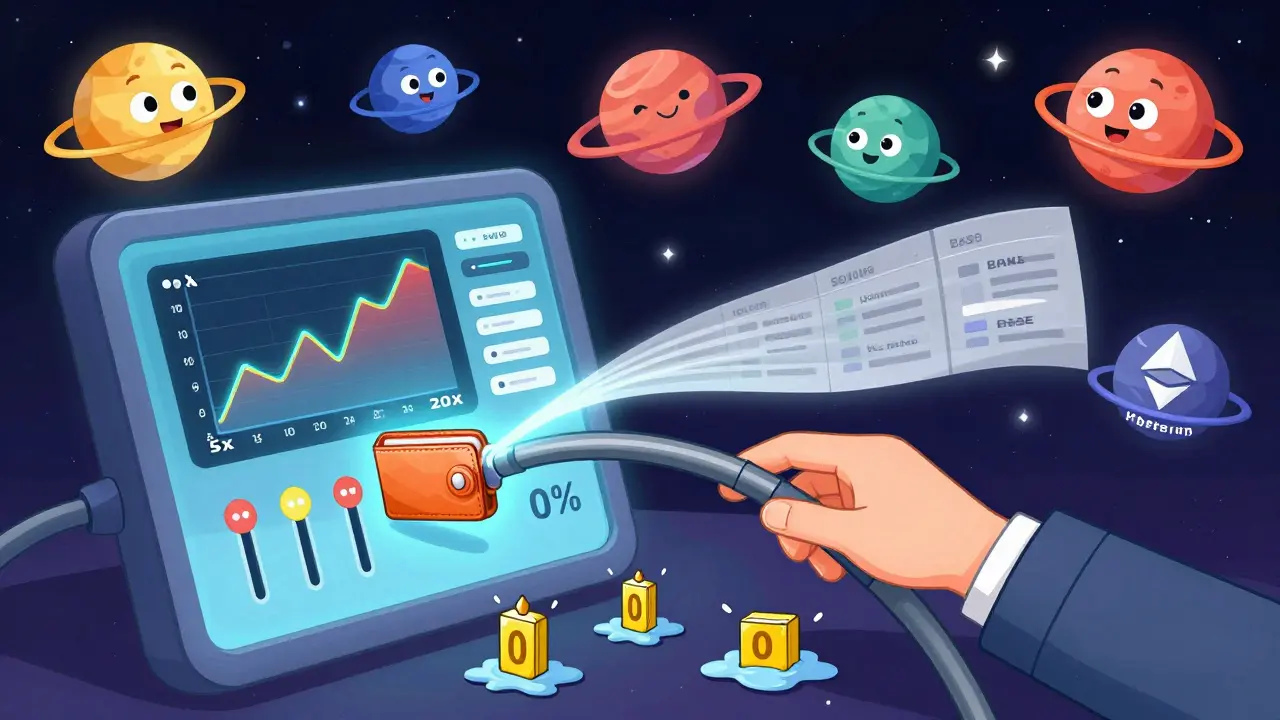
The interface looks like a centralized exchange. Sliders for leverage, real-time charts, market and limit orders - it’s familiar. That’s by design. Most people who trade derivatives don’t want to learn blockchain jargon. They want speed and simplicity. ADEN gives them that, while still settling every trade on-chain. No custodial risk. No exchange gets to freeze your funds. You control your wallet.
How Trading Works (No KYC, No Registration)
You don’t sign up. You don’t verify your email. You don’t upload a passport. You just connect your wallet - MetaMask, Phantom, Trust Wallet, or any WalletConnect-compatible wallet - and start trading. That’s the whole appeal for privacy-focused traders.
But here’s the catch: you need to understand how wallets work. If you lose your seed phrase, there’s no customer support to recover your account. No email ticket. No chatbot. Just silence. This isn’t a flaw - it’s the point. But if you’re new to DeFi, this can be terrifying.
ADEN supports six blockchains: BNB Chain, Arbitrum, Optimism, Base, Ethereum, and Solana. That’s more than most DEXs. You can pick which chain to trade on based on gas prices or network speed. On Arbitrum or Base, trades are almost instant. On Ethereum, you might wait a few seconds - but you won’t pay any gas fees. ADEN covers them. That’s huge.
Fees: The Real Star of the Show
ADEN’s fee structure is the most aggressive in the space:
- Maker fees: 0%
- Taker fees: 0.0009% (that’s 0.09 basis points)
Compare that to Kraken Pro, where makers pay 0% and takers pay 0.02% for high-volume traders. Or Coinbase, where taker fees start at 0.6%. Even Robinhood, which touts "zero fees," only offers 25 spot assets - no futures, no leverage.
ADEN’s taker fee is the lowest ever seen on a derivatives DEX. It’s not a gimmick. It’s sustainable because of the Orderly Network’s off-chain order matching. Orders are matched off-chain (like a CEX), then settled on-chain. That reduces congestion and lets them pass savings to users.
But here’s the reality: low fees mean nothing if no one’s trading. As of October 2025, ADEN is listed on CoinMarketCap as an "Untracked Listing." That means volume data isn’t being reported - or isn’t significant enough to track. There’s no way to know if $10 million or $100 million trades hands daily. That’s a red flag.
Why ADEN Isn’t for Everyone
Let’s be clear: ADEN isn’t for beginners. It’s not for people who want to buy Bitcoin and hold it. It’s not for those who need live chat support when something goes wrong. It’s for experienced traders who:
- Understand how leverage and liquidations work
- Are comfortable managing their own private keys
- Want to avoid KYC for privacy or regulatory reasons
- Trade derivatives regularly and want to cut costs
For everyone else? Stick with Kraken or Coinbase. Kraken has been around for 11 years without a single major hack. It supports 400+ coins, offers FDIC insurance on USD deposits, and has 24/7 customer service. It’s not cheap, but it’s safe.
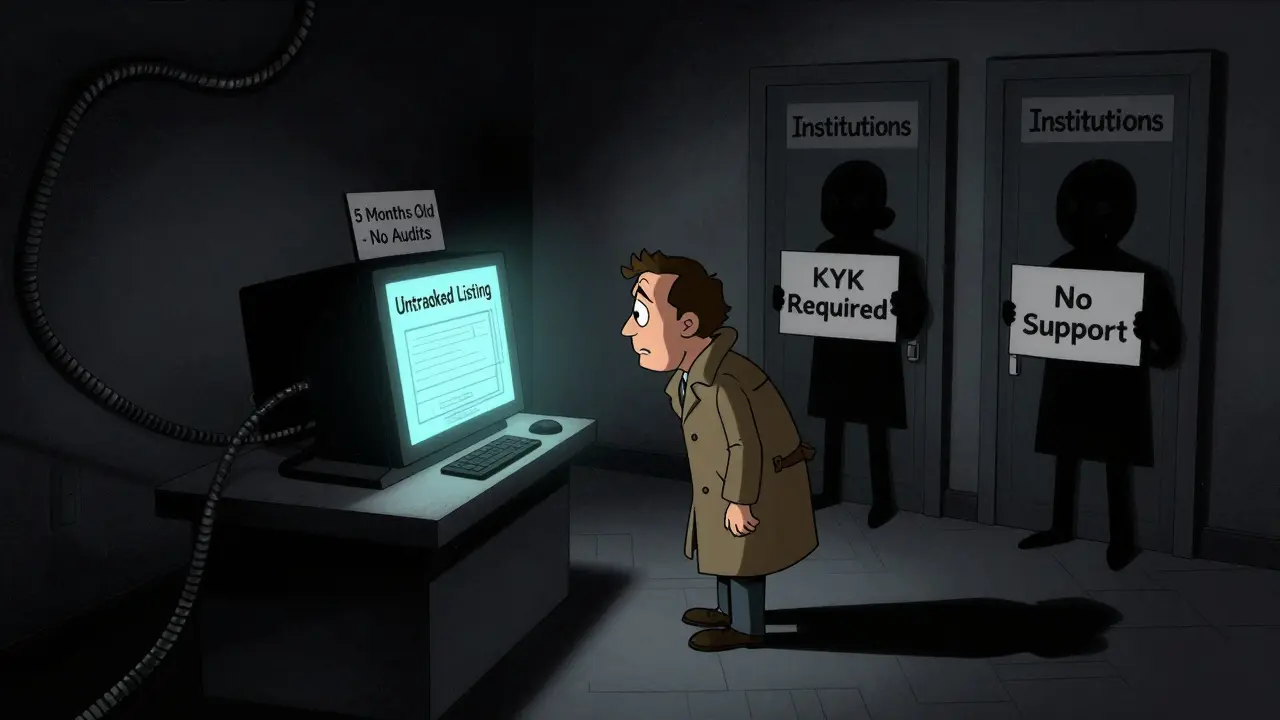
ADEN’s lack of KYC is a double-edged sword. It attracts privacy seekers and users from countries with strict crypto regulations. But it also scares off institutional investors, hedge funds, and anyone who needs compliance for tax or audit purposes. That limits ADEN’s growth potential.
How ADEN Compares to Other Decentralized Exchanges
Uniswap is the king of decentralized spot trading. But it doesn’t do derivatives. dYdX used to be the top choice for DeFi futures - but it’s now centralized under its parent company. GMX offers perpetuals on Arbitrum and Avalanche, but charges 0.05% taker fees and requires users to pay gas.
ADEN’s edge? Gasless trading + 0.0009% taker fees. That’s a combination no one else has matched. But dYdX still has higher volume. GMX has a bigger user base. ADEN has neither.
Here’s a quick comparison:
| Platform | Taker Fee | Maker Fee | Gas Fees? | KYC Required? | Supported Chains |
|---|---|---|---|---|---|
| ADEN | 0.0009% | 0% | No | No | 6 (BNB, Arbitrum, Optimism, Base, Ethereum, Solana) |
| GMX | 0.05% | 0% | Yes | No | 2 (Arbitrum, Avalanche) |
| dYdX | 0.02% | 0% | No | Yes (for withdrawals) | 1 (Ethereum L2) |
| Uniswap | N/A | N/A | Yes | No | 1 (Ethereum) |
ADEN wins on fees and chain support. But it loses on user base, liquidity, and brand trust. It’s like opening a new gas station on a quiet highway - the price per gallon is the lowest in the state, but no one’s driving by yet.
Who Should Use ADEN Right Now?
If you’re a pro trader who:
- Trades 10+ times a week
- Uses leverage between 5x and 20x
- Already has a wallet and knows how to move assets between chains
- Wants to avoid KYC for privacy or legal reasons
- Has a strategy that profits from ultra-low fees
Then ADEN is worth testing. Start small. Deposit $100 in USDT. Try a single trade. See how fast it executes. Check if your orders fill. Watch the liquidation risk.
Don’t go all-in. Don’t assume it’ll be the next Uniswap. It’s too early. The platform is less than five months old. The team hasn’t released a roadmap. There’s no public audit report. No community forums. No Twitter following worth mentioning.
What’s Missing? The Big Risks
ADEN’s biggest weakness isn’t the tech - it’s the lack of proof. No volume. No user reviews. No media coverage. No institutional backing. You’re trusting a new team with your capital, and there’s zero track record.
Also, derivatives are risky. Even on centralized exchanges, 80% of retail traders lose money on leverage. On a DEX with no support? That number could be higher.
And while ADEN is registered in Seychelles, that doesn’t mean it’s immune to future regulation. If the U.S. or EU cracks down on non-KYC derivatives platforms, ADEN could be blocked. There’s no legal safety net.
The gasless model is brilliant - but what if Orderly Network goes down? What if a bug causes a failed settlement? You can’t just call customer service. You’re on your own.
Final Verdict: A High-Risk, High-Reward Experiment
ADEN is not the best crypto exchange. It’s not even close. But it might be the most innovative derivatives DEX in 2025.
If you’re looking for safety, stability, and support - go with Kraken or Coinbase.
If you’re looking for the lowest possible fees, full control, and no KYC - and you’re okay with zero customer support and unproven liquidity - then ADEN is worth a look.
It’s not for everyone. But for the right trader? It could be the most cost-efficient way to trade crypto derivatives today.
Just don’t expect it to be easy. And don’t expect it to last.
Comments (16)
Vidyut Arcot
December 6, 2025 AT 01:06
ADEN’s fee structure is insane if you’re trading heavy. 0.0009% taker fee? That’s less than a penny on a $10k trade. I’ve been testing it on Base for two weeks now - orders fill fast, no slippage, and I haven’t paid a single gas fee. It’s not for beginners, but if you know what you’re doing, this is the cheapest edge you’ll find in DeFi.
Just don’t forget: no support means no safety net. One wrong click and your position liquidates. You’re on your own.
Alan Brandon Rivera León
December 7, 2025 AT 14:03
I’m from the US but trade from India sometimes. ADEN’s multi-chain support is what sold me. I can switch between Arbitrum and Base depending on congestion, and the fact that I don’t need KYC means I can trade without worrying about my data being sold or frozen. It’s not perfect, but it’s the closest thing to true financial freedom we’ve got right now.
Ankit Varshney
December 7, 2025 AT 15:39
Zero maker fees and gasless trading are revolutionary. But the lack of volume data is terrifying. How do you know it’s not a ghost exchange? I’ve seen this movie before - shiny UI, empty order book, then poof. No one’s there.
Ziv Kruger
December 8, 2025 AT 18:27
It’s not about fees or chains or KYC
It’s about control
ADEN doesn’t ask you to trust them
It asks you to trust yourself
That’s the real innovation
And that’s why most people won’t use it
Heather Hartman
December 9, 2025 AT 01:24
I started with $50 in USDT just to see how it felt - and honestly? It was smoother than some CEXs I’ve used. The UI is clean, the trades executed instantly, and I didn’t feel like I was handing over my soul to a corporation. If you’re curious, try it small. You might be surprised.
And yes, I’m still nervous about liquidations 😅
Catherine Williams
December 10, 2025 AT 05:22
Let’s not pretend this is for everyone. ADEN is a tool for people who’ve been burned by centralized exchanges or live in countries where access is restricted. It’s not a replacement for Kraken - it’s a parallel universe. And in that universe, you’re the CEO of your own wallet. That’s powerful. But also terrifying.
If you’ve ever lost funds because a CEX froze your account? This is your escape hatch.
Paul McNair
December 11, 2025 AT 04:12
Big picture: ADEN is a statement. It says, ‘We don’t need your ID. We don’t need your trust. We just need your capital and your competence.’ That’s radical. And that’s why institutions won’t touch it. But for individual traders? It’s a quiet revolution. The real question isn’t whether it works - it’s whether enough people are ready to take responsibility for their own money.
Mohamed Haybe
December 12, 2025 AT 14:35
Westerners love this crypto bullshit because it makes them feel like rebels but they still cry when their wallet gets hacked. ADEN? It’s for real men who don’t need mommy CEXs to hold their hand. India doesn’t need your KYC. We’ve been trading crypto since 2017 without your permission. ADEN is the future and you’re just scared because you don’t control it
Marsha Enright
December 13, 2025 AT 17:45
I’ve been using ADEN for my swing trades and honestly? It’s been flawless. The only thing I miss is a simple way to see my trade history outside my wallet. But the fees? Unbeatable. I’ve saved over $200 in fees in three weeks just from small trades. If you’re active, this is a no-brainer.
Just make sure you backup your seed phrase. Twice. On paper. In two different places. 😅
Andrew Brady
December 14, 2025 AT 23:03
ADEN is a trap. It’s funded by offshore shell companies and designed to lure retail traders into high-leverage positions so they lose everything - then the team disappears. No audits. No team names. No transparency. This is how crypto scams start. They give you free trades until you deposit $10k, then the chain goes silent. Don’t be the next victim.
Sharmishtha Sohoni
December 16, 2025 AT 13:45
Gasless + 0.0009% taker fee = best combo in DeFi. But why no volume data? That’s the red flag.
Althea Gwen
December 17, 2025 AT 23:50
ADEN? More like ADEN-TO-LOSE 😴
Zero KYC = zero accountability
Zero support = zero mercy
Zero volume = zero future
Also the UI looks like a 2017 crypto app 😅
Durgesh Mehta
December 19, 2025 AT 00:40
Been using it for a month now. The only thing I’d change is adding a simple trade log export. Other than that, it works. Low fees, fast, no KYC. I don’t need more than that.
Sarah Roberge
December 20, 2025 AT 01:59
ADEN is literally the future of finance but nobody gets it because they’re too busy watching YouTube videos about Dogecoin and thinking they’re ‘investing’. You need to understand blockchain architecture, liquidity pools, and off-chain matching to even begin to appreciate this. Most people can’t even spell ‘wallet’ without autocorrect fixing it. This isn’t for them. It’s for the 0.1% who actually think.
Steve Savage
December 20, 2025 AT 21:06
I’ve traded on Binance, Kraken, dYdX, GMX, and now ADEN. The difference? ADEN feels like trading in the wild. No safety rails. No corporate hand-holding. Just you, your wallet, and the market. It’s not for everyone - but for those who’ve been through the fire? It’s the most honest thing out there.
Britney Power
December 21, 2025 AT 17:02
ADEN represents a dangerous regression in financial infrastructure. By eliminating KYC, it actively facilitates illicit capital flows, tax evasion, and money laundering. The absence of regulatory oversight renders its entire operational model ethically indefensible, regardless of its technical elegance. The claim of 'gasless trading' is a red herring - the costs are externalized onto the underlying Layer 2 networks, creating systemic congestion risks for legitimate users. Furthermore, the lack of publicly verifiable audit reports and the opaque jurisdictional registration in Seychelles constitute a material failure of fiduciary responsibility. This platform does not democratize finance - it weaponizes anonymity to exploit retail participants who lack the technical literacy to comprehend the existential risks they are assuming. One cannot build a sustainable financial ecosystem on the principle of 'trust no one' while simultaneously expecting trust from the market. This is not innovation. It is institutional negligence dressed in DeFi jargon.