Smart Contract Cost Calculator
Compare real-world costs for smart contract execution across leading blockchains. Input your expected transaction volume and complexity to see monthly estimates.
Daily Volume
Complexity
Blockchain
| Blockchain | Cost Per Transaction | Monthly Cost | Notes |
|---|
Key Consideration: For Ethereum mainnet, consider layer-2 solutions like Polygon which offer 90% cost reduction during peak times.
Executing a smart contract isn’t free. Even if your code is perfect, the network will charge you to run it. And that cost can swing from a fraction of a penny to over $100-depending on which blockchain you pick. If you’re building a dApp, launching an NFT, or just trying to interact with DeFi, ignoring these fees is like buying a car without checking the price of gas. You’ll run out of money before you get anywhere.
Why Smart Contract Costs Matter More Than You Think
Smart contracts are self-executing programs on blockchains. They handle everything from token swaps to voting systems to digital collectibles. But every time they run-whether it’s a simple transfer or a complex loan calculation-they use computational power. That power costs money. This isn’t a one-time fee. It’s an ongoing cost per interaction.
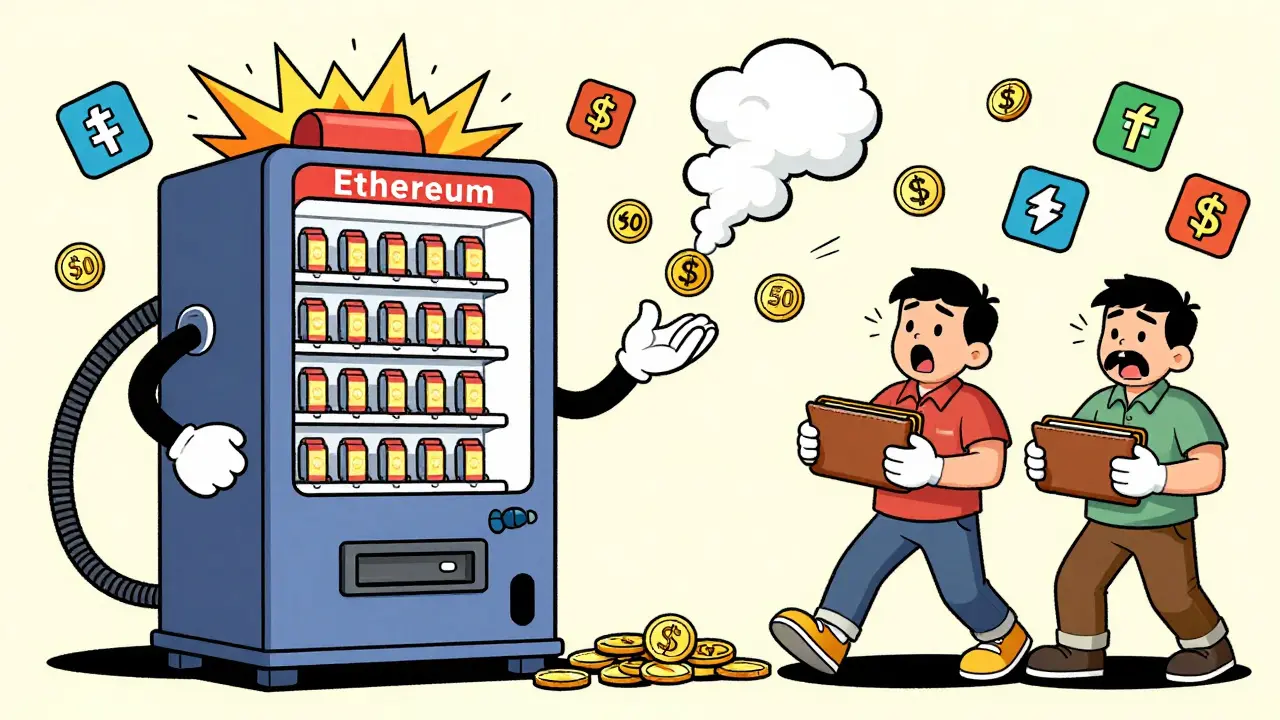
Think of it like a vending machine. You pay to buy a soda, but if the machine breaks every time someone presses a button, you’re paying for repairs too. That’s what happens when gas fees spike. Users abandon your app. Transactions fail. Revenue drops. In 2025, 62% of DeFi projects that didn’t optimize their smart contracts failed within a year-not because of bad code, but because users couldn’t afford to use them.
The real problem? Most developers focus on building features and forget about the cost of running them. A contract that costs $0.10 to execute might seem fine. But if 10,000 users interact with it daily, that’s $1,000 per day-$30,000 a month. That’s not scalable. That’s a business model on fire.
Ethereum: The Gold Standard With a Price Tag
Ethereum is still the most trusted blockchain for high-value applications. It’s where institutional DeFi, major NFT marketplaces, and critical smart contracts live. But it’s also the most expensive.
In Q3 2025, average transaction costs on Ethereum mainnet ranged from $5 to $50. During peak times-like when a popular NFT drops or a new DeFi protocol launches-fees spiked to $150 or more. One developer on Reddit reported spending $12,000 to deploy a single NFT contract during a CryptoPunk mint event. That’s not a typo.
Why so high? Ethereum uses a proof-of-stake consensus with thousands of active nodes (8,800 as of September 2025). That makes it secure and decentralized, but also slow and congested. Every operation has a fixed gas cost. Simple transfers use 21,000 gas. Complex contracts? 1 million gas or more. And gas prices are set by users bidding against each other.
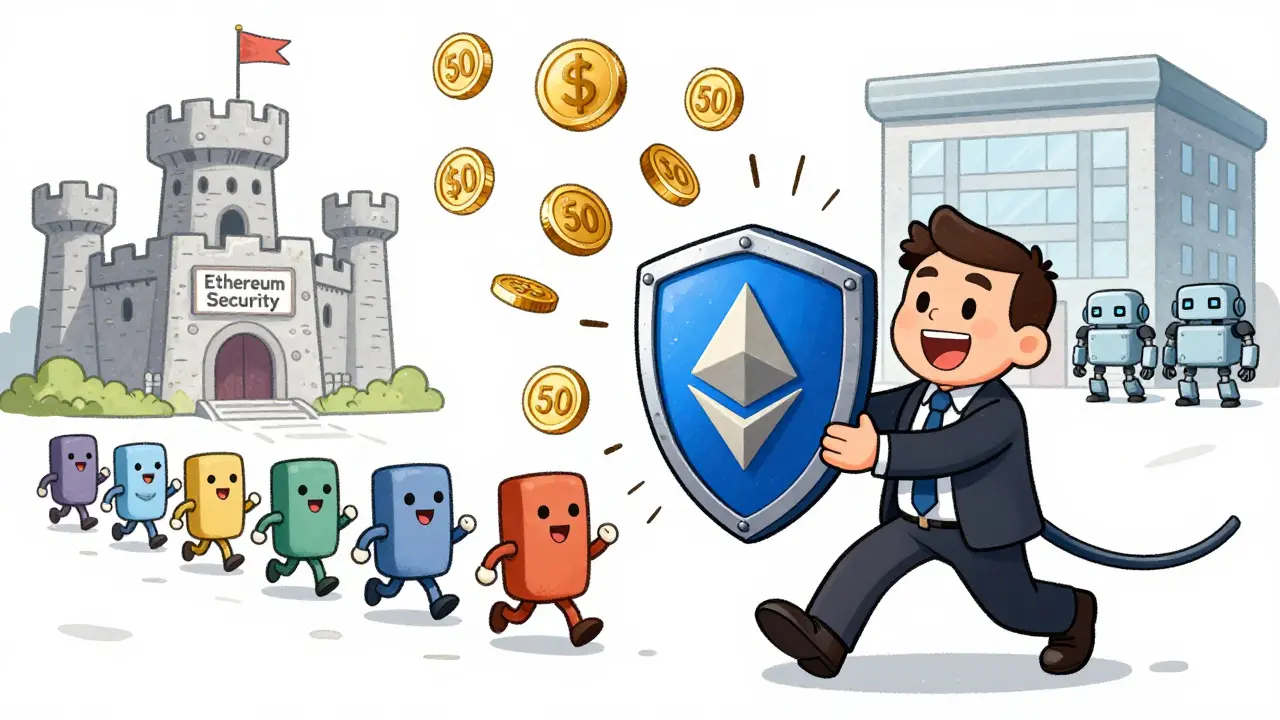
But there’s good news: the Dencun upgrade in March 2025 slashed layer-2 costs by 90%. Rollups like Arbitrum and Optimism now run at $0.005 per transaction. That’s why most new projects now use Ethereum as a settlement layer and run their apps on layer-2s. But if you’re deploying directly to Ethereum mainnet, you’re paying a premium for security.
Solana: Speed at a Penny a Pop
If Ethereum is a luxury sedan, Solana is a sports car with a turbo engine. It executes 65,000 transactions per second and charges an average of $0.00025 per smart contract execution. That’s less than a tenth of a cent. For gaming, microtransactions, or high-frequency trading apps, Solana is unbeatable.
How? It uses a unique proof-of-history consensus that timestamps transactions before they’re processed. This cuts out the waiting game. It’s fast. It’s cheap. And it’s why Solana captured 22.3% of the gaming and microtransaction market in 2025.
But there’s a catch: reliability. Solana had three major outages in Q2 2025, totaling 17 hours of downtime. In June 2025, the Firedancer upgrade boosted capacity to 100,000 TPS-but it still had 8.2 hours of downtime in its first month. For a financial application, that’s unacceptable. For a meme coin game? Maybe not.
Developers also complain about poor documentation. A Blockstack Review survey found 63% of Solana devs struggled to estimate fees accurately. One user on GitHub wrote: “I thought my contract cost $0.01. It ended up costing $0.80 because I didn’t know how storage worked.”

Polygon: Ethereum’s Affordable Twin
Polygon isn’t a competitor to Ethereum. It’s its sidekick. Built as a layer-2 scaling solution, Polygon uses Ethereum’s security but runs transactions off-chain. The result? Near-identical developer experience, with costs under $0.01 per transaction and 7,000 TPS throughput.
In Q2 2025, Polygon launched its CDK stack, letting developers create custom fee markets. Now, average costs dropped to $0.003 per transaction. Over 1,200 new projects moved to Polygon in just three months.
It’s the sweet spot for startups. You get Ethereum’s ecosystem, tools, and wallet support-but without the $50 gas fees. Developers who migrated from Ethereum mainnet to Polygon reported 85% cost reductions. One NFT platform cut its monthly operational costs from $24,000 to $360.
But remember: Polygon inherits Ethereum’s security model. If Ethereum goes down, Polygon is affected too. It’s not fully independent. But for most use cases, that trade-off is worth it.
Binance Smart Chain: The Budget EVM
Binance Smart Chain (BSC) is Ethereum-compatible. That means you can reuse your Solidity code, Metamask wallets, and DeFi tools. But it’s not Ethereum. It’s a centralized alternative.
With only 41 validator nodes, BSC is faster and cheaper-transactions cost less than $1. It handles 100 TPS, which is enough for many apps. It’s popular in Southeast Asia and among small developers who need quick, cheap deployments.
But centralization is the elephant in the room. BSC is controlled by Binance, one company. If Binance decides to censor a contract or freeze funds, it can. That’s why no major DeFi protocol uses BSC for custody. It’s fine for low-stakes apps, but not for storing real money.
Still, if you’re building a simple token or a community app and don’t need top-tier security, BSC is a solid choice. Just know you’re trading decentralization for price.
Hyperledger Fabric: The Enterprise Choice
Hyperledger Fabric isn’t a public blockchain. It’s a permissioned network designed for banks, supply chains, and governments. You don’t pay gas. You pay for infrastructure.
Deployment starts at $25,000 and can go up to $100,000 for complex setups. There’s no “gas” because only approved nodes run the network. Fees are fixed, negotiated in contracts. This makes budgeting easy. One financial institution told Capterra: “We know exactly how much this will cost every month. No surprises.”
But you need a team of blockchain engineers to set it up. There’s no Metamask. No public wallets. No community support. Only 2,800 contributors on GitHub compared to Ethereum’s 45,000+. If you’re a startup, this isn’t an option. If you’re a bank? It’s the only option.
How to Cut Your Smart Contract Costs in Half
You don’t have to accept high fees. There are proven ways to slash costs:
- Minimize storage. Every time you write data to the blockchain, it costs 20,000-50,000 gas. Use off-chain storage (like IPFS) for images and documents. Audius saved 40% on gas by moving audio metadata off-chain.
- Use batch processing. Instead of 100 separate transactions, bundle them into one. This cuts fees by 60% or more.
- Choose the right chain. Don’t deploy a simple token on Ethereum mainnet. Use Polygon or BSC. Save your Ethereum mainnet use for high-value interactions.
- Optimize your code. Use OpenZeppelin’s gas-efficient templates. They’ve been battle-tested. Over 1,200 developers clone them weekly.
- Test before you deploy. Use tools like Tenderly or Etherscan’s gas profiler. Run simulations. Know your cost before users do.
Consensys Academy found that 78% of developers fail their gas optimization exam. That’s not because it’s hard-it’s because most never learn it.
What’s Next? The Future of Smart Contract Costs
By 2026, Gartner predicts 75% of enterprise blockchains will use hybrid pricing-fixed monthly fees plus small usage charges. That means you won’t pay per transaction. You’ll pay a subscription.
For users, fees will keep dropping. Forrester Research says smart contract execution costs will become negligible by 2028. We’re moving toward a world where interacting with a blockchain feels as cheap as opening a webpage.
But right now? It’s still a minefield. The chain you pick isn’t just about technology. It’s about economics. It’s about who your users are. It’s about whether your app can survive the next NFT drop-or the next market crash.
Choose wisely. Because in blockchain, the cheapest chain isn’t always the best. But the most expensive one? It’s often the one that kills your project before it even starts.
Why are Ethereum smart contract fees so high?
Ethereum fees are high because it’s a decentralized, secure network with thousands of nodes validating every transaction. Demand often outstrips supply, especially during NFT mints or DeFi launches. Each operation costs gas, and users bid up the price. While layer-2 solutions now cut costs by 90%, mainnet fees remain expensive for direct deployments.
Can I avoid paying gas fees entirely?
You can’t avoid fees on public blockchains-they’re how miners or validators get paid. But you can shift the cost. Some apps pay fees for users (called “gas sponsorship”), or you can use layer-2 chains like Polygon where fees are under $0.01. Private chains like Hyperledger Fabric have fixed costs instead of per-transaction fees.
Is Solana really cheaper than Ethereum?
Yes, by a huge margin. Solana averages $0.00025 per transaction versus Ethereum’s $5-$50. But Solana’s trade-off is reliability-it’s had multiple outages in 2025. Ethereum is slower and pricier, but it’s never gone down for hours. Choose based on whether speed or uptime matters more for your use case.
What’s the best blockchain for a new NFT project?
For minting and sales, use Polygon. It’s cheap ($0.003 per transaction), secure (backed by Ethereum), and has a large user base. Save Ethereum mainnet for high-value secondary sales or if you need maximum trust. Avoid BSC if you want long-term decentralization, and avoid Solana if your users can’t tolerate outages.
How do I estimate the cost of my smart contract before deploying?
Use tools like Tenderly, Etherscan’s gas tracker, or Remix IDE’s built-in analyzer. Simulate your contract’s functions-each storage write, loop, or external call adds gas. Multiply the estimated gas by the current gas price (in gwei). For example: 500,000 gas × 20 gwei = 0.01 ETH ≈ $25. Always test on a testnet first.
Do regulatory changes affect smart contract costs?
Yes. The SEC now requires transparent fee disclosures in tokenomics documentation. This adds $7,500+ in legal and compliance costs per project. While it doesn’t change on-chain fees, it increases your total cost of launching. Ignoring this can lead to fines or delisting from exchanges.
Final Thoughts: Pick Your Chain Like a Business Decision
Smart contract costs aren’t a technical footnote. They’re a core part of your product’s economics. You wouldn’t launch a SaaS app without knowing your AWS bill. Don’t launch a blockchain app without knowing your gas bill.
Use Ethereum if you need trust. Use Polygon if you need affordability. Use Solana if you need speed and can handle downtime. Use Hyperledger if you’re a bank. And always, always optimize your code. The difference between a successful app and a failed one often comes down to one simple thing: how much you charge your users to use it.
Comments (20)
Sarah Luttrell
December 10, 2025 AT 19:48
Oh sweet merciful Ethereum, we're all just peasants begging for gas tokens now. 🤡 I paid $12k to mint one NFT and still got rekt by a rug pull. At least my wallet's full of trauma and NFTs that'll never sell. #CryptoIsDead
PRECIOUS EGWABOR
December 11, 2025 AT 21:10
Honestly? If you're deploying on mainnet in 2025 without a layer-2, you're either a masochist or a billionaire with too much time on your hands. Polygon’s $0.003 fee? That’s not a feature-it’s a public service.
Kathleen Sudborough
December 13, 2025 AT 14:28
I just want to say thank you for writing this. I’m a solo dev trying to build something small, and I had no idea how much gas could eat my budget. I switched to Polygon last week and my monthly costs dropped from $4k to $30. I actually slept last night for the first time in months. 💙
Heath OBrien
December 14, 2025 AT 05:04
Solana is trash and you know it. 17 hours down in one quarter? Thats not tech thats a toddler with a hammer. Ethereum is the only real chain. The rest are just echo chambers for degens
Taylor Farano
December 16, 2025 AT 02:15
78% of devs fail the gas optimization exam? Wow. So the entire Web3 ecosystem is just a bunch of people who can't read documentation and think ‘deploy and pray’ is a business model. Congrats, you’ve invented the digital equivalent of a Ponzi scheme with more syntax errors.
Toni Marucco
December 16, 2025 AT 22:41
The fundamental tension here is not technological-it is epistemological. We have constructed a global consensus mechanism predicated on the commodification of computational effort, yet we persist in treating it as if it were a utility. The gas fee is not a tax-it is a metaphysical assertion of scarcity in an infinite digital realm. We are not paying for computation. We are paying for the illusion of value.
Kathryn Flanagan
December 17, 2025 AT 10:27
Hey new devs, just a little heads up-don’t write your whole contract in one big function. I’ve seen people try to do 12 nested loops with storage writes and then cry when the gas hits $80. Break it up. Use events. Store data off-chain. It’s not magic, it’s just… thinking ahead. You got this!
amar zeid
December 18, 2025 AT 03:53
I am from India and we use BSC for everything. It is cheap, fast, and works. Why do Western devs always assume decentralization is more important than accessibility? For 99% of users, $0.50 vs $50 is the difference between using the app and giving up. Stop elitism. Build for people.
Alex Warren
December 18, 2025 AT 09:33
The claim that Solana had 8.2 hours of downtime in its first month after Firedancer is misleading. The network didn’t crash-it throttled. Validators overloaded on memory, not consensus. That’s a hardware issue, not a protocol failure. Fix the nodes, not the chain.
Claire Zapanta
December 19, 2025 AT 15:32
Funny how everyone ignores that Ethereum’s ‘security’ is just a facade. The SEC has been quietly pressuring node operators to blacklist certain contracts since 2024. You think you’re decentralized? You’re just on a private server with a fancy logo. The whole thing’s a controlled experiment.
Lloyd Cooke
December 20, 2025 AT 11:58
We are not merely users of blockchains-we are pilgrims in the cathedral of code. The gas fee is the incense burned at the altar of consensus. To complain of cost is to blaspheme against the sacred geometry of merkle trees. Let the fee rise. Let the weak flee. Only the worthy shall transact.
Kurt Chambers
December 22, 2025 AT 09:20
Ethereum is just big tech with a blockchain tattoo. They charge you $50 to send a token and call it ‘decentralized’. Meanwhile, Solana’s down for 17 hours and you’re still defending it? Bro, the whole thing is rigged. I saw a dev get banned for asking about fee manipulation. #BlockchainIsACult
Jessica Eacker
December 24, 2025 AT 07:44
If you're just starting out, don't overthink it. Use Polygon. Test on Sepolia. Optimize one function at a time. You don't need to be a genius-you just need to be consistent. I was where you are six months ago. Now I'm shipping. You can too.
Jessica Petry
December 26, 2025 AT 03:41
Anyone who says Hyperledger is ‘only for banks’ hasn’t read the whitepaper. It’s the only chain where you can actually audit every line of code. The rest of you are just gambling with open-source spaghetti and hoping nobody exploits your 1000-line smart contract written at 3 AM.
Scot Sorenson
December 26, 2025 AT 04:08
You think $0.00025 on Solana is cheap? Try deploying a contract with 3000 storage writes and see how fast your wallet bleeds. And don’t even get me started on how the ‘proof of history’ is just a fancy way of saying ‘trust the validator’. It’s not faster-it’s just less transparent.
Ike McMahon
December 26, 2025 AT 21:41
Batch processing is your best friend. If you’re doing 100 transfers, do them all in one tx. It’s not hard. Tools like Tenderly show you exactly where the gas spikes. Do it before you deploy. Save your sanity.
JoAnne Geigner
December 27, 2025 AT 21:20
I’ve been working with blockchain since 2018, and I’ve seen every trend come and go. What’s different now is that we’re finally starting to treat gas as a UX problem-not just a technical one. The best projects don’t just optimize code-they optimize the user’s emotional experience. No one wants to feel like they’re paying to breathe.
Anselmo Buffet
December 28, 2025 AT 01:03
Honestly I just use Polygon now. It works. I don’t care about the politics. I just want my app to run without my users screaming at me. And yeah, I don’t even check the gas price anymore. It’s like paying for coffee now. Good enough.
Joey Cacace
December 29, 2025 AT 16:47
Thank you for this incredibly thoughtful breakdown. I shared it with my team and we’ve already migrated our NFT minting to Polygon. The difference in user feedback has been night and day. People are actually using it now. That’s the real win.
Taylor Fallon
December 30, 2025 AT 06:36
i just wanna say that if u r a dev and u think u can just deploy on eth mainnet and hope for the best... u r not ready. i cried when my first contract cost $120 to deploy. now i use batched txs and offchain metadata. its not magic. its just care. and u deserve to build without being broke. <3