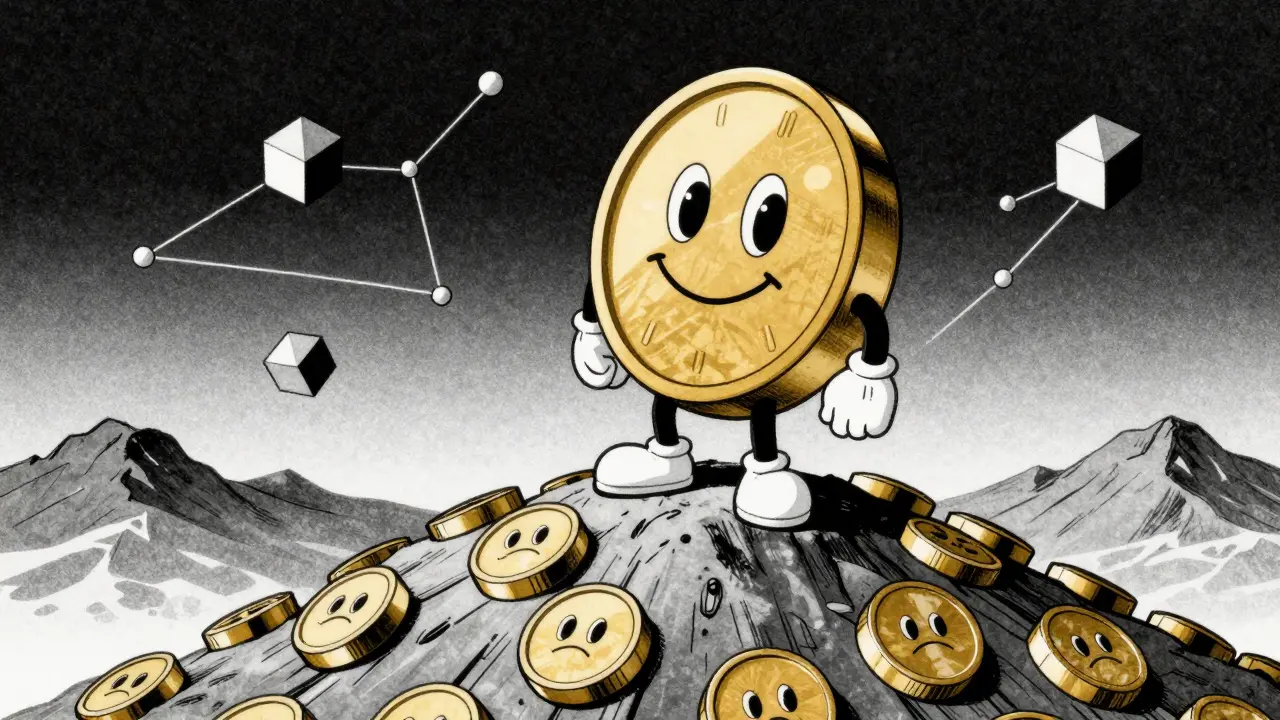
Imagine launching a project where you have a brilliant piece of technology, but a handful of early investors hold 60% of the voting power. Suddenly, your "decentralized" project is actually a digital oligarchy. This is the hidden trap of governance token distribution. If you get the math wrong at the start, you aren't just risking your token price; you're risking the entire legitimacy of your protocol.
The goal isn't just to give away tokens. It's to create a balanced ecosystem where the people who actually use the product have a say in how it evolves, while the people who funded the build are rewarded for their risk. Whether you're eyeing a massive airdrop or a structured private sale, your distribution strategy is the blueprint for who actually owns your project's future.
Key Takeaways for Protocol Founders
- Balance is everything: Aim to keep insider control under 25% of total voting power to maintain a decentralized image.
- Vesting protects value: Use 12-month cliffs and 2-4 year linear unlocks to prevent early dumps.
- Target real users: Airdrops work best when they reward utility, not just "farming" behavior.
- Compliance is non-negotiable: Different regions (like the EU under MiCA) have vastly different rules for what counts as a security.
The Core Anatomy of Token Allocation
You can't just pick numbers out of a hat. Most successful protocols follow a specific framework to ensure they have enough runway to grow without handing over the keys to the kingdom too early. According to industry standards, a healthy allocation usually looks like this:
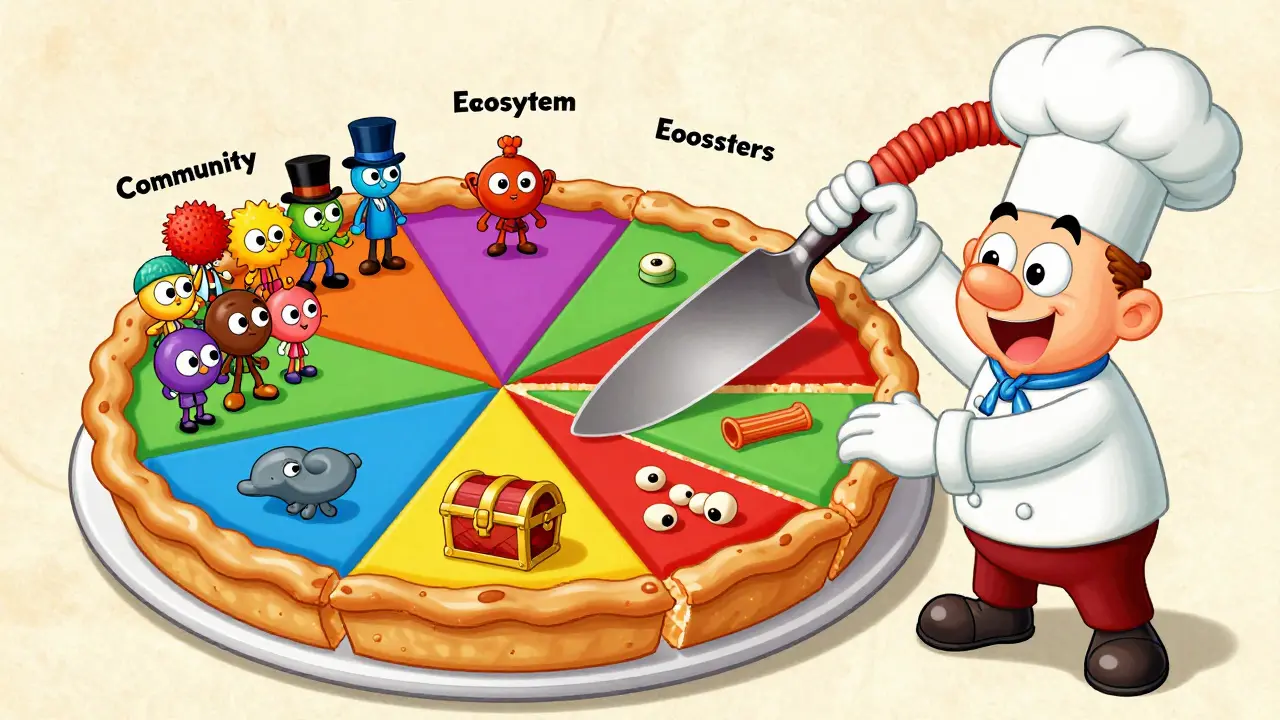
Tokenomics is the economic model of a cryptocurrency, encompassing its supply, distribution, and utility to ensure long-term sustainability. When designing these, you have to slice the pie into a few critical categories.
| Allocation Group | Typical Range | Standard Vesting | Primary Purpose |
|---|---|---|---|
| Community/Users | 30% - 50% | Immediate or Linear | Incentivize adoption & voting |
| Ecosystem/Reserves | 20% - 25% | Strategic release | Future grants & development |
| Investors | 15% - 20% | 6-12 mo cliff / 2-4 yr linear | Initial capital injection |
| Core Team | 10% - 15% | 12 mo cliff / 4 yr linear | Alignment with long-term success |
| Advisors | 2% - 5% | Vested over 1-2 years | Strategic guidance |
Paid Distribution: Raising Capital vs. Centralization
If you need millions to build a complex L1 or a DeFi primitive, you'll likely look at paid models. This is where you sell tokens in exchange for funding. The most common vehicle here is the SAFT (Simple Agreement for Future Tokens), which is a contractual agreement where an investor provides capital in exchange for the right to receive tokens upon the network's launch ].
The trade-off is simple: you get the money, but you risk "whale dominance." Look at the EOS launch in 2018; within six months, 40% of the tokens were held by a tiny group of exchanges and whales. This creates a governance nightmare because a few people can block any proposal they don't like, effectively killing community innovation.
To mitigate this, modern projects use tiered vesting. Instead of giving investors all their tokens on day one, they are unlocked slowly. This forces investors to care about the project's health over years, not just a few weeks of speculation.
Unpaid Distribution: The Power of the Airdrop
Unpaid distributions are designed to seed the community. The gold standard is the Airdrop, which is the distribution of a cryptocurrency token or coin free of charge to multiple wallet addresses ]. When Uniswap dropped UNI tokens in 2020, they didn't just give them to everyone; they targeted people who had actually swapped tokens on the platform. This created a class of stakeholders who already understood the product's value.
But beware of "airdrop farming." If your criteria are too loose, you'll attract bots. Balancer’s 2020 airdrop suffered from this, with bots claiming nearly 37% of the tokens. You end up with a "ghost community"-thousands of wallets that hold tokens but will never actually vote or contribute, only to sell the moment the token hits an exchange.
Another path is liquidity mining. In the early days of Compound, they distributed COMP tokens to anyone providing liquidity. This is a great way to bootstrap TVL (Total Value Locked), but it can lead to an "inflationary death spiral" if the token's value drops and users withdraw their funds as soon as the rewards dry up.
Advanced Governance Mechanics: Fighting Whale Dominance
Once the tokens are out there, how do you actually run the place? Standard "one token, one vote" usually fails because the richest people always win. To fix this, the industry is moving toward more sophisticated systems.
First, there's Delegation. Many users don't have the time to read 50-page technical proposals. In Uniswap's model, a huge chunk of voting power is delegated to specialized experts who actually understand the trade-offs. This keeps the project moving while allowing small holders to still have an indirect influence.
Then there is the veToken model (vote-escrowed). Popularized by Curve Finance, this requires users to lock their tokens for a set period (up to four years) to gain voting power. If you lock your tokens, you get a multiplier on your vote. This transforms the token from a speculative asset into a long-term commitment tool.
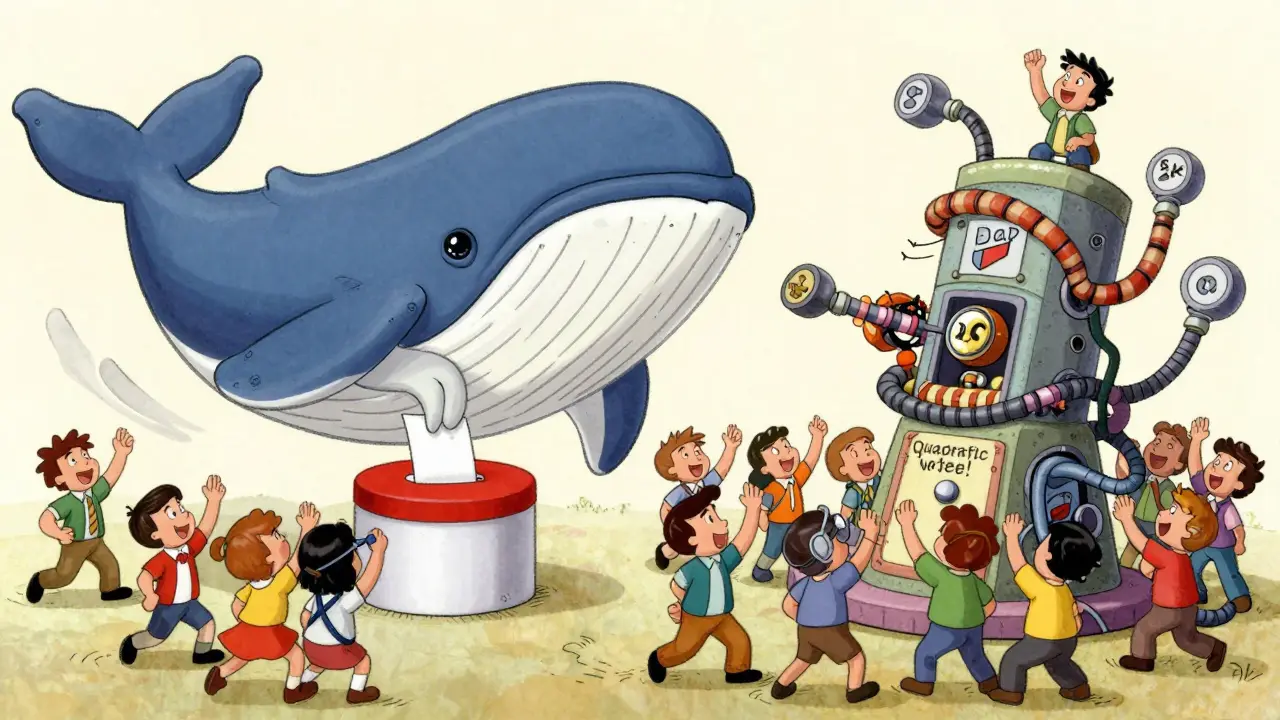
We're also seeing a rise in Quadratic Voting. Instead of a linear relationship, the cost of each additional vote increases quadratically. This means a person with 100 tokens doesn't have 100x the power of someone with 1 token; it gives a louder voice to the minority and prevents a single whale from steamrolling the community.
The Legal Minefield: SEC and MiCA
You can't talk about distribution without talking about the law. The big question is always: "Is this a security?" In the US, the SEC uses the Howey Test to determine if a token is an investment contract. If you promise a profit based solely on the efforts of the founders, you're in the danger zone.
The 2023 SEC v. Ripple Labs ruling provided some clarity, suggesting that tokens sold on public exchanges might be treated differently than those sold to institutional investors. However, the safest bet for 2026 is to ensure your distribution is broad. Some frameworks suggest having at least 5,000 unaffiliated holders controlling 75% of the voting power to argue that the token is a utility/governance tool rather than a security.
In Europe, the MiCA (Markets in Crypto-Assets) regulation, which became effective in January 2025, requires a "substantial utility assessment." If your governance token is just a wrapper for a financial instrument, you'll face heavy penalties. This is why many projects now maintain separate distribution strategies for US and EU residents.
What is the ideal cliff period for team tokens?
A 12-month cliff is the industry standard. This means the team receives zero tokens for the first year, ensuring they are focused on building the product rather than timing the market for an exit. Following the cliff, tokens are typically released linearly over 3 to 4 years.
How do I prevent Sybil attacks during an airdrop?
To stop users from creating 1,000 wallets to claim rewards, implement Sybil-resistant checks. This can include requiring a minimum amount of activity (e.g., at least 5 transactions), integrating decentralized identity (DID) proofs, or using "proof of personhood" services like Worldcoin or Gitcoin Passport.
Is a 100% community-owned token actually possible?
It's theoretically possible but practically difficult. Without a core team holding some tokens, it's hard to maintain long-term strategic direction or provide a "buffer" for emergency interventions. Most "community-owned" projects still have a treasury controlled by a multi-sig of trusted founders or a DAO council.
What is the risk of too much token supply?
Hyper-inflation. If you distribute tokens too aggressively to attract users (liquidity mining), you increase the supply faster than the demand. This leads to a price crash, which makes the rewards unattractive, causing users to leave-a cycle known as a death spiral.
What is the difference between a Governance Token and a Utility Token?
A utility token provides access to a service (like gas on Ethereum). A governance token gives you a vote on how the protocol is run (like UNI for Uniswap). While many tokens do both, the governance aspect specifically refers to the right to propose and vote on changes to the protocol's code or treasury.
Next Steps: Implementing Your Strategy
If you're moving from a centralized project to a DAO, don't flip the switch overnight. The most successful projects use Progressive Decentralization. Start with a core team making decisions, then move to a council, and finally open it up to the full token-holder community over 2-3 years.
Before you deploy your smart contracts, run your numbers through a simulator like TokenSPICE to see how your vesting affects the circulating supply. Get a legal opinion on your airdrop criteria to avoid SEC scrutiny. Finally, set up a tool like Snapshot for off-chain voting to lower the barrier for your community to participate without paying gas fees on every single vote.
Comments (15)
Felix Eduardo Velasquez
April 30, 2026 AT 14:59
The pivot toward quadratic voting is essentially an admission that pure plutocracy is unsustainable for long-term network health. By decoupling financial weight from decision-making power, we move closer to a true meritocracy. However, the real challenge remains the identity layer. Without a robust way to verify unique humans, quadratic voting just incentivizes a different kind of Sybil attack where whales split their holdings across thousands of wallets to regain their linear influence. It's a philosophical battle between anonymity and governance integrity that the industry hasn't quite solved yet.
Emily A
May 2, 2026 AT 02:28
Most of these 'best practices' are just rebranded mistakes from 2021. People still think a 12-month cliff is a magic shield, but if the product lacks actual utility, the market will price in the unlock long before the tokens hit the wallet. It is honestly exhausting how many founders believe a fancy spreadsheet can substitute for a viable business model.
Alex Mazonowicz
May 2, 2026 AT 07:30
This is such a great breakdown!!! Love seeing the focus on community empowerment!!!! Keep pushing for more transparency in Web3!!!!
Tracy McBurney
May 4, 2026 AT 03:15
Your allocation table is laughably optimistic. You claim 15-20% for investors is 'healthy,' yet you ignore how VCs often demand preferential terms that effectively strip the community of any real power. The 'ecosystem reserves' are usually just a slush fund for the team to manipulate the price or reward their buddies. Let's be honest: most projects are just centralization with a different coat of paint.
Ryan Nakielny
May 5, 2026 AT 16:23
Oh sure, just give 50% to the 'community' and watch as 40% of that gets vacuumed up by bots in six minutes. Truly a masterclass in decentralization.
Gabby Puche
May 6, 2026 AT 23:47
Totally agree with the point about rewarding utility over farming! 🌟 It makes such a difference when people actually love the product before they get the tokens! 🚀✨
Arti Jain
May 8, 2026 AT 02:16
India is leading the actual adoption. These Western frameworks are irrelevant.
Andrew Todd
May 9, 2026 AT 23:44
USA tokens are the only ones that matter. Everything else is a scam. Simple as that.
Jehan ZA
May 10, 2026 AT 21:37
The emphasis on MiCA compliance is quite prudent. It would be most unfortunate for a project to overlook the regulatory requirements of the European Union during their initial distribution phase.
Sri Astuti
May 11, 2026 AT 11:04
I find it absolutely absurd that the author glosses over the psychological trauma of retail investors who get dumped on by 'vested' teams who just find legal loopholes to exit early, and honestly, the way the table is structured completely ignores the volatility of liquidity mining rewards which’ve crushed countless portfolios in the last cycle 🙄
Elle Kharitou
May 11, 2026 AT 23:30
It's so beautiful to think about the token as a seed for a digital forest where the governance is the sunlight that allows everyone to grow together 🌿 I feel that the transition to progressive decentralization is like a child learning to walk, where the core team provides the initial support before letting the community find its own balance and rhythm in the vast expanse of the internet 🌈✨
Rachel S
May 13, 2026 AT 14:04
The sheer horror of an inflationary death spiral is something no founder ever truly prepares for until the TVL starts plummeting! 😱 It is a tragedy of tokenomics that we see repeated time and time again in every single bull cycle! 📉
Lynne Teperman
May 14, 2026 AT 13:36
wildly imaginative way to slice the pie i guess but the legal bit is a real buzzkill
AP Fisher
May 16, 2026 AT 01:49
I wonder if there is a way to make it even fairer for people who just want to help without needing a lot of money.
Veronica Bago
May 17, 2026 AT 17:33
Nice read!