
Crypto Tax Calculator 2025
How Much Tax Will You Pay?
Calculate your 30% profit tax and 1% TDS liability based on your crypto transaction in India (2025).
Buying cryptocurrency with Indian rupees isn’t just possible in 2025-it’s easier than ever. But it’s not as simple as downloading an app and clicking buy. There are rules, taxes, and platform choices that can make or break your experience. If you’ve ever wondered how to actually get crypto into your wallet using your bank account or UPI, here’s how it really works-no fluff, no theory, just what you need to do.
Yes, It’s Legal (But Taxed Heavily)
You can legally buy, sell, and hold cryptocurrency in India. The Supreme Court overturned the RBI’s 2018 ban back in 2020, and since then, exchanges have operated openly. But legality doesn’t mean no consequences. Since April 2022, the government taxes crypto profits at 30%, plus a 4% cess. That’s not a capital gains tax-it’s a flat rate on any profit you make, even if you only held the asset for a day. There’s also a 1% Tax Deducted at Source (TDS) on every trade, taken automatically by compliant exchanges. You don’t file this separately; it’s already taken out when you buy or sell. If you’re not seeing TDS deducted, you’re on a non-compliant platform-and that’s risky.What You Need Before You Start
Before you buy your first Bitcoin or Ethereum, you need three things:- Your PAN card (Permanent Account Number)
- Your Aadhaar card (India’s national ID)
- A smartphone with internet access
How to Deposit Rupees: UPI Is King
The fastest, most popular way to fund your crypto account is through UPI. It’s the same system you use to pay for chai or split a cab fare. Over 119 billion UPI transactions happened in October 2025 alone. Most exchanges-WazirX, ZebPay, CoinDCX-support UPI through apps like PhonePe, Google Pay, and Paytm. You just link your bank account, pick the exchange’s UPI ID, and send the money. Settlements happen in under 15 seconds. No waiting. No fees. Bank transfers still work, but they’re slower. If you use NEFT or IMPS, expect 1-2 business days. Some platforms like Kraken don’t even support UPI in India. They force bank transfers only, which makes them impractical for most retail users.Minimum Deposit? Start with ₹100
You don’t need thousands to get started. WazirX lets you buy as little as ₹100 worth of Bitcoin or Ethereum. That’s less than the cost of a movie ticket. You can buy fractions of a coin-0.00001 BTC, for example. This is huge for students, gig workers, or anyone just testing the waters. Binance India requires ₹500 minimum for bank transfers, but still allows ₹100 via UPI. ZebPay and CoinDCX follow the same model. If you’re starting small, go with an exchange that accepts ₹100. Don’t waste time on platforms that lock you out with higher minimums.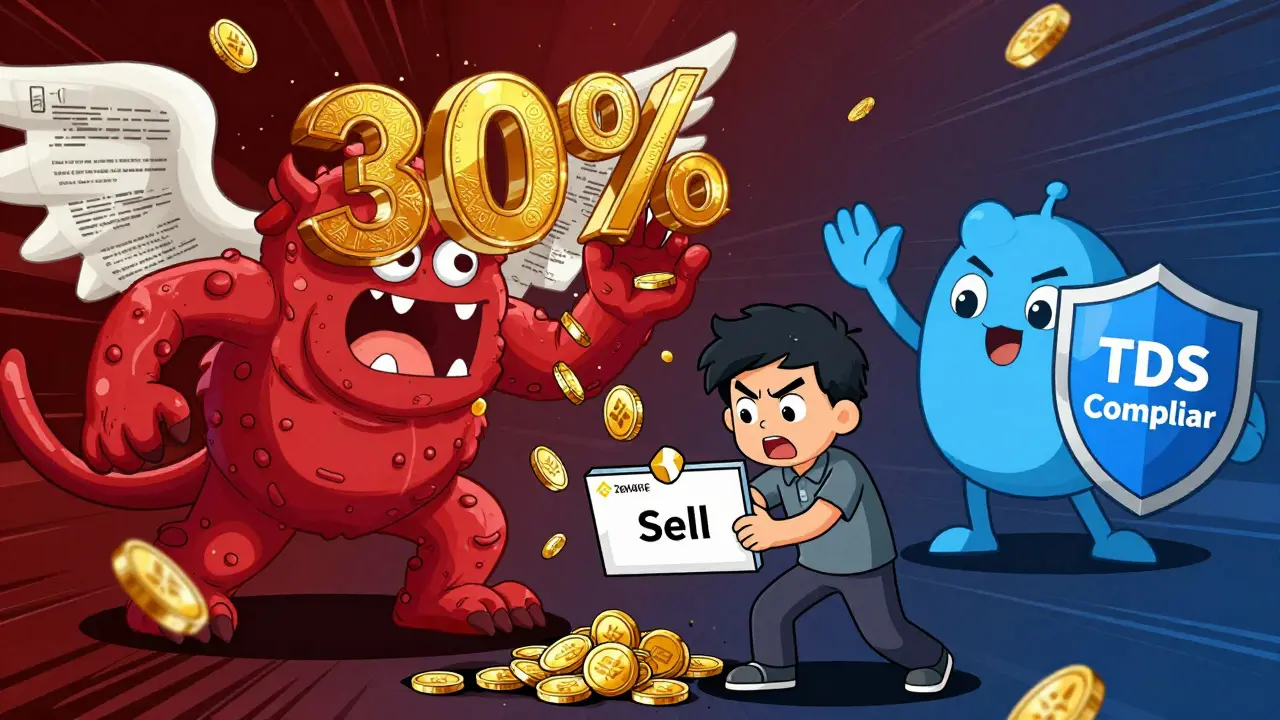
Best Exchanges in India (2025)
There are seven major exchanges operating in India. Here’s who stands out:| Exchange | Best For | Min Deposit | Trading Fee | TDS Compliant? | UPI Support | Coin Selection |
|---|---|---|---|---|---|---|
| WazirX | Beginners | ₹100 | 0.20% flat | Yes | Yes | 300+ |
| ZebPay | Mobile users | ₹100 | 0.15%-0.50% | Yes | Yes | 75 |
| CoinDCX | Security-focused | ₹100 | 0.10%-0.40% | Yes | Yes | 200+ |
| Binance India | Advanced traders | ₹500 (bank), ₹100 (UPI) | 0.10%-0.60% | No | Yes | 500+ |
| Kraken | Low fees, large trades | ₹2,000 | 0.00%-0.16% | No | No | 150+ |
WazirX is the safest pick for most people. It’s the most user-friendly, has the lowest barrier to entry, and complies with all tax rules. ZebPay wins for mobile design-it’s smooth, fast, and secure with fingerprint login. Binance has the most coins, but if you’re not tracking your taxes manually, you could get in trouble. Kraken has the best fees for big traders, but if you’re buying ₹500 a week, the lack of UPI and high minimum make it a bad fit.
Security: Don’t Leave Crypto on Exchanges
Exchanges are convenient, but they’re also targets. In 2024, ZebPay’s hot wallet was breached, costing users ₹18.7 crore. Cyble reported 217 crypto thefts in India in 2025, totaling ₹9.3 crore. Most were due to weak passwords or phishing scams. Always enable two-factor authentication (2FA) using an app like Google Authenticator-not SMS. SMS can be intercepted. Also, set up withdrawal whitelisting. That means you can only send crypto to addresses you’ve pre-approved. Most Indian exchanges let you do this in settings. For anything over ₹10,000, move your crypto off the exchange. Use a hardware wallet like Ledger Nano S+ (₹11,999). It’s offline, so hackers can’t touch it. Only 28% of Indian crypto users do this. Don’t be in the 72%. If you’re just starting out, use a trusted software wallet like Trust Wallet or Phantom. But never leave large amounts on an exchange longer than you need to.Taxes: You Can’t Ignore Them
The 30% tax on profits is non-negotiable. If you bought Bitcoin at ₹90 lakh and sold it at ₹95 lakh, you owe 30% on ₹5 lakh profit-that’s ₹1.5 lakh in tax. The 1% TDS is taken automatically if you’re on WazirX, CoinDCX, or ZebPay. You don’t need to pay it again. But if you’re on Binance India-which doesn’t deduct TDS-you must calculate and pay it yourself during tax season. NASSCOM’s 2025 audit found 37% of Binance India users underpaid taxes because they didn’t track their trades. Keep records of every trade: buy price, sell price, date, and platform. Use free tools like Koinly or CoinTracker to auto-generate tax reports. Don’t wait until March. Start tracking from day one.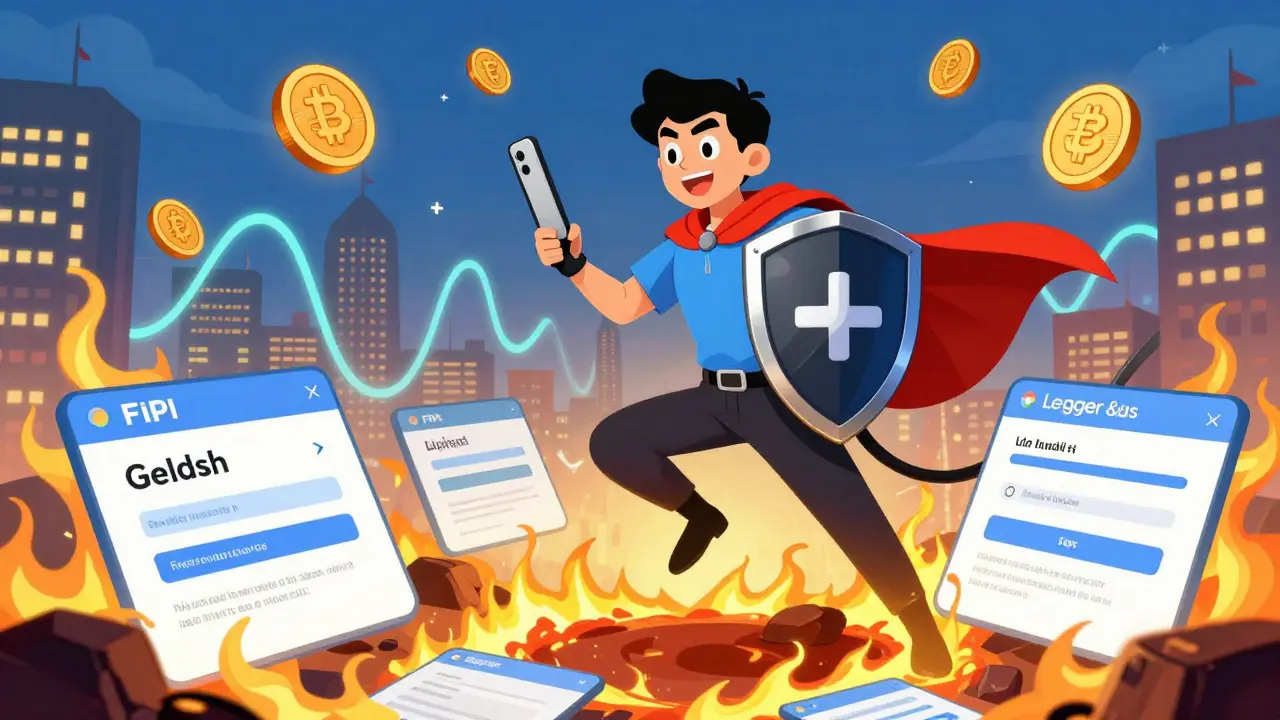
What Not to Do
- Don’t use unregulated P2P platforms like local Telegram groups or WhatsApp traders. There’s no recourse if you get scammed.
- Don’t reuse passwords. If you use the same password for your email, bank, and crypto account, one breach can take everything.
- Don’t trust “guaranteed returns”. If someone promises 5% daily profits, it’s a Ponzi scheme.
- Don’t ignore UPI limits. Some banks cap UPI transfers at ₹1 lakh per day. If you want to deposit ₹5 lakh, you’ll need to split it across days or use multiple apps.
Real Stories from Indian Crypto Users
A 21-year-old engineering student in Pune started buying ₹100 worth of Ethereum every day on WazirX in 2023. By late 2025, his portfolio hit ₹2.8 lakh. He didn’t time the market-he just invested consistently. He says, “It’s like saving, but with crypto.” A freelance designer in Bengaluru used crypto to receive payments from clients in the U.S. and Europe. She converted crypto to INR via ZebPay and paid her rent. She saved 4% on international transfer fees compared to traditional services. But not everyone wins. A user in Delhi lost ₹4.2 lakh after clicking a fake WazirX login link. He didn’t have 2FA enabled. His account was drained in 12 minutes.What’s Coming Next?
The Reserve Bank of India launched its own digital currency, the Digital Rupee (e₹), in retail pilot mode in November 2025. It’s not crypto-it’s a government-backed digital rupee. But it’s changing the conversation. Some analysts believe the Digital Rupee could eventually compete with crypto for everyday payments. Others think it’ll coexist. Either way, the Indian government is clearly moving toward digital money. The proposed Crypto Asset Regulation Bill, stuck in committee since February 2023, could bring clearer rules. But until then, the 30% tax and TDS are the reality. The market is growing anyway-15 million active users in 2025, with projections hitting 25 million by 2027.Start Today. Keep It Simple.
You don’t need to be a tech expert. You don’t need to understand blockchain to buy crypto. You just need a PAN card, a phone, and the willingness to follow the rules. Pick WazirX or ZebPay. Do KYC. Fund via UPI. Buy ₹100. Enable 2FA. Track your trades. Move big holdings to a hardware wallet. File your taxes. That’s it. The market won’t wait. The tax rules won’t change. The technology is here. Your move.Can I buy crypto with cash in India?
No. There are no legal cash-to-crypto exchanges in India. All transactions must go through regulated platforms that require KYC. Any service offering cash deals is unregulated and risky. Stick to UPI or bank transfers on verified exchanges like WazirX or ZebPay.
Do I need to pay tax if I don’t sell my crypto?
No. You only pay the 30% tax when you sell or trade crypto for another cryptocurrency or fiat. Holding crypto without selling doesn’t trigger a tax event. But you must still report holdings in your income tax return under ‘Schedule VDA’ (Virtual Digital Assets).
Is Binance India safe to use?
Binance India is safe in terms of platform security, but it’s not compliant with India’s TDS rule. It doesn’t automatically deduct the 1% tax on trades. That means you’re responsible for calculating and paying it yourself. If you’re not tracking every trade, you risk underpaying taxes, which could lead to penalties. For most users, it’s safer to use a TDS-compliant exchange like WazirX or CoinDCX.
Can I use PayPal or credit cards to buy crypto in India?
No. Indian exchanges do not accept PayPal, credit cards, or debit cards for crypto purchases. The only approved methods are UPI and bank transfers (NEFT/IMPS). This is a regulatory requirement to prevent money laundering and ensure traceability.
What happens if I don’t pay crypto taxes in India?
The Income Tax Department can track crypto transactions through exchanges that report to them. If you don’t pay, you’ll receive a notice. Penalties can include 100%-300% of the unpaid tax, plus interest. In extreme cases, it could lead to legal action under the Income Tax Act. TDS-compliant exchanges already report your trades, so hiding income is nearly impossible.
Which crypto should I buy first in India?
Start with Bitcoin or Ethereum. They’re the most liquid, have the highest trading volume, and are accepted by most platforms. Bitcoin is the most stable store of value in the Indian market. Ethereum offers more utility through DeFi and smart contracts. Avoid lesser-known altcoins until you understand how the market moves. Don’t chase hype.
Comments (18)
Martin Hansen
December 6, 2025 AT 03:17
Wow, another ‘guide’ for peasants who think crypto is a lottery ticket. You don’t need a PAN card to be rich-you need discipline, education, and a brain that doesn’t rely on UPI. This is why the West owns crypto, and India just pays 30% to play with Monopoly money.
Also, ‘WazirX is safest’? LOL. That’s like calling a paper towel ‘waterproof’ because it didn’t dissolve in your coffee.
Real investors use cold wallets, not apps that ask for selfies holding ID cards. Pathetic.
Lore Vanvliet
December 6, 2025 AT 14:31
OMG I JUST BOUGHT $500 OF SHIB ON WAZIRX AND NOW I’M RICH 😭💸 I’M SO PROUD OF MYSELF!! 🥳🇮🇳
My mom said crypto is gambling but I told her ‘MOM, I’M THE FUTURE’ and she cried. Then I bought a Tesla with crypto and now she’s my best friend. 🚗❤️
Also, I’m moving to Dubai next month bc India taxes are EVIL. #CryptoQueen #TDSIsTheNewTaxEvasion 😘
Frank Cronin
December 8, 2025 AT 03:31
Let me guess-you think buying ₹100 of Bitcoin makes you a ‘crypto investor.’
That’s like calling someone a chef because they microwaved ramen.
You don’t understand tax implications, you don’t understand blockchain, you don’t even know what a private key is. You just see a chart go up and think ‘I’m smart.’
Enjoy your 30% tax bill when you realize you’re not Warren Buffett-you’re the guy who bought at the peak because a Reddit post told you to.
And yes, I’m talking to you, WazirX user.
Cristal Consulting
December 8, 2025 AT 16:33
This guide is actually super helpful for beginners! I love how it breaks down UPI vs bank transfers and the TDS thing-that’s something most people overlook.
Also, the part about moving crypto off exchanges? YES. I lost a friend to a phishing scam last year because they left everything on Binance. Never again.
If you’re new, start small. Use WazirX or ZebPay. Enable 2FA. Track your trades. You got this!
And if you’re scared? That’s okay. Just take one step today. ₹100 is all you need to start learning.
Tom Van bergen
December 10, 2025 AT 07:07
The tax is 30% so you’re already losing. Why even bother. The system is rigged. Crypto is a distraction. The real revolution is decentralization not trading on UPI. You think you’re free but you’re just another node in a centralized system run by Indian bureaucrats and exchange CEOs. Wake up. The blockchain doesn’t care about your PAN card. It never did.
Adam Bosworth
December 10, 2025 AT 14:05
So you’re telling me I can’t use my credit card to buy crypto? 😭
And I thought I was being edgy with my Venmo account.
Also, why is everyone so obsessed with WazirX? It’s like the Crypto Starbucks of India. Everyone’s there but nobody’s actually doing anything.
My cousin lost ₹4 lakh on a fake link and now he’s in therapy. I’m just here for the memes. #CryptoTrauma #TDSIsMyTherapist 😂
Also, can I buy Dogecoin with my mom’s Aadhaar? Asking for a friend.
Renelle Wilson
December 11, 2025 AT 16:01
Thank you for this comprehensive and well-researched overview. The clarity with which you’ve outlined the regulatory landscape, the practical steps for KYC, and the critical importance of tax compliance is both refreshing and necessary.
Many individuals, particularly young professionals and students, are entering the crypto space without understanding the legal and fiscal implications. Your emphasis on TDS compliance and the distinction between holding and selling is invaluable.
I especially appreciate the warning about unregulated P2P platforms and the recommendation to use hardware wallets for holdings over ₹10,000. These are not mere suggestions-they are essential safeguards in an environment where regulatory oversight remains fragmented.
For those new to this space, I would encourage you to treat crypto not as a get-rich-quick scheme, but as a long-term asset class requiring diligence, documentation, and discipline. The tools you’ve referenced-Koinly, CoinTracker, and DigiLocker-are excellent starting points.
Let us not forget: financial innovation must be paired with responsibility. You’ve done a commendable job highlighting that balance.
Chloe Hayslett
December 12, 2025 AT 10:57
Wow, so India’s crypto scene is just a glorified UPI scam now? Of course. Because nothing says ‘free market’ like mandatory government ID selfies and a 30% tax on your dreams.
At least in America, you can buy crypto with a credit card and not have to beg the state for permission to own digital money.
India’s crypto policy isn’t regulation-it’s extortion with a smartphone app.
And you’re telling me to trust WazirX? The same platform that got hacked for ₹18 crore? LOL. I’ll take my Bitcoin and go to El Salvador.
Jonathan Sundqvist
December 14, 2025 AT 03:43
Bro, just use WazirX. UPI works. 100 rupees is enough. Don’t overthink it.
2FA. Hardware wallet. Track trades. Done.
Stop reading Reddit. Start buying.
I bought my first 0.001 BTC in 2022. Now I’m not rich, but I’m not poor either. And I didn’t need a PhD to do it.
Thomas Downey
December 14, 2025 AT 20:53
One cannot help but observe the profound irony in the Indian government’s simultaneous embrace of digital asset taxation and its refusal to acknowledge the philosophical underpinnings of decentralized finance.
By imposing a 30% flat tax, the state reduces a revolutionary technology to a mere consumption good-subject to bureaucratic extraction, not innovation.
Furthermore, the reliance on UPI-a state-adjacent payment rail-as the primary on-ramp, fundamentally undermines the very notion of financial sovereignty that crypto purports to offer.
This is not adoption. This is co-optation.
And yet, the user base grows. How curious.
Annette LeRoux
December 15, 2025 AT 21:31
Love this guide 🙌
Just bought my first ₹200 of ETH yesterday using ZebPay. Took 12 seconds via PhonePe. Felt like magic.
Enabled 2FA with Google Authenticator (no SMS, never again 😅).
Started tracking on Koinly. Already feel smarter.
Also, I’m keeping my coins in Trust Wallet until I get a Ledger. Not putting all my eggs in one basket, even if that basket is called ‘WazirX.’
Thank you for not talking down to beginners. That means a lot.
❤️
Jerry Perisho
December 16, 2025 AT 18:12
Quick tip: If you’re using Binance India, make sure you export your trade history every month. Their API doesn’t include TDS, so you’ll have to calculate it manually. Use Excel or CoinTracker.
Also, UPI limits are real. If your bank caps you at ₹1L/day, use multiple apps-Google Pay, PhonePe, Paytm. They’re all linked to the same UPI system but have separate daily limits.
And yes, Kraken’s fees are great-but if you’re trading ₹500 a week, you’re wasting your time. UPI is king for retail.
Don’t overcomplicate it. Start small. Stay consistent.
Manish Yadav
December 17, 2025 AT 04:55
Bro, why you write so long? Just say: buy on WazirX, use UPI, turn on 2FA, don’t trust anyone who say ‘10% daily profit.’
My uncle lost ₹5 lakh in WhatsApp group. He thought it was real. Now he cry every night.
I buy ₹100 every day. Not rich. But not fool. That’s enough.
Tax? I don’t care. Exchange take it. Done.
Isha Kaur
December 17, 2025 AT 11:44
I really appreciate how this guide doesn’t just list platforms but explains why certain choices matter-like the difference between TDS-compliant and non-compliant exchanges. I’ve been using CoinDCX for a year now, and I didn’t even realize they automatically deduct TDS until I read this.
As a woman in tech, I’ve noticed how many women are hesitant to enter crypto because they feel overwhelmed by jargon or fear being scammed. This guide is exactly the kind of clear, non-intimidating resource that could help bridge that gap.
I also want to emphasize the point about not leaving funds on exchanges. I used to keep everything on ZebPay until I lost a friend to a phishing attack. Now I keep only what I’m actively trading on the exchange-the rest is in my Ledger. It’s a small step, but it gives me peace of mind.
And yes, starting with ₹100 is perfect. My sister bought her first fraction of Bitcoin on her 18th birthday. She’s now saving for college with it. It’s not about getting rich overnight-it’s about building a habit of financial awareness.
Thank you for writing this. It’s thoughtful, practical, and above all, human.
Glenn Jones
December 18, 2025 AT 15:01
WAZIRX IS A SCAM. THEY STOLE MY 0.5 BTC IN 2024. I SWEAR TO GOD. THEY JUST TOOK IT. NO PROOF. NO REPLY. JUST ‘WE’RE INVESTIGATING’.
AND NOW YOU TELL ME TO USE THEM? 😭
Also, TDS? Who the f*** is TDS? I thought it was a type of tea. I’m 23 and I just learned crypto taxes exist because my cousin got audited.
Also, why does everyone keep saying ‘hardware wallet’ like it’s a magic spell? I spent ₹12k on a Ledger and now I can’t even remember my recovery phrase. I think I lost everything.
Also, Binance India is fine. I don’t pay taxes. No one checks. #CryptoFreedom #TDSisAFraud #SendHelp
Joe West
December 18, 2025 AT 15:46
Great breakdown. One thing I’d add: if you’re using DigiLocker, make sure your documents are updated. I had my PAN rejected because it was expired. Took 3 days to fix.
Also, don’t forget to check if your bank allows UPI payments to crypto exchanges. Some banks block them silently. If your payment fails, call your bank and ask if they’re blocking ‘crypto-related UPI transactions.’
And yes, Kraken’s fees are killer-but only if you’re trading large. For most people? UPI on WazirX is the way to go.
Start small. Stay safe. Keep learning.
Mariam Almatrook
December 20, 2025 AT 07:01
One cannot help but notice the disturbing normalization of financial surveillance masquerading as ‘compliance.’
The requirement to upload a selfie holding your Aadhaar is not security-it is psychological subjugation. The state does not merely regulate; it demands performative obedience.
And yet, the very technology that promised decentralization is now enslaved to the very institutions it sought to dismantle.
30% tax on profits? A punitive measure disguised as fiscal prudence.
The Digital Rupee is not an alternative-it is the endgame.
Crypto in India is not a revolution.
It is a carefully choreographed illusion.
Thomas Downey
December 21, 2025 AT 14:23
Interesting perspective from the previous commenter. But let’s not romanticize decentralization as some libertarian utopia.
The fact that India is taxing crypto at all means the state recognizes its legitimacy. That’s a win.
And the 1% TDS? It’s not oppression-it’s transparency. Most nations don’t even track crypto trades.
WazirX’s compliance isn’t weakness-it’s pragmatism.
Yes, we’re being watched.
But we’re also being protected.
That’s the trade-off of living in a society with rule of law.
And frankly? I’d rather pay 30% than get hacked by a Telegram scammer.