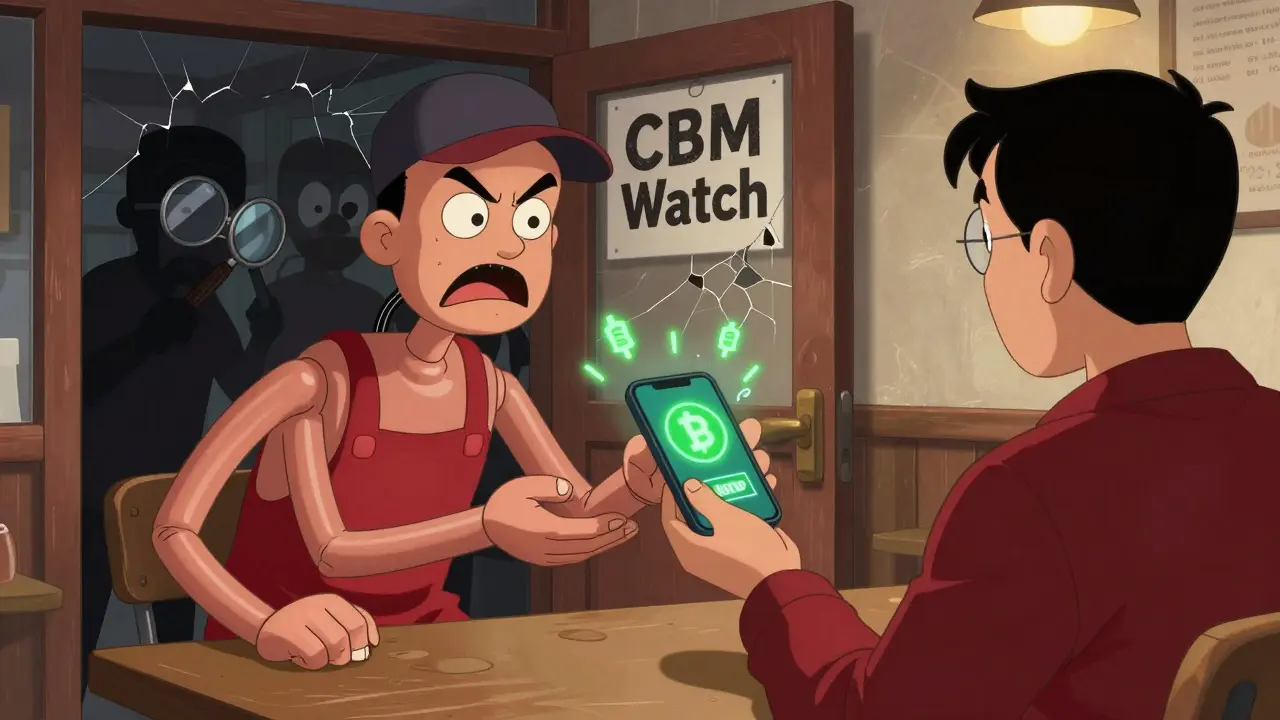
On May 15, 2020, Myanmar’s Central Bank dropped a bomb: Central Bank Directive 9/2020. It didn’t just warn people away from Bitcoin or Ethereum-it made owning, buying, or trading any cryptocurrency illegal. Not risky. Not discouraged. Illegal.
At the time, few outside the country paid attention. But this wasn’t just another regulatory notice. It was a desperate move by a government already losing control. And four years later, after a military coup, currency collapse, and internet blackouts, that ban is still on the books. But here’s the twist: more people than ever are breaking it.
What Exactly Did Directive 9/2020 Say?
The Central Bank of Myanmar (CBM) didn’t mince words. Under Section 40(e) and Section 62 of the Central Bank of Myanmar Law, only the CBM could issue currency. That meant anything digital, decentralized, or foreign-like Bitcoin, Ethereum, Litecoin, or even Perfect Money-wasn’t money. It was contraband.
The directive banned:
- Buying or selling cryptocurrencies
- Exchanging crypto for kyat or foreign cash
- Using crypto for payments or transfers
- Any financial institution facilitating these transactions
They named names. Bitcoin. Ethereum. USDT. Even Perfect Money, a niche e-wallet used mostly for online gambling and remittances. And they zeroed in on how people were doing it: Facebook pages, personal websites, and informal money changers.
Before 2020, the CBM had said crypto was risky. But no one got fined. No accounts got shut down. Directive 9/2020 changed that. Suddenly, using crypto wasn’t just foolish-it was a criminal act.
How They Tried to Enforce It
The CBM didn’t just issue a warning. They followed up.
In May 2024-exactly four years after the ban-they released another public notice. This one wasn’t a reminder. It was a threat. They said they would:
- Freeze bank accounts of anyone caught trading crypto
- Press criminal charges under the Anti-Money Laundering Law
- Impose fines or jail time
And they did. Reports from legal firms like Tilleke & Gibbins show that local money changers who used USDT to move cash across borders were targeted. Accounts were closed. People were arrested. One case involved a man who converted $5,000 in USDT to kyat through a friend’s shop. He got a six-month sentence.
But here’s the problem: the CBM’s tools are old. They can monitor bank transfers. They can track Facebook ads. But they can’t track Telegram groups. They can’t follow encrypted wallets. They can’t shut down offshore exchanges like Binance or Bybit that operate from outside Myanmar’s borders.
The Real Target: Hundi and Black Market Cash
Directive 9/2020 wasn’t really about Bitcoin. It was about hundi.
Hundi is an informal, centuries-old system of cash transfers-used by migrant workers, traders, and families sending money home. Before crypto, hundi ran on cash couriers and unregistered agents. When the kyat started crashing after the 2021 coup, people needed something faster, safer, and more stable.
USDT became the new hundi.
Instead of sending cash through a smuggler, people sent USDT over Telegram. A buyer in Thailand pays $1,000 in USDT. A seller in Myawaddy gives the equivalent in kyat to a local contact. No bank. No paperwork. No government tracking.
The CBM called it illegal. But it was the only way millions could afford food, medicine, and rent.

The Underground Economy Is Growing
Here’s what the government doesn’t want you to know: crypto use in Myanmar is at an all-time high.
Why? Because the kyat is worthless. In 2020, $1 USD was worth about 1,500 kyat. By 2025, it was over 4,000. Prices doubled. Salaries didn’t. Savings vanished.
People turned to USDT-not to get rich, but to survive. It’s stable. It moves across borders in seconds. You can store it on a phone. You don’t need a bank. You don’t need permission.
Telegram channels like “Myanmar Crypto Deals” and “USDT Kyat Exchange” have thousands of members. Tron-based USDT is the favorite because it’s cheap to transfer. Peer-to-peer trades happen in coffee shops, bus stations, and private homes. No one reports it. No one gets caught.
One trader in Mandalay told a journalist: “I don’t care if it’s illegal. My daughter needs insulin. The hospital won’t take kyat anymore. Only USDT.”
The Opposition’s Countermove
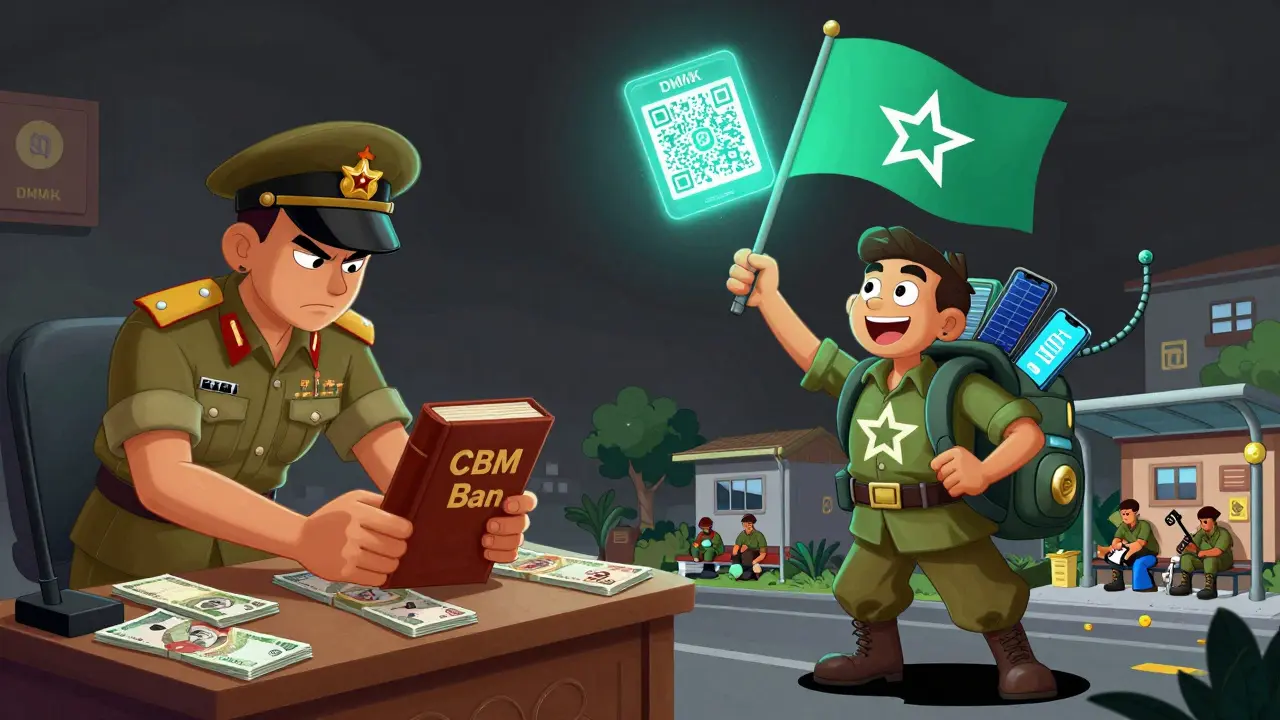
While the military government bans crypto, the opposition National Unity Government (NUG) embraced it.
In December 2021, the NUG declared USDT legal tender in the areas they control. They didn’t stop there. They started building their own digital currency: DMMK (Digital Myanmar Kyat). It’s not Bitcoin. It’s not Ethereum. It’s a state-backed stablecoin designed to pay soldiers, fund hospitals, and pay civil servants-without touching the military’s banking system.
The NUG also built a mobile wallet called “DMMK Wallet.” Simple. Works on low-end phones. No internet? Use SMS. No bank account? No problem.
This is the real war: one side bans digital money. The other side builds its own.
Why the Ban Is Failing
There are three reasons Directive 9/2020 can’t win:
- Internet shutdowns backfire. The military cuts internet access to stop crypto. But when the internet goes down, so do banks, ATMs, and mobile payments. People turn to crypto even harder when the system collapses.
- USDT is the only stable currency left. The kyat is in freefall. Cash is scarce. Foreign currency is locked away. USDT is the only thing that holds value.
- Enforcement is selective. The CBM doesn’t go after students or housewives. They go after money changers. But those changers just move to the next town. The system adapts.
Even the CBM knows it’s losing. Their 2024 notice didn’t promise to stop crypto. It just said they’d keep trying.
What This Means for the Future
Myanmar’s crypto ban isn’t a policy. It’s a symptom.
The country is broken. The economy is shattered. The government can’t control money. So it tries to ban the only thing people still trust.
But history shows you can’t ban technology that solves a real problem. People in Venezuela, Lebanon, and Nigeria didn’t stop using crypto when their governments tried to shut it down. They just got better at hiding it.
Myanmar is the same. The ban will stay on paper. The trading will keep going underground.
Unless the military changes its approach-unless it accepts that crypto isn’t the enemy, but a symptom of a failed system-the ban will keep failing. And the people? They’ll keep using USDT to feed their families, pay their doctors, and survive.
By 2025, Myanmar has one of the highest crypto adoption rates in Southeast Asia-not because people love Bitcoin, but because they have no other choice.
Comments (12)
roxanne nott
December 19, 2025 AT 03:52
USDT isn't crypto it's a scam token backed by nothing. The CBM was right to ban it. People are just desperate and gullible.
Shubham Singh
December 20, 2025 AT 11:51
Ah yes, the classic "they banned it so it must be evil" narrative. How quaint. The Central Bank doesn't control money-it controls perception. And now, four years later, they're chasing ghosts with paper threats while people trade USDT over Telegram like it's the new hundi. The irony is thicker than Myanmar's monsoon humidity.
Charles Freitas
December 22, 2025 AT 01:59
Of course it's failing. You can't ban a solution to a problem you created. The military turned a currency into confetti and now they're mad that people found a way to glue it back together. This isn't crypto adoption-it's survival. And if you're still arguing about legality instead of humanity, you're part of the problem.
Ashley Lewis
December 22, 2025 AT 17:59
The NUG's DMMK is a fantasy. A state-backed stablecoin is an oxymoron. If it's state-backed, it's not decentralized. If it's not decentralized, it's just kyat with a new name. This is not innovation. It's propaganda with a blockchain sticker.
SHEFFIN ANTONY
December 23, 2025 AT 16:22
You think this is unique? Try telling that to the 12-year-old in Lagos who uses USDT to buy data bundles because his mom's salary was wiped out by inflation. This isn't about Myanmar. It's about the entire Global South realizing the West's financial system is rigged-and they're building their own. The CBM is just the last man holding a broken ledger.
Vyas Koduvayur
December 24, 2025 AT 17:40
Let’s not romanticize this. Yes, USDT is being used for survival, but there’s also a massive underground network of fraudsters using it for everything from pyramid schemes to fake job scams. I’ve seen Telegram groups where people are sold "USDT-backed gold" that doesn’t exist. The CBM’s enforcement is clumsy, but the lack of regulation means people are getting ripped off daily. It’s not freedom-it’s a wild west with worse consequences than the old system.
Jake Mepham
December 25, 2025 AT 16:47
This is textbook monetary collapse. When a currency loses trust, people naturally seek alternatives. The fact that USDT is stable, borderless, and doesn’t require a bank account makes it the perfect stopgap. What’s remarkable isn’t that people are using it-it’s that they’re doing it with zero infrastructure. No banks. No apps. Just phones and Telegram. That’s resilience. That’s human ingenuity. The CBM could’ve adapted. Instead, they doubled down on control-and lost.
Craig Fraser
December 26, 2025 AT 11:56
I find it deeply concerning that the opposition is now creating its own currency. This isn't liberation-it's fragmentation. You can't have two sovereign monetary systems in one country. It's a recipe for chaos. The NUG should be focusing on restoring governance, not minting digital tokens. This is technocratic narcissism dressed up as revolution.
Jacob Lawrenson
December 28, 2025 AT 04:35
This is literally the most inspiring thing I’ve seen all year 🙌 People are building their own economy while the regime burns the old one. USDT isn’t a currency-it’s a lifeline. And the fact that it’s working on SMS and low-end phones? That’s not tech. That’s magic. The CBM can’t arrest hope.
Zavier McGuire
December 28, 2025 AT 20:31
The ban is pointless because the internet keeps going down and people still need to eat so they just use USDT anyway and the CBM doesn't even have the manpower to do anything about it so why bother pretending they care
Sybille Wernheim
December 29, 2025 AT 08:23
What’s beautiful here isn’t the technology-it’s the quiet, collective decision to refuse despair. People aren’t choosing crypto because they’re tech-savvy. They’re choosing it because they’re human. And when systems fail, humans rebuild. The NUG’s wallet, the Telegram traders, the mothers exchanging USDT for insulin-this isn’t an underground economy. It’s the new civil society. And it’s working.
Sarah Glaser
December 30, 2025 AT 02:52
The true tragedy is not the ban, but the silence of the global financial institutions. The IMF, the World Bank, the SWIFT network-they all watch as a nation’s currency collapses and do nothing. They treat crypto as a threat, not a symptom. They should be asking: Why do people need to bypass the system entirely? The answer isn’t in blockchain. It’s in dignity. It’s in sovereignty. It’s in the right to survive without permission. Myanmar is not an anomaly-it is a mirror. And the world is refusing to look.