P2P Crypto Platform Comparison Tool
Find Your Best P2P Crypto Platform
Select your priorities to get personalized recommendations for Nigerian P2P platforms based on speed, fees, payment methods, and security.
Recommended Platform
Platform Comparison
| Platform | Speed | Fees | Payment Methods | Language Support |
|---|---|---|---|---|
| Binance P2P | 5-15 minutes | 0.1% | 20+ | English |
| Bybit | 8-12 minutes | 0.1% | 5+ | Yoruba, Igbo, Hausa |
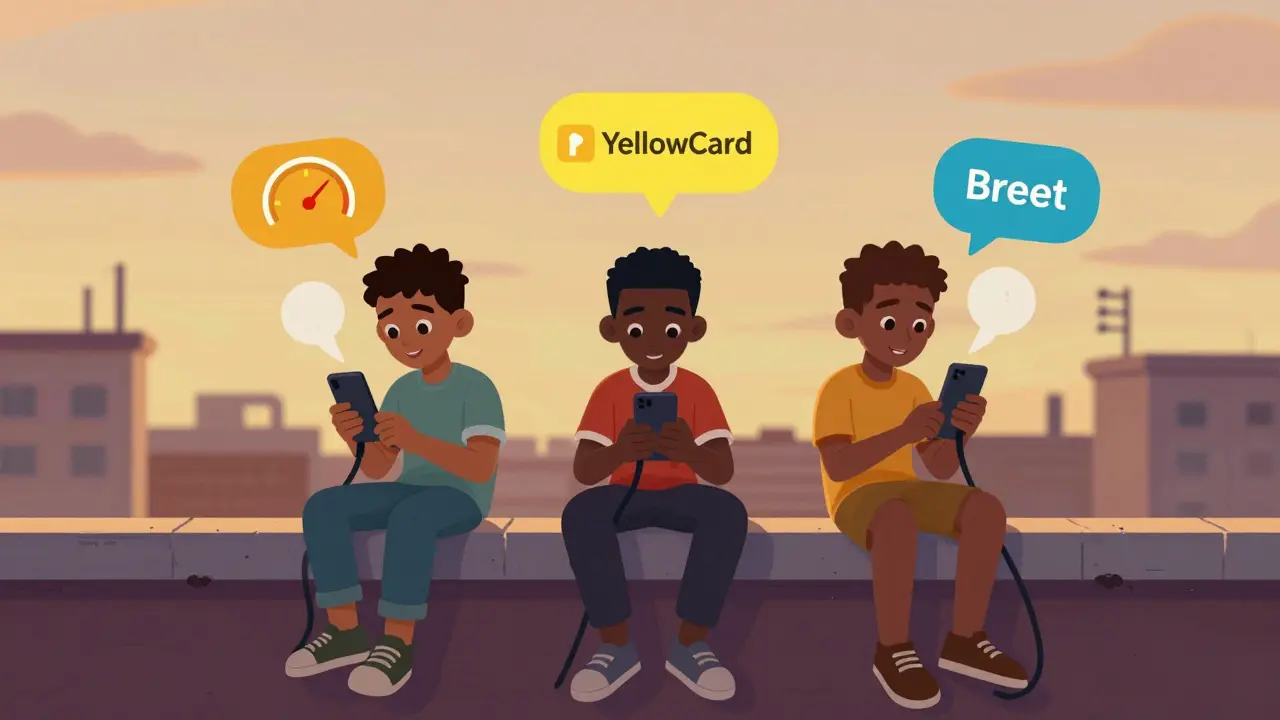
| YellowCard | 2-3 minutes | 0% | 3 | English, Yoruba, Igbo |
| Breet | < 3 minutes | 0.15% | 4 | English |
| Busha | 10-15 minutes | 0.1% | 5 | English |
Security Tip
Always use the platform's escrow system—never send money before crypto is locked. Check seller trade history for at least 100 completed trades, not just 5 with 5-star ratings.
When the Nigerian Naira lost more than 75% of its value against the US dollar since 2016, people didn’t just wait for the government to fix it. They turned to crypto. Not through banks. Not through exchanges. But directly, person-to-person. Today, Nigeria is the second-largest crypto-adoption country in the world, and P2P crypto trading is the engine behind it. Over $500 million worth of digital assets change hands every month through peer-to-peer platforms, bypassing broken banking systems and inflation that hit 24% in 2023.
Why P2P Crypto Took Off in Nigeria
In 2021, the Central Bank of Nigeria banned banks from dealing with crypto businesses. That should’ve killed the market. Instead, it forced people to find a way around it. P2P platforms became the workaround. You don’t need a bank account to trade crypto on these platforms-you just need a phone, a data plan, and a willingness to send money via bank transfer, mobile money, or even cash deposits at a local agent. The real reason it stuck? Inflation. If your salary buys 30% less every year, you look for something that holds value. Bitcoin, USDT, and other stablecoins became digital savings accounts. Remittances from the diaspora, which used to cost up to 8% in fees, now arrive in minutes for under 1%. And for the 36% of Nigerian adults who are unbanked, crypto is the first financial tool they’ve ever had access to.The Big Players: How Nigeria’s Top P2P Platforms Compare
By 2025, Nigeria’s P2P market had seven major platforms operating under the new Investments and Securities Act (ISA 2025), which gave the Securities and Exchange Commission (SEC) full oversight. This ended years of legal gray zones. Here’s how the top platforms stack up:| Platform | Trading Fees | Payment Methods | Speed (Avg. Transaction) | Key Strength | Major Weakness |
|---|---|---|---|---|---|
| Binance P2P | 0.1% taker/maker | 20+ (bank transfer, POS, mobile wallets) | 5-15 minutes | 45% market share, largest liquidity | 37-hour outage in March 2025; stricter KYC |
| Bybit | 0.1% taker/maker | 5+ (bank, USSD, card) | 8-12 minutes | 24/7 support in Yoruba, Igbo, Hausa | Slower than Breet for instant payouts |
| YellowCard | 0% trading fees | 3 (bank, mobile money, USSD) | 2-3 minutes | Instant Naira deposits, 120+ tutorial videos | App crashes during peak hours (43% of tests) |
| Breet | 0.15% fee | 4 (bank, POS, card, USSD) | Under 3 minutes | Fastest bank payouts (98% under 5 mins) | Only supports Bitcoin and USDT |
| Busha | 0.1% fee | 5 (bank, mobile, cash deposit) | 10-15 minutes | First SEC-licensed exchange in Nigeria | Support response takes 47 minutes on average |
| Remitano | 0.25% fee | 5 (bank, mobile, card) | 15-30 minutes | Trusted across Africa and Southeast Asia | No native crypto-only Bitcoin trades |
| Quidax | 0.1% fee | 4 (bank, USSD, card, mobile) | 10-20 minutes | Monthly penetration testing, cold storage | Less user-friendly app interface |
Market share is dominated by Binance, holding 45% of daily active users. Bybit follows with 22%, and YellowCard at 15%. The rest are split among smaller players. But speed and trust matter more than size. Breet wins on payout speed-98% of transactions finish in under 5 minutes. YellowCard wins on education, with over 120 tutorial videos in local languages and an 85% completion rate. Bybit leads in language support, offering live chat in Yoruba, Igbo, and Hausa-something no other global platform does.
How It Actually Works: A Step-by-Step
Let’s say you want to buy $100 in USDT with Naira. Here’s what happens:- You open your chosen app-say, Binance P2P.
- You select “Buy USDT,” pick a seller with a 4.8+ rating and 95% trade completion rate.
- You pay the seller via bank transfer. The app holds the USDT in escrow.
- You click “I paid” and upload a screenshot of your transfer.
- The seller verifies the payment. If it matches, they release the USDT to your wallet.
- You get your crypto in under 10 minutes.
It sounds simple. But it’s not foolproof. Many new users get scammed because they skip verification steps. Sellers might ask you to send money to a different account. Or buyers might use stolen cards. That’s why platforms now require KYC-photo ID, selfie, sometimes utility bills. The process can take 2-3 hours for first-timers. And 65% of users report delays in payment verification.
Security Risks and How to Avoid Them
The SEC says scam incidents dropped 63% since ISA 2025 launched. But fraud hasn’t disappeared. The most common scam? Impersonating verified sellers. A fake profile looks real-high ratings, good photos, even fake chat logs. In Q2 2025, 22% of reported fraud cases involved this exact trick. Here’s how to protect yourself:- Always use the platform’s escrow system-never send money before crypto is locked.
- Check the seller’s trade history. Look for 100+ completed trades, not just 5 with 5-star ratings.
- Never disable two-factor authentication (2FA). Yet, 68% of Nigerian users turn it off because SMS codes often don’t arrive.
- Use only bank transfers or verified mobile wallets. Avoid cash deposits unless you’re in a trusted physical location.
- Watch for rate discrepancies. If a seller offers 1,500 Naira per USDT when the market is at 1,450, it’s likely a trap.
One Reddit user, u/CryptoSafeNG, lost ₦500,000 ($328) when a buyer used stolen bank credentials. The platform froze the escrow for 72 hours while investigating. By then, the money was gone.
Who’s Using These Platforms?
The typical Nigerian crypto trader is male, 18-34 years old, and trades under ₦500,000 ($328) per transaction. That’s not a billionaire. That’s a student, a driver, a small business owner trying to save up. Women make up only 22% of users, but that number is rising fast as educational content improves. Most users don’t care about blockchain tech. They care about one thing: getting their money quickly and safely. That’s why 73% of users pick platforms based on speed alone. And 68% say avoiding delayed transactions is their top concern.
The Future: What’s Next for Nigeria’s P2P Market?
The market is worth $2.3 billion in 2025 and growing at 34% yearly. By 2027, analysts predict it could hit $5.1 billion. Why? Because institutions are watching. Banks, asset managers, even pension funds are eyeing crypto as a hedge. The SEC expects 35-40 licensed platforms by the end of 2025-up from just 12 today. New rules are coming. By December 31, 2025, every platform must install real-time transaction monitoring. Binance already rolled out “Naira Direct,” cutting transaction steps from five to two. YellowCard expanded into five more African countries, using Nigeria as its testbed. But risks remain. Rural areas still have poor internet-31% of users can’t reliably access apps. And 42% of new users get scammed in their first month. The SEC’s crackdown on fraud is good, but it’s not enough. Users need better education, not just regulation.What You Should Do Now
If you’re in Nigeria and thinking about trying P2P crypto:- Start with YellowCard if you’re new-it’s free, fast, and has the best tutorials.
- Use Binance if you want the most liquidity and lowest spreads.
- Use Breet if you need cash out fast-like paying rent or school fees.
- Never trade outside the app. No WhatsApp deals. No Telegram groups. No cash handoffs.
- Enable 2FA. Even if SMS is slow. Use an authenticator app instead.
The boom isn’t over. It’s just getting started. Nigeria’s P2P crypto market isn’t a glitch in the system. It’s the system working the way it should-without permission, without banks, without waiting.
Is P2P crypto trading legal in Nigeria in 2025?
Yes. Since the Investments and Securities Act (ISA 2025) passed in early 2025, P2P crypto trading is fully legal under the oversight of the Securities and Exchange Commission (SEC). The Central Bank of Nigeria no longer blocks banks from servicing licensed crypto platforms. All major platforms now operate under SEC licenses.
Which platform is best for beginners in Nigeria?
YellowCard is the best for beginners. It has zero trading fees, instant Naira deposits, and over 120 tutorial videos in local languages like Yoruba and Igbo. Its app is simple, and the support team responds quickly. Many new users start here before moving to bigger platforms like Binance.
Can I lose money trading crypto on P2P platforms?
Yes. You can lose money if you skip safety steps. Scammers impersonate verified sellers, use stolen bank accounts, or trick you into sending money before crypto is released. Always use escrow, check seller ratings, and never disable 2FA. Even with platform protections, user error is the biggest risk.
Why do transactions sometimes take longer than expected?
Delays happen because of bank processing times, verification checks, or CBN compliance reviews. If a payment looks unusual, the platform may freeze the escrow for up to 72 hours. Also, SMS-based 2FA often fails in rural areas, slowing down account access. Use an authenticator app like Google Authenticator to avoid these delays.
Do I need to pay taxes on crypto profits in Nigeria?
As of 2025, Nigeria does not have a formal crypto tax law. However, the Federal Inland Revenue Service (FIRS) has signaled it may start taxing capital gains from crypto in 2026. For now, keep records of all trades-buy and sell prices, dates, and wallet addresses-in case regulations change.
What’s the minimum amount I can trade on P2P platforms?
Most platforms allow trades as low as ₦100 ($0.06). But sellers often set minimums of ₦5,000 ($3) to avoid small, high-effort transactions. Start with at least ₦5,000 to get better rates and faster matches.
Can I use P2P crypto to send money to family abroad?
Yes. That’s one of the biggest use cases. You buy USDT or Bitcoin on a Nigerian P2P platform, then send it to a family member’s wallet abroad. They can cash out via their local exchange or P2P platform. Fees are under 1%, compared to 8% with Western Union or MoneyGram. It’s faster, cheaper, and more reliable.
Comments (11)
sonia sifflet
December 8, 2025 AT 05:42
This is textbook economic desperation masquerading as innovation. Nigeria didn't 'solve' finance-they patched a broken system with crypto because they had no other choice. This isn't a movement. It's a survival tactic. And calling it a 'boom' is just Silicon Valley euphemism for collapse.
Uzoma Jenfrancis
December 9, 2025 AT 04:21
We don't need your Western validation. We built this ourselves. Banks failed us. Government failed us. So we used our phones and our wits. If you think this is chaotic, try living on 24% inflation and seeing how creative you get.
Elizabeth Miranda
December 10, 2025 AT 10:23
The resilience here is extraordinary. What’s happening in Nigeria isn’t just crypto adoption-it’s decentralized financial sovereignty in real time. The fact that platforms are now localizing support in Yoruba, Igbo, and Hausa? That’s not just user experience. That’s cultural empowerment.
Chloe Hayslett
December 10, 2025 AT 19:51
Oh look, another ‘crypto saves Africa’ fairy tale. Let me guess-next you’ll tell me they’re building rockets with Bitcoin. This isn’t innovation. It’s a workaround for a government that can’t print money without destroying it. And yes, I’m still waiting for the VC-funded ‘Nigeria Crypto Dream’ documentary.
Jonathan Sundqvist
December 11, 2025 AT 11:02
Breet is the real MVP. I know a guy in Lagos who pays his rent with it every Friday. 3 minutes. Done. No drama. No waiting. Binance? Too slow. YellowCard? App crashes when you need it most. Breet just works.
Thomas Downey
December 12, 2025 AT 20:24
One must pause to reflect upon the profound epistemological rupture that P2P crypto trading represents in the postcolonial financial landscape. The abandonment of institutional trust in favor of algorithmic escrow mechanisms is not merely economic-it is ontological. The Nigerian user, stripped of state-backed monetary legitimacy, has reconstituted value through cryptographic consensus. A tragic, yet sublime, act of self-sovereignty.
Annette LeRoux
December 14, 2025 AT 06:05
It’s beautiful, really. People using tech not to chase wealth, but to preserve dignity. I cried reading about the 120 tutorial videos in local languages. That’s not a feature-that’s a lifeline. 🌍❤️
Vincent Cameron
December 14, 2025 AT 13:03
The real question isn’t which platform is fastest-it’s whether crypto trading in this context is a liberation or just a new form of exploitation. Who profits from the 0.1% fees? Who controls the liquidity? Is this financial autonomy-or just a more efficient version of the same extractive system?
Mairead Stiùbhart
December 15, 2025 AT 03:55
Wow. You actually read all that? Congrats. Now go enable 2FA. And stop using SMS. Use Google Authenticator. Seriously. You’re one phishing link away from losing your rent money.
Doreen Ochodo
December 15, 2025 AT 10:23
Start small. Use YellowCard. Enable 2FA. Never skip escrow. That’s it. You got this. No fluff. No drama. Just do it.
Holly Cute
December 15, 2025 AT 18:39
Let’s be real: 68% of users disable 2FA because SMS doesn’t work. That’s not a user error-that’s infrastructure failure. And yet everyone’s acting like it’s their fault. Meanwhile, Binance has 45% market share but had a 37-hour outage in March. And you’re telling me this is stable? The SEC’s crackdown reduced scams by 63%? That means 37% are still happening. That’s not regulation-that’s a bloodbath with a compliance badge. Also, why are women only 22% of users? Because the culture’s still male-dominated and the tutorials are written like they’re for 18-year-old boys who think ‘HODL’ is a verb. Fix the culture, not the app.