P2P Trading Impact Calculator
See how sanctions and restrictions impact P2P crypto trading volumes in restricted countries. Based on data from the 2025 global P2P market report.
Enter your country's current trading volume and select restriction level to estimate real-world impact.
Enter your data above to see the impact.
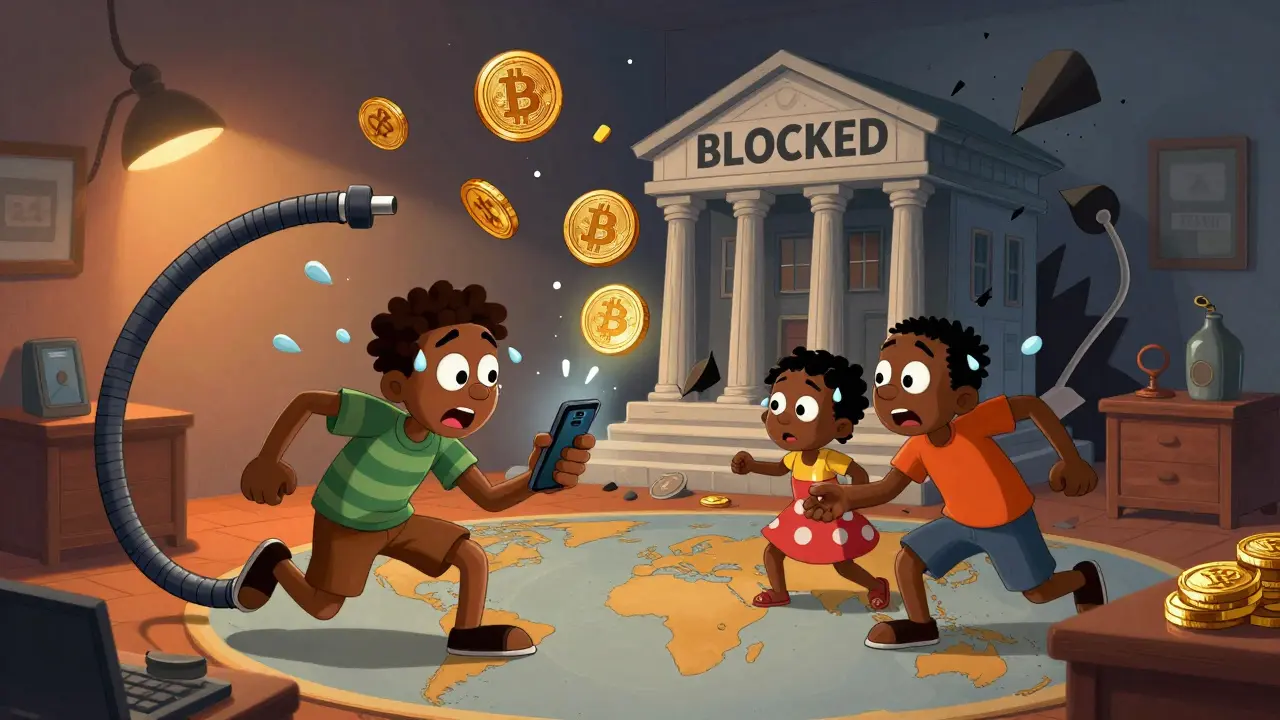
When you live in a country where banks won’t let you buy Bitcoin, or where the government says crypto is illegal, where do you turn? For millions of people, the answer is P2P crypto trading. It’s not a loophole. It’s not a hack. It’s survival. In places like Nigeria, Iran, Venezuela, and Pakistan, peer-to-peer crypto markets have become the only way to send money to family abroad, protect savings from inflation, or even pay for basic goods when local currency collapses. But in 2025, those markets are under more pressure than ever.
Why P2P Trading Exists in Restricted Countries
P2P crypto trading means two people swap crypto directly-no exchange, no middleman, no bank approval needed. You pay someone in local currency via bank transfer, mobile money, or even cash. They send you Bitcoin or USDT. Done. It’s fast, private, and works even when banks shut down access. In countries like Algeria, Egypt, or Bangladesh, crypto exchanges are banned outright. But P2P? That’s harder to stop. You don’t need a license to text someone and say, “I’ll give you 10 million naira for 0.5 BTC.” That’s not a business-it’s a personal deal. And that’s why P2P volumes kept growing even when official exchanges got shut down. But here’s the catch: governments aren’t ignoring it. They’re watching. And they’re acting.How Sanctions Are Crushing P2P Volumes
The biggest force reshaping P2P trading isn’t local law-it’s U.S. sanctions. The Office of Foreign Assets Control (OFAC) doesn’t just target big banks. It targets wallets. It targets stablecoins. It targets anyone who helps someone in a sanctioned country move money. In 2024, OFAC froze $740 million in stablecoins tied to sanctioned entities. That’s up 35% from 2023. Nine out of ten major U.S. exchanges now automatically block any wallet on OFAC’s Specially Designated Nationals list. That means if you’re in Iran or Russia, and you try to trade on Binance or OKX, your account gets locked. Your funds? Frozen. Your trading history? Gone. The result? Russian and Iranian P2P volumes dropped 60% after OFAC cracked down. International crypto remittances to sanctioned countries fell 21% in 2024. That’s not just numbers. That’s families who can’t get money from relatives overseas. That’s small businesses that can’t pay suppliers. That’s people who lost their only financial lifeline.What the Big Exchanges Are Doing
Binance and OKX aren’t just following the law-they’re getting ahead of it. They’ve created tiered restriction lists:- High-sanctioned: Afghanistan, Iran, North Korea, Syria, Cuba. P2P trading blocked entirely.
- Strict national bans: Algeria, Bangladesh, Bolivia, Nepal. No P2P allowed, even if users try to bypass it.
- Selective restrictions: India, Nigeria, Malaysia, Canada. P2P is technically allowed, but with heavy KYC, limits, and monitoring.
- Conflict zones: Crimea, Donetsk, Luhansk. Completely cut off.

Countries Where P2P Is Still Alive (For Now)
Not all restricted countries are the same. Some have found a middle ground. Pakistan doesn’t ban crypto. It just watches it closely. P2P trading is allowed, but users must report transactions over $1,000. It’s not perfect, but it keeps the market running. Turkey? In 2025, they legalized crypto exchanges-but banned using crypto to buy coffee, phones, or groceries. So P2P trading for investment? Fine. P2P for daily spending? Not allowed. That’s a weird gray zone, but traders are adapting. Vietnam decriminalized crypto in 2025. No more jail time for holding Bitcoin. New rules focus on taxes and consumer protection-not banning P2P. Trading volumes are rising. Kenya reversed its ban on crypto banking in 2024. Argentina legalized crypto for international trade settlements in early 2025. These aren’t full endorsements, but they’re openings. In places like Kenya and Vietnam, P2P isn’t a last resort anymore. It’s becoming part of the financial system.What’s Really Driving the Numbers
The data says P2P volumes are falling. But that’s only half the story. On paper, trading volumes dropped because exchanges blocked accounts. But in real life, people found new ways. Telegram bots. Local WhatsApp groups. Cash trades in markets. Crypto ATMs in hidden locations. These aren’t tracked by exchange data. They’re invisible to regulators. Also, stablecoins are still moving. USDT and USDC are the real currency of P2P trading. Even when banks freeze accounts, stablecoins keep flowing. In 2024, Ethereum transactions involving sanctioned entities dropped 29%-but only because monitoring got tighter. The actual demand? Still there. And then there’s DeFi. Decentralized finance platforms cut off 42% of international transactions after adding OFAC filters. But again-users found alternatives. Non-KYC bridges. Privacy coins. Chain-hopping. The tools are evolving faster than the rules.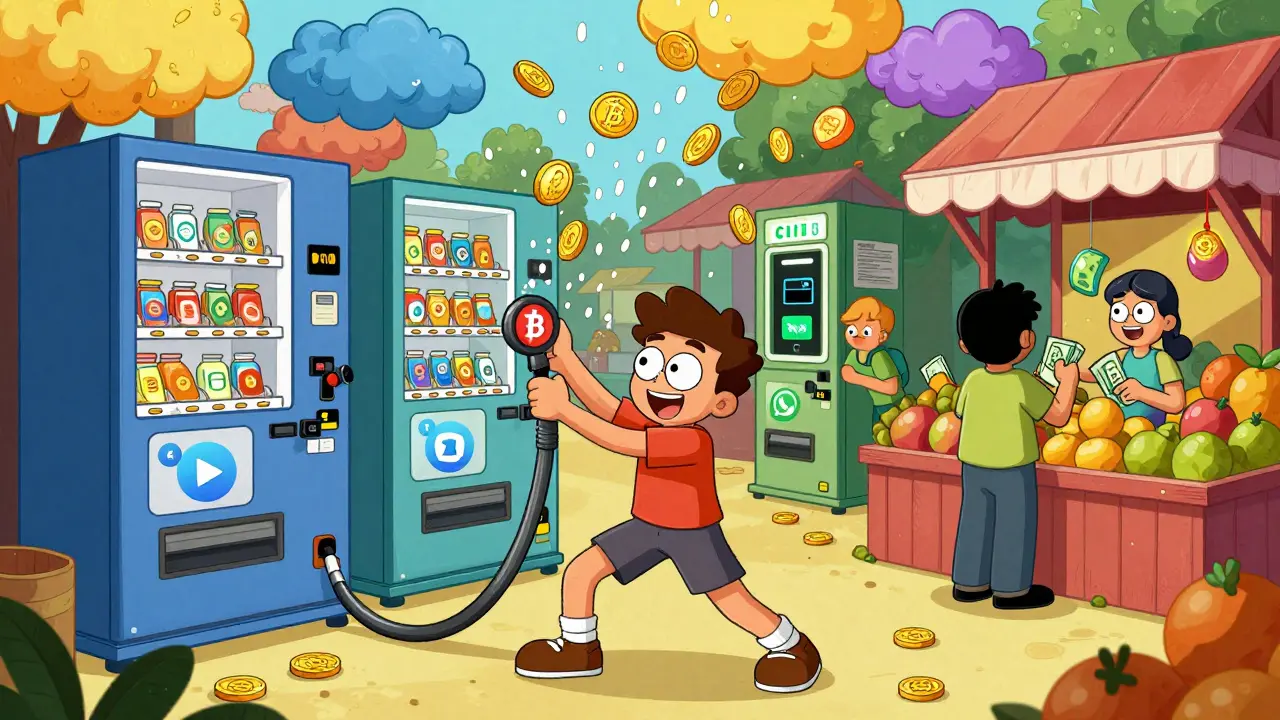
Comments (11)
Scott Sơn
December 6, 2025 AT 03:43
This isn't trading-it's digital black market bingo. People are risking jail time to send crypto through Telegram bots like it's 2012 and we're all using LimeWire. The fact that this is still a thing in 2025 is both tragic and kind of hilarious.
Frank Cronin
December 6, 2025 AT 07:25
OFAC didn't 'crack down'-they just finally stopped pretending this was a financial system and not a criminal smuggling ring. If you're using USDT to bypass sanctions, you're not a victim. You're a participant. And no, I don't care if your cousin in Venezuela needs medicine. That's not my problem.
Kenneth Ljungström
December 8, 2025 AT 05:17
I get the frustration, but let's not romanticize this. People are doing what they have to. I've talked to guys in Lagos who trade BTC for airtime credits so their kids can call school. This isn't speculation-it's survival. Maybe the rules need to evolve instead of just shutting it all down. 🙏
miriam gionfriddo
December 9, 2025 AT 15:47
ok so like i just read this and my brain exploded?? like i thought crypto was supposed to be FREEEEE but now its like... if you're from the wrong country your wallet gets ghosted?? and the stablecoins?? they're the real currency?? but OFAC is just... blocking?? like wtf?? i need a nap
Ben VanDyk
December 11, 2025 AT 00:05
The article says P2P volumes dropped, but then immediately says people just moved underground. So which is it? If it's not being tracked, how do we know volumes dropped? The data is inconsistent.
Sandra Lee Beagan
December 11, 2025 AT 08:42
In Canada, we've seen the same pattern with remittances. When banks cut off access, people turn to crypto-not because they're tech-savvy, but because they're desperate. The irony? The tools meant to empower are now weaponized by compliance algorithms. It's a systemic failure, not a user problem. 😔
ronald dayrit
December 11, 2025 AT 09:05
The real question isn't about regulation or sanctions or even crypto-it's about the collapse of trust in institutions. When your government can't protect your savings and your bank won't let you send money home, what's left? A peer-to-peer network isn't a workaround-it's the only remaining social contract. We're not trading Bitcoin. We're trading dignity.
Martin Hansen
December 11, 2025 AT 09:53
You people act like this is some noble resistance. It's not. It's just regulatory arbitrage dressed up as humanitarianism. If you're using crypto to avoid sanctions, you're enabling kleptocrats and criminals. Stop pretending you're Robin Hood. You're just bad at banking.
Tom Van bergen
December 12, 2025 AT 06:05
Sanctions are the real crypto killer not the tech not the users not the banks the system itself is the problem and if you think this is about money you're wrong it's about control and the fact that people still find ways means the system is already broken
Yzak victor
December 13, 2025 AT 01:55
I think Martin’s point is valid but also misses the human layer. People aren’t choosing crypto because it’s cool-they’re choosing it because they have no other options. The system failed them first. Now we’re punishing them for trying to survive. That’s not justice. That’s cruelty wrapped in compliance.
Cristal Consulting
December 13, 2025 AT 19:18
This is why we need community-run nodes and local crypto meetups-not big exchanges. The future isn't on Binance. It's in WhatsApp groups and cash trades under streetlights. Keep going. We see you.