
There’s no shortage of crypto airdrops promising free tokens, but few are as confusing - or as risky - as Sishi Finance (SISHI). If you’ve seen ads saying you can get free SISHI tokens by joining a Telegram group or completing a challenge, you’re not alone. But here’s the hard truth: Sishi Finance isn’t what it used to be. What started as a hype-driven project with a peak price of over $7 has collapsed to less than half a cent. And the airdrop you’re being offered? It might be worth less than the time you spend signing up.
What’s Left of Sishi Finance?
Sishi Finance launched with big promises and even bigger numbers. At its height, SISHI hit $7.29. Today, it trades around $0.0005 to $0.0006, depending on the exchange. That’s a drop of more than 99.99%. To put that in perspective: if you held 1,000 SISHI tokens at the peak, they were worth $7,290. Now, they’re worth about $0.50. That’s not a correction - that’s a near-total wipeout. Trading volume on major platforms like CoinMarketCap shows zero activity over the past 24 hours. That means no one’s buying or selling. No liquidity. No market. Even if you get airdropped 10,000 SISHI tokens, you won’t be able to cash them out easily - if at all. Exchanges like Binance and Coinbase list SISHI, but they’re just carrying it as a relic, not a viable asset.How the SISHI Airdrop Actually Works
Unlike traditional airdrops that snapshot wallet addresses at a certain block height, Sishi Finance runs what it calls "ongoing challenges and promotions." This isn’t a one-time giveaway. It’s a continuous loop of small tasks designed to keep people engaged - and maybe even hopeful. According to Bitget’s latest update (September 2025), you can earn SISHI by:- Joining official Telegram or Discord groups
- Following Sishi Finance on Twitter or X
- Completing quizzes or referral challenges
- Participating in community events or AMAs
Why You Should Be Skeptical
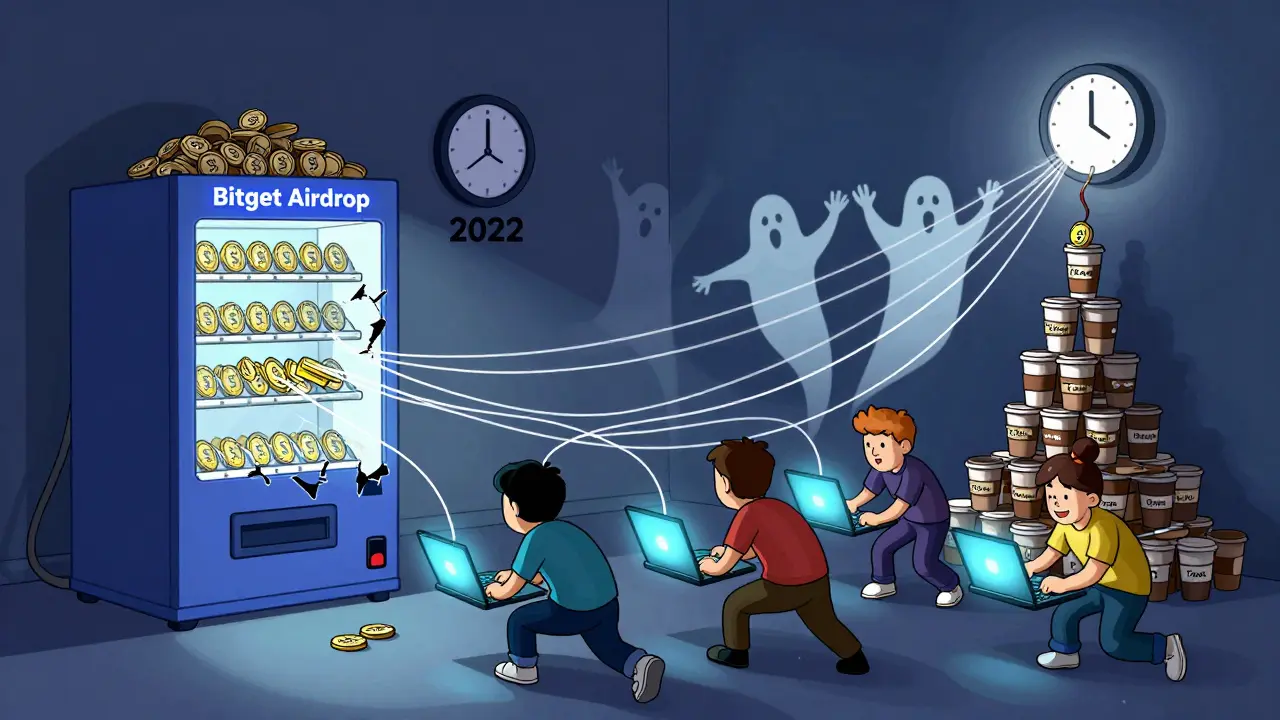
This isn’t just about low value. It’s about risk. Crypto scams are everywhere. The same platforms that list SISHI also warn about "rug pulls," fake exchanges, and recovery scams. While Sishi Finance hasn’t been officially labeled a scam, the signs are there:- No active development team publicly identified
- No whitepaper update since 2022
- No real utility - SISHI isn’t used in any DeFi protocol, dApp, or service
- Zero trading volume = no market demand
- Airdrop rewards are too small to matter, but the time investment isn’t
Who’s Still Participating - And Why?
You’ll find people in Reddit threads and Telegram groups claiming they "made bank" on SISHI. Those people either held at the peak (and sold years ago) or are bots posting fake screenshots. Real users? They’re either:- Believing the hype because they don’t understand how crypto valuations work
- Looking for any tiny gain, no matter how small, because they’ve lost money elsewhere
- Using the airdrop as a gateway to other scams - like "claim your SISHI now, pay a gas fee" schemes
What You Should Do Instead
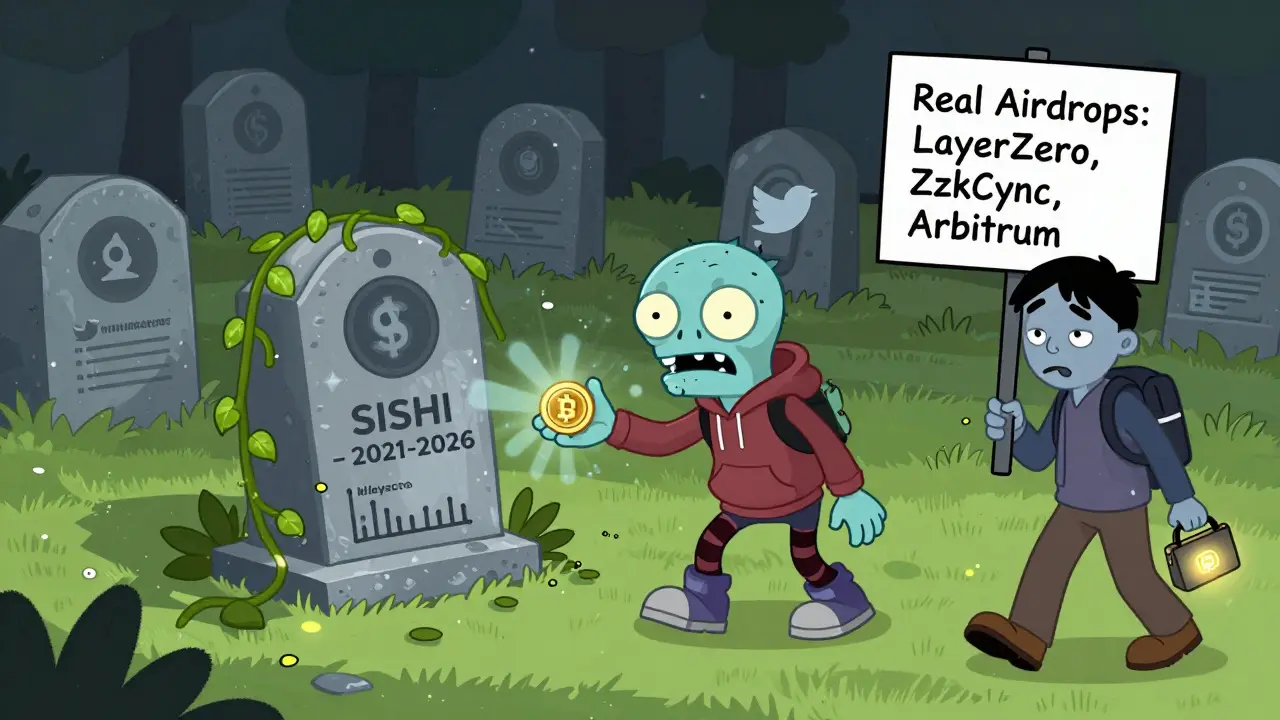
If you’re looking for real crypto airdrops, focus on projects with:- Active development teams with public profiles
- Clear token utility (staking, governance, payments)
- Real trading volume (over $1M daily)
- Published audit reports from firms like CertiK or PeckShield
Is There Any Way to Get Value From SISHI?
Technically, yes - but only if you treat it like digital trash, not an investment. If you already have SISHI tokens:- Don’t send more funds to any "claim" page - it’s a scam
- Don’t pay gas fees to "unlock" your tokens - they’re already yours
- If you want to get rid of them, try selling on a decentralized exchange like Uniswap - but expect almost no buyers
- Consider deleting the wallet holding them - it’s cleaner than holding dead assets
- Only use a burner wallet - never your main one
- Never connect your wallet to unknown smart contracts
- Set a 15-minute time limit per task - if it’s not worth 15 minutes, it’s not worth doing
- Assume every token you earn is worth $0.0001 - because that’s what it is
Final Reality Check
The Sishi Finance airdrop isn’t a gift. It’s a distraction. It keeps people scrolling, clicking, and hoping - while the project quietly disappears. There’s no hidden secret. No comeback story. No miracle recovery. The math doesn’t lie: 99.99% loss. Zero volume. No utility. No team. No future. If you’re chasing free crypto, go after projects that are building something real. Don’t chase ghosts.Is the Sishi Finance airdrop still active in 2026?
Yes, Sishi Finance still runs occasional challenges on platforms like Bitget, but they’re low-value and ongoing. There’s no official end date, and rewards are minimal - often less than a penny in value. The project has shifted from large airdrops to small, continuous tasks designed to maintain the illusion of activity.
How much are SISHI tokens worth today?
As of January 2026, SISHI trades between $0.000517 and $0.0005878, depending on the exchange. This is down over 99.99% from its all-time high of $7.29. Most major exchanges list it, but trading volume is effectively zero, meaning you won’t be able to sell it easily.
Can I cash out SISHI tokens from the airdrop?
Technically, yes - but practically, no. You can send SISHI to exchanges like Binance or Coinbase, but there are almost no buyers. The lack of trading volume means you’ll likely have to sell at a fraction of the token’s already tiny value - if you can sell at all. Most people who hold SISHI now are just holding onto it out of hope, not expectation.
Is the Sishi Finance airdrop a scam?
It hasn’t been officially labeled a scam, but it has all the warning signs: no real utility, zero trading volume, no active development team, and a price that’s crashed over 99.99%. The airdrop tasks are designed to keep users engaged while the project fades. Many experts classify it as a "zombie token" - alive on paper, but dead in practice.
Should I join the SISHI airdrop?
Only if you’re treating it as a time-waster, not an opportunity. Use a burner wallet, never connect your main wallet, and limit your time to 15 minutes per task. Don’t expect any financial return. The value of the tokens you earn is negligible, and the risk of phishing or wallet compromise is real. There are far better ways to earn crypto - focus on projects with real traction.
What happened to Sishi Finance’s price?
SISHI peaked at $7.29 in 2021, fueled by hype and speculation. After that, the project failed to deliver any real product or utility. The team went quiet, development stopped, and holders started selling. With no demand and no reason to hold, the price collapsed. Today, it’s a fraction of a cent - a textbook example of a crypto project that burned through hype and vanished.
Comments (19)
Brittany Slick
January 5, 2026 AT 07:51
okay but imagine if you treated this like a digital scavenger hunt instead of an investment 🌈
you’re not getting rich, you’re collecting tiny little digital stickers that make you feel like you’re doing something
and honestly? that’s fine. if it gives you a little spark of hope on a Tuesday, who am i to judge?
we all need our little rituals, even if they’re powered by dead coins.
greg greg
January 6, 2026 AT 19:56
it’s fascinating how psychological anchoring works in crypto - people remember the $7.29 peak like it was yesterday, and now they’re clinging to the ghost of that number like it’s a life raft, even though the boat sank five years ago and the water’s full of sharks
the brain refuses to process a 99.99% loss because it can’t reconcile the emotional value with the mathematical reality
and that’s why these airdrops work - not because they promise returns, but because they promise redemption
you’re not chasing tokens, you’re chasing the version of yourself that believed in the dream
and that’s the real tragedy here.
Sherry Giles
January 8, 2026 AT 11:23
this is all a deep state crypto operation to drain your wallet and track your crypto habits
they want you to think it’s a scam so you stop looking
but the real game? they’re harvesting your wallet addresses, your IP, your device fingerprints - all for the next phase of the global financial reset
they don’t need you to hold sishi - they need you to click, to join, to sign up
every single one of you is a data point in a quantum surveillance matrix
and you’re handing it to them for free tokens worth 0.0005 cents
wake up.
Meenakshi Singh
January 10, 2026 AT 04:53
bro this is why you never trust anonymous teams 😤
zero dev activity + zero volume + zero utility = 🚩🚩🚩🚩🚩
if your token can’t even pay for gas to move it, why are you still breathing life into it?
just delete the wallet and move on. your mental health > 500 sishi tokens 🤡
Jessie X
January 11, 2026 AT 11:40
i joined the airdrop once just to see what it was like
took 12 minutes to follow three links and answer a quiz
got 200 tokens
worth like 10 cents
did i care
no
but i felt like i did something
and that’s weirdly enough enough
Kip Metcalf
January 11, 2026 AT 22:04
just think of it as free internet points
you’re not losing anything
you’re not investing
you’re just clicking
and if you get a few tokens? cool
if not? you wasted 15 minutes
that’s it
no big deal
life’s too short to stress over dead coins
Natalie Kershaw
January 13, 2026 AT 18:39
you know what’s wild? the fact that people still engage with this is a testament to human resilience
we’re wired to chase patterns, to believe in comebacks, to hope for the miracle bounce
and sishi? it’s not a project anymore
it’s a mirror
it reflects our refusal to let go
so if you’re doing the tasks? cool
just do it with zero expectations
and maybe, just maybe, you’ll find peace in the process, not the payout
Jacob Clark
January 15, 2026 AT 06:00
OH MY GOD I CAN’T BELIEVE YOU’RE STILL TALKING ABOUT THIS!!
THIS IS THE MOST OBVIOUS RUG PULL OF THE DECADE!!
WHY ARE YOU EVEN HERE?!
THEY’RE NOT EVEN DEVELOPING ANYTHING!!
THEY’RE JUST SITTING THERE LIKE A GHOST IN A BROWSER WINDOW!!
AND YOU’RE STILL CLICKING?!
YOU’RE BEING USED!!
THEY’RE MAKING MONEY OFF YOUR ENGAGEMENT METRICS!!
STOP. JUST. STOP.
PLEASE.
FOR THE LOVE OF GOD.
GO DO SOMETHING REAL.
WALK OUTSIDE.
CALL A FRIEND.
READ A BOOK.
ANYTHING.
PLEASE.
Mujibur Rahman
January 16, 2026 AT 01:51
from a technical standpoint, this is a textbook case of token decay
no utility → no demand → no liquidity → no price
the airdrop is a liquidity illusion - it keeps the contract alive, the exchange listing valid, and the social media bots engaged
it’s not a scam per se, it’s a zombie protocol
the real risk isn’t the tokens - it’s the habit
if you’re training yourself to chase micro-rewards from dead chains, you’re conditioning your brain to ignore real signals
don’t let crypto turn you into a clickworker
Don Grissett
January 16, 2026 AT 08:31
you guys are overthinking this
its just a meme coin
people still trade dogecoin
why not this
if you wanna waste time go ahead
but dont act like its a crime
also sishi was always a joke
the name alone shouldve been a red flag
anyway i got 12k tokens last week
theyre worth like 6 bucks
im chillin
Katrina Recto
January 16, 2026 AT 09:36
i used to chase these too
then i realized i was spending more time on my phone than i spent with my kids
so i deleted the apps
and guess what
i didn’t miss it
and i started reading again
and walking
and talking to people
you’re not losing tokens
you’re losing hours
and hours are more valuable than any coin
Mollie Williams
January 18, 2026 AT 03:49
there’s something almost poetic about sishi
it’s not dead - it’s haunting
it doesn’t ask for your money
it asks for your attention
and in a world that sells us everything as an investment
maybe the most radical thing you can do is give your time to something worthless
not because you believe
but because you refuse to be sold
and in that refusal
you reclaim your agency
even if the tokens are dust
your choice isn’t
Tre Smith
January 19, 2026 AT 05:33
the fact that you’re still debating this shows how broken the crypto community is
zero volume, no team, no utility, no roadmap
and yet people are still signing up for airdrops
it’s not ignorance
it’s pathology
you’re not participating in a project
you’re participating in a collective delusion
and the only thing you’re earning is regret
and possibly a phishing link
kris serafin
January 20, 2026 AT 20:42
if you’re gonna do the airdrop, do it right 🚀
use a burner wallet
turn off notifications
set a 10-min timer
do the 3 tasks
claim your 300 tokens
and then walk away
no more
no less
you’re not investing
you’re collecting digital confetti
and that’s okay 😊
Jordan Leon
January 22, 2026 AT 18:16
in the grand architecture of human behavior, this phenomenon is not unique to cryptocurrency
it mirrors the behavior of gamblers clinging to a losing slot machine
the variable reward schedule - small, unpredictable tokens - activates the same dopamine pathways as social media likes
the difference is, with slot machines, you know the house always wins
with sishi, you’re convinced the house is just taking a nap
it isn’t
it’s already closed
Rahul Sharma
January 23, 2026 AT 20:57
in india we have many such projects
people believe because they want to believe
they think tomorrow will be better
but this is not future
this is illusion
do not waste time
do not connect wallet
do not trust
just move on
there are better ways to earn
like learning coding
or trading real coins
not ghosts
Paul Johnson
January 25, 2026 AT 14:02
you people are so gullible
you think you’re smart for doing the airdrop
but you’re just the sucker the project needs to stay alive
you’re the reason this thing still has a listing
you’re the reason the scammer’s bank account still has funds
you’re not a participant
you’re a pawn
and you’re proud of it
pathetic
Emily Hipps
January 25, 2026 AT 19:19
hey if you’re doing the airdrop - that’s cool
you’re not hurting anyone
and hey maybe one day you’ll look back and laugh
or maybe you’ll find a friend in the discord
or maybe you’ll learn to spot scams better next time
none of this is about the tokens
it’s about the human need to belong
so if it helps you feel connected
go for it
just keep it light
and keep your main wallet locked
Brittany Slick
January 27, 2026 AT 14:41
you know what’s wild? the fact that i still check my sishi balance every now and then
like it’s a lottery ticket i forgot i bought
and every time i see it’s still 0.0005
i smile
because i’m not mad
i’m just… amused
we’re all just ghosts chasing digital fireflies
and somehow that’s beautiful