Ariva Airdrop: What It Is, How It Works, and Why It Matters
When you hear Ariva airdrop, a distribution of free cryptocurrency tokens to wallet holders as part of a project’s launch or growth strategy. Also known as crypto airdrop, it’s a way for new blockchain projects to build a user base without paying for ads. Unlike buying tokens on an exchange, airdrops give you free crypto just for doing simple things—like joining a Telegram group, holding a specific coin, or signing up for a newsletter. But not every airdrop is legit. Some are scams. Others are so poorly designed you’ll never get paid. The Ariva airdrop falls somewhere in between—it’s real, but only if you know what you’re doing.
Airdrops like Ariva rely on blockchain airdrop, a mechanism that uses smart contracts to automatically send tokens to qualifying wallets. They don’t need a middleman. The rules are written in code: if your wallet held at least 100 X coin on block 12,345,678, you get 500 Ariva tokens. That’s it. No forms. No KYC. Just math. But here’s the catch—most people miss eligibility because they don’t track the exact block height or use the wrong wallet. And if you’re using a centralized exchange wallet like Binance or Coinbase, you won’t qualify. The tokens go to the exchange’s wallet, not yours. You need a self-custody wallet like MetaMask or Trust Wallet. That’s the first rule.
Then there’s airdrop eligibility, the specific conditions you must meet to receive free tokens, often tied to wallet activity, token holdings, or community participation. For Ariva, past airdrops required holding a minimum amount of a related token or interacting with their testnet. Some users got rewarded just for staking. Others had to complete a series of tasks on their website. The rules change with every drop. That’s why you can’t just Google "how to get Ariva tokens" and expect a one-size-fits-all answer. You have to check their official channels—Discord, Twitter, their website—and watch for updates. If someone on Reddit claims they know the secret, they’re probably wrong. Or worse, they’re trying to steal your seed phrase.
And that’s the biggest risk: scams. Fake airdrops are everywhere. They ask you to send crypto first. They use fake websites that look real. They promise millions of tokens for a $5 fee. The Ariva team has warned users about copycat sites. Always verify the official link. Never connect your wallet to a site you didn’t find through their verified social media. And never enter your seed phrase anywhere. Ever.
What you’ll find below are real posts that break down how airdrops like Ariva actually work—not the hype, not the promises, but the mechanics. You’ll see how to check your eligibility using blockchain explorers, how to spot fake airdrop sites, and why some airdrops never pay out even if you did everything right. These aren’t guesses. They’re based on real data, real wallets, and real mistakes people made.
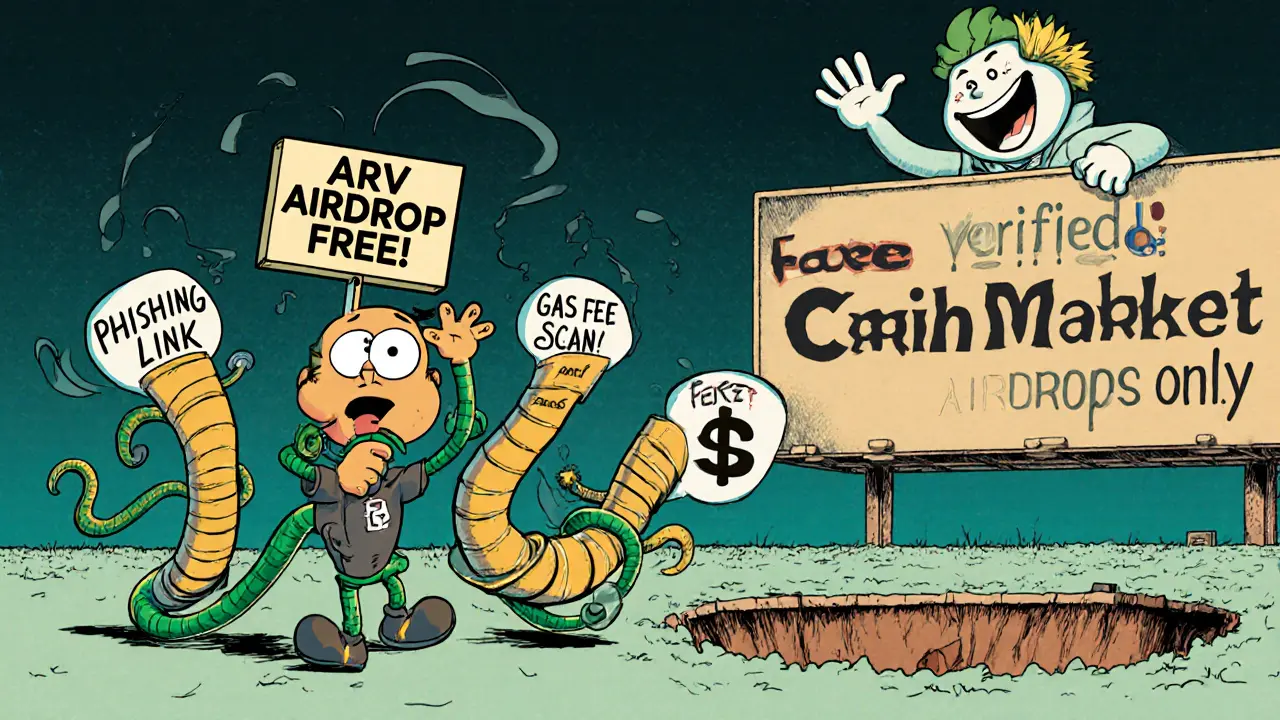
There is no official Ariva (ARV) x CoinMarketCap airdrop. Learn why this claim is a scam, what ARV really is, how to spot fake airdrops, and where to find real ones instead.