Bitcoin holders: What they know, how they protect their coins, and why it matters
When you hold Bitcoin, you're not just storing a digital asset—you're participating in a global, decentralized network that runs on Bitcoin nodes, computers that validate transactions and enforce Bitcoin’s rules without central control. Also known as full nodes, these are the quiet guardians of the network, making sure no one cheats, doublespends, or manipulates the ledger. Most people think owning Bitcoin means having it in an app or exchange. But real Bitcoin holders understand: true ownership means you control the keys, verify the chain yourself, and rely on the network’s design—not a company’s promise.
That’s why the number of Bitcoin nodes, over 24,000 globally, each independently checking every block matters more than price charts. More nodes mean harder to censor, harder to attack, and harder to shut down. And it’s why Merkle trees, a math structure that lets lightweight wallets confirm transactions without downloading the whole blockchain are so crucial—they let Bitcoin holders verify their balance securely even on a phone. This isn’t theory. It’s how your wallet knows your coins are real without trusting anyone.
But holding Bitcoin safely isn’t just about nodes or tech. It’s about how you store your recovery phrase. A 12-word seed phrase, a human-readable backup that can restore your entire Bitcoin wallet is your last line of defense. More words don’t make it safer—poor storage does. Write it on paper. Keep it away from screens. Never screenshot it. The same people who trust exchanges with their Bitcoin often leave their seed phrase in a Google Doc. That’s not holding Bitcoin. That’s lending it.
And here’s the truth most ignore: Bitcoin’s security doesn’t come from big companies, flashy apps, or influencer hype. It comes from the quiet, technical discipline of its holders—the ones who run nodes, verify transactions, and treat their keys like a birth certificate. The posts below show you exactly how that works: from how Bitcoin holders use Merkle trees to verify balances without trusting third parties, to why the number of nodes is the real measure of Bitcoin’s health, to how even a single mistake with a seed phrase can erase years of work. These aren’t guides for beginners. They’re survival manuals for anyone serious about keeping their Bitcoin safe in a world full of shortcuts and scams.
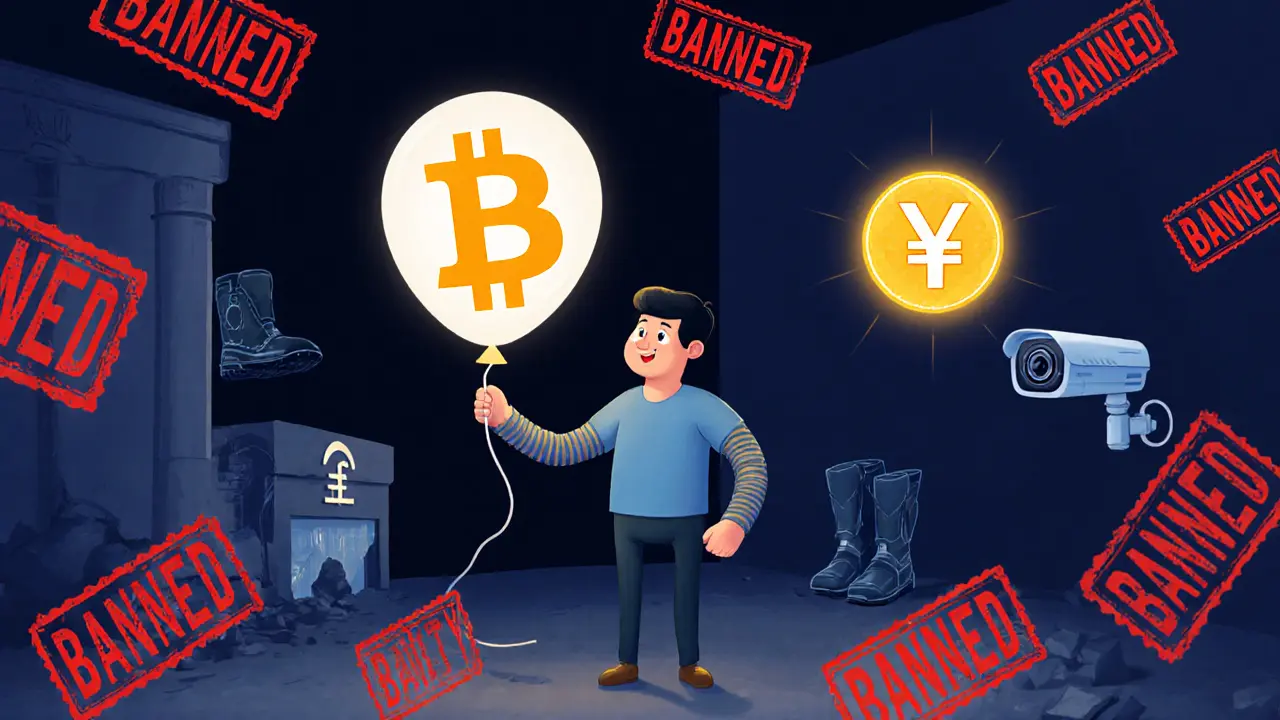
China's crypto ban blocks all trading, mining, and exchange of Bitcoin. Holders can own it, but can't use it legally. Banks freeze accounts, mining is shut down, and the digital yuan is the government's real focus.