Blockchain Claims Verification: How to Confirm Real Crypto Claims and Avoid Scams
When someone says a crypto project is "verified" or "on-chain verified," what does that actually mean? Blockchain claims verification, the process of proving that a crypto claim—like an airdrop, token allocation, or smart contract function—is real and tamper-proof using cryptographic methods. It’s not just a buzzword; it’s the backbone of trust in Web3. Without it, you’re just trusting a website, a Discord message, or a Telegram bot—and that’s how most people lose money. Real verification doesn’t come from a badge on a website. It comes from math: Merkle trees, formal proofs, and consensus rules that anyone can check themselves.
One of the most common tools for this is the Merkle tree, a data structure that turns thousands of transactions into a single hash, letting wallets verify your balance without downloading the whole blockchain. That’s how SPV wallets like Trust Wallet or Exodus work—they don’t store all data, but they can still prove you own your coins. Then there’s formal verification, a mathematical method used by top DeFi protocols to prove their code behaves exactly as intended under every possible condition. Projects like Uniswap and Aave use it because a single bug can cost millions. And when it comes to permissioned blockchains—like those used by banks or governments—the system relies on Byzantine Fault Tolerance, a consensus mechanism that lets nodes agree on truth even if some are malicious or fail. It’s why Hyperledger Fabric can run supply chain tracking without a central authority.
These aren’t theoretical ideas. They’re the tools that separate real projects from scams. When you see a crypto airdrop, the legitimate ones use on-chain eligibility checks tied to wallet history—verified through Merkle proofs. When a token claims to be audited, check if the audit used formal verification tools like Certora or Coq. And when a blockchain says it’s "secure," ask if it uses PBFT or something weaker. The difference isn’t marketing—it’s math you can verify yourself.
Below, you’ll find real-world examples of how blockchain claims verification works—or fails. From the Merkle trees that power Bitcoin nodes to the scams that fake verification to steal funds, every post here shows you how to tell truth from noise in crypto. No fluff. Just what you need to protect your assets.
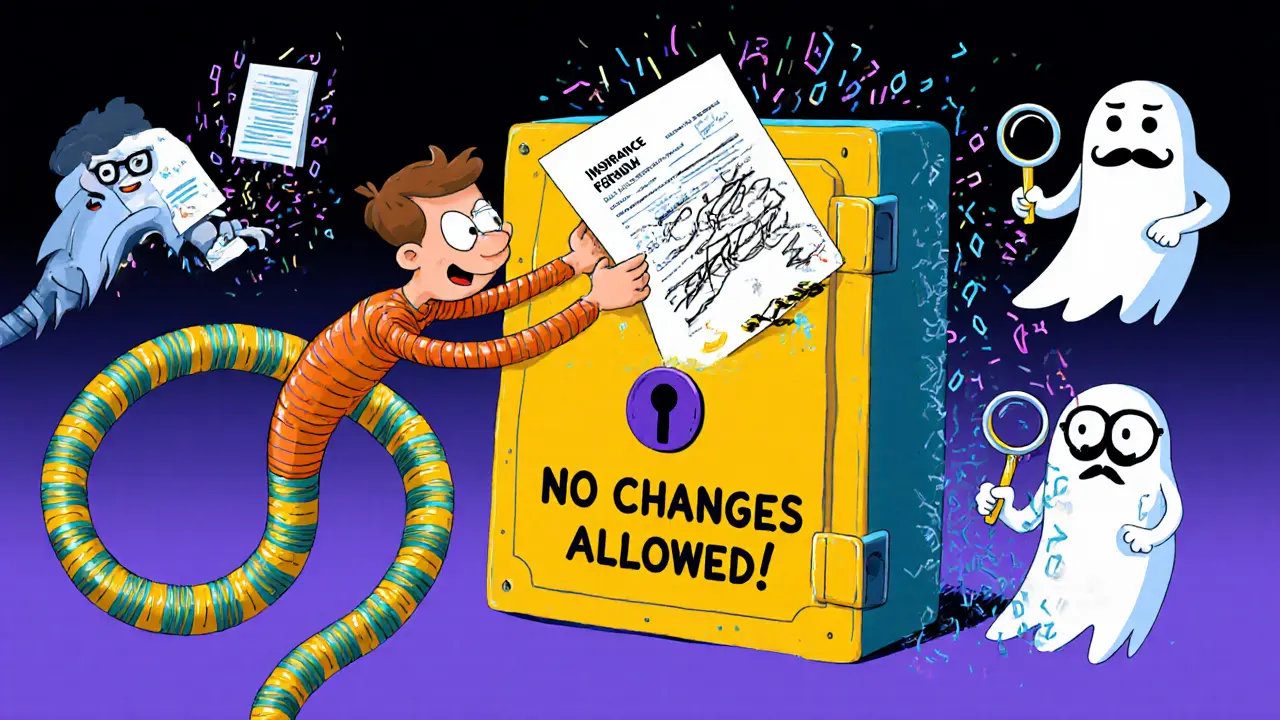
Blockchain is cutting insurance fraud by 68% in pilot programs by creating tamper-proof claims records. Learn how it works, who's using it, and why it's not a magic fix.