C-Cex Exchange: What You Need to Know About Centralized Crypto Platforms
When you buy crypto with a credit card or bank transfer, you’re almost certainly using a C-Cex exchange, a centralized platform that holds your crypto and handles trades on your behalf. Also known as centralized exchange, it’s the gateway most people use to enter the crypto world—but it’s not without risks. Unlike decentralized exchanges, C-Cex platforms require you to hand over control of your funds, verify your identity, and follow their rules. That makes them faster and easier to use, but also vulnerable to hacks, freezes, and government pressure.
These platforms are shaped by geography and regulation. A C-Cex exchange that works in India might block users in Iran or Nigeria. That’s because they follow KYC crypto, rules that force users to prove who they are before trading to avoid fines from regulators like the U.S. Treasury. This is why Nigerian traders rely on P2P networks, why Iranians avoid exchanges tied to Tether, and why users in restricted countries often turn to DEXs—if they already have crypto. The crypto regulation, patchwork of local laws that dictate who can trade and how turns a simple trade into a legal minefield.
Most C-Cex exchanges don’t offer true ownership. You’re trusting them to keep your Bitcoin, Ethereum, or altcoins safe. But history shows that’s risky: exchanges get hacked, freeze withdrawals, or vanish overnight. That’s why platforms like NitroEx and ADEN get scrutinized so closely—users want speed and low fees, but they won’t risk losing their money. Meanwhile, exchanges like Binance DEX and Raydium give you control, but only if you already know how to move crypto off a C-Cex exchange in the first place.
What you’ll find here isn’t a list of the "best" exchanges. It’s a real-world look at what happens when regulation, technology, and human behavior collide. You’ll see how a zero-fee DEX like OpenSwap struggles with low traffic, how airdrops from CoinMarketCap turn into ghost tokens, and why some platforms disappear after promising big returns. These aren’t theoretical debates—they’re lessons from users who lost money, got locked out, or learned the hard way that trust isn’t the same as security.
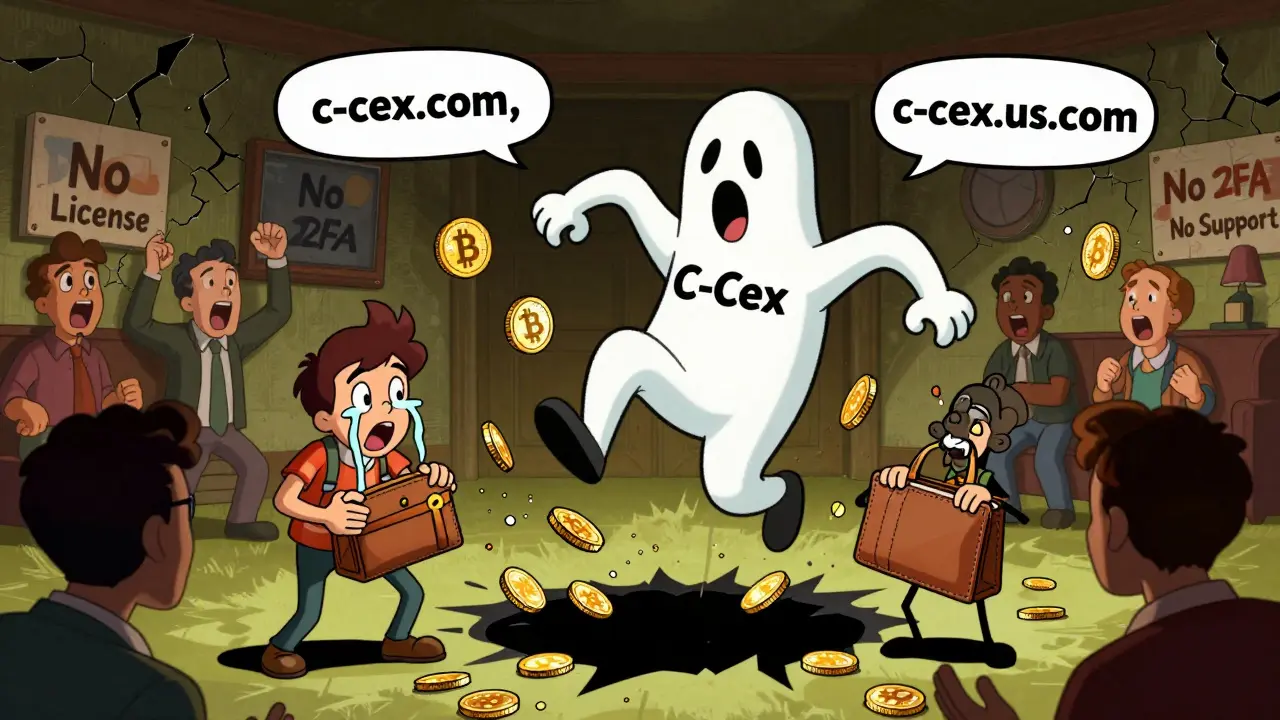
C-Cex is a high-risk crypto exchange with no regulatory oversight, frequent domain changes, and dangerous security flaws. Learn why experts advise against using it in 2025 and what safer alternatives to choose instead.