C-Cex Safety: What You Need to Know Before Using Centralized Exchanges
When you use a centralized exchange, a platform that holds your crypto and manages your trades on your behalf. Also known as C-Cex, it’s the most common way people buy and sell crypto—but it’s also the most dangerous if you don’t know the risks. Unlike decentralized exchanges where you keep control, C-Cexs like Binance, Kraken, or Coinbase act like banks: they store your coins, verify your identity, and process your trades. That convenience comes at a cost: you’re trusting them with your life’s savings.
That’s why KYC crypto, the process of proving your identity to a crypto exchange. Also known as know-your-customer, it’s not just paperwork—it’s a trade-off. Exchanges demand your ID, phone number, and sometimes even a selfie because regulators force them to. But every piece of data you give them becomes a target. Hackers don’t break into wallets—they break into exchange databases. In 2024 alone, over $1.2 billion was stolen from centralized platforms through phishing, insider leaks, and compromised admin accounts. And if your exchange gets sanctioned—like some did in Iran or Myanmar—you could lose access overnight with no appeal.
Then there’s the exchange hacks, when attackers steal funds directly from an exchange’s hot wallets. Also known as crypto exchange breaches, they’re not rare—they’re predictable. Look at NitroEx, a platform that vanished with users’ funds, or Nobitex, which got hacked and froze Iranian users’ accounts. These aren’t edge cases. They’re symptoms of a system built on trust, not code. Even big names like Binance have had security incidents. The difference? They had insurance and recovery plans. Most don’t.
So what does real C-Cex safety look like? It’s not two-factor authentication alone. It’s knowing if the exchange is audited, where it stores funds (hot vs cold wallets), whether it’s regulated in a stable jurisdiction, and if it’s ever been flagged by OFAC or other sanctions bodies. It’s avoiding platforms tied to Tether or state media in censored regions. It’s understanding that if you’re trading on a C-Cex, your crypto isn’t yours until you withdraw it to a wallet you control.
You’ll find posts here that break down exactly which exchanges to avoid in restricted countries, how P2P trading bypasses C-Cex risks, and why some "secure" platforms like ADEN or Binance DEX are actually safer because they don’t hold your keys. You’ll see real cases—like the Peanut.Trade airdrop that vanished, or NitroEx’s silent collapse—where users lost everything because they trusted the wrong platform. This isn’t theory. It’s what happened to real people.
Before you deposit another dollar into a centralized exchange, read what others learned the hard way. The next hack isn’t coming—it’s already here. And the only way to stay safe is to know who you’re trusting, and why they might not be worth it.
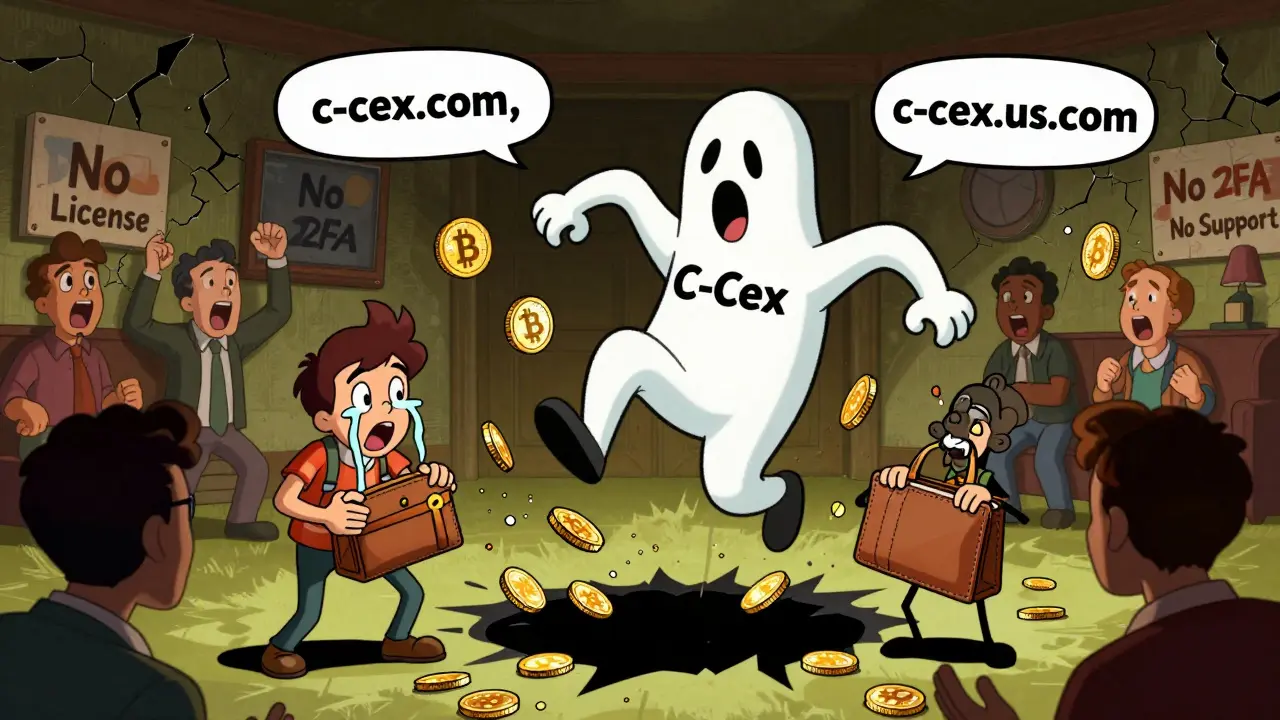
C-Cex is a high-risk crypto exchange with no regulatory oversight, frequent domain changes, and dangerous security flaws. Learn why experts advise against using it in 2025 and what safer alternatives to choose instead.