Canwifhat crypto: Understanding Crypto Identity, Privacy, and Decentralized Finance
When people ask Canwifhat crypto, a term that reflects confusion around crypto identity, access, and privacy in restricted regions. Also known as crypto identity confusion, it's not a project or token—it's the result of users in censored countries trying to understand why they can't trade, why their accounts get frozen, and who really controls their digital self. This isn’t about hype. It’s about real people in Nigeria, Iran, Myanmar, and India navigating a financial system that blocks them at every turn.
Self-sovereign identity, a system where you own your digital identity without relying on banks or governments. Also known as DIDs, it’s the backbone of privacy in Web3. Platforms like Beldex and Data Ownership Protocol use it to let you prove who you are without handing over your passport or phone number. This matters because centralized exchanges like Binance or Nobitex demand KYC—and if you’re from a sanctioned country, that means your account gets shut down, your funds frozen, and your options vanish. But with self-sovereign identity, you don’t need their permission to trade. You just need a wallet and a connection. That’s why decentralized exchanges like Binance DEX and Raydium are lifelines. They don’t ask for your ID. They don’t care where you live. They just let you swap tokens. But here’s the catch: you need crypto already. You can’t buy Bitcoin on a DEX with UPI or a bank transfer. That’s where P2P trading comes in—platforms like YellowCard and Bybit let you trade fiat for crypto directly with other people, bypassing banks entirely. It’s messy, it’s risky, and it’s the only way millions stay connected to the global economy.
Privacy-preserving verification, a method that lets you prove your identity without revealing your personal data. Also known as zero-knowledge proofs, it’s what makes blockchain identity actually work. Imagine proving you’re over 18 without showing your birth certificate. That’s what this tech does for crypto. It’s used in real applications today—not theory. From insurance claims to cross-border payments, it’s cutting fraud and protecting users. And in places like Iran or Myanmar, where governments track every transaction, this isn’t optional. It’s survival. The posts below cover exactly this: how people in restricted countries use P2P trading to stay alive, how DEXs bypass sanctions, why some tokens like UBX or BECKOS are traps, and how real privacy tools like Beldex and DOP give power back to the user. You won’t find fluff here. Just clear, practical truth about who controls crypto—and how to take it back.
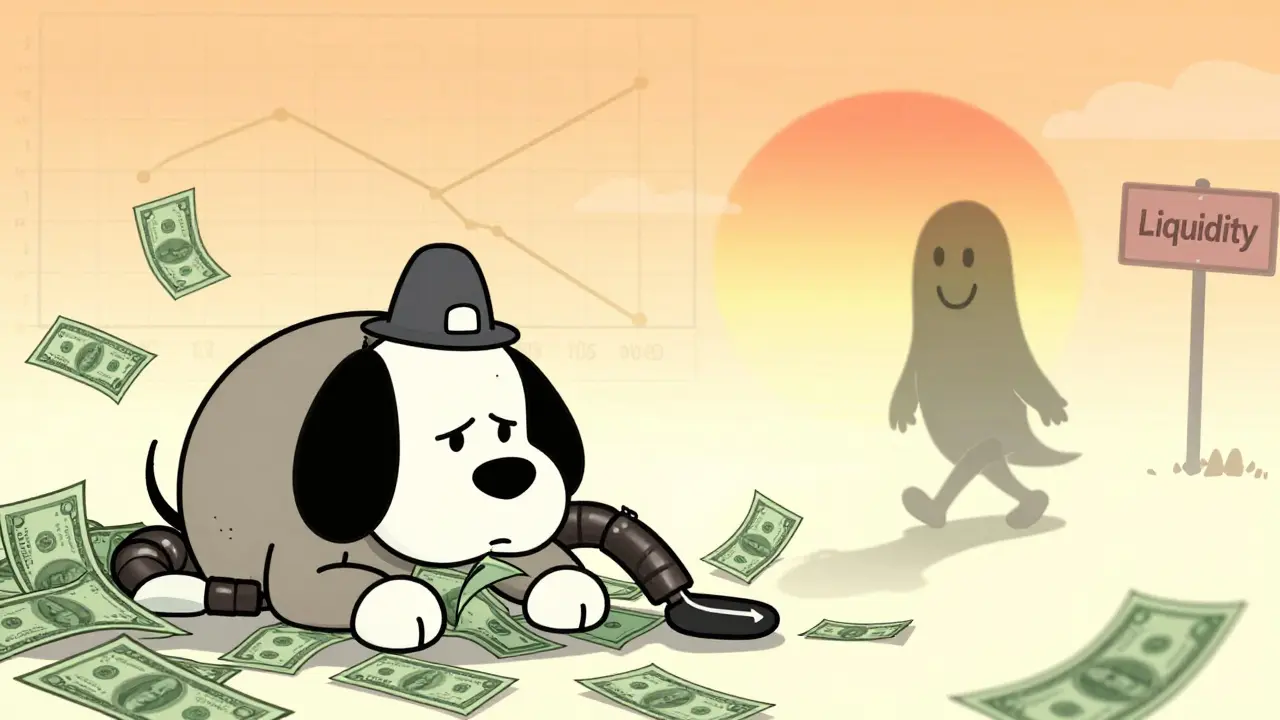
Canwifhat (CAN) is a dead Solana meme coin with no team, no utility, and near-zero trading volume. Once a copycat of dogwifhat, it's crashed 99.2% from its peak and is now considered abandonware by experts.