Coq: What It Is and How It Relates to Blockchain Security and Formal Verification
When you hear Coq, a formal proof assistant used to verify mathematical theorems and software correctness. Also known as the Coq proof system, it is not a cryptocurrency or a blockchain protocol—it’s a tool that helps engineers prove code behaves exactly as intended. This matters deeply in crypto, where a single bug can drain millions. While most people focus on price charts and wallets, the real backbone of secure blockchain systems often runs on logic, not luck—and that’s where Coq steps in.
Coq is used by teams building critical infrastructure like Ethereum’s consensus layer, Tezos smart contracts, and verified blockchain protocols such as CertiK’s formal audits. It doesn’t guess—it proves. For example, if a smart contract is supposed to only allow withdrawals after a certain date, Coq can mathematically confirm that no possible input or edge case can bypass that rule. This is called formal verification, the process of using mathematical logic to guarantee software behaves correctly under all conditions. Unlike automated testing, which checks a few scenarios, formal verification covers every possible path. That’s why projects like the Tezos blockchain use Coq to verify their core code before launch. It’s slow, it’s complex, but it’s the only way to eliminate entire classes of bugs before they hit the chain.
Coq doesn’t work alone. It’s part of a bigger ecosystem that includes theorem proving, the practice of using logical systems to derive truths from axioms. Think of it like a detective using a strict set of rules to rule out every possible criminal scenario—except here, the crime is a漏洞 (vulnerability) in code. The same logic that verifies a rocket’s flight path also verifies a DeFi protocol’s asset distribution. Projects like the Ethereum Foundation and the Zcash team have used Coq to audit critical components, not because they trust their developers, but because they know humans make mistakes. Machines that prove correctness don’t.
You won’t find Coq in your wallet app or on CoinMarketCap. But every time you use a verified smart contract, interact with a secure exchange, or benefit from a bug-free blockchain upgrade, Coq might’ve been quietly working behind the scenes. The posts below dive into exactly that—how blockchain security is built on math, not marketing. You’ll see how Merkle trees, Byzantine Fault Tolerance, and quantum threats are all analyzed with the same precision Coq brings to code. Some of these articles explain how systems are built to be provably safe. Others expose scams that skipped this step entirely. Either way, you’re not just reading about crypto—you’re learning what makes some projects survive, and others vanish overnight.
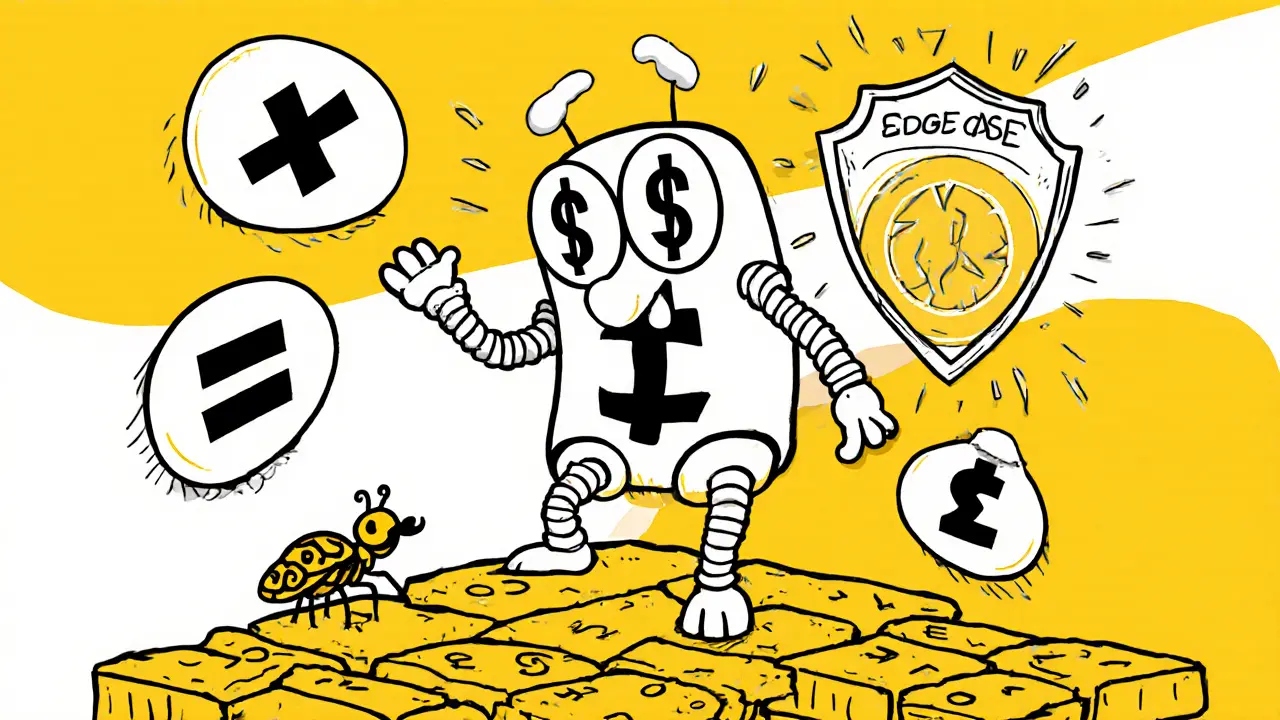
Formal verification uses math to prove smart contracts behave correctly under all conditions. It's now standard for high-value DeFi protocols and required by regulators. Learn how it works, which tools to use, and when you need it.