Crypto Exchange Korea: Top Platforms, Rules, and How to Trade Safely
When you're trading cryptocurrency in Crypto Exchange Korea, a regulated digital marketplace where users buy, sell, and store cryptocurrencies under South Korea’s strict financial oversight. Also known as Korean crypto platforms, these exchanges must follow anti-money laundering rules, verify every user’s identity, and report all transactions to the Financial Services Commission. Unlike many other countries, Korea doesn’t just allow crypto—it actively monitors it. Every major exchange like Upbit, Bithumb, and Korbit is legally required to partner with local banks and freeze accounts linked to suspicious activity. This makes Korea one of the most transparent, but also one of the most restricted, crypto markets in the world.
If you’re using a crypto exchange Korea, a regulated digital marketplace where users buy, sell, and store cryptocurrencies under South Korea’s strict financial oversight. Also known as Korean crypto platforms, these exchanges must follow anti-money laundering rules, verify every user’s identity, and report all transactions to the Financial Services Commission. you need to know that you can’t just deposit cash from any bank—you must use a real-name verified account tied to your ID. That’s why many traders use Korean crypto exchanges, regulated platforms like Upbit and Bithumb that require strict identity verification and bank linkage under South Korean law. Also known as Korea-based crypto platforms, they’re the only legal gateways for buying Bitcoin and altcoins with won. Trying to use an offshore exchange like Binance without a local bank link? You’ll hit walls. Withdrawals get blocked. Deposits vanish. The government tracks every transaction, and they don’t play around.
But it’s not just about rules—it’s about access. Korea’s exchanges offer unique coins you won’t find elsewhere, like Klaytn and Polygon-based tokens that local projects launch first. You’ll also find the highest trading volumes for Korean-specific tokens, often driven by domestic demand, not global hype. And because of the strict KYC, scams are rarer here than in unregulated markets—but they still exist. Fake airdrops, phishing apps pretending to be Korbit or Upbit, and fake customer support lines are common. Always double-check URLs. Never share your 12-word seed phrase, even if someone claims to be from customer service. And if a platform asks you to send crypto to a wallet before trading, walk away.
What you’ll find below are real reviews and deep dives into the exchanges Koreans actually use, the hidden fees they don’t tell you about, how taxes work in 2025, and what happens when the government cracks down again—because it always does. No fluff. No guesses. Just what works, what doesn’t, and how to stay safe in one of the world’s toughest crypto environments.
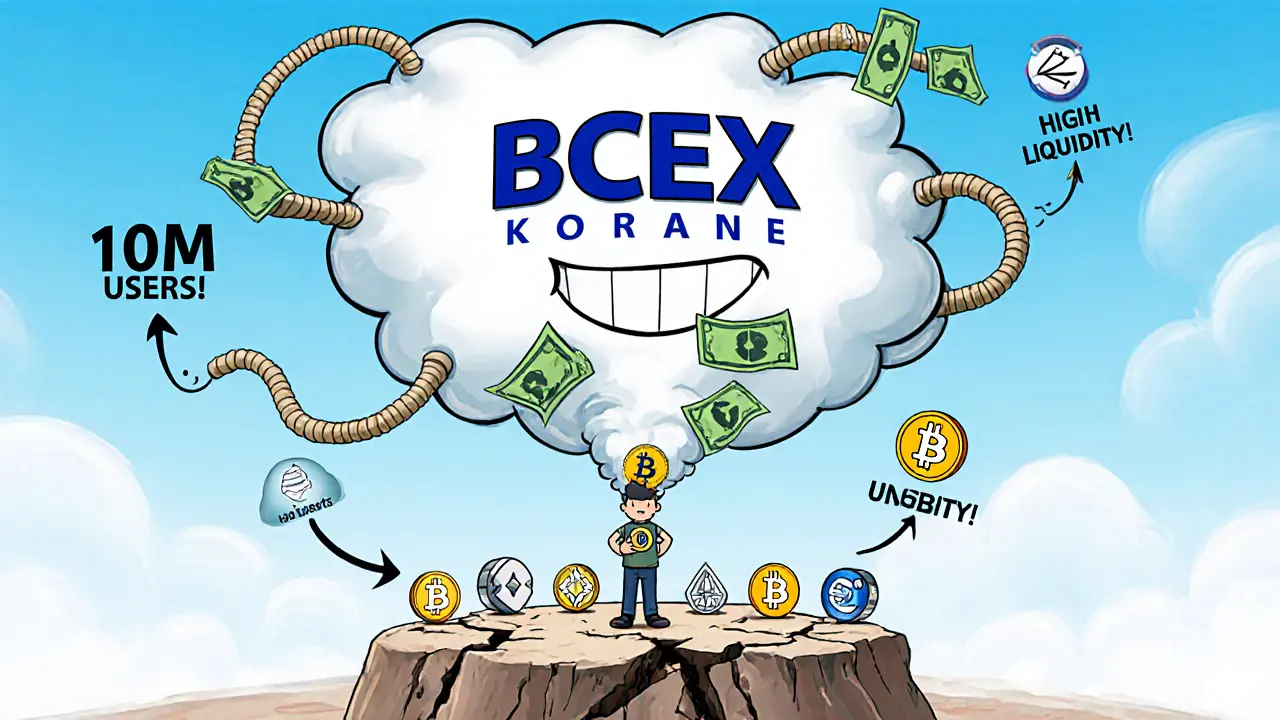
BCEX Korea claims massive trading volume and 500+ coins, but real data shows just 7 active pairs and $3M daily volume. Learn why this exchange is risky and what better alternatives exist in South Korea.