Crypto Regulation China: What's Banned, What's Allowed, and How It Affects Global Crypto
When we talk about crypto regulation China, the strict, state-driven approach to cryptocurrency control implemented by the Chinese government since 2017. Also known as China's cryptocurrency crackdown, it's not about stopping innovation—it's about controlling financial flows and protecting the state's digital currency, the digital yuan, China's central bank digital currency (CBDC) designed to replace cash and monitor transactions. Unlike countries that try to regulate crypto through licensing or taxation, China simply banned it outright—no exchanges, no mining, no peer-to-peer trading on major platforms. The goal? Keep capital from leaving the country and ensure the government stays in control of money.
What's surprising is that while crypto trading and mining were crushed, blockchain China, the underlying technology used for secure, transparent ledgers without cryptocurrencies was encouraged. The government funded research, built national blockchain networks, and even tested smart contracts for supply chains and public records. This split is key: crypto as a threat, blockchain as a tool. That’s why you’ll find Chinese companies like Alibaba and Tencent building enterprise blockchain solutions while their citizens can’t buy Bitcoin on Binance. The crypto mining China, once the world’s largest hub for Bitcoin mining, now banned under strict energy and environmental rules crackdown forced miners to flee to Kazakhstan, the U.S., and Nigeria—changing the global hash rate map overnight.
The cryptocurrency ban China, the sweeping prohibition on all crypto-related financial services since 2021 didn’t stop people from using crypto—it just pushed it underground. Millions still use DAI on Polygon, trade via Telegram P2P, or rely on friends with overseas wallets. But the risks are high: accounts get frozen, exchanges vanish, and regulators don’t care if you’re just holding Bitcoin for savings. Meanwhile, the digital yuan, China's central bank digital currency (CBDC) designed to replace cash and monitor transactions is being tested in over 200 cities, with millions of users already on the platform. It’s fast, traceable, and government-controlled—everything crypto was supposed to fight against.
The world watches China’s move closely. Other countries are now copying its playbook—banning crypto to push their own digital currencies. But China’s model only works because of its centralized power. In open societies, you can’t just shut down a decentralized network. That’s why the posts below cover everything from how Iranians bypass similar bans to how Russia uses crypto to dodge sanctions. You’ll find real stories from people who lost money, others who found workarounds, and deep dives into the tech that keeps crypto alive even where it’s illegal. This isn’t theory. It’s survival.
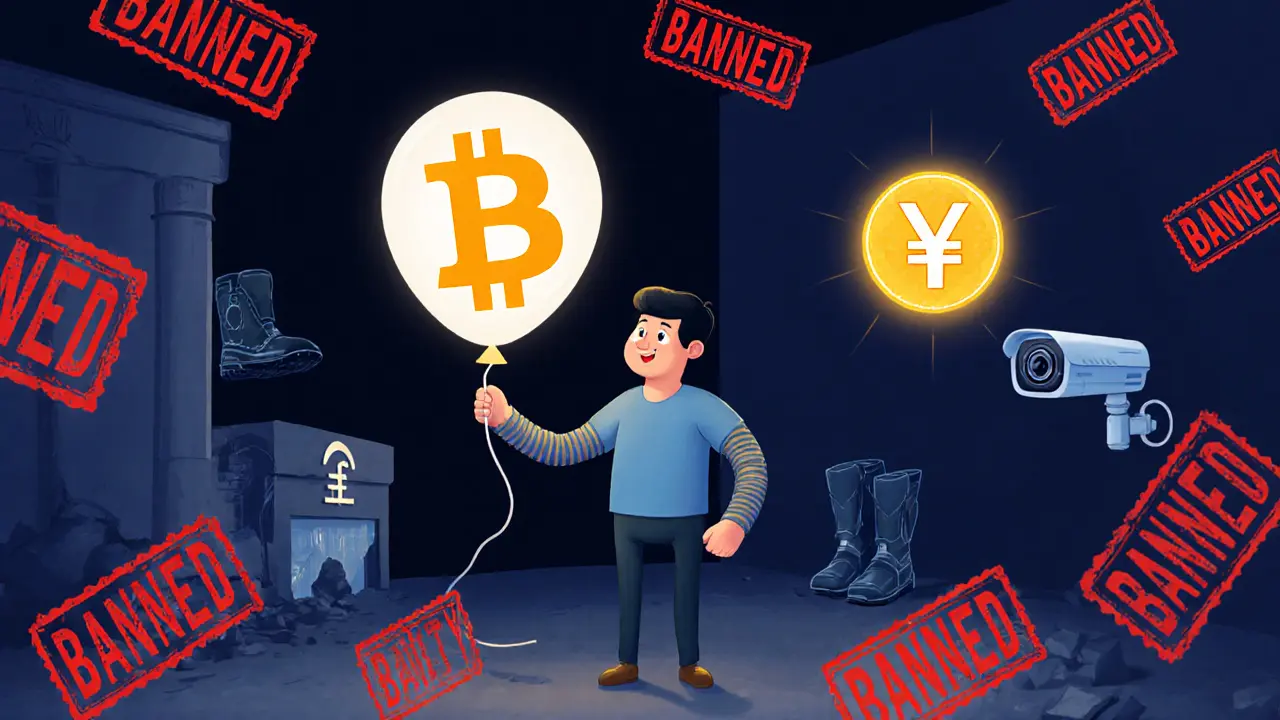
China's crypto ban blocks all trading, mining, and exchange of Bitcoin. Holders can own it, but can't use it legally. Banks freeze accounts, mining is shut down, and the digital yuan is the government's real focus.