Formal Verification in Blockchain: How Code Gets Proven Safe
When you hear formal verification, a mathematical method to prove software behaves exactly as intended without errors. Also known as correct-by-construction verification, it's not just theory—it’s the reason some blockchains never get hacked the way others do. Unlike testing, which checks a few scenarios, formal verification runs every possible path through the code. It asks: Can this smart contract ever send funds to the wrong address? Can it get stuck in an infinite loop? Can someone drain it with a single weird input? If the math says no, then it’s safe.
This isn’t about fancy tools or expensive consultants. It’s about smart contracts, self-executing agreements coded directly onto blockchains that handle billions in value. If a contract has a flaw, hackers exploit it—fast. And once it’s live, you can’t patch it. That’s why projects like Ethereum’s Beacon Chain, Tezos, and Zcash use proof systems, formal methods that generate mathematical certificates proving code correctness. These aren’t guesses. They’re ironclad guarantees written in logic, not opinion.
It’s not magic. It’s hard work. Developers write specs in precise languages like Coq or Isabelle, then let automated tools grind through every possible input. It takes time. It takes skill. But when done right, it stops attacks before they happen. The 2016 DAO hack? Could’ve been prevented. The Parity wallet freeze? Might’ve been avoided. Formal verification doesn’t make code perfect—but it removes the biggest, most obvious holes.
What you’ll find below isn’t just a list of articles. It’s a real-world look at how blockchain security actually works. From formal verification techniques that guard critical protocols, to how Merkle trees and Byzantine Fault Tolerance create layers of trust, to why even the most secure systems still need human oversight. These posts don’t just explain concepts—they show you what’s been proven, what’s still risky, and what you should care about when holding crypto.
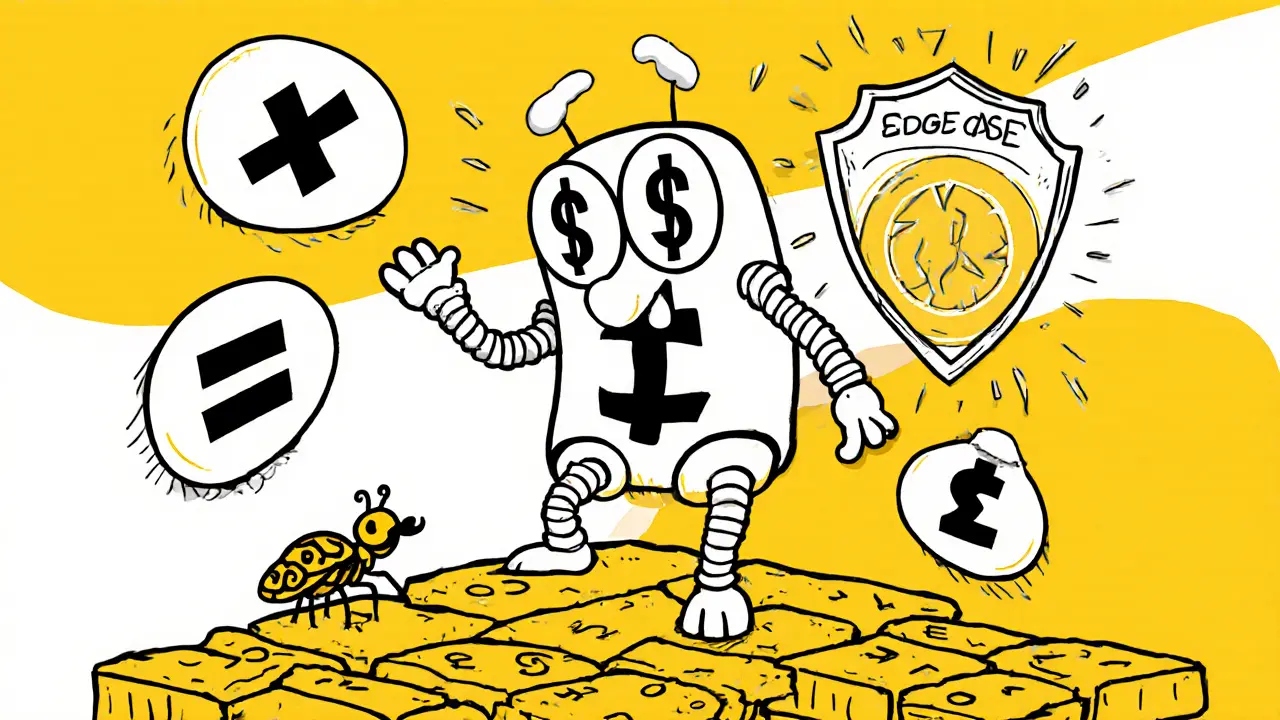
Formal verification uses math to prove smart contracts behave correctly under all conditions. It's now standard for high-value DeFi protocols and required by regulators. Learn how it works, which tools to use, and when you need it.