Fraud Detection Blockchain: How Crypto Networks Stop Scams and Protect Users
When you hear fraud detection blockchain, a system that uses cryptographic protocols and distributed ledgers to identify and block malicious activity in real time. It's not magic—it's math, logic, and network design working together to make crypto safer than traditional finance. Every time a transaction gets added to a blockchain, it's checked by dozens, sometimes thousands, of independent nodes. If something looks off—like a wallet suddenly sending out millions in tiny chunks—it gets flagged before it even finishes.
Behind the scenes, Merkle trees, a data structure that condenses thousands of transactions into a single hash. Merkle root lets wallets verify payments without downloading the whole blockchain make it impossible to fake a transaction without changing the entire chain. That’s why SPV wallets can still trust the network. And when enterprises run private blockchains, they rely on Byzantine Fault Tolerance, a consensus method that lets networks stay secure even if some nodes are hacked or lying. PBFT is the engine behind Hyperledger Fabric and other systems used by banks and governments. It doesn’t need trust—it needs math.
Smart contracts, the automated code running on blockchains, are another weak spot. That’s where formal verification, a process that uses mathematical proofs to show a contract behaves correctly under every possible condition comes in. Top DeFi protocols like Aave and Compound use it. If a contract can’t be proven safe, it doesn’t go live. Regulators now demand it. Meanwhile, UK sanctions compliance, a real-world application where crypto firms must track funds in real time to block money flowing to sanctioned entities shows how fraud detection isn’t just technical—it’s legal.
These aren’t theoretical ideas. They’re the reason your crypto didn’t vanish when the Shwe Kokko scam network tried to move $10 billion. They’re why British Columbia’s mining ban didn’t break the network—it just shifted energy use. And they’re why a fake airdrop like VDV VIRVIA can’t trick users who know to check the blockchain, not a Telegram group. Fraud detection blockchain doesn’t prevent every scam, but it raises the cost so high that most bad actors walk away.
Below, you’ll find real cases where these systems worked—or failed. From how Bitcoin nodes stop censorship to how quantum computing might break encryption in the future, these posts show exactly how crypto stays secure in a world full of people trying to break it.
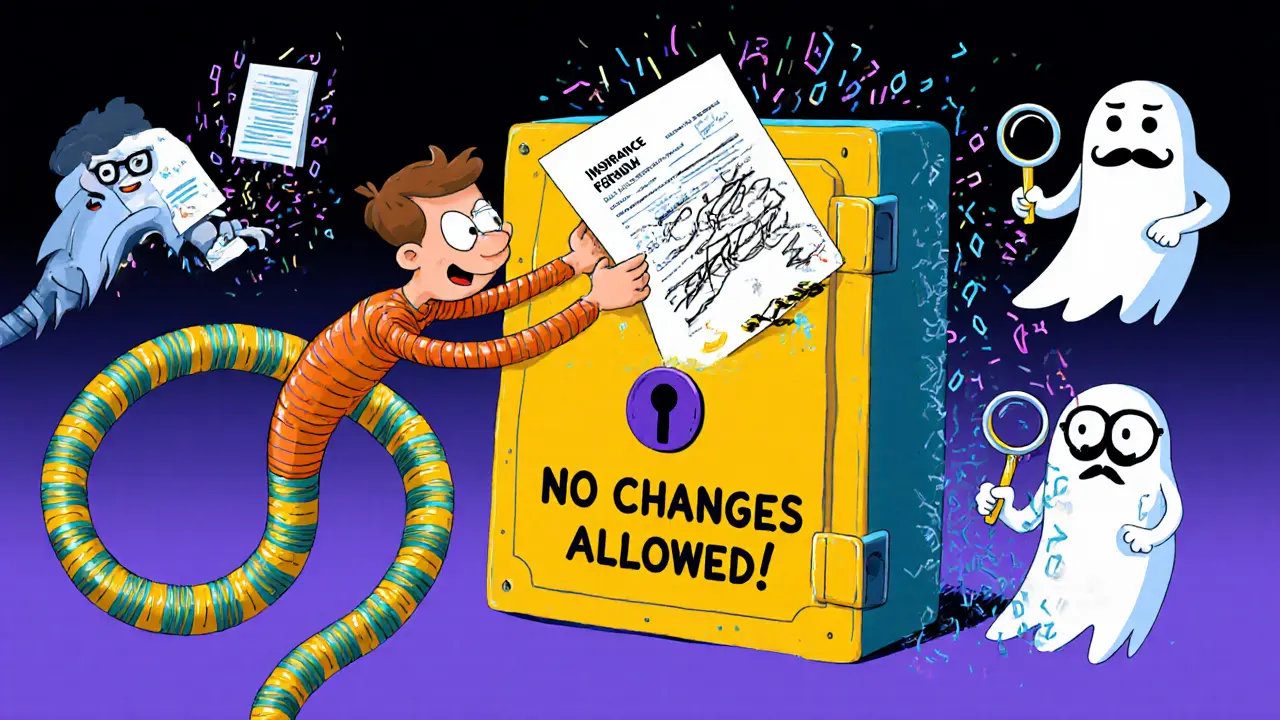
Blockchain is cutting insurance fraud by 68% in pilot programs by creating tamper-proof claims records. Learn how it works, who's using it, and why it's not a magic fix.