Insurance Fraud Prevention in Crypto: How Scams Evolve and How to Stop Them
When we talk about insurance fraud prevention, the practice of stopping deceptive claims to protect financial systems. Also known as fraud detection, it’s traditionally linked to health, auto, or property claims. But in crypto, fraud doesn’t come from falsified accident reports—it comes from fake tokens, rigged airdrops, and sanctioned networks hiding stolen funds. The same principles apply: identify the lie, trace the money, and cut off the flow.
Modern crypto fraud looks nothing like old-school insurance scams. Instead of faking a car crash, scammers create tokens like Beckos (BECKOS), a meme coin with 420 trillion supply and zero real use, or launch fake airdrops like VDV VIRVIA, a scam that pretends to reward users but steals wallet keys. These aren’t just bad investments—they’re engineered thefts. And they thrive because people assume crypto is anonymous, not traceable. But blockchain doesn’t lie. Every transaction leaves a trail. That’s why governments are stepping in. The U.S. sanctioned nine entities in Myanmar tied to a $10 billion scam ring, and the UK now requires crypto firms to use real-time tools to block sanctions evasion, the illegal movement of funds through crypto to avoid financial penalties. These aren’t distant policies—they’re active defenses.
What makes this different from traditional insurance fraud? It’s scale and speed. One fake airdrop can target thousands in hours. A single unregulated exchange like HitBTC or Zeddex can become a funnel for stolen assets. And unlike a forged medical bill, a scam token can vanish overnight with no recourse. That’s why prevention isn’t about paperwork—it’s about awareness. Know the red flags: tokens with no team, no audits, no listings. Airdrops that ask for your seed phrase. Exchanges with zero users but zero fees. These aren’t opportunities—they’re traps.
Blockchain security tools like Merkle trees and formal verification help platforms prove they’re not lying. But they won’t protect you if you click a link in a Telegram group promising free crypto. The strongest fraud prevention system isn’t a government agency or a smart contract—it’s your own skepticism. If it sounds too good to be true, it is. And in crypto, that’s not just a saying—it’s a survival rule.
Below, you’ll find real cases of how these scams work—from the Myanmar networks hiding behind armed groups, to the fake GZONE airdrops that have stolen thousands, to the Russian tokens used to bypass sanctions. These aren’t hypotheticals. They’re happening now. And knowing how they operate is the first step to staying safe.
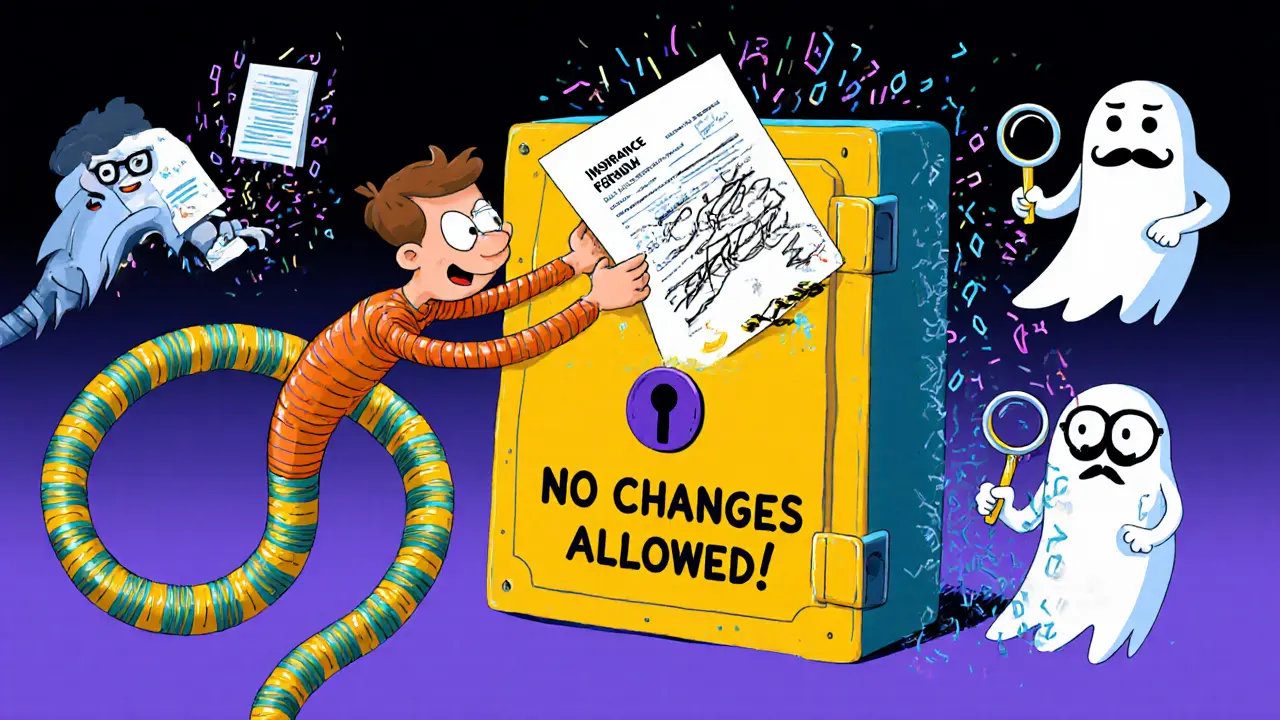
Blockchain is cutting insurance fraud by 68% in pilot programs by creating tamper-proof claims records. Learn how it works, who's using it, and why it's not a magic fix.