Sanctions Evasion Crypto: How Crypto Bypasses Global Restrictions
When governments try to cut off access to the global financial system, sanctions evasion crypto, the use of digital assets to circumvent financial restrictions imposed by foreign governments. Also known as crypto sanctions circumvention, it’s not theoretical—it’s happening right now in countries like Russia, Iran, and Venezuela, where people and institutions turn to blockchain to move money when banks won’t let them. This isn’t about hiding money from the IRS. It’s about survival—keeping savings alive when national currencies collapse or when international wire systems freeze.
One of the clearest examples is Russia, a nation that built a parallel crypto infrastructure after Western sanctions blocked its access to SWIFT and major banks. Also known as Russian crypto network, it relies on exchanges like Grinex, a Russia-linked platform that replaced Garantex after sanctions hit. Also known as Grinex exchange, it handles billions in trades using obscure tokens like A7A5, a token created specifically to move value without triggering traditional financial monitoring. Also known as A7A5 crypto, it’s not traded on Binance or Coinbase—it moves through private channels, peer-to-peer networks, and encrypted messaging apps.
It’s not just Russia. In Iran, where the government blocks access to foreign exchanges, people use DAI, a stablecoin pegged to the US dollar that runs on Polygon and avoids direct ties to regulated platforms. Also known as DAI stablecoin, it lets Iranians buy groceries, pay for medicine, and send money abroad without touching the rial. They use VPNs to reach decentralized exchanges, then trade on Telegram groups where buyers and sellers match up directly. No KYC. No bank. No middleman. These aren’t tech fantasies—they’re daily routines for millions.
What ties these cases together? It’s not anonymity alone. It’s accessibility. You don’t need a bank account to hold crypto. You don’t need approval from a government to send it. And once it’s on the blockchain, it’s nearly impossible to reverse or seize. That’s why governments fear it. That’s why people rely on it.
Below, you’ll find real breakdowns of how this works—from the tokens used, to the exchanges that stay under the radar, to the tools people actually use to stay connected. No theory. No speculation. Just what’s happening now, in the places where financial freedom is under siege.
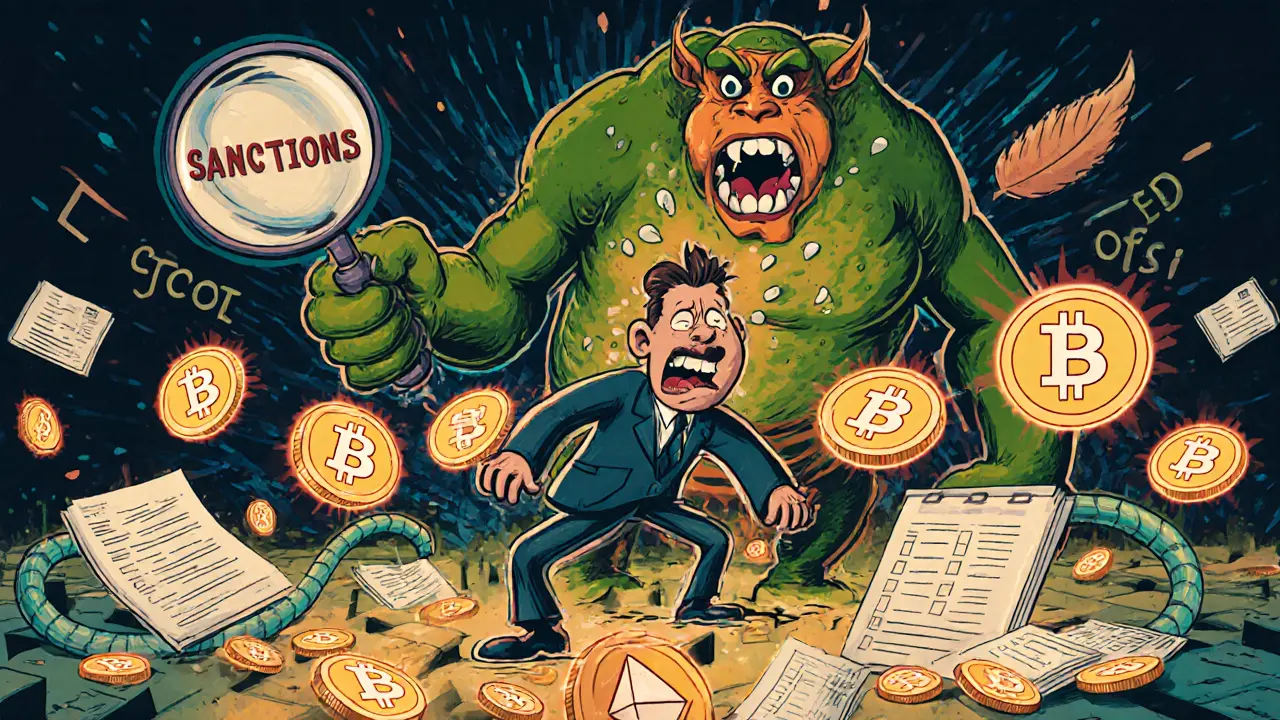
UK crypto firms must now use real-time blockchain tools to prevent sanctions evasion. With OFSI reporting widespread under-reporting and new fines hitting millions, compliance is no longer optional-it's a survival requirement.