Security Token Market: What It Is and Why It Matters for Crypto Investors
When you hear security token market, a regulated segment of blockchain where digital assets represent real-world ownership like shares, real estate, or debt. Also known as tokenized securities, it’s not about memes or speculation—it’s about turning assets like company equity or rental income into tradable blockchain tokens under legal oversight. Unlike Bitcoin or Ethereum, which are utility or currency tokens, security tokens are treated like stocks by regulators like the SEC, FCA, or ESMA. That means they must follow strict rules: disclosures, investor verification, and reporting. This isn’t a loophole—it’s a bridge between Wall Street and Web3.
What makes the security token, a blockchain-based digital asset representing ownership in an external asset or enterprise, compliant with financial regulations. Also known as STO, it different is how it connects real value to code. A startup can issue tokens backed by 10% of its profits. A building owner can split a property into 1,000 tokens, letting anyone buy a slice. These aren’t theoretical. Projects in the U.S., Switzerland, and Singapore have already issued tokenized real estate, private equity, and even music royalties. But they only work if the platform follows blockchain regulation, the legal frameworks governing digital assets that are classified as securities under existing financial laws. Also known as crypto compliance, it rules—KYC, AML, and audited smart contracts. That’s why you’ll see fewer wild price swings here than in meme coin markets. The goal isn’t to get rich overnight—it’s to build a transparent, liquid market for assets that were once locked away.
Behind every security token is a system designed for trust. That’s why you’ll find posts here on tokenization, the process of converting rights to an asset into a digital token on a blockchain. Also known as asset digitization, it using Merkle trees to prove ownership without exposing full transaction history, or how Byzantine Fault Tolerance keeps enterprise-led token platforms running even if some nodes fail. You’ll also see how formal verification keeps smart contracts from leaking funds, and why the number of nodes matters—not just for Bitcoin, but for any regulated blockchain that needs to prove integrity to auditors and investors.
There’s no sugarcoating it: the security token market is still small compared to DeFi or spot trading. But it’s growing fast because institutions need it. Pension funds, hedge funds, and family offices can’t touch unregulated tokens—but they can invest in compliant ones. That’s why you’ll find deep dives on how countries like Switzerland and Malta are building legal sandboxes, how U.S. crypto firms are adapting to OFSI and IRS rules, and why quantum computing threats matter more here than anywhere else—because the assets behind these tokens are worth billions.
What follows is a collection of real-world examples, technical breakdowns, and risk assessments—all tied to how security tokens are built, regulated, and used today. No hype. No promises of 100x returns. Just what’s actually happening on the ground, who’s behind it, and what you need to know before you even consider getting involved.
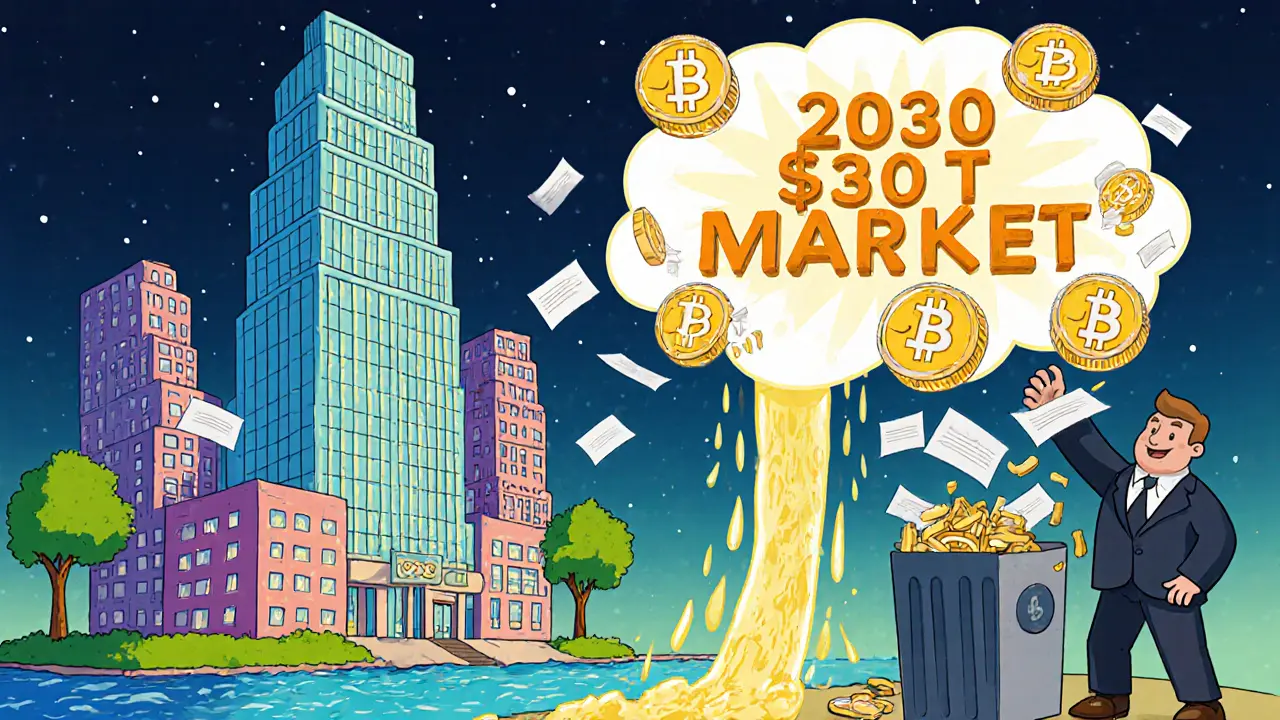
Security token markets are transforming how assets like real estate, bonds, and commodities are owned and traded using blockchain. With institutional adoption rising and regulations clarifying, this $250B market could hit $30T by 2030.