Tokenized Assets: What They Are, How They Work, and Why They Matter
When you hear tokenized assets, digital representations of real-world value like property, stocks, or commodities on a blockchain. Also known as digital securities, they let you own a piece of something that used to require thousands of dollars and legal paperwork just to get started. It’s not magic—it’s code. A building, a painting, even a share in a startup can be broken into hundreds or thousands of tiny tokens, each tracked on a public ledger. That’s the core idea behind tokenized assets: making ownership accessible, liquid, and verifiable without middlemen.
What makes this possible? smart contracts, self-executing code that enforces rules around ownership, transfers, and payouts automatically. These contracts handle everything from who can buy a token to how profits are split—no lawyer needed. And because they run on blockchains like Ethereum or Polygon, every transaction is recorded forever. That’s why tokenized assets are gaining traction in real estate, art, and even music royalties. Someone in Nairobi can buy 0.01% of a New York apartment. A musician in Lagos can sell shares of their next album directly to fans. This isn’t theory—it’s happening now.
But tokenized assets aren’t just about buying fractions. They’re about trust. Traditional systems rely on banks, brokers, and regulators to verify ownership. With tokenized assets, the blockchain does the verifying. That’s why projects like Alpha Quark Token, which tokenizes music and film rights, or Tusima Network, which builds privacy layers for business data, are using this tech. It’s not just about turning things into tokens—it’s about making the system fairer, faster, and open to more people.
Of course, it’s not without risks. Some tokenized assets are scams. Others sit on poorly secured chains. But the real power lies in the shift: from centralized control to decentralized ownership. You don’t need permission to buy a token. You don’t need a broker to sell it. And you don’t need to wait weeks for settlement—it’s done in minutes.
What you’ll find below isn’t a list of hype. It’s a collection of real, grounded pieces that explain how tokenized assets connect to blockchain security, governance, and practical use cases. From how Merkle trees verify ownership data to how formal verification keeps smart contracts safe, these posts cut through the noise. You’ll see how enterprises use permissioned blockchains to manage tokenized assets, how regulators are reacting, and what tools actually work in 2025. No fluff. No promises of quick riches. Just clear, practical knowledge to help you understand what’s real—and what’s not.
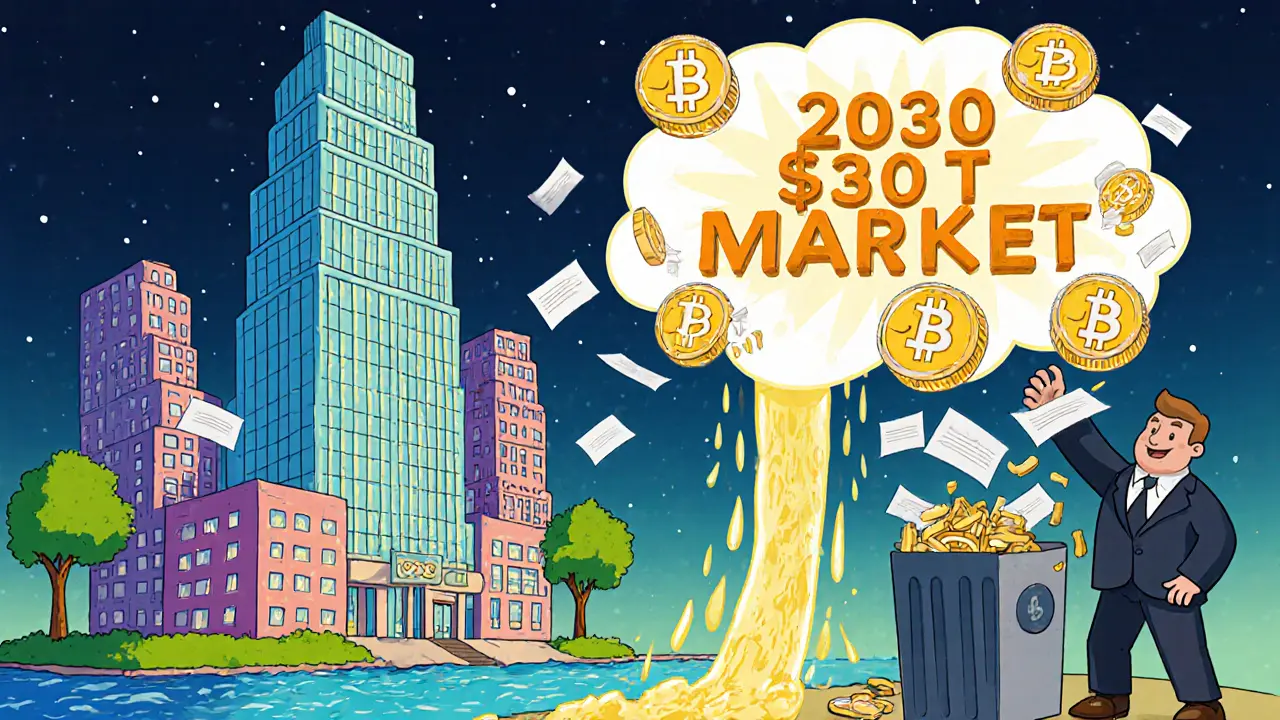
Security token markets are transforming how assets like real estate, bonds, and commodities are owned and traded using blockchain. With institutional adoption rising and regulations clarifying, this $250B market could hit $30T by 2030.