UK Crypto Sanctions: What You Need to Know About Crypto Restrictions and Enforcement
When the UK crypto sanctions, targeted financial restrictions imposed by the UK government on individuals, entities, or countries using cryptocurrency to evade traditional financial controls. Also known as crypto asset sanctions, these rules are designed to block illicit flows of digital money tied to terrorism, war crimes, and state-sponsored hacking. The UK’s Office of Financial Sanctions Implementation (OFSI) treats crypto the same as cash—any transaction involving a sanctioned wallet or exchange is illegal, no matter how it’s disguised.
These sanctions aren’t just about freezing wallets. They force exchanges operating in the UK to screen every user against OFSI’s list, which includes Russian oligarchs, Iranian entities, and North Korean hacking groups. If you’re using a crypto service based in the UK—like Coinbase UK, Binance UK, or even a peer-to-peer platform—you’re already under this filter. The rules also apply to anyone sending crypto to someone on the list, even if you didn’t know they were sanctioned. Ignorance isn’t a defense.
What makes this different from other countries is how fast the UK acts. While the US takes months to update its sanctions list, the UK adds new addresses within days of a cyberattack or invasion. In 2023 alone, OFSI froze over 1,200 crypto wallets linked to Russian evasion networks. They’ve targeted mixers like Tornado Cash, decentralized exchanges like Uniswap when used by sanctioned actors, and even NFT marketplaces that traded assets tied to sanctioned individuals. This isn’t theoretical—it’s happening right now.
The real impact isn’t just on criminals. Ordinary users have seen wallets frozen after receiving small amounts from a compromised address. Some have been locked out of their own funds because a former owner was flagged. If you’re trading on an unregulated platform, using a VPN to access a foreign exchange, or accepting crypto from someone you don’t fully know—you’re at risk. The UK doesn’t care if you didn’t mean to break the rules. They only care if you did.
There’s no gray area: if a wallet is on the OFSI list, you cannot interact with it. No exceptions. No workarounds. Even if the crypto came from a legitimate source, if it passed through a sanctioned address, it’s tainted. That’s why top UK exchanges now require full transaction history checks before allowing withdrawals. It’s not paranoia—it’s compliance.
What you’ll find below are real cases, technical breakdowns, and practical guides on how these sanctions affect everything from wallet security to DeFi usage. You’ll see how Russian actors used crypto to bypass UK restrictions, how UK-based miners got caught in the net, and why even small airdrops can trigger compliance flags. These aren’t theoretical risks. They’re documented events—each one a lesson in what happens when crypto meets government enforcement.
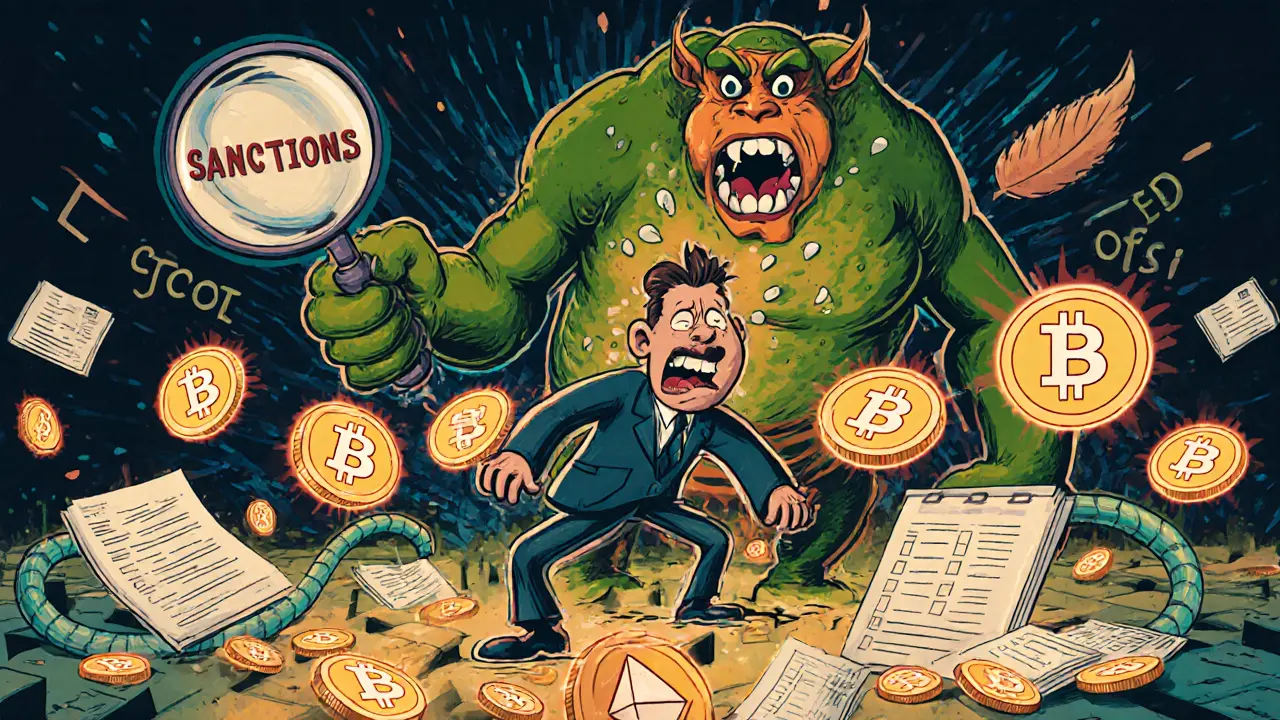
UK crypto firms must now use real-time blockchain tools to prevent sanctions evasion. With OFSI reporting widespread under-reporting and new fines hitting millions, compliance is no longer optional-it's a survival requirement.