Imagine owning a piece of a company, but instead of just hoping the stock price goes up, you get a direct say in how the CEO spends the budget or which new products get built. That is essentially the promise of a governance token is a specialized cryptocurrency that grants its holders voting rights within a blockchain protocol or a Decentralized Autonomous Organization (DAO). Unlike Bitcoin, which is mostly seen as digital gold, these tokens are more like digital ballots that represent power and influence over a network's future.
The real question is: why do these tokens have value? If a token only lets you vote on technical upgrades that you might not even understand, is it actually worth anything? For many, the value is speculative, but for the architects of the new web, it is about the shift from centralized corporate boards to community-led ownership. Whether you are a long-term investor or just curious about the tech, understanding the mechanics of these assets is key to navigating the current crypto landscape.
The Engine Behind the Vote: How It Actually Works
At its core, governance is powered by Smart Contracts. These are self-executing pieces of code that remove the need for a middleman. When a proposal is made-say, to change the interest rate on a lending platform-the smart contract counts the votes and, if the threshold is met, automatically applies the change to the protocol. There is no manager who can ignore the result; the code simply executes.
Typically, voting power is proportional. If you own 1% of the total token supply, you have 1% of the voting weight. This creates a direct link between financial stake and influence. If you have a lot of money on the line, you have a bigger incentive to make decisions that keep the protocol healthy. However, this also leads to a "whale" problem, where a few massive holders can override thousands of smaller users, which often contradicts the whole point of decentralization.
Where Does the Value Come From?
If you look at the market price of a governance token, you are seeing a mix of utility and speculation. Most of the value currently comes from secondary market discovery-basically, what people are willing to pay for the potential of future influence. But true, intrinsic value usually comes from three specific areas:
- Treasury Control: Many DAOs manage massive treasuries filled with millions of dollars in assets. Holding a governance token means you have a say in how that capital is spent, whether it is for marketing, developer grants, or strategic acquisitions.
- Protocol Parameters: In Decentralized Finance (DeFi), tokens allow users to tweak the "knobs" of the system. For example, MakerDAO holders use the MKR token to decide the risk parameters for the DAI stablecoin. If you can influence the rules to favor your own strategy, that power has monetary value.
- Revenue Sharing: Some projects are moving toward "Value Accrual" models. Instead of just voting, token holders might receive a share of the protocol's transaction fees. This turns a governance token from a simple ballot into a dividend-paying asset.
| Model | Who Has Power? | Main Value Driver | Biggest Weakness |
|---|---|---|---|
| Proportional Voting | Whales / Large Holders | Direct Influence | Centralization Risk |
| Quadratic Voting | Broad Community | Fair Representation | Sybil Attack Vulnerability |
| Revenue-Share | Active Stakeholders | Passive Income | Regulatory Scrutiny |
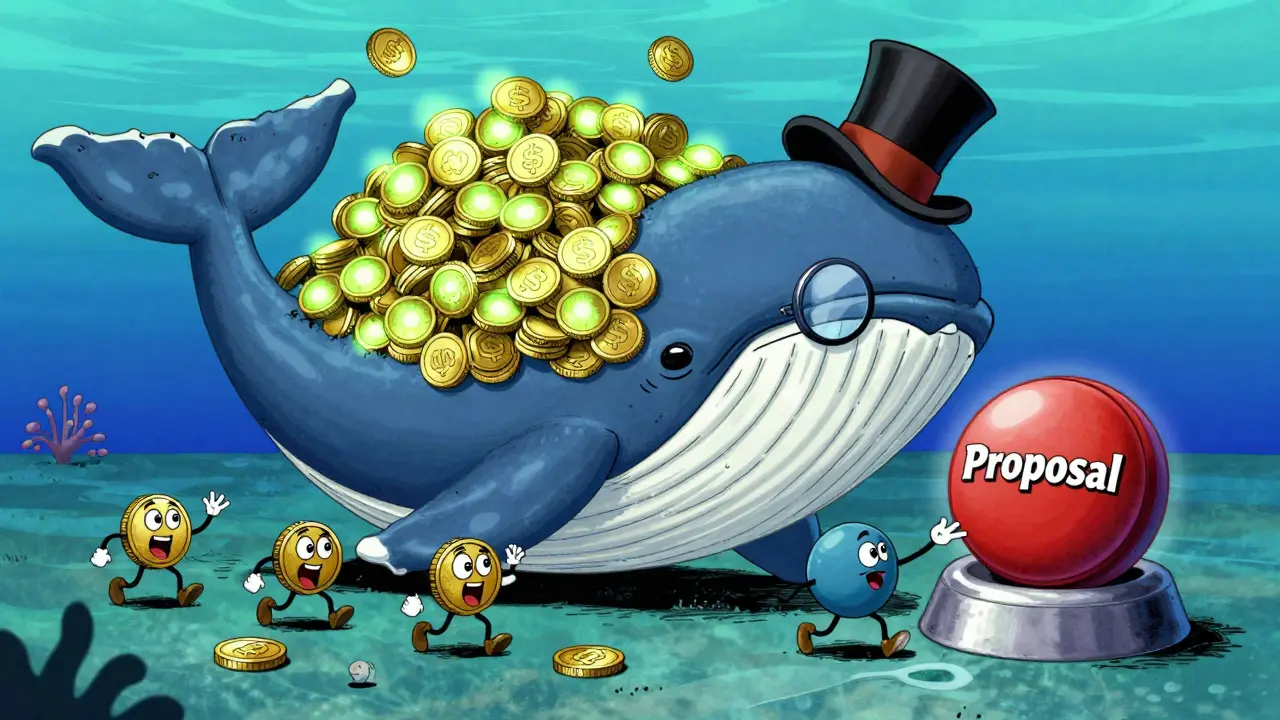
The Dark Side: Apathy and Whale Dominance
It sounds great on paper, but the reality is often messy. One of the biggest hurdles is "governance fatigue." Most people don't want to read a 20-page technical proposal about liquidity pool ratios on a Tuesday afternoon. This leads to massive voter apathy, where only a tiny fraction of tokens are actually used to vote. When only 2% of holders participate, the legitimacy of the decision is called into question.
Then there is the issue of the Whale-investors with enough tokens to unilaterally pass proposals. This creates a paradox: the system is decentralized in name, but in practice, it functions like a plutocracy. To fight this, some projects are experimenting with Quadratic Voting, a mathematical approach where the cost of each additional vote increases quadratically. In simple terms, 100 votes from one person count for far less than one vote from 100 different people.
Modern Shifts: From Speculation to Sustainability
We are seeing a shift in how these tokens are designed. Early versions were often just "rewards" given to users for using a platform (liquidity mining), which led to a cycle of pumping and dumping. Today, the industry is moving toward Progressive Decentralization. This is where a founding team keeps control during the early, volatile stages and slowly hands the keys to the community over several years. This prevents the project from collapsing due to a bad community vote before the product is even finished.
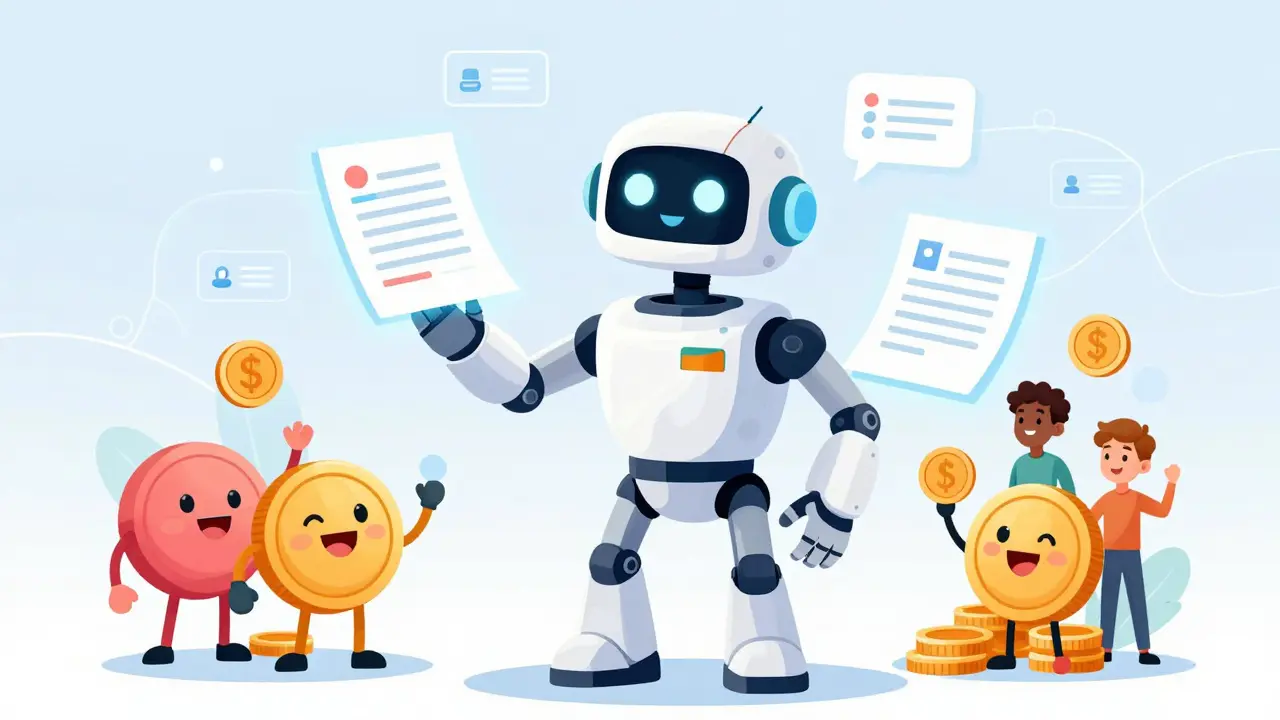
Another trend is the integration of AI. Imagine an AI agent that analyzes 50 different governance proposals, summarizes the risks, and suggests a vote based on your pre-set preferences. This could solve the apathy problem by making participation a five-minute task rather than a full-time job. Additionally, cross-protocol governance is emerging, allowing different blockchain projects to coordinate their decisions, creating a web of interconnected digital organizations.
How to Evaluate a Governance Token
If you are trying to figure out if a token actually has value, stop looking at the price chart and start looking at the forum. A healthy governance token is backed by an active, arguing, and engaged community. If the proposals are vague and the voting is always 100% in favor of the founders, the token is likely just a marketing tool with no real power.
Check for these three indicators:
- Voter Turnout: What percentage of the total supply actually participates? High turnout equals high legitimacy.
- Proposal Diversity: Are people proposing real changes, or just "thank you" notes to the team?
- Treasury Transparency: Is there a clear, public record of how the funds are being spent based on the votes?
Are governance tokens considered securities?
This is a major gray area. Regulators, especially in the US, often look at whether a token represents an investment in a common enterprise with an expectation of profit. If a token promises revenue sharing or acts like a stock, it is more likely to be classified as a security than a pure utility token.
Can I vote without owning the tokens?
Generally, no. In most systems, you must hold the tokens in your wallet to sign the transaction. However, some protocols use "delegation," where you can give your voting power to a trusted expert or representative without actually sending them your tokens.
What happens if a proposal fails?
If a proposal doesn't reach the required quorum (minimum number of votes) or fails to get a majority, nothing happens. The protocol continues to operate under its existing rules. In some cases, the proposal may be refined and resubmitted for a second vote.
Does owning more tokens always mean more power?
In traditional proportional systems, yes. But in newer models like Quadratic Voting or identity-based voting (where one person equals one vote regardless of balance), the influence of large holders is intentionally limited to ensure a more democratic outcome.
Why do some governance tokens crash in price?
Many tokens suffer from "inflationary pressure." When projects give tokens away as rewards to attract users, those users often sell their tokens immediately for a profit. If the token doesn't have a strong reason to be held (like revenue sharing or critical voting power), the price drops as the market is flooded with supply.
Comments (10)
Adam Auksel
April 10, 2026 AT 15:54
This is a great breakdown for anyone trying to get their feet wet in the DAO space! 🌟 I really think the shift toward AI agents for voting could be a game-changer for accessibility. It's all about making sure everyone feels empowered to participate regardless of their technical background 🚀✨
Amanda Faust
April 12, 2026 AT 06:58
obviously the whole concept of governance tokens is just a repackaged version of shareholder voting but with more volatility and fewer legal protections
Jessie Tayaban
April 13, 2026 AT 06:05
Omg yes!! the whale probelm is so real and it just makes me feel like the whole thing is riggd anywayyy 😭💔
Tracie and Matthew Hartley
April 13, 2026 AT 09:34
quadratic voting is just another way to pretend its fair while the devs still pull all the strings behnd the scenes lol
Aaliyah BROTHERS
April 14, 2026 AT 12:14
WAKE UP PEOPLE!!! This is exactly how the GLOBALISTS want to control our money!!! First it is a "voting token" and then suddenly your entire bank account is controlled by a nameless algorithm in some foreign server!!! Absolute madness!!!! 😡🇺🇸
william manes
April 15, 2026 AT 00:30
Total scam. Only patriots win. 🇺🇸🤡
Rebecca Violette
April 16, 2026 AT 04:25
i tried geting into a dao once but the community was so toxic and i felt like i was just being used for my liquidity... it's just so draining honestly 😔
Rob Mitchell
April 16, 2026 AT 19:24
Delegation is the best middle ground here. It lets experts handle the technicals while holders maintain ultimate control.
Emily H
April 17, 2026 AT 01:45
The transition toward progressive decentralization represents a sophisticated approach to project maturity. By ensuring that the foundational architecture is stable before relinquishing control to the community, developers can mitigate the risk of premature governance failures. Furthermore, the integration of value accrual models, such as revenue sharing, transforms these tokens from mere utility instruments into sustainable financial assets. This evolution is critical for attracting long-term institutional capital. It is also noteworthy that the legal classification of these assets remains a pivotal challenge. The tension between utility and security definitions will likely dictate the pace of adoption in regulated markets. Ultimately, the success of any governance model depends upon the quality of its participants and the transparency of its treasury management. Without a robust mechanism for auditing funds, the promise of decentralized power remains an aspiration rather than a reality. I believe the industry is moving in the right direction, albeit slowly. The move toward AI-assisted governance will likely alleviate the burden of technical literacy for the average user. This could lead to a more democratic distribution of power. Proper education on these systems is essential for the broader public. We must distinguish between speculative hype and actual functional utility. Only then can we achieve true decentralized governance.
Lauren Abrams
April 18, 2026 AT 12:55
Interesting points on the treasury control side of things.