
The Brazilian Digital Token, or BRZ, isn’t just another crypto coin. It’s a digital version of the Brazilian Real (BRL) built to let people in Brazil trade and hold their local currency on global crypto platforms without jumping through banking hoops. Unlike Bitcoin or Ethereum, BRZ doesn’t swing wildly in price. It’s designed to stay worth exactly 1 BRL - one token equals one real. That stability makes it a bridge between Brazil’s economy and the rest of the crypto world.
How BRZ Works
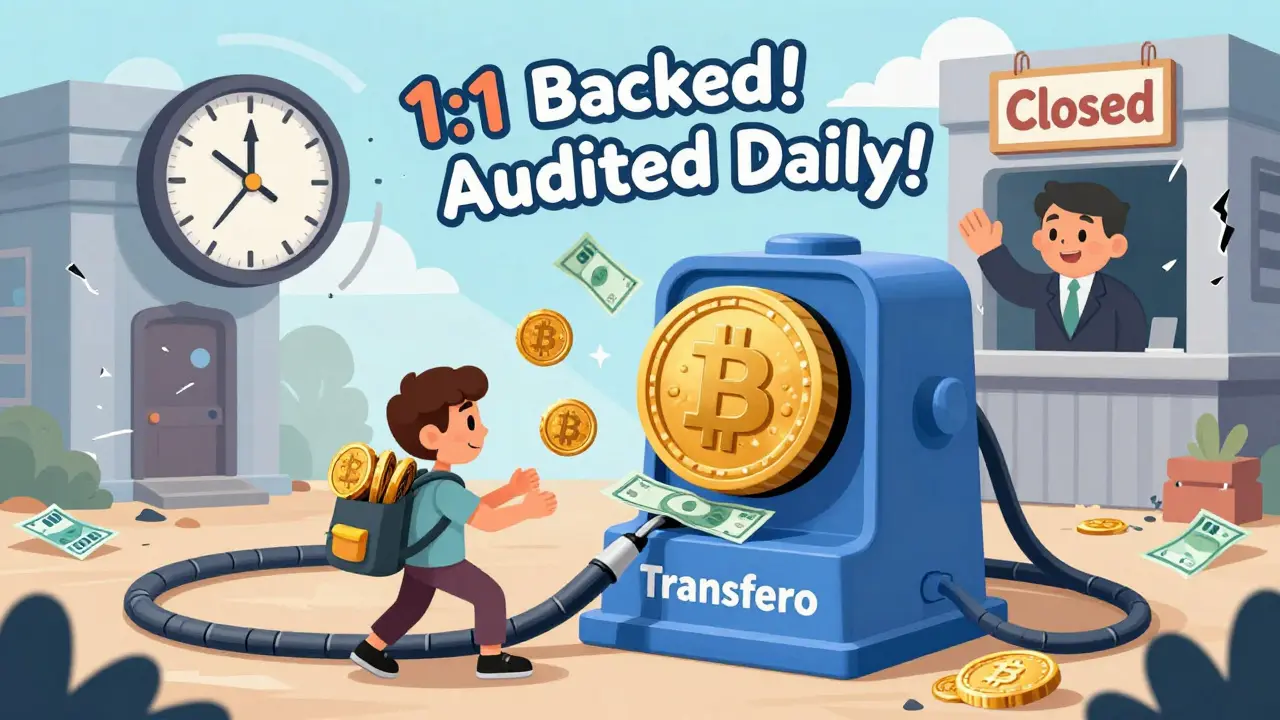
BRZ is an ERC-20 token, which means it runs on the Ethereum blockchain. It’s also available on Polygon, a faster and cheaper layer built on top of Ethereum. Every BRZ token in circulation is backed by a real Brazilian Real held in reserve. If you buy 100 BRZ, Transfero - the company behind it - must have 100 BRL in a bank account somewhere to match it. This 1:1 backing is audited regularly by third-party firms, so you can check that the reserves are real.
Here’s the catch: you can’t just walk into a bank and swap cash for BRZ. The process is digital. Brazilian users can buy BRZ through approved platforms like NovaDAX or Transfero’s own app. When you deposit BRL, you get BRZ in return at a 1:1 rate. Want to cash out? You can redeem BRZ back into BRL, but you’ll pay a 1% fee. That fee covers operational costs and keeps the system running smoothly.
Why BRZ Exists
Brazil has one of the largest crypto markets in Latin America. Millions of Brazilians trade Bitcoin, Ethereum, and other tokens. But here’s the problem: Brazilian banks don’t make it easy to send money abroad. If you want to buy Bitcoin on Binance or trade on Uniswap, you often need to use intermediaries, pay high fees, or wait days for transfers. BRZ solves that.
Instead of converting BRL to USD first, then to crypto, you convert BRL to BRZ - and BRZ can be traded directly for Bitcoin, USDT, or other tokens on global exchanges. It’s like having a local currency that works everywhere crypto does. For everyday users, it means faster, cheaper access to international markets. For businesses, it opens up new ways to receive payments from abroad without relying on traditional banking.
Where You Can Trade BRZ
BRZ trades on six major exchanges, including Uniswap V4 (Polygon), NovaDAX, and Meteora. The most popular trading pair is BRZ/USDT - meaning most people swap BRZ for Tether, the dollar-backed stablecoin. Weekly volume for this pair hits around $31,000, which makes up nearly all of BRZ’s total trading activity.
But here’s the reality: BRZ isn’t moving like a top-tier crypto. Its 24-hour trading volume hovers around $80,000, and monthly volume is just over $1 million. Compare that to USDT, which trades over $100 billion daily. BRZ’s liquidity is thin. That means big buys or sells can swing the price more than you’d expect. If you’re trading BRZ, keep an eye on order books - slippage can be a real issue.
Price and Market Data (February 2026)
As of February 2026, BRZ’s price is all over the map depending on where you look. CoinMarketCap says it’s trading at $0.1905 USD, while Coinbase lists it at $0.18. Why the difference? It’s likely due to how each platform calculates volume and supply. Some platforms include illiquid pairs; others don’t.
The all-time high for BRZ was $0.33 in August 2024. Since then, it’s dropped about 46%. The 52-week range is between $0.0961 and $0.2541. That volatility isn’t because BRZ is unstable - it’s because the market for BRZ is small. A few large trades can push the price around. The token has around 1,800 holders, which is tiny compared to major stablecoins like USDC or USDT, which have millions.
Market cap figures are confusing too. CoinMarketCap reports $190 million, while Coinbase says $32 million. That’s a huge gap. One explanation: CoinMarketCap might be using the total supply (1 billion BRZ) multiplied by the highest price seen, while Coinbase uses a more conservative estimate based on actual trading activity. Either way, the numbers suggest BRZ’s value is still being figured out.
Who Uses BRZ?
BRZ isn’t meant for speculators looking to get rich quick. It’s for people who need to move Brazilian Real internationally - fast, cheap, and without bank delays. Think of it this way:
- A Brazilian freelancer gets paid in Bitcoin from a client in the U.S. They convert it to BRZ, then cash out to BRL locally - no wire fees, no waiting.
- A small business in São Paulo wants to pay a supplier in Argentina. Instead of using a costly international transfer, they send BRZ directly to a crypto wallet - settled in minutes.
- A crypto investor in Brazil wants to diversify into DeFi protocols on Ethereum. They buy BRZ, then swap it for ETH or USDC on Uniswap - no need to convert to USD first.
It’s also becoming a hedge against inflation. Brazil’s currency has historically lost value over time. By holding BRZ - pegged to the real - users lock in its value while still participating in global markets.
How BRZ Compares to Other Stablecoins
| Feature | BRZ | USDT | USDC | BRLC (Brazilian Real Coin) |
|---|---|---|---|---|
| Backing | 1:1 Brazilian Real | 1:1 U.S. Dollar | 1:1 U.S. Dollar | 1:1 Brazilian Real |
| Blockchain | Ethereum, Polygon | Multiple (Ethereum, Solana, Tron) | Ethereum, Solana | Ethereum |
| Primary Market | Brazil | Global | Global | Brazil (limited) |
| Trading Volume (24h) | $80,000 | $100B+ | $20B+ | Not available |
| Regulatory Oversight | Audited reserves, Brazilian compliance | U.S. regulated | U.S. regulated | Unknown |
BRZ is unique because it’s the only stablecoin tied directly to the Brazilian Real. USDT and USDC are great for global trade, but they don’t help Brazilians avoid currency conversion fees. BRZ cuts out the middleman. It’s not trying to compete with USDT - it’s filling a gap USDT can’t reach.
Is BRZ Safe?
Yes - if you understand its limits. The 1:1 reserve system is transparent and audited. That’s a good sign. But BRZ isn’t regulated like a bank. If Transfero disappeared tomorrow, there’s no government insurance protecting your BRZ. It’s crypto - you’re responsible for your own funds.
Also, the low trading volume means it’s easy for big players to manipulate the price. Don’t park life savings in BRZ. Use it for what it’s designed for: moving BRL internationally, not betting on its value.
What’s Next for BRZ?
Transfero is working on deeper integration with Brazilian payment networks. Soon, you might be able to pay for groceries, ride-hailing, or utility bills using BRZ directly. That could turn it from a trading tool into a daily-use currency.
More exchanges are expected to list BRZ in 2026, which could boost liquidity. If Brazil’s central bank moves toward a digital real (CBDC), BRZ could even become a bridge between government-backed digital currency and decentralized finance.
Right now, BRZ is still niche. But it’s one of the few crypto projects built not for global speculation - but for real, local needs. In a country where inflation and banking barriers have pushed millions into crypto, BRZ isn’t just a token. It’s a practical solution.
Is BRZ a good investment?
BRZ isn’t designed as an investment. It’s a stablecoin, so its value shouldn’t change much. If you’re looking to make money from price swings, BRZ isn’t the right choice. Its purpose is to let Brazilians move their real money across borders without fees or delays. Trading it for profit carries risk due to low liquidity and price volatility.
Can I buy BRZ outside Brazil?
Yes, you can buy BRZ on exchanges like Uniswap or NovaDAX from anywhere in the world. But you can’t redeem it back to Brazilian Real unless you have a Brazilian bank account or use an approved local partner. The 1:1 redemption with 1% fee is only available to users within Brazil.
Is BRZ backed by the Brazilian government?
No. BRZ is issued by Transfero, a private company, not the Brazilian central bank. While it’s fully backed by BRL reserves and complies with local financial regulations, it’s not a government-issued digital currency. Think of it like a private bank issuing its own digital cash - backed by real money, but not state-controlled.
How is BRZ different from Bitcoin?
Bitcoin is volatile and not tied to any currency. BRZ is stable and pegged 1:1 to the Brazilian Real. Bitcoin is mined; BRZ is issued only when real BRL is deposited. Bitcoin is a store of value and speculative asset. BRZ is a payment tool - designed to make real-world transactions easier for Brazilians.
Can I use BRZ to pay bills in Brazil?
Not yet, but that’s coming. Transfero is working with local payment providers to let users pay for utilities, transportation, and online services using BRZ. Right now, you can only use BRZ for trading on crypto exchanges. But in 2026, expect to see BRZ integrated into everyday Brazilian apps.
Comments (12)
Lisa Parker
February 19, 2026 AT 21:08
I just bought my first BRZ last week after reading this. Honestly? It felt like finally having a key to unlock my crypto life. I’ve been stuck trying to send money out of Brazil for years - banks take forever and charge like 10%. BRZ just… works. No drama. Just send, swap, done. I’m not trying to get rich. I just want my money to move like it should.
Nova Meristiana
February 21, 2026 AT 04:38
LMAO. Another ‘stablecoin’ that’s basically a glorified IOU with a blockchain sticker on it. 🤡 You think this is innovation? It’s just BRL with extra steps. And don’t even get me started on that $80k daily volume. That’s not a market - that’s a garage sale. BRZ is the crypto equivalent of a Nokia 3310 in 2026. Still works? Sure. But why are you still using it?
Aileen Rothstein
February 21, 2026 AT 07:42
This is actually one of the most thoughtful crypto write-ups I’ve seen in ages. BRZ isn’t flashy, but it’s solving a real, painful problem. Millions of Brazilians are cut off from global finance because of banking bureaucracy. BRZ doesn’t try to be Bitcoin - it tries to be useful. And that’s rare. The fact that it’s audited, on Ethereum/Polygon, and has real use cases (freelancers, small biz payments) makes it way more valuable than 99% of memecoins out there. Keep building, Transfero.
JJ White
February 21, 2026 AT 14:36
YOU THINK THIS IS STABLE?!?!?!?!
BRZ traded at $0.33 in August 2024 and now it’s at $0.18? That’s a 46% DROP in a stablecoin?!?!
That’s not stability - that’s a slow-motion implosion. And the fact that CoinMarketCap and Coinbase can’t even agree on the market cap? That’s not transparency. That’s chaos wrapped in a whitepaper. This isn’t a bridge - it’s a rickety wooden plank over a canyon full of piranhas. DON’T TRUST IT.
Someone’s getting rich off this. Probably not you.
Nicole Stewart
February 22, 2026 AT 09:37
BRZ is just another crypto scam pretending to be a solution
Alan Enfield
February 22, 2026 AT 13:45
The real value here isn’t in trading BRZ - it’s in bypassing the traditional FX pipeline. For SMEs in Brazil, sending money to Argentina or Portugal used to mean wire fees, 3-day delays, and hidden charges. Now? BRZ in, BRZ out. Instant. 1% fee. That’s a revolution in micro-transactions. It’s not about speculation. It’s about infrastructure. And honestly? That’s way more important than another DeFi yield farm.
Jennifer Riddalls
February 23, 2026 AT 14:38
I really appreciate how this breaks down the practical uses - like freelancers cashing out or small businesses paying suppliers. I’ve been helping friends in Brazil navigate crypto for years, and BRZ is honestly the only thing that actually makes sense for daily life. Not for gambling. Not for hype. Just… for moving money. And that’s powerful. You don’t need to be a crypto bro to benefit from this.
kieron reid
February 24, 2026 AT 04:58
1.8k holders. $80k volume. A 1% redemption fee. And you call this a ‘bridge’? It’s a leaky bucket. The only people using this are either clueless or desperate. The fact that the price swings like a pendulum in a hurricane proves it’s not stable - it’s fragile. And ‘audited reserves’? Anyone can pay an auditor to say yes. This isn’t finance. It’s theater.
Ian Plunkett
February 25, 2026 AT 12:27
I’ve been watching BRZ for months. And I’ve seen the same 3 whales moving the market. One day it’s at $0.25. Next day, $0.10. Then it bounces back. All because someone dumped 50k BRZ on Uniswap. That’s not a market - that’s a rigged casino with a Brazilian flag on the wall. And the ‘audit’? It’s done once a quarter. In between? Total black box. You think you’re safe? You’re just the bait.
Avantika Mann
February 25, 2026 AT 18:36
This is such an important project, especially for people in emerging markets. I’m from India, and we have similar issues with cross-border payments. BRZ shows how a local currency can be digitized without losing its value or connection to reality. It’s not about becoming the next USDT - it’s about empowering people who’ve been left out. I hope more countries follow this model. You’re doing amazing work, Transfero!
Nikki Howard
February 26, 2026 AT 04:34
I find it deeply concerning that a private entity holds such critical financial infrastructure without direct regulatory oversight. The lack of central bank involvement renders BRZ legally ambiguous. Furthermore, the discrepancy in valuation metrics across platforms indicates systemic opacity. One must question whether this constitutes a legitimate financial instrument - or merely a speculative vehicle masquerading as utility.
Tarun Krishnakumar
February 26, 2026 AT 10:32
Let me tell you what’s REALLY going on here. BRZ isn’t a stablecoin - it’s a Trojan horse. The Brazilian government doesn’t want you to know this, but Transfero is a front for a shadow financial network. They’re using BRZ to track every single transaction, building a real-time database of who’s sending money where. Why? Because they’re preparing for a mandatory digital currency rollout - and they’re using BRZ to test surveillance tech on real people. The 1% fee? That’s not for ‘operational costs.’ That’s for data harvesting. The ‘audits’? Faked. The ‘reserves’? Maybe there, maybe not. You think you’re using BRZ to escape the system? You’re feeding it. They’re watching. They’re always watching. And when the CBDC launches? You won’t even be able to opt out. This isn’t innovation. It’s a trap. And you’re walking right into it. 🕵️♂️📡