
PinLink (PIN) isn’t just another crypto coin. It’s a bridge between physical infrastructure and blockchain finance - letting everyday investors earn returns from real-world assets like mining rigs, GPUs, and cloud computing power without owning a single machine. Launched in late 2024, PinLink is built on Ethereum as an ERC-20 token and is designed to tokenize revenue-generating physical devices, turning them into tradeable, yield-bearing assets on-chain.
How PinLink Works: Tokenizing Real Infrastructure
PinLink’s core idea is simple: take physical hardware that makes money - like Bitcoin mining rigs or AI training servers - and split ownership into digital tokens. These tokens, called PIN, represent a share of the device’s earnings. Instead of buying a $20,000 mining rig yourself, you can buy $50 worth of PIN and earn a portion of the electricity and hash rate revenue it generates.
This is called Real-World Asset (RWA) tokenization. Unlike most crypto projects that rely on speculation, PinLink ties token value directly to real cash flow. The platform uses ERC-1155 tokens to represent fractional ownership of each asset, allowing users to buy, sell, or stake their shares. The earnings from these devices - like mining rewards or cloud compute fees - are automatically distributed to PIN holders as yield.
According to data from December 2025, PinLink offers up to 40% APR on staked tokens, based on actual revenue from mining operations. That’s far higher than most DeFi staking options, which typically offer 3-8%. This yield isn’t theoretical - users on Reddit have reported earning 1,850 PIN in 30 days from staking 50,000 PIN, which translates to a 44.4% return.
Technical Backbone: Built on Ethereum
PinLink runs entirely on Ethereum’s blockchain. That means it’s compatible with any Ethereum wallet - MetaMask, Trust Wallet, or Coinbase Wallet. Transactions happen on Ethereum’s Proof-of-Stake network, which is faster and cheaper than the old Proof-of-Work system. But there’s a catch: Ethereum still has high gas fees during peak times.
Users have reported paying $20-$30 in gas fees just to buy $100 worth of PIN. That makes small investments unprofitable. The solution? Use layer-2 networks like Arbitrum or Polygon when they’re integrated (planned for 2026), or wait for lower congestion periods. The platform’s documentation is solid, with clear guides on GitHub and active Telegram/Discord communities offering support.
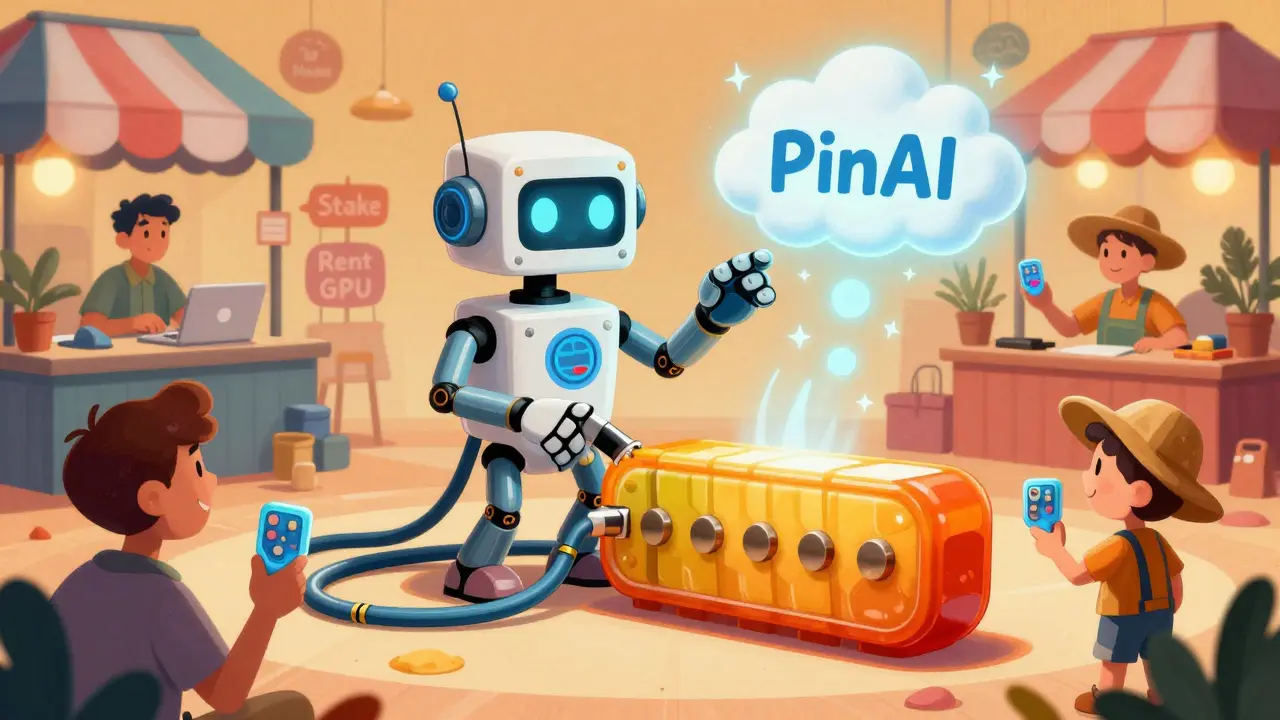
PinLink also has its own AI optimization tool called PinAI, which helps improve the efficiency of tokenized hardware. This means more output from the same machines - and higher yields for token holders. It’s a subtle but important layer that separates PinLink from basic DePIN projects.
Market Performance and Price History
As of December 19, 2025, PinLink’s price is $0.09425, with a market cap of $8.61 million and a circulating supply of 88.2 million PIN out of a 100 million max supply.
Its price history shows extreme volatility. It hit an all-time high of $4.30 on December 11, 2024 - a 97.73% drop from that peak. But it also bounced back from a low of $0.02474 in November 2024, rising over 294% since then. That kind of swing attracts both opportunistic traders and long-term believers.
The spike in late 2024 was triggered by the launch of the Pinnacle marketplace, PinLink’s official platform for staking and managing assets. That launch alone pushed its market cap to $80 million in two weeks. Since then, it’s settled into a more stable, though still volatile, range.
Who Uses PinLink? Real Users, Real Use Cases
PinLink’s user base is small but growing - around 25,180 unique holders as of December 2025. The users fall into three main groups:
- Yield seekers (68%) - People who want passive income from physical assets without managing hardware.
- AI developers (22%) - Those who need affordable, decentralized GPU power for training models and avoid expensive cloud services like AWS.
- Speculators (10%) - Traders betting on its future expansion into GPUs and AI agents.
One common success story: someone bought PIN at $0.025 in November 2024 and held through the December surge. They turned $1,000 into over $3,900. A common failure? Someone tried to buy $50 of PIN during peak Ethereum congestion and paid $23 in fees - losing half their investment before even owning the asset.
How PinLink Compares to Other DePIN Projects
PinLink isn’t the only DePIN project. Render Network (RNDR) and Filecoin (FIL) are much bigger, with market caps over $1 billion. But here’s the difference:
| Feature | PinLink (PIN) | Render Network (RNDR) | Filecoin (FIL) |
|---|---|---|---|
| Primary Asset | Miners, GPUs, AI rigs | GPU compute | Storage |
| RWA Yield? | Yes - up to 40% APR | No | No |
| Token Type | ERC-20 | ERC-20 | ERC-20 |
| Market Cap (Dec 2025) | $8.61M | $2.1B | $1.8B |
| AI Integration | Yes - PinAI suite | Yes | No |
| Current Use Case | Yield + Compute | Compute only | Storage only |
PinLink is the only one that combines both infrastructure access and direct yield from real-world operations. That’s its edge. But it’s also its risk - if the hardware stops earning, so does the yield.

Upcoming Roadmap: What’s Next for PinLink?
PinLink’s future depends on execution. Its roadmap for early 2026 is ambitious:
- February 15, 2026 - Integrate GPU tokenization (beyond mining rigs).
- March 30, 2026 - Launch an AI agent marketplace where developers can rent AI models powered by PIN.
- April 30, 2026 - Enable tokenization of IoT devices and WiFi nodes.
If they hit these targets, PinLink could capture 0.5-1.2% of the $45 billion DePIN market by 2027, potentially growing its market cap to $225-540 million. That’s a 25-60x increase from current levels.
But if they miss even one milestone - especially the AI agent integration - the project could stall. Right now, only three institutional partners are confirmed: Fetch.ai, The Graph, and Oasis Network. More partnerships will be critical for credibility.
Risks and Red Flags
PinLink isn’t risk-free. Here are the biggest concerns:
- Ethereum gas fees - Still too high for small investors.
- Regulatory risk - The SEC could classify PIN as a security because it offers yield from physical assets. No project has fully solved this yet.
- Small market cap - At $8.6 million, it’s easy to manipulate. A single large sale could crash the price.
- Limited exchange listings - Only five exchanges list PIN as of late 2025, making it harder to buy and sell.
- Team anonymity - No known founders or public leadership. This isn’t unusual in crypto, but it raises trust questions.
The most successful users are those who treat PIN like a high-yield bond - not a lottery ticket. They stake small amounts, monitor Ethereum fees, and avoid FOMO during spikes.
Should You Buy PinLink (PIN)?
If you’re looking for:
- High yield from real assets - Yes, PIN is one of the few options offering 30-40% APR.
- Exposure to AI infrastructure - It’s a direct way to bet on decentralized compute power.
- A low-risk investment - No. This is speculative. Price swings are brutal.
- A long-term hold - Only if you believe in the roadmap and can handle volatility.
Start small. Use a wallet you control. Always keep enough ETH for gas. And never invest more than you’re willing to lose.
PinLink isn’t the next Bitcoin. It’s something rarer: a crypto project that’s trying to make real money from real machines - and letting you in on it. Whether it succeeds depends on whether the hardware keeps running, the code keeps working, and the market keeps believing.
What is PinLink (PIN) crypto used for?
PinLink (PIN) is a utility token used to access and earn yield from tokenized real-world infrastructure like mining rigs, GPUs, and cloud computing devices. Holders can stake PIN to receive a share of the revenue these machines generate, with reported yields up to 40% APR. It also gives AI developers affordable access to decentralized compute power.
Where can I buy PinLink (PIN)?
As of December 2025, PinLink is listed on five exchanges, including BingX, Gate.io, MEXC, Phemex, and KuCoin. You’ll need an Ethereum-compatible wallet like MetaMask and some ETH to pay for gas fees when purchasing or transferring PIN tokens.
Is PinLink a good investment?
PinLink offers high yield potential and a unique RWA+DePIN model, but it’s high-risk. Its price dropped 97% from its all-time high, and Ethereum gas fees can eat into small profits. It’s best suited for investors who understand crypto volatility and are willing to hold through downturns while monitoring its roadmap progress.
How does PinLink earn money for holders?
PinLink earns money by tokenizing revenue-generating hardware - like Bitcoin mining rigs - and distributing a portion of their earnings (mining rewards, compute fees) to PIN token holders. The platform uses its PinAI suite to optimize performance, increasing yield. Earnings are paid out automatically via smart contracts.
Can I stake PinLink (PIN) tokens?
Yes, you can stake PIN tokens on the Pinnacle marketplace, PinLink’s official platform. Staking allows you to earn up to 40% APR from the revenue generated by tokenized mining rigs and other infrastructure. Rewards are distributed weekly, and users can unstake at any time, though gas fees apply for each transaction.
What makes PinLink different from other DePIN coins?
Unlike other DePIN projects like Render or Filecoin that only offer access to compute or storage, PinLink is the first to combine DePIN with Real-World Asset (RWA) tokenization - meaning holders earn direct yield from physical assets. This turns infrastructure into a passive income tool, not just a service.
What’s the total supply of PinLink (PIN)?
PinLink has a maximum supply of 100 million PIN tokens. As of December 2025, 88.2 million are in circulation, meaning 88.2% of the total supply is already out. No additional tokens will be created beyond this cap.
Is PinLink regulated?
PinLink operates in a regulatory gray area. Because it generates yield from physical assets, the SEC could classify PIN as a security. The project’s decentralized governance and lack of central control may offer some protection, but no official regulatory approval exists yet. Investors should assume it’s unregulated and proceed with caution.