
Symmio (SYMM) isn't another meme coin or a copycat DeFi project. It’s a derivatives protocol-a behind-the-scenes engine designed to make on-chain trading of complex financial instruments like perpetual futures way more efficient. If you’ve ever tried to trade leveraged positions on decentralized exchanges, you know how messy it gets: fragmented liquidity, high slippage, clunky interfaces. Symmio was built to fix that.
What Symmio Actually Does
Symmio doesn’t run a trading platform you can open and start buying. Instead, it’s infrastructure. Think of it like a highway system that lets other companies build their own toll booths and gas stations. Its core innovation? Symmetrical contracts.
Here’s how it works: two traders-let’s call them PartyA and PartyB-want to bet on the price of Bitcoin. Instead of placing orders on an order book, they each commit collateral and directly match through Symmio’s system. The trade is settled atomically, meaning it either happens fully or not at all. No counterparty risk. No middleman. No need for a centralized exchange to hold funds.
This isn’t just about safety. It’s about flexibility. Symmio lets users create exposure to almost any asset-crypto, stocks, commodities-even ones that don’t exist yet. You don’t need a new token for every asset. You just need a price feed. That’s why it’s called a meta-derivatives engine.
How SYMM Token Fits In
The SYMM token is the fuel for this system. It’s not a governance token you vote with. It’s not a staking token you earn interest on. SYMM is used to pay for transaction fees, collateral adjustments, and settlement costs within the protocol. Some third-party platforms might also require SYMM for access to premium features.
The total supply is capped at 880,080,088 SYMM tokens. But here’s where things get confusing: different exchanges report wildly different circulating supply numbers. CoinGecko says around 436 million are in circulation. RootData says over 726 million. Bybit claims 770 million. That kind of inconsistency raises red flags. It suggests unclear token distribution, possible locked tokens not being reported, or data lag from third-party sources.
Price, Market Cap, and Performance
As of early 2026, SYMM trades between $0.007 and $0.008. That’s down over 90% from its all-time high of $0.15 in December 2024. Its market cap hovers around $10 million, which is tiny compared to leaders like dYdX ($1.3 billion) or GMX ($240 million).
Trading volume is even more telling. On most exchanges, SYMM sees less than $50,000 in 24-hour volume. For comparison, even obscure altcoins with no real use case often trade over $1 million daily. Low volume means high slippage. One trader on Reddit said they had to split a $500 order into five parts just to avoid a 5% price hit.
Market sentiment is mixed. CoinGecko shows SYMM underperforming the broader crypto market by a wide margin. Over the last week, while Bitcoin rose 0.9%, SYMM dropped nearly 4%. That’s not just a bad day-it’s a pattern.
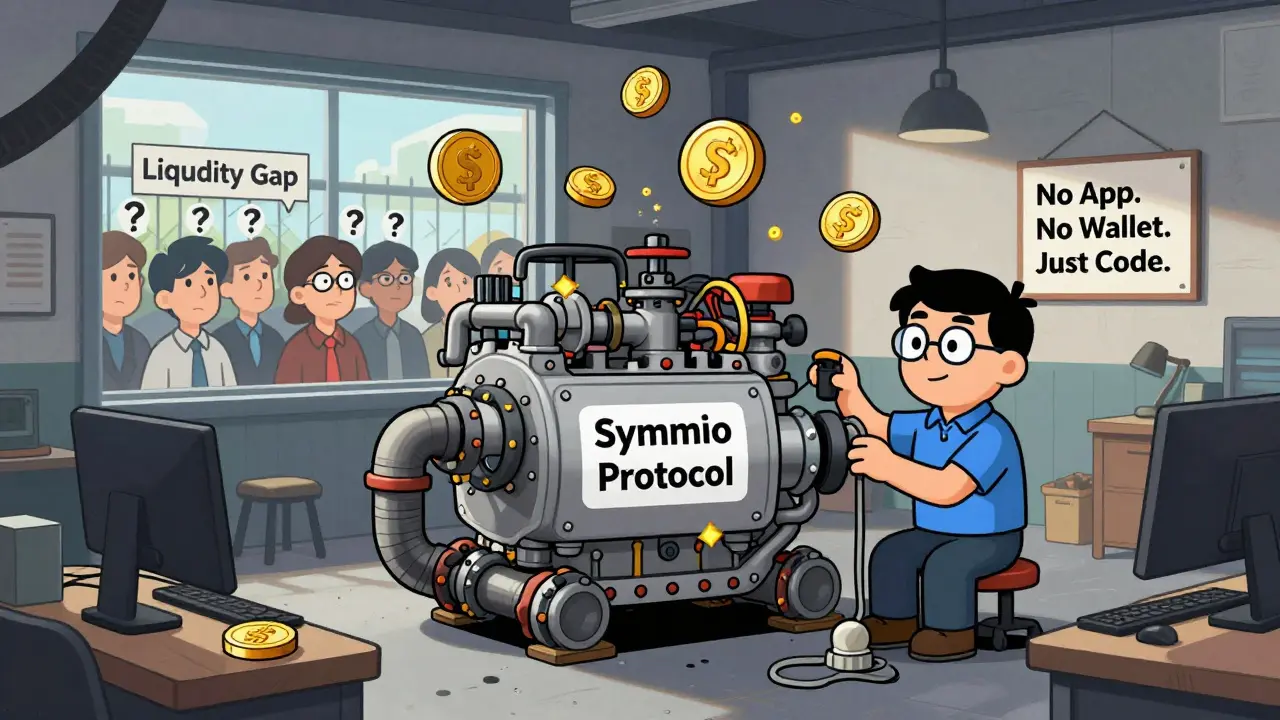
Who’s Using Symmio?
Not you. Not most retail traders.
According to RootData, nearly 60% of SYMM trading volume comes from institutional or high-net-worth accounts. That’s unusual for a project this young. It suggests Symmio is being used as a back-end tool by professional traders, not as a consumer-facing product.
There are only an estimated 15,000-20,000 active SYMM holders. That’s less than 5% of dYdX’s user base. The protocol’s GitHub shows active development, but community channels are quiet. Reddit threads mention excitement about the tech-but frustration over lack of liquidity and limited exchange listings.
Why It’s Hard to Use
Getting SYMM isn’t hard. You can buy it on Bybit, MEXC, LBank, and a few others. But using it? That’s another story.
You need to understand derivatives. You need to know what perpetual futures are. You need to understand collateral ratios, liquidation risks, and funding rates. Symmio doesn’t explain any of this. Its documentation assumes you already do.
There’s no simple app. No mobile wallet integration. No one-click trading. If you’re not already deep into DeFi, you’ll be lost. Even experienced users complain about the learning curve and lack of educational resources.
The Bigger Picture: Is Symmio the Future?
Symmio’s idea is brilliant. Solving DeFi fragmentation by letting anyone build their own derivatives exchange? That’s a real problem. The tech is sound. The architecture is elegant.
But innovation alone doesn’t win. Adoption does.
Symmio raised $3.1 million. That’s not nothing-but dYdX raised $65 million. GMX raised $24 million. Those projects had marketing teams, user-friendly interfaces, and liquidity incentives. Symmio has none of that.
It’s also in a regulatory gray zone. Derivatives are heavily scrutinized. While Symmio’s decentralized model might help it avoid direct regulation, regulators don’t care about the tech-they care about who’s getting hurt. If retail traders start losing money because of thin order books and hidden fees, the SEC will notice.
Final Verdict: Is SYMM Worth It?
Here’s the truth: Symmio is not a coin you buy to get rich. It’s not a play for the next 100x.
If you’re a DeFi developer, a derivatives trader, or someone building a trading platform-you should be watching Symmio. Its architecture could become foundational.
If you’re a retail investor looking for a new crypto to hold? Skip it.
The token’s price is volatile, liquidity is thin, adoption is minimal, and the roadmap is unclear. There’s no guarantee it will survive the next bear market. The tech is promising, but the market hasn’t voted for it yet.
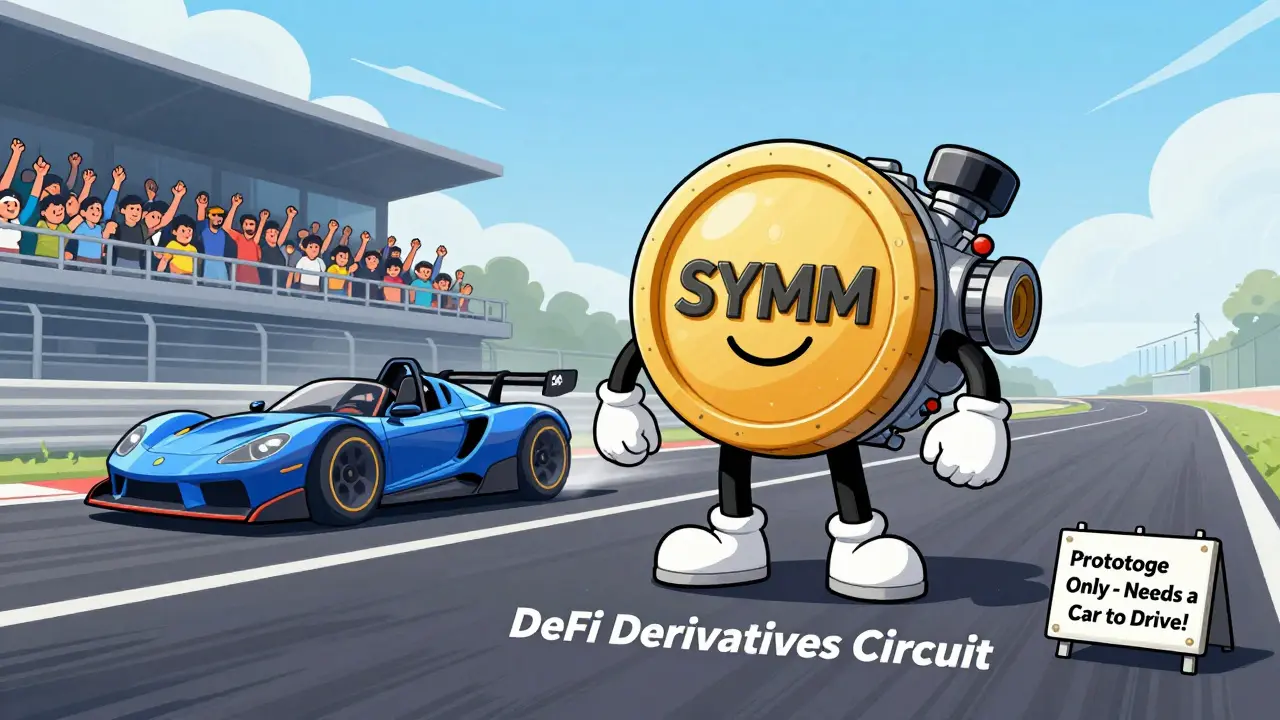
Think of SYMM like a prototype engine in a garage. It’s brilliant engineering. But unless someone builds a car around it-and puts it on the road-no one’s going to notice.
Is Symmio (SYMM) a good investment?
Symmio is not a typical investment. The SYMM token has low liquidity, minimal retail adoption, and no clear utility for casual holders. Its value is tied to future adoption by professional trading platforms, which hasn’t materialized yet. For most people, it’s speculative at best and risky at worst.
Where can I buy SYMM coin?
You can buy SYMM on centralized exchanges like Bybit, MEXC, LBank, and Gate.io. It’s not listed on major platforms like Binance or Coinbase. Always transfer SYMM to a non-custodial wallet after purchase-exchanges have thin order books and high slippage risk.
Why is the SYMM supply different across websites?
Different platforms use different data sources and update frequencies. Some include locked or vesting tokens in their circulating supply calculations, while others don’t. This inconsistency suggests a lack of transparency in token distribution, which is a red flag for any crypto project.
Does Symmio have a wallet or app?
No. Symmio doesn’t offer a wallet, mobile app, or user interface. It’s purely a protocol. To interact with it, you need to use third-party platforms that have integrated Symmio’s infrastructure-like certain DeFi derivatives exchanges. There’s no official Symmio app.
How does Symmio compare to dYdX or GMX?
dYdX and GMX are fully functional trading platforms with user interfaces, high liquidity, and thousands of active users. Symmio is infrastructure-they’re the product. Symmio could power future versions of dYdX, but right now, it’s not a direct competitor. It’s more like a building block than a finished house.
Can I stake SYMM to earn rewards?
No. SYMM has no staking, yield farming, or liquidity mining programs. The token’s only function is to pay protocol fees. Any site claiming you can stake SYMM is either misleading or running a scam.
Is Symmio regulated?
Symmio operates as a decentralized protocol, so it’s not directly regulated. But because it enables derivatives trading, it falls under regulatory scrutiny. The SEC and other agencies have targeted similar protocols before. There’s no official compliance framework yet, which makes SYMM a higher-risk asset.