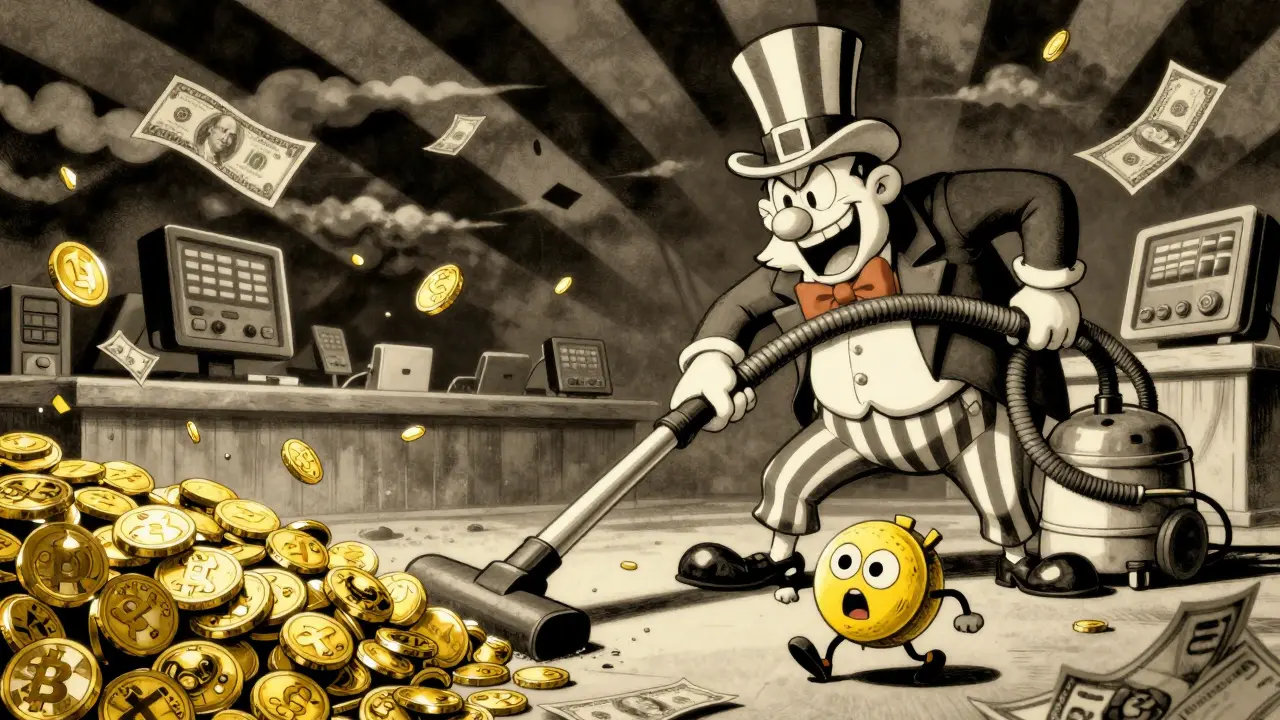
It happened fast. One day, the charts were green; the next, they were bleeding red. If you watched the markets in early 2025, you remember the feeling. It wasn’t just a dip-it was a liquidity crisis. Prices didn’t just drop; they free-falled. Support levels that had held for months shattered like glass. For many traders, it felt less like a market correction and more like a system failure.
By mid-2026, we finally have enough data to understand exactly what went wrong. It wasn’t one single event. It was a perfect storm of macroeconomic policy, structural weakness in decentralized finance (DeFi), and too much leverage. Understanding this crisis isn’t just about looking back at lost money. It’s about recognizing the fragile architecture of our current financial system so you don’t get caught off guard when the next shock hits.
The Trigger: When the Treasury Sucked Up Cash
To understand why crypto crashed, you first have to look outside crypto. The primary trigger was the U.S. Treasury General Account (TGA) refill operation in early 2025. Think of the TGA as the government’s checking account. When the government needs to pay its bills or fund operations, it pulls cash from the broader banking system into this account.
In early 2025, the Treasury pulled between $500 billion and $600 billion out of the financial system. That is a massive amount of dry powder disappearing overnight. In traditional markets, institutional market makers absorb this shock. But crypto markets are different. They rely heavily on speculative capital and algorithmic trading. When that external liquidity vanished, risk assets got hit hard. Bitcoin, which had recently touched an all-time high above $100,000, couldn’t hold the line. It dropped to roughly $77,500 by April 10, wiping out billions in gains.
| Asset/Event | Metric | Outcome |
|---|---|---|
| TGA Refill | Liquidity Withdrawn | $500-600 Billion |
| Bitcoin Price | Peak to Low | $100k+ to ~$77.5k |
| Total Liquidations | Volume | $2.23 Billion (Initial Wave) |
| Ethereum | Weekly Decline | ~12% (Broke $4,000 support) |
This wasn’t a gradual decline. It was a sudden drain. When money leaves the system, investors panic. They sell their most volatile assets first. In 2025, that asset class was cryptocurrency.
The Structural Flaw: Circular Liquidity in DeFi
If the TGA refill was the spark, the fuel was the structure of the crypto economy itself. Arthur Breitman, co-founder of Tezos, pointed out a critical vulnerability during this period: the "circular" nature of DeFi liquidity. Most decentralized protocols don’t generate revenue from external sources like real-world businesses do. Instead, they recycle existing capital within the ecosystem.
Imagine a closed loop where Protocol A lends to Protocol B, which lends back to Protocol A. As long as everyone is confident, it works. But confidence is fragile. When external liquidity dried up, these self-sustaining mechanisms collapsed. There was no external revenue stream to plug the hole. This made the entire ecosystem susceptible to internal shocks. A small withdrawal could trigger a chain reaction across multiple protocols, leading to a systemic freeze.
This circularity means that crypto markets are inherently more fragile than traditional ones. Traditional banks have deposit insurance and central bank backing. DeFi has code-and code doesn’t care if you’re underwater.

The Feedback Loop: Algos and Leverage
Once the initial selling started, technology accelerated the crash. Ben Kurland, CEO of DYOR, noted that once the first wave of liquidations began, algorithms took over. In crypto, conviction is often high, but liquidity is thin. This combination creates violent price movements.
Here is how the feedback loop worked:
- Price Drop: Bitcoin falls below key technical levels.
- Stop-Losses Hit: Automated trading bots execute sell orders to limit losses.
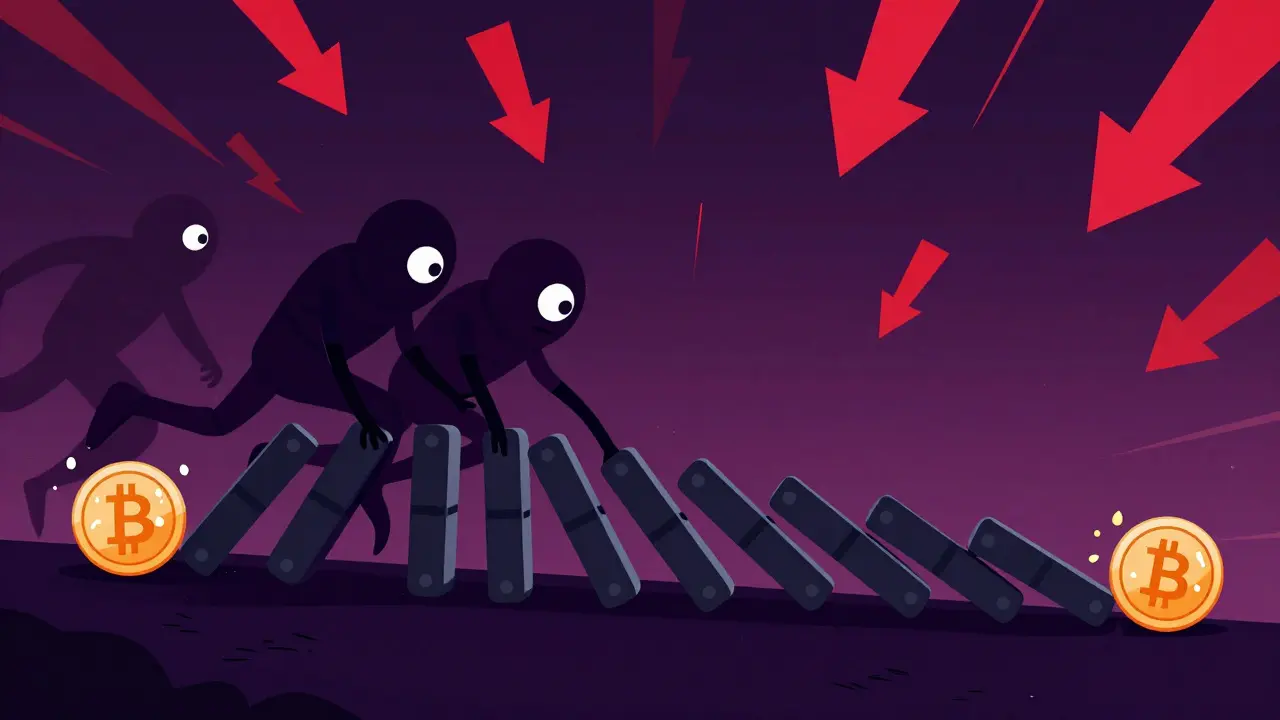
- Liquidations Cascade: Leveraged long positions are forcibly closed by exchanges. Over $3 billion in longs were liquidated according to Coinglass data.
- Funding Pressure: Short sellers profit, but funding rates turn negative, incentivizing more shorting.
- Panic Selling: Retail investors see red screens and sell spot holdings to cut losses.
This cycle repeats in minutes, not days. The result is a "free fall" downward movement. Recoveries, however, grind back slowly because buying pressure takes time to rebuild. This asymmetry is a defining characteristic of crypto volatility.
Regulatory Uncertainty and Macro Headwinds
You can’t talk about the 2025 crisis without mentioning the political context. Donald Trump’s election victory in November 2024 had initially boosted the market. Investors expected a pro-crypto regulatory environment, including a strategic Bitcoin reserve and a dedicated crypto council. But expectations moved faster than implementation.
By early 2025, those promises remained unfulfilled. Regulatory uncertainty lingered. At the same time, macroeconomic pressures mounted. Inflation climbed, and new U.S. tariffs on imports from Mexico, Canada, and China were introduced in February 2025. These tariffs created ripple effects across global financial markets, increasing risk aversion.
Investors became nervous. The Fear Sentiment Index, constructed using Google Trends data, showed a surge in retail anxiety. When fear spikes, liquidity vanishes. Traders stop providing bids, and prices slide further. The combination of delayed regulatory clarity and aggressive fiscal policy created a hostile environment for risk assets.
Altcoin Collapse and Memecoin Drain
While Bitcoin and Ethereum suffered significant corrections, altcoins faced existential threats. Solana, for example, collapsed over 50% from its January 2025 highs. The total cryptocurrency market capitalization, which had peaked at over $3 trillion in Q4 2021, contracted to approximately $1.5 trillion by early February 2025.
A major factor here was the siphoning of liquidity by memecoins. During the bull run, speculative capital flowed into low-cap tokens with little utility. When the tide turned, this capital fled instantly. There was no fundamental value to anchor these prices. As memecoin failures mounted, trust eroded across the board. Investors moved to perceived safer assets-or exited crypto entirely.
Smart contract vulnerabilities and bridge exploits during the crisis period further undermined confidence. High-profile protocol failures reminded users that DeFi infrastructure was still maturing. In a liquidity crunch, security concerns become existential risks.
Lessons for 2026 and Beyond
As we move through 2026, the market is adapting. Institutional players are reducing leverage. Exchanges are implementing stricter margin requirements. Regulators are discussing enhanced liquidity provisions for major platforms.
But the core lesson remains: crypto markets are susceptible to external macroeconomic shocks. The TGA refill proved that even the strongest bull markets can be undone by monetary policy. The circular liquidity model of DeFi proved that internal recycling isn’t enough to sustain growth during stress.
For investors, this means diversification is non-negotiable. Relying solely on leveraged positions or high-yield DeFi farms is dangerous. You need dry powder-cash reserves-to weather downturns. You also need to monitor macro indicators like TGA balances, inflation reports, and tariff announcements. These aren’t just news headlines; they are direct drivers of liquidity.
The crisis highlighted the need for resilient infrastructure. Future iterations of DeFi must integrate external revenue streams and reduce reliance on self-referential loops. Only then can the ecosystem withstand the inevitable next shock.
What caused the 2025 crypto liquidity crisis?
The crisis was triggered by a combination of factors. The primary catalyst was the U.S. Treasury General Account (TGA) refill, which drained $500-600 billion from the financial system. This was exacerbated by structural weaknesses in DeFi, high leverage among traders, regulatory uncertainty, and macroeconomic headwinds like rising inflation and new tariffs.
How did the TGA refill affect Bitcoin?
The TGA refill removed significant liquidity from the broader financial system, causing risk assets to sell off. Bitcoin, after reaching over $100,000 in January 2025, dropped to approximately $77,500 by April 10 as investors fled volatile assets due to the lack of available capital.
What is "circular liquidity" in DeFi?
Circular liquidity refers to DeFi protocols relying on self-sustaining mechanisms rather than external revenue streams. Capital is recycled within the ecosystem, making it vulnerable to internal shocks. When external liquidity dries up, these loops can collapse, leading to systemic instability.
Why do crypto crashes feel like free falls?
Crypto markets have thin liquidity compared to traditional markets. When prices drop, automated trading algorithms and forced liquidations create a feedback loop that accelerates selling. This results in rapid, violent downward movements known as free falls.
Did regulatory changes contribute to the crisis?
Yes. Despite campaign promises of crypto-friendly policies, concrete implementations like a strategic Bitcoin reserve were delayed. This regulatory uncertainty, combined with new tariffs and inflation concerns, increased investor nervousness and contributed to the selloff.
How much leverage was liquidated in 2025?
Over $3 billion in long positions were liquidated across exchanges during the peak of the crisis. An initial wave saw $2.23 billion in liquidations, with $1.88 billion specifically representing forcibly closed long positions.
What should investors watch for in 2026?
Investors should monitor macroeconomic indicators such as TGA balances, inflation rates, and trade policy changes. Additionally, watching for improvements in DeFi infrastructure, such as reduced leverage availability and enhanced liquidity provisioning, is crucial for assessing market resilience.
Comments (18)
H F
May 20, 2026 AT 10:09
Oh my god, reading this is like watching a car crash in slow motion but with more math involved. The way the TGA refill just sucked the air out of the room was absolutely terrifying for anyone holding leverage. I remember staring at my screen when BTC dropped below 80k and thinking my life was over. It wasn't just a dip, it was a total system failure that exposed how fragile our entire financial structure really is. We were all so focused on the moon shots and the memecoins that we completely ignored the macro indicators screaming danger signs from miles away.
Bridget Coogle
May 21, 2026 AT 21:57
it was scary yes but look at how fast we bounced back honestly
Zara Zaman
May 22, 2026 AT 13:30
You people are still asleep at the wheel if you think DeFi is safe. This circular liquidity nonsense is exactly why foreign investors stay away from these unstable markets. We need real assets backed by real nations not some code written by kids in their bedrooms. The US Treasury pulling cash should have been a warning shot for everyone to get out while they could instead of doubling down on garbage tokens.
Larry Port
May 23, 2026 AT 08:41
I think the issue is deeper than just the TGA refill though. When you look at the structure of DeFi protocols, they are essentially betting against themselves. If Protocol A lends to Protocol B and they both rely on the same underlying asset value, a drop in price doesn't just hurt one protocol it hurts the whole loop. It's like a house of cards where every card is glued to its neighbor. One gust of wind and everything collapses. The algorithms didn't cause the crash they just accelerated the inevitable because there was no external revenue stream to catch the fall.
Jocelyn Garcia
May 23, 2026 AT 12:06
The alpha here is understanding that liquidity isn't infinite. Most retail traders don't realize that market makers pull bids when volatility spikes. In early 2025 the order books were thin as hell because everyone was leveraged up to the eyeballs. Once the TGA drained the reserves the spread widened instantly. You can't trade in a vacuum. The delta between bid and ask became untradeable for spot holders too. Smart money exited via OTC desks long before the charts showed red.
Amit Varpe
May 24, 2026 AT 15:59
Indian traders know how to handle volatility lol :)
Bronwen Butler
May 25, 2026 AT 00:16
everyone blames the treasury but it was the memecoin degenerates who ruined the ecosystem. They siphoned off all the smart capital into shitcoins with zero utility. When the music stopped there was nothing left to support the major caps. Bitcoin dropping to 77k was just collateral damage from the altcoin apocalypse. People want to blame macro policy but it was pure greed and lack of due diligence that caused the crash. No one forced you to buy PEPE.
Pauline Larocco71
May 25, 2026 AT 20:00
i totally agree with bronwen about the memecoins but i think the regulatory uncertainty played a huge role too. trump promised a strategic reserve and then nothing happened for months. that delay created so much anxiety in the market. investors hate uncertainty more than bad news sometimes. plus the new tariffs on china and mexico really spooked the global markets. it was a perfect storm of political disappointment and economic fear. my portfolio took a hit but im glad i diversified into gold too
Albert Lee
May 26, 2026 AT 22:28
This is such a crucial lesson for all of us! The pain of losing money is temporary but the wisdom gained from understanding market mechanics lasts forever. We have to learn to respect the macro environment. The TGA refill wasn't an accident it was a scheduled event that everyone knew about. Yet so many people ignored it because they were addicted to the green candles. We need to build resilience in our portfolios and stop chasing yield at any cost. Your mental health matters more than your APY!
Ankush Pokarana
May 27, 2026 AT 08:08
the nature of leverage is that it amplifies both gains and losses but in a liquidity crunch it only amplifies the destruction. when funding rates turned negative it created a cascade effect where short sellers were incentivized to push prices lower to close their positions faster. this feedback loop is inherent in leveraged markets. without circuit breakers or adequate liquidity buffers the system will always fail under stress. we must rethink the design of perpetual futures contracts
Bianca Vilas Boas Lourenço
May 28, 2026 AT 07:08
Ugh another day another crypto disaster 🙄 Why do we keep falling for the same tricks? The 'circular liquidity' explanation sounds like fancy words for 'we ran out of other people's money'. I'm just sitting here watching my savings evaporate while the whales laugh all the way to the bank 😂 Maybe next time we'll listen to the experts instead of the influencers on Twitter. Send help or send BTC (whichever comes first) 💔
Sarah C
May 28, 2026 AT 16:00
I found this analysis really helpful in understanding what went wrong. It's easy to panic sell when things go south but looking back it makes sense. The combination of high leverage and thin liquidity was a recipe for disaster. I'm glad I moved most of my holdings to stablecoins before April started. We have to be smarter next time.
Kimberly Herbstritt
May 29, 2026 AT 00:36
I disagree that the TGA was the main culprit. Sure it removed liquidity but crypto has survived bigger shocks before. The real issue was the lack of institutional adoption beyond ETFs. Retail traders got crushed because they had no protection. The system worked exactly as designed for the insiders. Friendly reminder that this is not financial advice but maybe focus on building actual utility rather than speculating on price movements.
Sharada Vakkund
May 30, 2026 AT 04:47
Let's come together and learn from this experience. The crisis highlighted how interconnected our financial systems are. Whether you are in India the US or anywhere else the lessons apply universally. We need better risk management tools and more transparency in DeFi protocols. Let's support each other through these volatile times and share knowledge rather than blaming each other. Community is key to surviving bear markets.
Sudarshan Anbazhagan
May 31, 2026 AT 10:19
It is evident that the participants in the cryptocurrency market failed to adhere to basic principles of risk management and macroeconomic awareness. The reliance on algorithmic trading strategies without proper oversight led to catastrophic failures during periods of stress. Furthermore the structural deficiencies in decentralized finance protocols were well documented yet ignored by greedy speculators. This serves as a cautionary tale for future generations of investors who must prioritize stability over speculative gains.
John Gonzalez Bentham
June 1, 2026 AT 10:58
typical victim mentality. you got wrecked because you used 100x leverage on a meme coin. dont blame the treasury for your own stupidity. the market is efficient and punished those who didnt do their homework. simple as that. stop whining and go read whitepapers instead of complaining on reddit.
Ellie Riddell
June 1, 2026 AT 23:35
Fascinating how everyone suddenly remembers the importance of fundamentals after getting liquidated. The irony is palpable. While you were busy arguing about who to blame the smart money was quietly accumulating at discounted prices. The free fall was indeed dramatic but the recovery will be even slower. Enjoy the grind. At least now you know that 'this time is different' is the most dangerous phrase in investing.
Destiny Kilby
June 3, 2026 AT 14:42
The data presented here is quite comprehensive regarding the liquidity dynamics. However one might argue that the correlation between TGA refills and crypto crashes is not strictly causal but rather coincidental with broader risk-off sentiment. Nevertheless the impact on retail investors was significant and warrants careful consideration for future portfolio construction. Diversification remains the only free lunch in investing.