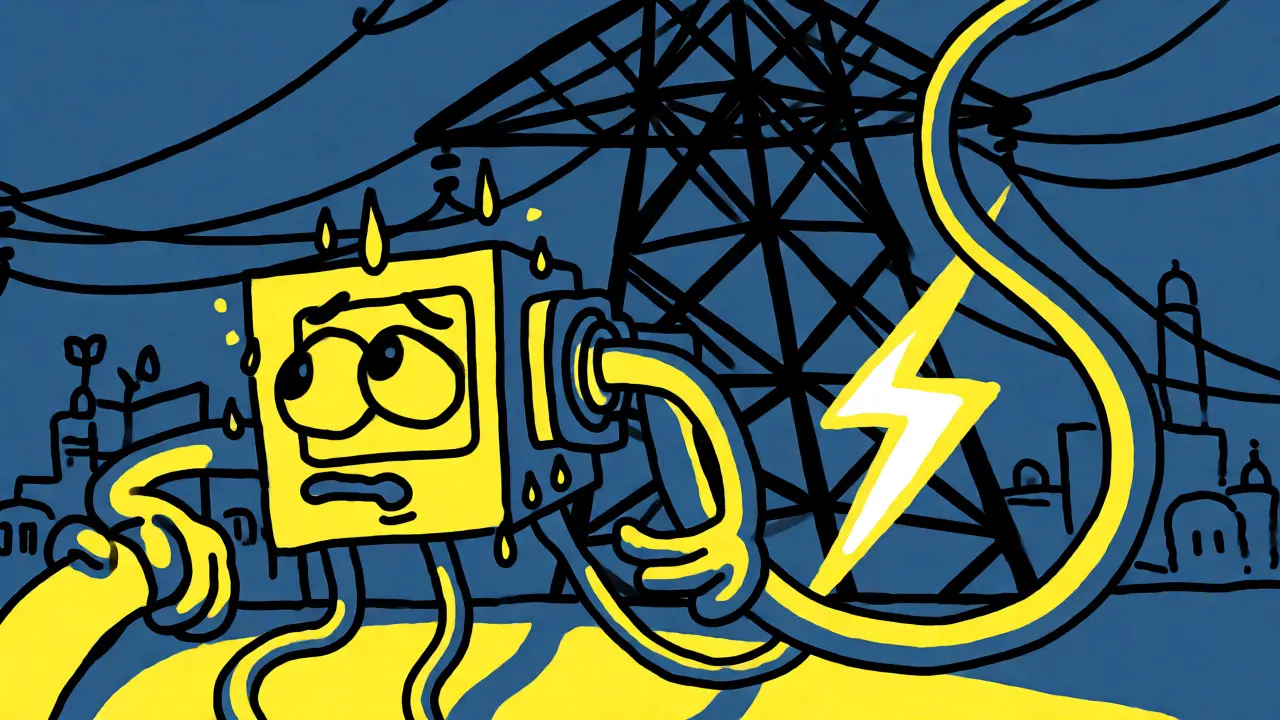
Imagine paying $35 a month for electricity while your neighbor pays $350. Now imagine the government shutting down your computer because it’s using too much of that cheap power to mine Bitcoin. That’s the reality in Algeria today. In July 2025, President Abdelmadjid Tebboune signed Law No. 25-10, a sweeping regulation that didn’t just tax or regulate cryptocurrency-it criminalized it entirely. The law bans buying, selling, holding, and most critically, mining digital assets. While many point to financial stability as the driver, the real engine behind this strict prohibition is Algeria’s fragile electricity grid. With summer temperatures soaring and demand spiking, the government decided that every kilowatt-hour used by a GPU rig was a kilowatt-hour stolen from an air conditioner.
The Legal Hammer: What Law No. 25-10 Actually Bans
If you thought previous restrictions were tough, wait until you see the new penalties. Before 2025, Algeria had rules on paper, but enforcement was loose. Law No. 25-10 changed everything by adding teeth to the bark. It defines crypto-assets broadly as "property, income, funds, or financial assets," leaving no room for interpretation. If you hold Bitcoin, Ethereum, or even meme coins, you are technically breaking the law.
The stakes are high. Violators face prison sentences ranging from two months to one year. But the fines hit harder for most people. First-time offenders can be slapped with fines between 200,000 and 1,000,000 Algerian dinars (DZD). For context, that’s roughly $1,540 to $7,700 USD. If you’re caught again, those fines double, jumping to a potential $14,700 USD penalty. And it’s not just traders who are worried. The law explicitly targets mining operations. Whether you’re running a single gaming PC or a warehouse full of ASIC miners, if you’re producing virtual currency, you’re in the crosshairs.
Even promotion is risky. Influencers and content creators who talk about crypto opportunities now have to watch their words. The ambiguity around what constitutes "promotion" has led to self-censorship among educators and tech enthusiasts, who fear that explaining blockchain technology could land them in legal hot water.
The Energy Crisis: Why Mining Is the Villain Here
Why is Algeria so aggressive? Look at the grid. Algeria’s national electricity provider, SONELGAZ, operates at about 70% capacity during normal times. But come summer, when temperatures climb and everyone cranks the AC, utilization hits 95-100%. The grid is literally maxed out.
Cryptocurrency mining, particularly proof-of-work models like Bitcoin, is incredibly energy-hungry. The Algerian Central Bank Governor, Salah Eddine Taleb, pointed out that mining one Bitcoin consumes approximately 1,500 kWh. To put that in perspective, that’s the same amount of electricity 30 average Algerian households use in a month. During peak demand periods, seeing unauthorized rigs sucking up power feels like a direct threat to national infrastructure.
There’s also a massive economic distortion at play. Algeria heavily subsidizes electricity. Residential users pay as little as $0.035 per kWh. Compare that to the global average of $0.14 per kWh, and you see why mining is profitable there. It’s an arbitrage game: buy cheap state-subsidized power, sell expensive digital gold. The government sees this as a subsidy leak-public money effectively funding private crypto profits while regular citizens face rolling blackouts.
| Metric | Algeria (Subsidized) | Global Average | Impact on Mining |
|---|---|---|---|
| Cost per kWh | $0.035 | $0.14 | High profitability due to low input costs |
| Grid Capacity Utilization (Summer) | 95-100% | Variable | High risk of instability and blackouts |
| Bitcoin Mining Cost (Est.) | Low | High | Attracts foreign and local miners seeking arbitrage |
Enforcement: How They Catch You
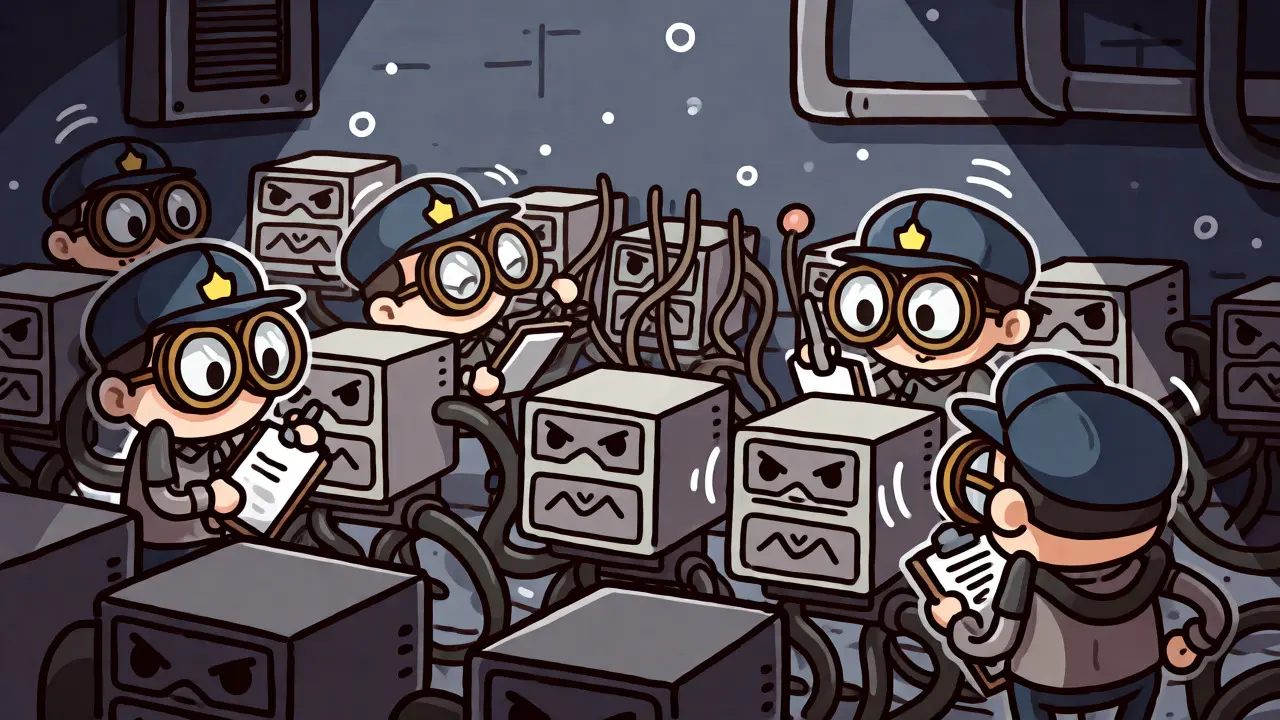
You might think, "I’ll just hide my rig in the basement." Think again. Enforcement isn’t just about knocking on doors; it’s about data. Since June 2024, authorities have been conducting surprise inspections in industrial zones. They aren’t looking for logos; they’re looking for anomalies.
SONELGAZ monitors power usage patterns closely. If a small facility suddenly spikes its consumption by 30-50% above the norm without a clear industrial reason, it triggers an inspection. In 2024 alone, unauthorized mining operations were detected consuming 15-20 MW of power. That sounds small, but during critical peak hours, that’s enough to tip the balance toward brownouts.
The crackdown extends beyond physical hardware. The law also bans Virtual Private Networks (VPNs) for accessing crypto services. This closes the loophole where Algerians used VPNs to bypass geo-blocks on exchanges. By banning the tool and the activity, the government aims to isolate the market completely. Specialized cyber units within the National Gendarmerie have been trained to spot these digital footprints, making it harder to fly under the radar.
Regional Context: An Outlier in MENA
Algeria stands alone in the Middle East and North Africa (MENA) region. While neighbors like the United Arab Emirates, Bahrain, and Saudi Arabia are building regulatory frameworks to attract crypto investment, Algeria chose prohibition. The UAE, for instance, processed $2.1 billion in crypto transactions in Q2 2025 alone under its new framework. Meanwhile, Algeria’s Global Crypto Adoption Index ranking dropped from 87th in 2023 to 112th in 2025.
This divergence creates a "brain drain." A study by the African Blockchain Association found that 37% of Algerian blockchain developers moved to more friendly jurisdictions like Tunisia and Morocco between 2023 and 2025. When talent leaves, innovation stalls. Countries with clear regulations saw a 30% increase in crypto-related investments, while banned nations like Algeria forfeit those gains.
| Country | Stance | Mining Status | Key Driver |
|---|---|---|---|
| United Arab Emirates | Regulated & Licensed | Permitted | Fintech Hub Ambitions |
| Tunisia | Licensed Framework | Permitted with License | Digital Asset Innovation |
| Egypt | Banned Trading/Holding | Restricted | Financial Stability |
| Algeria | Total Criminal Ban | Banned (Criminalized) | Energy Security & Grid Load |
The Renewable Energy Missed Opportunity
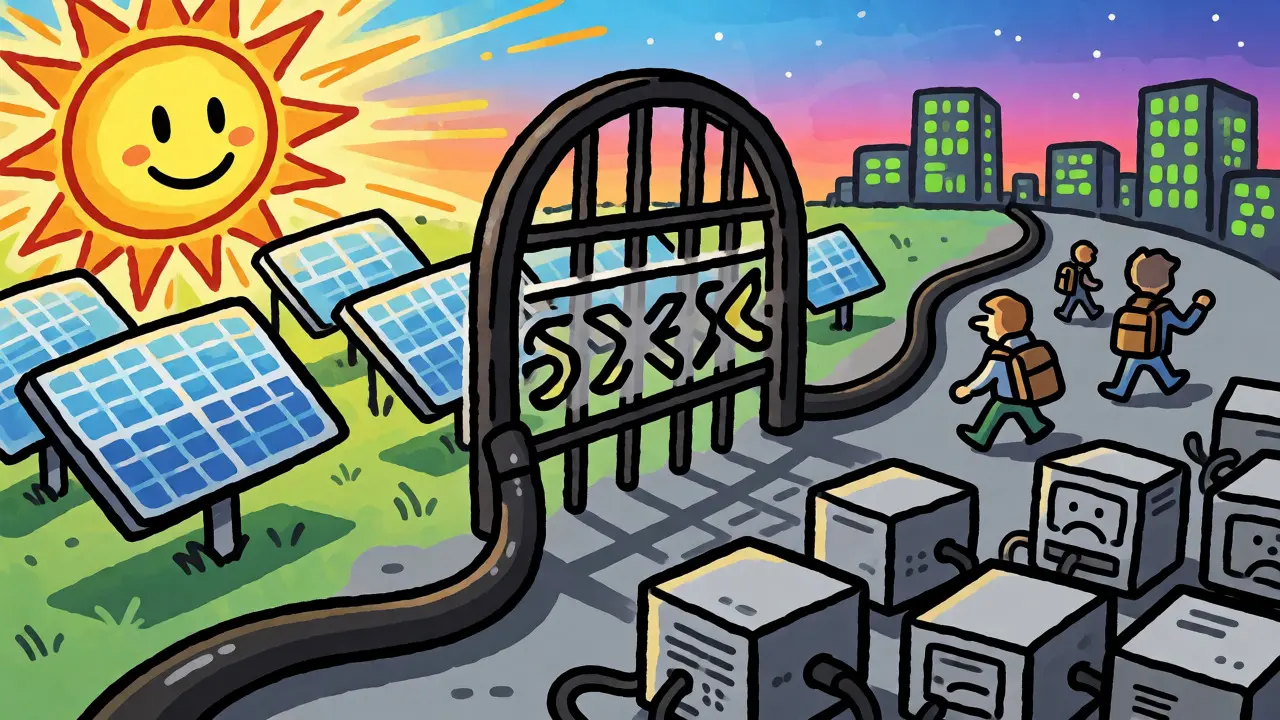
Critics argue that Algeria is shooting itself in the foot. Dr. Leila Bencharif, a Professor of Financial Technology at Algiers University, points out a glaring contradiction. Algeria has a massive solar energy potential identified in its 2024 National Renewable Energy Strategy-up to 22GW. Instead of channeling excess solar capacity into mining operations, which could act as a flexible load sink, the government banned it outright.
Proof-of-stake systems, which consume significantly less energy than proof-of-work, were lumped in with heavy-duty miners. This lack of nuance frustrates the community. Many users feel punished for using efficient technologies because regulators couldn’t distinguish between a laptop staking Ethereum and a warehouse burning coal-fired power to mine Bitcoin.
What Happens Next?
For now, the door is closed. There are no licenses being issued, no gray markets tolerated, and no exceptions for students or hobbyists. If you’re in Algeria, your best bet is to keep your digital assets cold and quiet, or move your operations abroad.
However, history suggests bans rarely stick forever. The Global Crypto Alliance notes that 68% of crypto bans implemented between 2020 and 2025 were partially or fully reversed within three years due to economic pressure. Algeria’s specific energy constraints make it a tougher nut to crack, but the economic cost of losing developers and fintech startups is mounting. A white paper proposed by researchers at Algiers University suggests a future where regulated mining uses only excess renewable energy. Until then, the lights stay on, but the GPUs stay off.
Frequently Asked Questions
Is it illegal to just hold Bitcoin in Algeria?
Yes. Law No. 25-10 explicitly prohibits the purchase, sale, use, and holding of virtual currencies. Passive possession is considered a violation, subject to fines and potential imprisonment.
Why did Algeria ban crypto mining specifically?
The primary reason is energy security. Cryptocurrency mining is energy-intensive, and Algeria’s electricity grid faces severe strain during summer peaks. Additionally, subsidized electricity rates create an unfair economic incentive for miners, diverting resources from domestic needs.
What are the penalties for mining crypto in Algeria?
Penalties include prison sentences of two months to one year and fines ranging from 200,000 to 1,000,000 DZD ($1,540-$7,700 USD). Repeat offenders face doubled fines and potentially harsher scrutiny.
Can I use a VPN to access crypto exchanges in Algeria?
No. The law bans the use of Virtual Private Networks (VPNs) for accessing cryptocurrency services. Authorities monitor network traffic, and using a VPN to circumvent the ban is part of the prohibited activities.
Are there any exceptions for renewable energy miners?
Currently, no. The ban applies to all forms of production and distribution of virtual currencies, regardless of the energy source. However, experts are proposing future frameworks that might allow mining powered exclusively by excess solar capacity.