Imagine logging into a decentralized exchange you’ve heard great things about, only to find the trading volume is literally zero. That’s the current reality for ApeSwap on the Telos network. If you’re looking for high-frequency trading or massive liquidity pools here, you might be barking up the wrong tree. But if you’re interested in where multi-chain strategies go when they hit smaller networks, this review breaks down exactly what’s happening.
What Is ApeSwap on Telos?
ApeSwap is a decentralized finance (DeFi) platform that started on Binance Smart Chain but expanded to other networks, including Telos. Think of it as an Automated Market Maker (AMM). Instead of matching buyers and sellers like a traditional stock market, it uses smart contracts to hold funds in liquidity pools. You swap tokens against these pools. The Telos implementation launched in October 2022 as part of a partnership to bring DeFi tools to the Telos ecosystem.
The platform is governed by a Decentralized Autonomous Organization (DAO), meaning token holders have a say in how things run. The native token, BANANA, acts as both a reward for providing liquidity and a governance tool. While ApeSwap shines on its home turf, the Telos version is essentially a port of those features, adapted for the Telos blockchain’s specific technical requirements.
The Tech and Tokenomics Breakdown
Technically, the setup looks solid. The platform supports swaps between six major assets: BANANA, ETH, BTC, USDT, USDC, and TLOS. This gives users a decent range of options without needing to bridge too many times.
Here’s how the fees work, which is crucial for understanding where your money goes:
- Total Fee: 0.2% per transaction.
- Liquidity Providers: Get 0.05%. This is your cut for putting up capital.
- Burn Mechanism: 0.075% is used to buy back and burn BANANA tokens, theoretically reducing supply.
- Treasury & Network: The remaining split goes to the ApeSwap Treasury and the Telos network itself.
This structure aims to keep the ecosystem sustainable. By burning tokens, they hope to create scarcity. By paying LPs, they try to attract capital. It’s a standard DeFi model, but its success depends entirely on people actually using it.
Market Reality Check: The Volume Problem
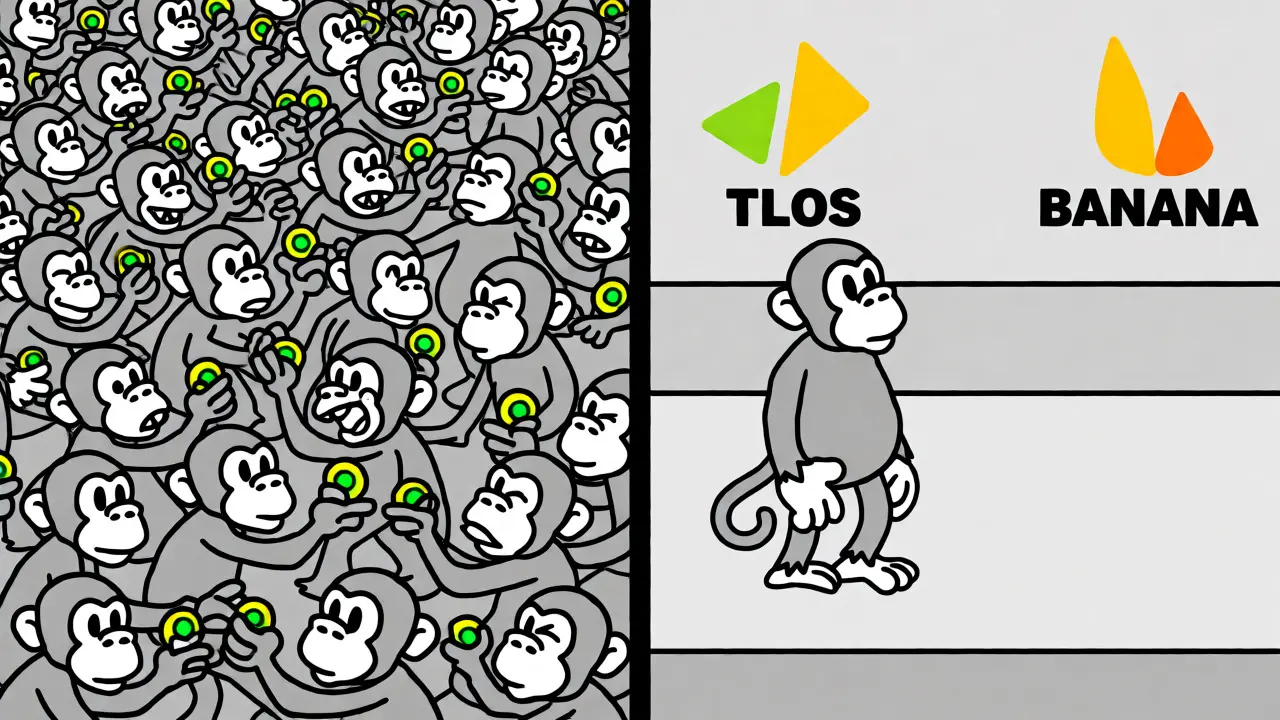
Let’s look at the hard data. According to CoinGecko metrics from 2025, ApeSwap on Telos recorded $0.00 in 24-hour trading volume. Yes, zero. Compare that to Swapsicle V2, another DEX on Telos, which holds over 64% of the market share. The entire Telos DEX ecosystem sees only about $742 in daily trades across all platforms.
| Feature | ApeSwap (Telos) | ApeSwap (BSC) | Swapsicle (Telos) |
|---|---|---|---|
| Daily Volume | $0.00 | Millions USD | Hundreds USD |
| User Adoption | Minimal | High | Moderate |
| Liquidity Depth | Very Low | Deep | Low-Medium |
| Primary Use Case | Strategic Presence | Active Trading/Farming | Local Telos Trading |
This isn’t just a blip. It indicates that while the tech works, the users aren’t there. Most ApeSwap activity happens on Binance Smart Chain. On Telos, the lack of volume means slippage can be unpredictable for larger trades, and yield farming rewards are negligible because there aren’t enough fees being generated to distribute.
User Experience and Community Sentiment
If you’ve used ApeSwap before, the interface will feel familiar. It’s clean, intuitive, and designed so beginners don’t get lost. You connect your Web3 wallet, select your tokens, and swap. Simple.
However, community feedback specific to the Telos instance is almost non-existent. DappBay lists zero user reviews for the Telos deployment. Most discussions on Reddit or Twitter focus on the BSC side, praising fast transactions and active communities there. On Telos, silence dominates. This makes sense-if no one is trading, no one is complaining or celebrating.
For new users, the learning curve is moderate. You need a wallet compatible with Telos (like Anchor Wallet) and some TLOS for gas fees. But once you’re in, the experience mirrors the main platform. The issue isn’t usability; it’s utility. Why use a quiet road when the highway next door is bustling?
Should You Use It? Pros and Cons
So, who is this for? Let’s break it down honestly.
Pros:
- Familiar Interface: If you know ApeSwap, you know this.
- Low Fees: Telos transactions are cheap compared to Ethereum.
- Multi-Chain Bridge: Easy movement of BANANA tokens via bridging tools.
- Governance Participation: Holders can still vote on DAO proposals.
Cons:
- Zero Liquidity: Hard to exit positions without significant slippage.
- No Active Farming: Rewards are minimal due to low volume.
- Niche Audience: Only useful if you’re already deep in the Telos ecosystem.
- Stale Partnership: The initial 12-month revenue-sharing deal has expired.
If you’re holding TLOS and want to diversify slightly within the same chain, it’s an option. But if you’re looking for serious yield generation or active trading, stick to the BSC version or move to a more liquid Telos DEX like Swapsicle.
Final Verdict
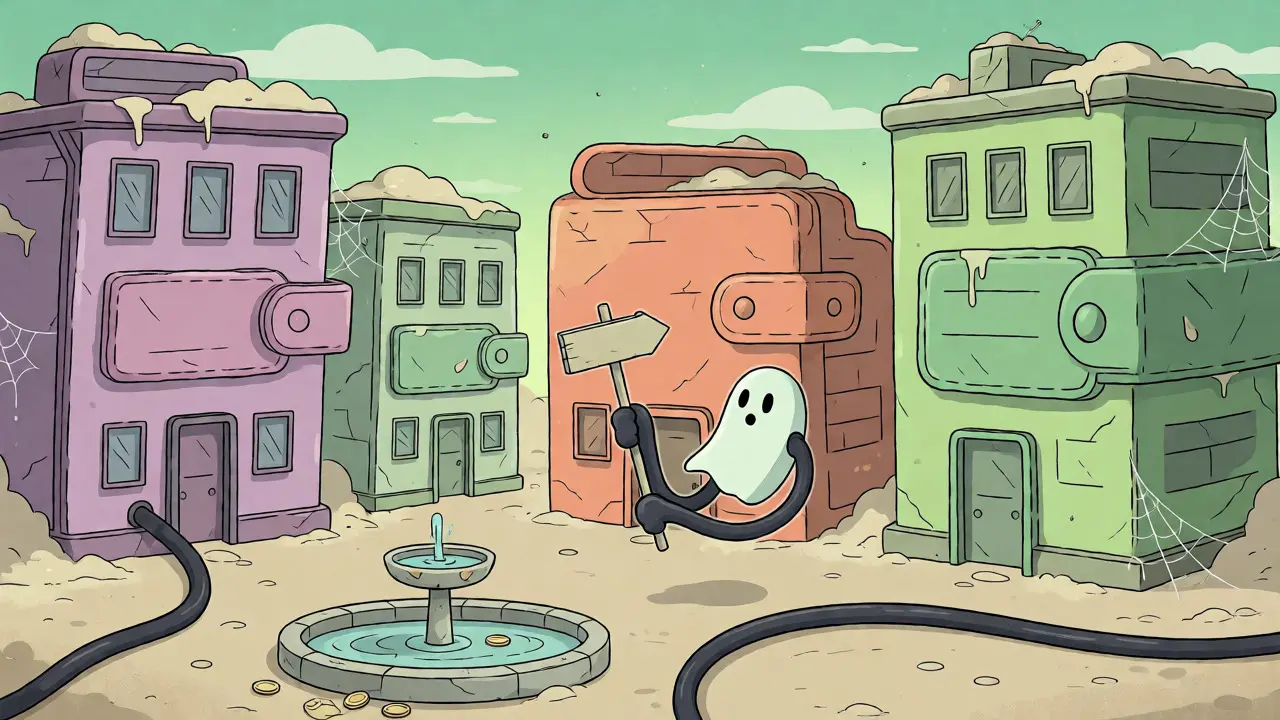
ApeSwap on Telos is a ghost town with nice buildings. The infrastructure is well-built, the fee structure is logical, and the team behind it has proven competence elsewhere. But without traffic, even the best store fails. Currently, it serves more as a strategic placeholder for ApeSwap than a viable financial hub for Telos users. Unless Telos experiences a sudden DeFi boom, expect this implementation to remain a minor footnote in the broader ApeSwap story.
Is ApeSwap on Telos safe to use?
Yes, the codebase is audited by Paladin and shares security standards with the main Binance Smart Chain deployment. However, "safe" doesn't mean profitable. With near-zero liquidity, you face higher risks of slippage and difficulty exiting positions quickly.
Can I earn good yields farming on ApeSwap Telos?
Generally, no. Yield farming relies on trading fees distributed to liquidity providers. Since ApeSwap Telos has $0.00 daily trading volume, the fee pool is empty. APRs may appear high on paper due to inflationary token emissions, but real value capture is minimal.
Which wallet do I need for ApeSwap Telos?
You need a Web3 wallet that supports the Telos blockchain. Popular choices include Anchor Wallet and MetaMask configured with custom RPC settings for Telos. Ensure you have TLOS tokens to cover gas fees.
Why is the trading volume so low?
The Telos blockchain has a much smaller user base compared to Ethereum or Binance Smart Chain. Additionally, competitors like Swapsicle have captured most of the local DeFi attention. ApeSwap's expansion was strategic, but it hasn't attracted sufficient organic traffic yet.
Is the BANANA token the same on Telos?
It is a wrapped version of the original BANANA token, bridged from the main network. It functions similarly for governance and rewards but exists on the Telos ledger. Be careful not to send tokens directly to unsupported addresses without using a proper bridge.