
Searching for a review of BarterDEX might feel like looking for a ghost. If you try to log in or download the app today, you won’t find it. That’s because BarterDEX doesn’t exist anymore-not as an active product, but as a name from the past. It was rebranded to AtomicDEX is the evolved version of BarterDEX that continues to offer non-custodial trading via atomic swaps back in July 2019. So, why are you here? Maybe you stumbled upon an old forum post, or perhaps you’re researching the history of decentralized finance (DeFi). Either way, understanding BarterDEX is crucial if you want to grasp how atomic swaps are trustless cryptocurrency exchanges between different blockchains without intermediaries work today.
This isn’t just a history lesson. The technology BarterDEX pioneered is still alive and kicking under the AtomicDEX banner. In this guide, I’ll break down what BarterDEX was, how it worked, why it changed its name, and whether its successor, AtomicDEX, is worth your time in 2026. We’ll also look at the pros and cons of this specific type of decentralized exchange compared to the giants like Coinbase or Uniswap.
What Was BarterDEX?
To understand BarterDEX, you have to look back at 2016. It started life as EasyDEX before being rebranded to BarterDEX in 2017. Developed by the Komodo Platform is a blockchain ecosystem focused on privacy, security, and interoperability through atomic swaps, it was designed with one clear goal: let you trade crypto without trusting anyone else. Unlike centralized exchanges where you send your coins to their wallets, BarterDEX was non-custodial. Your private keys stayed on your device. Always.
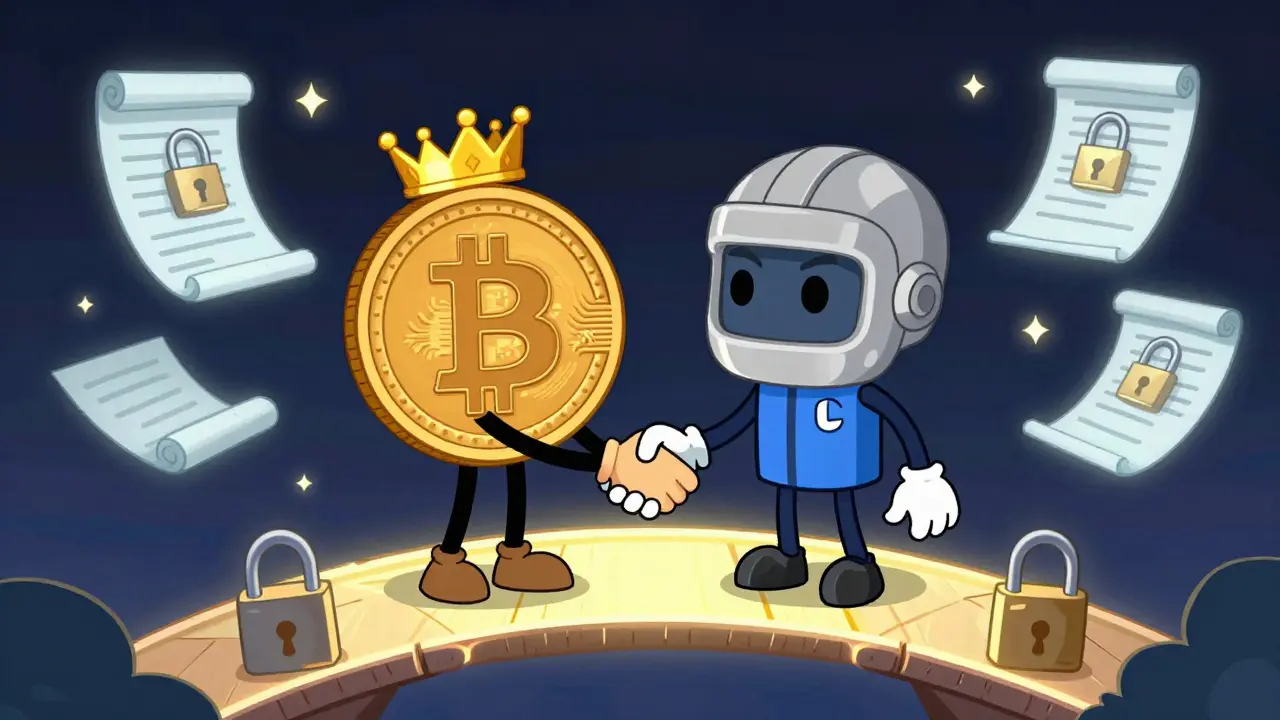
The core tech behind this was the atomic swap. Imagine you want to trade Bitcoin for Litecoin. On a central exchange, you deposit both, they hold them, and execute the trade. With an atomic swap, the two blockchains talk directly. If one side fails, the other reverses automatically. No middleman, no counterparty risk. BarterDEX made this possible for hundreds of coins, supporting about 95% of existing cryptocurrencies at its peak. That’s a massive number compared to most exchanges that only list popular tokens.
Why Did BarterDEX Become AtomicDEX?
In July 2019, Komodo announced that BarterDEX was evolving into AtomicDEX. This wasn’t a shutdown; it was a strategic upgrade. The team realized that while the technology was solid, the user experience needed refinement. AtomicDEX kept all the core benefits-non-custodial trading, wide coin support, and privacy-but improved the interface and added more features over time.
If you’re reading old reviews praising BarterDEX, know that those sentiments largely carry over to AtomicDEX. However, the landscape has changed since 2019. New competitors have emerged, and regulatory pressures have increased. Still, the fundamental promise remains: total control over your assets. For many users, especially those wary of exchange hacks or frozen accounts, this is still a major selling point.
How Atomic Swaps Work: The Core Technology
You don’t need to be a coder to use these tools, but understanding the basics helps. An atomic swap relies on hash-locked contracts. Here’s the simplified version:
- Hash Lock: Both parties agree on a secret key. Only someone who knows this key can claim the funds.
- Time Lock: A deadline is set. If the swap isn’t completed by then, the funds return to the original owners.
- Trustless Execution: Neither party needs to trust the other. The code enforces the rules.
This means you can trade Bitcoin for Ethereum, or even obscure altcoins, without ever touching a centralized platform. It’s peer-to-peer in the truest sense. While AMM-based DEXs like Uniswap is an automated market maker decentralized exchange that uses liquidity pools instead of order books rely on liquidity providers, AtomicDEX uses direct order matching facilitated by Liquidity Nodes. These nodes help stabilize prices and ensure trades happen smoothly, solving one of the biggest problems early DEXs faced: lack of liquidity.
Fees and Costs: What You Pay
When BarterDEX was active, its fee structure was competitive. Takers paid 0.15%, while makers paid nothing (0.00%). Compare that to the industry average of around 0.25% at the time, and it was a deal. Today, AtomicDEX maintains similar low fees, though exact rates can vary depending on network congestion.
Remember, there are no withdrawal fees in the traditional sense. Since you never deposit funds onto a platform, you only pay standard network transaction fees when moving coins off-chain or initiating a swap. This can be cheaper or more expensive than centralized exchanges depending on current blockchain conditions. For example, during high Ethereum gas fees, swapping ERC-20 tokens might cost more than using a centralized exchange with fixed fees.
| Feature | BarterDEX / AtomicDEX | Coinbase | Kraken |
|---|---|---|---|
| Custody | Non-custodial (You hold keys) | Custodial (Exchange holds keys) | Custodial (Exchange holds keys) |
| KYC Required | No | Yes | Yes |
| Fiat On-Ramp | No | Yes | Yes |
| Supported Coins | ~99% of all cryptos | ~235 | ~350+ |
| Taker Fee | 0.15% | 0%-3.99% | 0%-0.4% |
Pros and Cons of Using AtomicDEX
Let’s get real about the experience. There are clear advantages, but also some hurdles you need to jump over.
Pros:
- Total Privacy: No KYC means no personal data collection. Your identity stays yours.
- Asset Control: Your funds never leave your wallet. If the service goes down, your coins are safe.
- Wide Selection: Access to thousands of coins, including those not listed on major exchanges.
- Cross-Chain Trading: Swap between different blockchains seamlessly.
Cons:
- Steep Learning Curve: Not beginner-friendly. You need to understand wallets, seeds, and network fees.
- No Fiat Support: You can’t buy crypto with USD or EUR directly. You must already own crypto.
- Slower Transactions: Atomic swaps take longer than instant centralized trades.
- Limited UI Polish: While improved, the interface isn’t as slick as Binance or Coinbase.
Who Should Use AtomicDEX?
This tool isn’t for everyone. If you’re new to crypto and want to buy Bitcoin with a credit card, stick with Coinbase or Kraken. They handle the complexity for you. But if you’re an experienced trader who values privacy and wants to avoid custodial risks, AtomicDEX is a strong option. Developers, privacy advocates, and those holding niche altcoins will find it particularly useful.
Also, consider the regulatory environment. Because it’s non-custodial and requires no KYC, it operates in a gray area in some jurisdictions. While this offers freedom, it also means less consumer protection if something goes wrong. Always do your own research.
Getting Started with AtomicDEX
If you decide to give it a shot, here’s what you need to know. First, download the Komodo Wallet. It’s available for Windows, macOS, Linux, Android, and iOS. Setup takes about 15-20 minutes. Make sure you back up your seed phrase immediately. Losing it means losing access to your funds forever.
Next, fund your wallet with the cryptocurrencies you want to trade. Since there’s no fiat on-ramp, you’ll need to acquire crypto elsewhere first. Once funded, navigate to the AtomicDEX section. Select the pair you want to trade, enter the amount, and confirm. The process is straightforward once you understand the mechanics.
Expect a learning period. Experienced users might get comfortable in 2-3 hours. Beginners could take 8-10 hours to fully grasp the nuances. Don’t rush. Start with small amounts to test the waters.
Final Thoughts
BarterDEX may be gone, but its legacy lives on in AtomicDEX. It represents a vital part of the decentralized finance ecosystem-one that prioritizes user sovereignty over convenience. While it’s not the easiest tool to use, it offers unparalleled control and privacy. As cross-chain interoperability becomes more important, technologies like atomic swaps will likely play a bigger role. Whether you choose to trade on AtomicDEX depends on your priorities. If control and privacy matter most, it’s worth exploring.
Is BarterDEX still operational?
No, BarterDEX was rebranded to AtomicDEX in July 2019. All development and updates now happen under the AtomicDEX name.
Can I use AtomicDEX to buy crypto with USD?
No, AtomicDEX does not support fiat on-ramps. You must already own cryptocurrency to use the platform for trading.
Is AtomicDEX safe?
It is considered highly secure because it is non-custodial. Your private keys never leave your device, eliminating the risk of exchange hacks. However, you are responsible for securing your own wallet and seed phrase.
What are the fees on AtomicDEX?
Taker fees are typically 0.15%, while maker fees are 0.00%. You also pay standard network transaction fees for each swap.
Do I need to complete KYC to use AtomicDEX?
No, AtomicDEX does not require Know Your Customer (KYC) verification. It is designed for anonymous, non-custodial trading.