
You’ve probably seen the buzz around the BINO airdrop by Binopoly, a cryptocurrency project aiming to distribute free tokens to early adopters and active users. But here is the hard truth: there is no single, official "click-and-claim" button for a massive Binopoly giveaway. Instead, the distribution works through exchange challenges, specifically on platforms like Bitget. If you are looking for a get-rich-quick scheme where you just sign up and get thousands of dollars in tokens, this isn’t it. However, if you are willing to participate in trading competitions and platform tasks, you can earn free BINO tokens. This guide cuts through the noise, explains exactly how the current distribution model works, and helps you avoid scams that prey on confusion between similar-sounding projects.
Understanding the Binopoly (BINO) Token
Before you start hunting for airdrops, you need to know exactly what asset you are dealing with. The ticker symbol BINO is currently shared by two different projects, which causes significant confusion in the crypto space. We are talking about Binopoly, a decentralized finance (DeFi) token listed on exchanges like Bitget. Its contract address starts with 0xa2df...05eb592. It is crucial not to confuse this with BinoFi, a separate hybrid exchange project that also uses the BINO ticker but operates on a different technology stack involving Multi-Party Computation (MPC) wallets. BinoFi has been in presale phases with specific price targets, while Binopoly is focused on its existing liquidity and community growth through exchange partnerships. Mixing these up could lead you to buy the wrong token or fall for a phishing site pretending to be one of them. Always verify the contract address on a block explorer before interacting with any wallet request.
How the BINO Airdrop Actually Works
The term "airdrop" in the context of Binopoly does not refer to a retroactive reward for past holders, as seen with major Layer 1 networks. Instead, it refers to Bitget Airdrop Challenges, promotional events where users complete specific tasks, such as trading volume targets or holding certain assets, to receive free tokens. Here is the step-by-step reality of how you can get your hands on BINO:
- Create an Account: You need an account on a supporting exchange, primarily Bitget. Ensure you have completed KYC (Know Your Customer) verification, as most legitimate airdrops require verified identities to prevent bot farming.
- Monitor the Events Page: Navigate to the "Airdrop" or "Rewards" section on the exchange. Look for active campaigns featuring BINO. These are not always live; they come and go based on marketing cycles.
- Complete Tasks: Typical requirements might include depositing a minimum amount of USDT, executing a specific number of trades, or participating in a new launchpad event. For example, some recent campaigns required users to trade over $100 worth of assets within a 24-hour window.
- Claim Rewards: Once the campaign ends and your activity is verified, the BINO tokens are credited to your spot wallet. There is usually a snapshot date, after which no further participation counts for that specific round.
This model shifts the burden from passive waiting to active participation. It rewards engagement rather than just holding. If you see a website claiming you can get BINO just by connecting your MetaMask wallet without trading, be extremely cautious. That is likely a scam designed to drain your funds.
Eligibility Criteria and Common Pitfalls
To qualify for these exchange-based distributions, you generally need to meet specific criteria. While exact terms change per campaign, the standard requirements include:
- Verified Identity: Unverified accounts are almost never eligible for substantial airdrops due to anti-money laundering (AML) regulations.
- Trading Volume: Most BINO-related rewards require a minimum trading volume. This ensures that only active traders benefit, filtering out casual browsers.
- Geographic Restrictions: Users from sanctioned countries or regions with strict crypto regulations may be excluded. Check the terms and conditions (T&C) of the specific Bitget challenge.
- No Sybil Attacks: Exchanges use sophisticated detection to identify multiple accounts controlled by one person. Creating ten accounts to farm small rewards will result in all of them being banned.
A major pitfall is the lack of centralized listing. Since Binopoly is not available on major centralized exchanges like Binance’s main spot market, you often need to use Web3 Wallet features or Decentralized Exchanges (DEXs) to manage or swap your tokens after claiming them. This adds a layer of complexity. If you claim BINO via a DEX interaction, ensure you have enough gas fees (ETH, BNB, or MATIC depending on the chain) to execute the transaction.
| Method | Effort Level | Risk | Potential Reward |
|---|---|---|---|
| Bitget Airdrop Challenge | Medium (Requires Trading) | Low (Platform Secured) | Free BINO Tokens |
| Direct Purchase on DEX | Low | Medium (Slippage/Gas Fees) | Immediate Ownership |
| Presale Investment | High (Capital Required) | High (Project Risk) | Lower Entry Price |
| Scam Websites | None | Critical (Fund Loss) | Zero |
Market Context and Value Assessment
It is important to approach the value of BINO with realistic expectations. Current market data for Binopoly shows limited trading volume and inactive price feeds on some aggregators, displaying placeholder values. This suggests low liquidity or niche interest compared to top-tier altcoins. Price prediction models often show erratic behavior for such tokens, with some projections indicating minimal movement. Do not expect a 100x return overnight. The primary value proposition of the airdrop is speculative: you acquire the asset for free, so your downside risk is zero (excluding time spent). If the project gains traction and lists on larger exchanges, the value could appreciate. If it remains stagnant, you simply have worthless tokens in your wallet. This is why diversification across multiple airdrop opportunities-such as those from established protocols like Nillion or Initia-is a smarter strategy than betting everything on one obscure token.
Security Best Practices for Airdrop Hunters
As you navigate the world of BINO and other crypto giveaways, security must be your top priority. The crypto space is rife with malicious actors who create fake airdrop sites. Follow these rules:
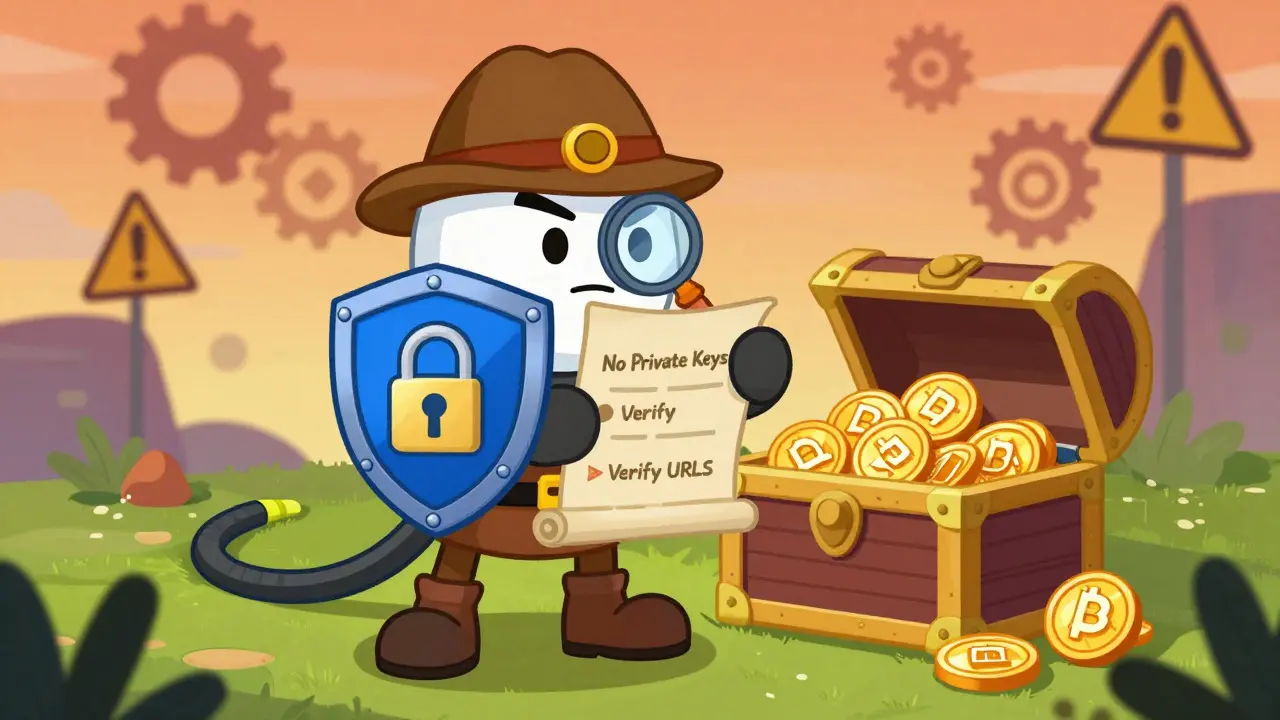
- Never Share Private Keys: Legitimate airdrops never ask for your seed phrase or private key. They connect to your wallet read-only or credit directly to your exchange account.
- Use a Burner Wallet: When interacting with unknown DeFi protocols or claiming tokens on-chain, use a secondary wallet with minimal funds. Keep your main holdings in a cold storage device.
- Verify URLs: Double-check the domain name. Scammers often use look-alike domains like "binopoly-airdrop.com" instead of the official exchange URL.
- Check Contract Addresses: Before approving any transaction, compare the contract address with the one listed on CoinMarketCap or CoinGecko. A single character difference means it’s a fake token.
In 2026, regulatory scrutiny is higher than ever. Platforms like Bitget are under pressure to comply with global standards, which means their airdrop mechanisms are more transparent but also stricter on eligibility. Take advantage of this by following the official channels only.
Conclusion: Is the BINO Airdrop Worth It?
The BINO airdrop by Binopoly is a legitimate opportunity for active traders on supported exchanges like Bitget, but it is not a passive income stream. It requires effort, verification, and adherence to specific trading volumes. Given the current low liquidity and market presence of the token, treat any claimed BINO as a lottery ticket rather than a guaranteed investment. Focus on completing the tasks safely, avoid sharing sensitive information, and keep your expectations grounded. If you enjoy the process of exploring new DeFi projects and are comfortable with the risks, participating in these challenges can be a rewarding way to expand your crypto portfolio at zero cost. Just remember: if it sounds too good to be true, it almost certainly is.
Is the Binopoly (BINO) airdrop real?
Yes, but it is not a traditional "free money" airdrop. Binopoly distributes tokens through promotional challenges on exchanges like Bitget. You must complete specific tasks, such as trading volume targets, to qualify. There is no automatic distribution to all wallet holders.
What is the difference between Binopoly and BinoFi?
Both projects use the ticker symbol BINO, which causes confusion. Binopoly is a DeFi token traded on exchanges like Bitget. BinoFi is a separate hybrid exchange project that has undergone presales and uses MPC wallet technology. They are unrelated entities with different goals and tokenomics.
How do I claim my BINO tokens?
To claim BINO tokens, you typically need to register on Bitget, complete KYC verification, and participate in active airdrop challenges. Once you meet the trading or holding requirements, the tokens are credited to your exchange wallet. You can then withdraw them to a personal wallet if desired.
Is BINO listed on Binance?
No, Binopoly (BINO) is not listed on the main centralized spot market of Binance. Users interested in BINO typically access it through Bitget or via decentralized exchanges (DEXs) using Web3 wallets. Always verify the contract address when trading on DEXs.
What are the risks of participating in crypto airdrops?
The main risks include falling for phishing scams, wasting time on low-value tokens, and potential smart contract vulnerabilities if interacting with unverified DeFi protocols. Additionally, tax implications may arise from receiving taxable income in the form of tokens. Always use secure practices and verify sources.