Imagine spending months designing a unique logo or writing a song, only to have someone else claim it as their own. In the traditional world of intellectual property (IP), proving you created something first often means digging through dusty paper trails or waiting years for a court date. It is frustrating, expensive, and slow. But what if you could timestamp your creation instantly, making it impossible for anyone to deny your ownership? That is exactly what blockchain technology brings to the table. By turning creative assets into immutable digital records, creators can finally secure their rights without relying solely on bureaucratic delays.
The landscape of IP protection has shifted dramatically. We are no longer just talking about physical goods; we are dealing with digital files that can be copied with a single click. Traditional systems struggle to keep up with this speed. Blockchain steps in not to replace copyright law, but to strengthen it. It provides a transparent, tamper-proof ledger that serves as undeniable evidence of who created what and when. This shift is significant enough that global bodies like the World Intellectual Property Organization (WIPO) have established dedicated task forces to study and standardize these applications.
How Blockchain Proves Ownership Instantly
The core problem with digital content is that it lacks inherent scarcity or provenance. When you save a JPEG, anyone can copy it. Blockchain solves this by creating a cryptographic hash-a unique digital fingerprint-of your file. This hash is then recorded on the blockchain with a precise timestamp. Because the blockchain is decentralized and immutable, once that record is written, it cannot be altered or deleted by any single party.
This process creates three critical layers of protection:
- Immutable Proof of Existence: You get a time-stamped certificate showing your work existed at a specific moment. If someone tries to claim they created it earlier, the blockchain record disproves them.
- Transparent Lineage: Every transfer or license of the asset is recorded. You can trace the history of ownership from the original creator to the current holder.
- Cryptographic Verification: The integrity of the file can be verified. If even one pixel changes in an image, the hash changes, revealing that the file has been tampered with.
For example, platforms like Ascribe allow artists to register their digital works on the blockchain. This doesn't stop people from copying the image, but it makes it easy to prove who the original artist is. This distinction is vital. Copyright infringement is still illegal, but blockchain makes enforcement easier by providing irrefutable evidence.
Smart Contracts Automate Licensing and Royalties
Proving ownership is only half the battle. Monetizing your IP is where things get messy. Traditionally, licensing agreements involve lawyers, contracts, and manual tracking of usage. It is inefficient and prone to errors. Enter smart contracts. These are self-executing codes stored on the blockchain that automatically enforce the terms of an agreement.
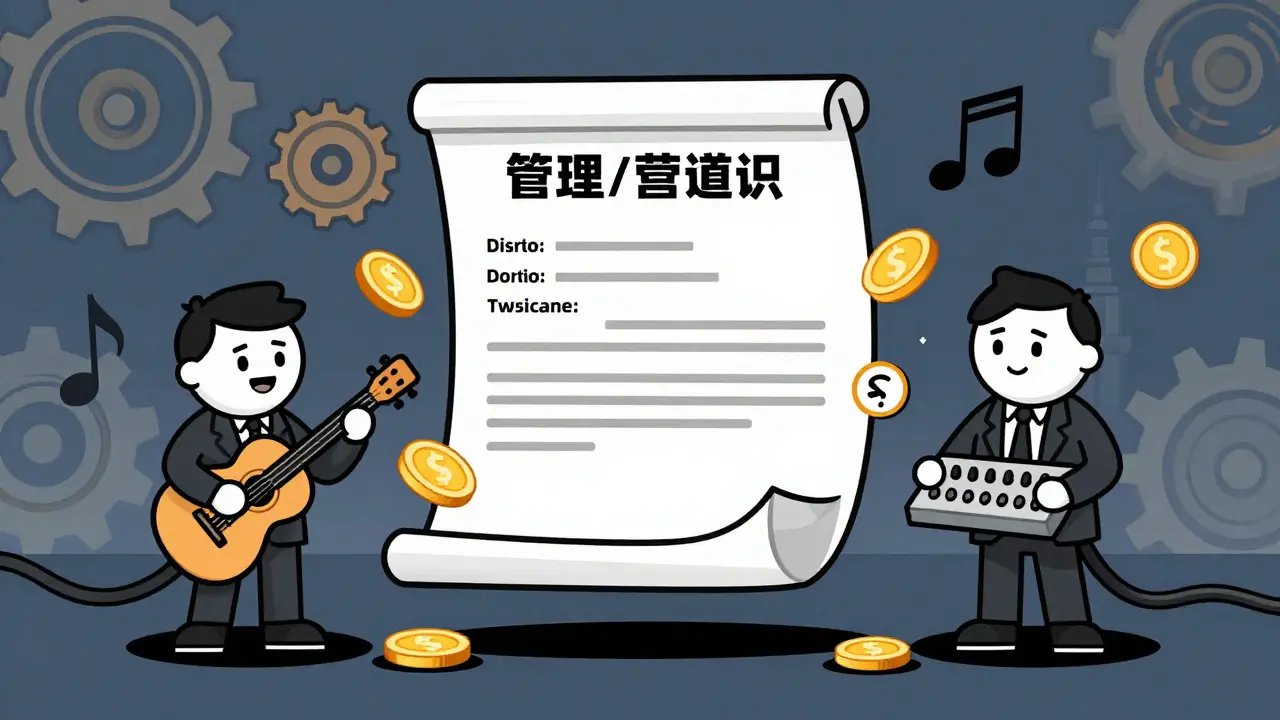
Here is how it works in practice. Let’s say you are a musician. You upload your track to a platform like Mycelia. You set the rules: every time the song is streamed, 70% of the fee goes to you, and 30% goes to the producer. When a stream occurs, the smart contract triggers automatically. The payment is split and sent directly to your wallets. No middleman, no delayed invoices, no disputes over percentages.
This automation extends to other fields too. Photographers using KodakOne can set prices for high-resolution downloads. When a buyer pays, the contract executes, granting access to the file while simultaneously recording the transaction. This reduces administrative overhead and ensures creators get paid faster and more fairly.
| Feature | Traditional System | Blockchain System |
|---|---|---|
| Proof of Creation | Manual registration, slow processing | Instant cryptographic timestamping |
| Licensing Enforcement | Legal action required, high cost | Automated via smart contracts |
| Transparency | Opaque, private records | Publicly verifiable ledger |
| Cross-Border Use | Jurisdictional complexities | Global, borderless access |
| Cost | High legal and filing fees | Lower transaction costs (gas fees) |
Real-World Applications Beyond Art
While digital art and music get the most attention, blockchain IP protection is transforming industries where authenticity is paramount. Consider luxury goods or pharmaceuticals. Counterfeiting costs billions annually. Blockchain provides a way to authenticate physical items by linking them to a digital twin on the ledger.
Everledger, for instance, tracks diamonds and other high-value assets. Each diamond gets a unique ID on the blockchain. Its journey from mine to market is recorded. If a counterfeit enters the supply chain, it won’t have a matching blockchain entry, exposing it immediately. Similarly, in the pharmaceutical industry, blockchain can verify the origin of drugs, ensuring patients receive genuine medication rather than dangerous fakes.
In software development, open-source projects face challenges with attribution and licensing compliance. Blockchain can track contributions and ensure that derivative works respect the original licenses. This creates a more trustworthy ecosystem for developers who rely on shared code bases.

Challenges and Limitations to Watch
It is important to stay grounded. Blockchain is not a magic wand. It has limitations that you need to understand before adopting it. First, there is the "oracle problem." Blockchain can verify data on the chain, but it cannot verify what happens off-chain. If someone uploads a fake document to the blockchain, the ledger will immutably record that fake document. Garbage in, garbage out.
Second, legal recognition varies. While WIPO is working on standards under CWS Task No. 59, courts in different countries may view blockchain evidence differently. A timestamp on Ethereum might be strong evidence in one jurisdiction but less persuasive in another until local laws catch up. You still need traditional legal frameworks to back up your claims.
Third, scalability and energy consumption remain concerns. While newer consensus mechanisms like Proof-of-Stake are more efficient, some networks still face congestion during peak times. This can lead to higher transaction fees and slower confirmation times, which might frustrate users expecting instant results.
Getting Started with Blockchain IP Protection
If you are ready to protect your assets, here is a practical roadmap. Start by identifying your core IP assets. Are they digital files, patents, trademarks, or physical goods? Next, choose a platform that aligns with your needs. For artists, look at Ascribe or Verisart. For musicians, explore Mycelia. For general business use, consider enterprise-grade solutions that offer private blockchains for greater control.
Then, integrate smart contracts if you plan to license your work. Work with developers who understand both coding and IP law. Finally, educate your team. Understanding how to interact with wallets, manage keys, and interpret blockchain records is crucial. Don’t neglect security; losing your private key means losing access to your proofs forever.
The future of IP protection is hybrid. Blockchain enhances existing systems rather than replacing them entirely. By leveraging its transparency and automation, you can reduce risk, streamline operations, and maintain greater control over your creative and innovative outputs. As standards mature and adoption grows, this technology will become an essential tool in every creator’s toolkit.
Does blockchain replace copyright law?
No, blockchain does not replace copyright law. It complements it by providing robust, tamper-proof evidence of ownership and creation dates. Legal enforcement still relies on national and international laws, but blockchain makes the process of proving infringement significantly easier and faster.
Is my data safe on the blockchain?
The data recorded on the blockchain is immutable and secure against tampering. However, you must protect your private keys. If you lose your keys, you lose access to your records. Additionally, be cautious about storing sensitive personal information directly on public blockchains, as it becomes permanently visible.
Can I use blockchain for physical products?
Yes, by linking physical items to digital tokens via QR codes, NFC chips, or RFID tags. Platforms like Everledger use this method to track diamonds and luxury goods, ensuring authenticity and preventing counterfeiting throughout the supply chain.
What is the role of WIPO in blockchain IP?
The World Intellectual Property Organization (WIPO) recognizes blockchain as a frontier technology. They have established a Blockchain Task Force to develop standards and guidelines for using blockchain in IP ecosystems, aiming to improve interoperability and governance across different jurisdictions.
Are smart contracts legally binding?
The legal status of smart contracts varies by jurisdiction. Many countries are updating their laws to recognize automated agreements. However, it is wise to have a traditional legal contract that references the smart contract to ensure enforceability in court if disputes arise.