You just tried to log into Bybit, but the screen goes blank or throws an error. You’re not alone. For thousands of traders in restricted regions like the United States, this is a daily headache. It’s not a glitch; it’s geofencing. This digital fence stops people in certain countries from accessing the platform to comply with local laws. But here’s the catch: the fence has holes. If you’re wondering why your IP address keeps getting flagged or how Bybit actually spots a VPN, you need to understand the tech behind the ban.
| Aspect | What You Need to Know |
|---|---|
| Primary Restriction Method | IP Address Geolocation blocking during login and trading sessions. |
| VPN Effectiveness | Standard commercial VPNs often bypass basic checks, but risk detection via fingerprinting. |
| KYC Vulnerability | Users can sometimes verify with foreign IDs while using a VPN, though this violates Terms of Service. |
| Regulatory Driver | Compliance with jurisdictions that prohibit unregistered derivatives exchanges (e.g., USA). |
| Risk Factor | Account freezes or fund withdrawals delays if non-compliant access is detected retroactively. |
Why Bybit Blocks Certain Countries
Let’s get real about why this happens. Bybit isn’t trying to be difficult for fun. They are navigating a minefield of global regulations. After Binance paid a massive $4.3 billion settlement to U.S. regulators, other major exchanges got nervous. Bybit chose a different path than Coinbase or Kraken, which obtained proper licenses. Instead, Bybit implemented geofencing as a "when all else fails" strategy. Jake Chervinsky, chief legal officer at Variant Fund, described this as creating a virtual fence around the product. It’s a blunt instrument, sure, but it keeps them out of immediate regulatory hot water in places like the United States.
The logic is simple: if you can’t satisfy the complex compliance obligations of a specific jurisdiction, you block access entirely. This affects not just the U.S., but also other regions with strict crypto derivatives laws. The system monitors your IP address in real-time. If your traffic comes from a blocked country, the platform refuses the connection. It’s less about who you are and more about where your data packets originate. However, this simplicity is exactly what makes it vulnerable to tech-savvy users willing to jump through hoops.
How Bybit Detects Your Location
So, how does the fence work? Primarily, it relies on IP geolocation databases. When you connect, Bybit checks your IP against a list of approved jurisdictions. If you’re in London, you’re good. If you’re in New York, you’re blocked. But that’s only layer one. During the sign-up process, they cross-reference your IP with the country listed on your government-issued ID during KYC (Know Your Customer) verification. This creates a consistency check. If your IP says "Singapore" but your passport says "United States," red flags go up.
However, technical analysis suggests their detection isn’t always bulletproof. A CoinDesk investigation revealed that many American users successfully bypass these checks by connecting to a VPN server in an approved country before signing up. They then complete KYC using identification documents from that approved jurisdiction. This highlights a significant gap: Bybit’s current systems may prioritize user acquisition over strict enforcement, or perhaps their cross-referencing algorithms aren’t aggressive enough to catch every mismatch immediately.
The Reality of VPN Circumvention
Can you use a VPN? Technically, yes. Practically, it’s risky. Many traders use standard commercial VPN services to mask their true location. The process usually involves confirming your real IP, switching to a VPN server in a permitted country (like Switzerland or Singapore), and then accessing the Bybit app. Since the IP appears legitimate, the initial access works. Some users even manage to pass KYC checks by using non-U.S. identification documents, though this often requires having access to such documents legally.
But don’t assume you’re invisible. While basic IP checks are easy to fool, advanced detection methods exist. These include browser fingerprinting, analyzing connection timing patterns, and checking device characteristics. If your behavior looks suspicious-like logging in from three different continents in an hour-the system might flag your account. Daniel Arroche, a partner at French crypto law firm d&a partners, noted that while VPN usage is common, it explicitly violates the terms of service of most platforms. You are essentially playing a cat-and-mouse game with the compliance team.

Security Breaches and Compliance Risks
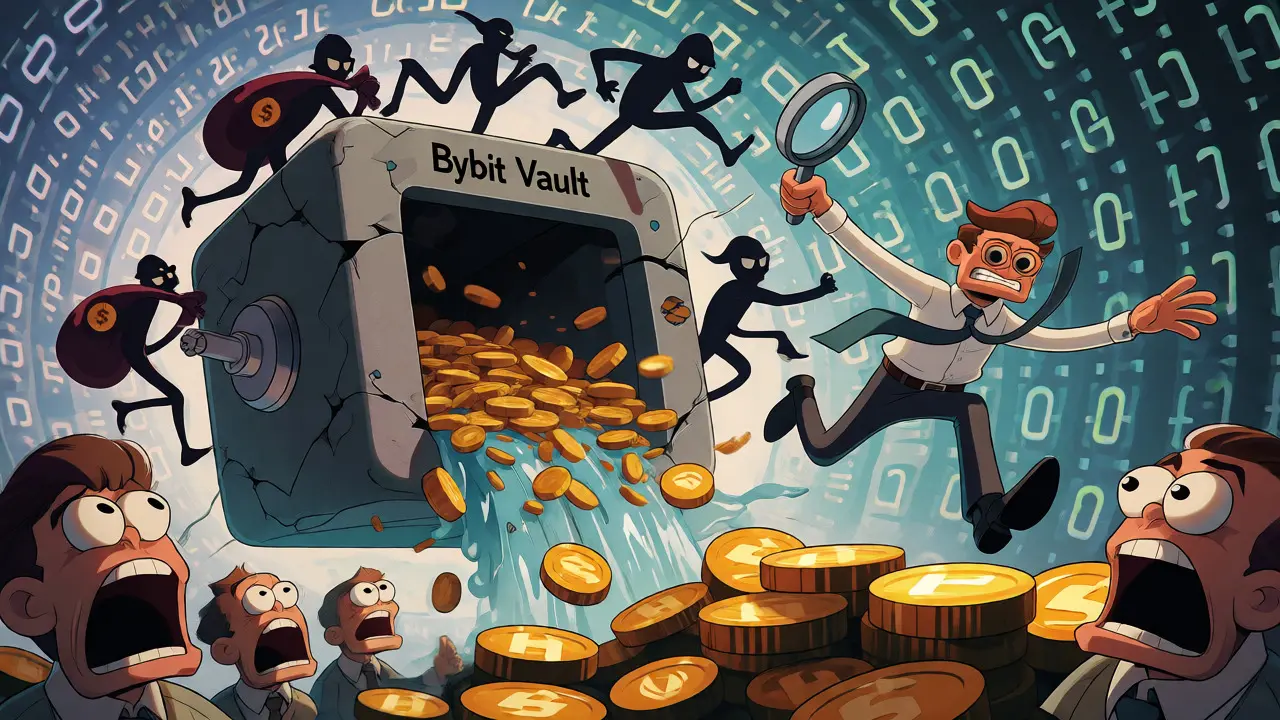
We can’t talk about Bybit without mentioning the elephant in the room: security. In 2024, the platform suffered a devastating hack resulting in $1.4 billion in losses. This incident was attributed to North Korea’s TraderTraitor group. The attackers exploited vulnerabilities in the SAFE Wallet user interface source code used in multi-signature transactions. They embedded malicious code that made fraudulent transfers look routine to CEO Ben Zhou.
Why does this matter for geofencing? Because compromised platforms struggle to maintain effective compliance systems. If the infrastructure itself is under attack, the integrity of user verification and geographic monitoring can wobble. Following the hack, Bybit hired Mandiant, a top-tier security firm acquired by Google Cloud, to investigate and bolster defenses. This event underscores that while geofencing handles regulatory access, internal security flaws can undermine trust and operational stability regardless of where you live.
Comparison With Other Exchanges
How does Bybit stack up against competitors? It sits in a middle ground. Binance completely withdrew from the U.S. market, launching a separate entity called Binance.US. On the other end, Coinbase and Kraken operate fully licensed within the U.S. Bybit maintains its international platform but strictly fences off restricted zones. This approach allows them to serve global markets without the heavy overhead of full U.S. licensing, but it creates friction for American traders.
| Exchange | U.S. Strategy | Geofencing Strictness | VPN Bypass Difficulty |
|---|---|---|---|
| Coinbase | Fully Licensed Entity | N/A (Domestic) | N/A |
| Binance | Separate Binance.US | High (Global vs US split) | Moderate |
| Bybit | International Only | Intermediate | Low-Moderate |
| Sky Protocol | Blanket VPN Block | Very High | High |
Some protocols, like Sky Protocol (formerly Maker), have taken a harder line, implementing blanket VPN blocking regardless of location. This prevents any VPN user from accessing services, which is a more aggressive stance than Bybit’s selective geographic restrictions. It shows the spectrum of strategies available, ranging from total exclusion to nuanced IP management.
User Experience and Account Safety
If you’re trading from a restricted region using a workaround, what’s the worst-case scenario? User feedback on Reddit and Trustpilot reveals consistent frustration. While many report successful circumvention, there’s lingering anxiety about account closures. If Bybit detects a violation later, they could freeze funds or delay withdrawals. Sensor Tower, a mobile analytics firm, stated it cannot definitively track whether U.S. users are using VPNs, indicating how widespread and opaque this practice is.
The demand for access to global liquidity drives this behavior. Despite the risks, the competitive trading features and deep order books on Bybit attract traders who feel limited by domestic options. Just remember: violating Terms of Service means you have no legal recourse if things go wrong. You’re operating outside the protection of the platform’s compliance framework.
Future Trends in Crypto Geofencing
Where is this heading? Expect tighter enforcement. As regulatory pressure mounts, exchanges will likely invest in machine learning-based analysis of user behavior. Imagine systems that analyze typing speed, mouse movement, and transaction timing to spot anomalies typical of VPN users. Academic research, including a 2025 SSRN paper on post-hack security, suggests exchanges must balance security, compliance, and accessibility.
For now, the trend is toward stricter compliance-driven market segmentation. TRM Labs reported that 17 jurisdictions representing 70% of global crypto exposure tightened regulations in 2023. This forces platforms to refine their digital fences. If you rely on Bybit from a restricted area, keep an eye on their updates. The days of easily bypassing IP checks with a basic VPN subscription may be numbered as detection technologies mature.
Does Bybit allow US users?
No, Bybit's terms of service explicitly prohibit access from the United States. The platform implements geofencing to block users based on their IP address being located in restricted jurisdictions.
Can I use a VPN to trade on Bybit?
Technically, yes, many users do. However, using a VPN to access Bybit from a restricted country violates the Terms of Service. While it may work initially, there is a risk of account suspension or withdrawal issues if detected.
How does Bybit detect VPN usage?
Bybit primarily uses IP geolocation databases. More advanced detection may involve browser fingerprinting, device characteristic analysis, and monitoring inconsistent login locations or behaviors, though basic commercial VPNs often bypass simple IP checks.
What happens if I am caught using a VPN?
If Bybit determines you accessed the platform from a restricted jurisdiction in violation of their rules, they may freeze your account, halt trading, or restrict withdrawals until the issue is resolved or the account is closed.
Is Bybit safe after the 2024 hack?
Bybit hired security firm Mandiant to investigate the $1.4 billion hack and implement enhanced measures. While the incident was severe, the exchange continues to operate globally, balancing security improvements with ongoing regulatory compliance efforts.