
Imagine waking up to find your trading platform offline because the government pulled the plug. That’s not a hypothetical nightmare for Indian crypto traders; it’s a real risk that has defined the last few years of this market. If you’ve ever wondered why CoinDCX and WazirX feel different from Binance or Coinbase, the answer lies in the heavy hand of Indian regulation. The days of unregulated wild west trading are over. Today, operating in India means adhering to strict banking-level standards set by the Financial Intelligence Unit (FIU-IND). This shift hasn't just changed how exchanges operate; it has reshaped who survives and who struggles.
The Regulatory Shift: From Wild West to Banking Standards
For years, cryptocurrency in India existed in a gray zone. You could buy Bitcoin with a credit card and store it wherever you wanted. That ended when the government decided to treat Virtual Digital Asset (VDA) service providers like banks. In March 2023, the Prevention of Money Laundering Act (PMLA) was extended to cover crypto exchanges. This wasn’t a suggestion; it was a mandate. Every exchange had to register with the FIU-IND, implement rigorous Know Your Customer (KYC) checks, and report suspicious transactions automatically.
This move aligned India with global standards, specifically those set by the Financial Action Task Force (FATF). But India went further. They implemented the Travel Rule with no minimum threshold. In plain English? If you send even one rupee worth of crypto to another wallet, the exchange must know exactly who sent it and who received it. No loopholes. This level of transparency is rare globally and puts immense pressure on platforms to maintain massive databases of user activity.
The goal was clear: stop money laundering and tax evasion. But the side effect was a consolidation of power among larger players who could afford these compliance costs. Smaller startups often couldn't keep up, leaving CoinDCX and WazirX as the dominant domestic names, albeit with significant baggage.
Security Breaches: The Catalyst for Tighter Rules
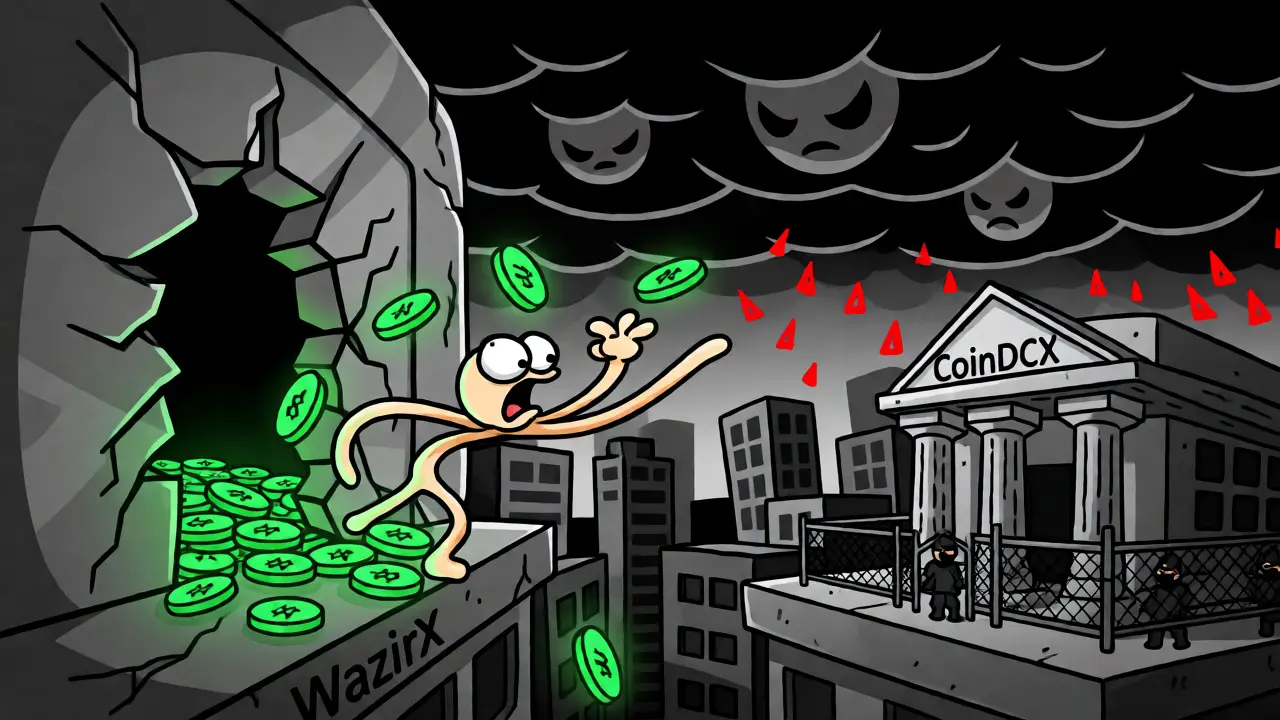
Regulations don't appear in a vacuum. They usually follow disasters. For WazirX, the disaster came in July 2024. A catastrophic hack drained $230 million from their hot wallets. It wasn’t just a loss of funds; it was a loss of trust. Users watched helplessly as withdrawals froze for weeks. When the platform finally resumed operations, the recovery was slow and painful. Compare this to BingX, an international exchange that suffered its own breach around the same time but restored services within 24 hours. The contrast highlighted a critical vulnerability in domestic infrastructure.
CoinDCX, recognized as India’s first digital asset unicorn, wasn't immune either. In July 2025, they faced their own major security scare. While less financially devastating than the WazirX incident, it reinforced regulators' fears. The message from New Delhi was loud and clear: if you can’t secure billions in user assets, you shouldn’t be handling them. These incidents weren't just bad luck; they exposed systemic weaknesses in cybersecurity preparedness across the sector.
| Exchange | Incident Year | Estimated Loss | Recovery Time | Regulatory Outcome |
|---|---|---|---|---|
| WazirX | 2024 | $230 Million | Weeks/Months | Intense scrutiny, forced audits |
| CoinDCX | 2025 | Undisclosed (Significant) | Days | Enhanced security protocols mandated |
| Binance | N/A (Pre-registration) | N/A | N/A | Paid $2.2M penalty to register |
The September 2025 Cybersecurity Mandate
If you thought KYC was tough, wait until you hear about the new audit rules. In September 2025, the FIU-IND introduced a game-changer: mandatory cybersecurity audits. But not just any audit. These had to be conducted by firms approved by the Indian Computer Emergency Response Team (CERT-In). This turned cybersecurity from a nice-to-have feature into a strategic investment requirement.
Why does this matter to you as a trader? Because smaller exchanges now face a financial wall. Hiring CERT-In-approved auditors isn't cheap. Large firms like CoinDCX can absorb these costs easily. Startups? Many might fold or merge. This mandate effectively raises the barrier to entry, favoring established giants while squeezing out the little guys. It also shifts the focus from reactive fixes to proactive defense. Exchanges can no longer wait for a hack to upgrade their firewalls; they have to prove they’re ready before they trade.
This regulatory evolution reflects a broader strategy. India ranks high in global blockchain adoption reports. The government wants to capture this economic potential without letting illicit finance run rampant. By forcing third-party validation, they ensure that every registered exchange meets a baseline standard of technical competence.
Domestic vs. Offshore: The Great Divide
Here’s where things get tricky for users. While domestic exchanges scramble to comply, many Indians still prefer offshore platforms like Huione, CEX.IO, or BingX. Why? Lower fees and a wider range of altcoins. But convenience comes with risk. Indian authorities have issued notices to 25 offshore exchanges for failing to comply with domestic registration requirements. They allege these platforms pose money laundering risks.
These offshore giants have a 45-day window to explain themselves. If they fail, they could face bans. Imagine having your account frozen overnight because your favorite exchange didn’t file the right paperwork. This uncertainty drives many traders to diversify. Some keep funds on compliant domestic exchanges for safety, while using offshore ones for speculative trades, accepting the risk of sudden liquidation.
International players aren't ignoring this. Coinbase successfully registered with the FIU, signaling their commitment to the Indian market. Binance paid a hefty $2.2 million penalty to get registered, proving that big money follows compliance. KuCoin followed suit with a smaller $41,000 fine. The trend is undeniable: if you want access to India’s millions of crypto users, you play by their rules.

What This Means for Your Wallet
So, what should you do? First, check if your exchange is FIU-registered. This status is non-negotiable for legal operation in India. Second, understand that KYC is permanent. Once you verify your identity, it’s tied to your transaction history forever. Privacy purists might hate this, but it’s the price of participation.
Third, watch the news regarding offshore bans. If you trade on platforms that haven’t registered, keep an eye on social media. User frustration is high, and sudden policy changes can disrupt your liquidity. Finally, consider custody solutions. Companies like Liminal Custody, based in Singapore but registered in India, offer institutional-grade storage. For large holdings, moving assets off-exchange reduces exposure to both hacks and regulatory freezes.
The landscape is shifting toward stability at the cost of freedom. Domestic exchanges like CoinDCX are investing heavily in compliance to differentiate themselves from risky offshore options. WazirX, despite its stumble, remains a key player due to its deep user base, though it faces an uphill battle to rebuild trust.
Key Takeaways
- Compliance is King: All exchanges must register with FIU-IND and follow PMLA guidelines.
- No Threshold Travel Rule: Every crypto transfer requires full sender/receiver details.
- Mandatory Audits: Since Sept 2025, CERT-In approved firms must audit cybersecurity annually.
- Offshore Risk: Unregistered foreign exchanges face potential bans after 45-day notice periods.
- Consolidation: High compliance costs favor large players like CoinDCX over small startups.
Is it safe to use offshore crypto exchanges in India?
It carries higher risk. While they offer lower fees, they may not be FIU-registered. Authorities can issue bans or freeze accounts if they suspect non-compliance with anti-money laundering laws. Always check if the platform has officially registered with Indian regulators.
Why did WazirX take so long to recover after the hack?
The $230 million hack involved complex fund tracing and legal hurdles. Unlike some international peers that restored services quickly, WazirX faced prolonged investigations and regulatory scrutiny, which delayed the reopening of withdrawal features for users.
What is the FATF Travel Rule in India?
The FATF Travel Rule requires exchanges to share sender and receiver information for crypto transfers. In India, there is no minimum value threshold, meaning even small transfers require detailed reporting to prevent money laundering.
Do I need to pay tax on crypto held in offshore exchanges?
Yes. Indian residents are taxed on capital gains regardless of where the exchange is located. However, offshore exchanges may not deduct Tax Deducted at Source (TDS) automatically, requiring you to calculate and file taxes manually.
Can smaller exchanges survive the new audit rules?
It will be difficult. Mandatory cybersecurity audits by CERT-In approved firms are expensive. Many smaller exchanges may struggle to cover these operational costs, leading to potential mergers or exits from the market.