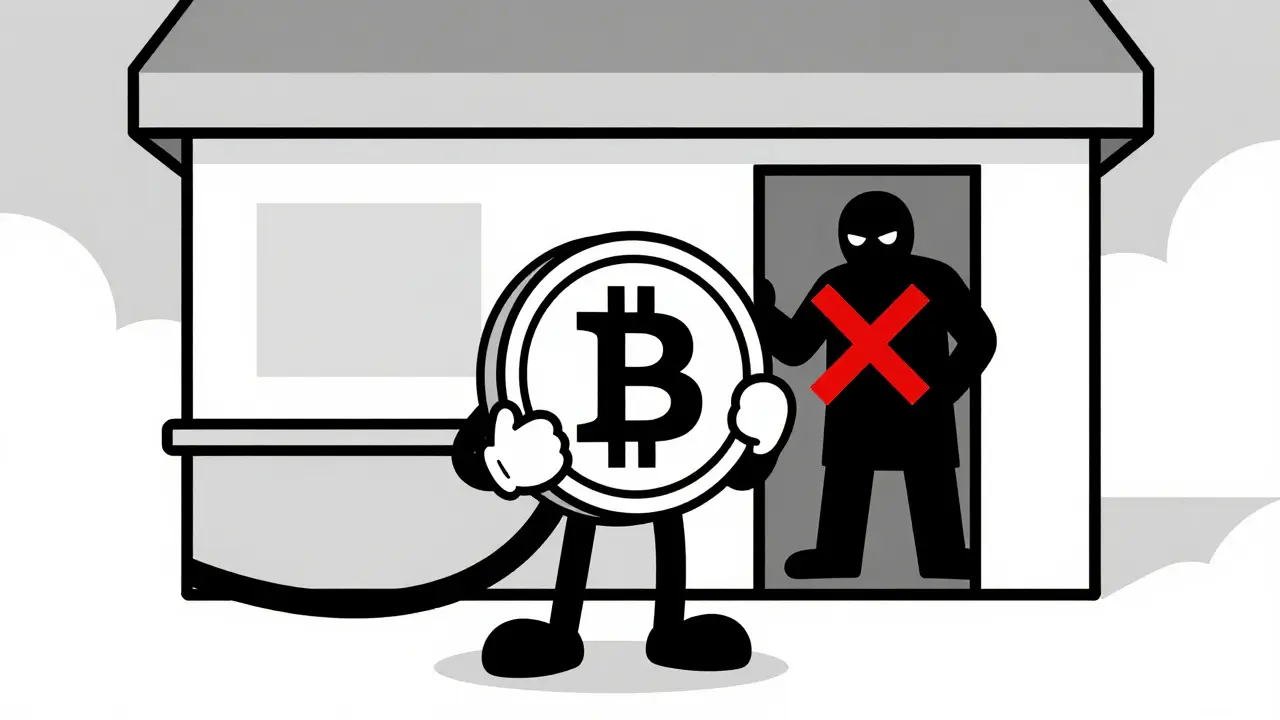
Imagine trying to buy a coffee with Bitcoin in Moscow. You can’t. In fact, you can’t use it for almost anything domestically. Yet, just across the border or in international trade, Russian companies are moving billions of dollars through blockchain networks every day. This contradiction defines the legal status of cryptocurrencies in Russia as of mid-2026.
If you are wondering whether you can legally own, trade, or spend crypto in Russia, the answer is messy. It depends entirely on who you are, how much money you have, and where the transaction takes place. The government has created a strict two-tier system: one lane for wealthy, "qualified" investors and corporations doing international business, and a closed door for everyone else. Meanwhile, the state is rolling out its own rival currency, the Digital Ruble the official central bank digital currency (CBDC) of the Russian Federation.
The Two-Tier System: Who Can Actually Use Crypto?
Russia does not treat all citizens equally when it comes to digital assets. The core of the current regulatory framework is the concept of the Qualified Investor an individual or entity meeting specific financial thresholds set by Russian law to access complex financial instruments. If you do not fit this profile, your options are severely limited.
For the average person, owning cryptocurrency is technically allowed under the 2014 legislation that classifies crypto as a "monetary substitute." However, using it for payments is strictly prohibited. You cannot pay for groceries, rent, or services with Bitcoin or Ethereum within Russia. Doing so violates the rule that the Russian Ruble the official fiat currency of the Russian Federation is the sole legal tender. If you try, you risk administrative fines or worse, depending on the scale of the violation.
But if you are rich enough, the rules change. Under the experimental legal regime introduced in late 2025, "especially qualified" investors can engage in cryptocurrency transactions. Here is what that actually means in numbers:
- Individuals: You must prove investments in securities and deposits exceeding ₽100 million (roughly $1 million USD, though exchange rates fluctuate).
- Income Requirement: Your annual income must exceed ₽50 million.
- Companies: They must meet existing qualified investor standards under applicable federal laws.
This creates a stark divide. Ordinary Russians hold an estimated $40 billion in cryptocurrencies according to the Russian Association of Cryptoeconomics a non-profit organization representing blockchain and AI interests in Russia, but they operate in a legal gray area. They can buy and hold, but they cannot easily convert it back to rubles through official banking channels without triggering anti-money laundering flags or violating payment restrictions.
The Experimental Legal Regime for International Trade
Why would Russia allow any crypto activity at all? The answer lies in sanctions evasion and international trade. Since 2022, Western financial restrictions have cut many Russian entities off from the SWIFT system and traditional dollar/euro clearing houses. Cryptocurrency became a lifeline.
In 2025, crypto-facilitated international trade in Russia hit 1 trillion rubles. This wasn't done by random individuals; it was driven by large corporations using the Experimental Legal Regime a temporary legislative framework allowing controlled testing of new financial technologies. This regime permits Russian companies to use Bitcoin and other major cryptocurrencies for settlements with foreign partners, specifically to bypass Western financial blockades.
The Central Bank of Russia the nation's monetary authority, also known as the Bank of Russia agreed to this arrangement reluctantly. Their primary concern is always domestic stability. They will allow crypto to flow out for imports and in for exports, provided it stays within the bounds of the experimental framework. They draw a hard line at domestic usage. As long as the ruble remains king inside Russia’s borders, the Central Bank tolerates crypto as a tool for external survival.
| User Type | Can Own Crypto? | Can Pay Domestically? | Can Trade Derivatives? | Regulatory Basis |
|---|---|---|---|---|
| Average Citizen | Yes (as property) | No (Illegal) | No | 2014 Monetary Substitute Law |
| Qualified Investor | Yes | No | Yes (via authorized firms) | Federal Law on Digital Financial Assets |
| Especially Qualified Investor | Yes | No | Yes (including spot/experimental) | 2025 Experimental Legal Regime |
| Corporations (Export/Import) | N/A (Corporate Asset) | No | Yes (for settlement) | Sanctions Bypass Framework |
The Rise of the Digital Ruble
While private crypto faces hurdles, the state’s version is accelerating. The Digital Ruble is not a cryptocurrency in the decentralized sense. It is a Central Bank Digital Currency (CBDC). It is fully centralized, programmable, and issued directly by the Central Bank of Russia.
Legislation passed in 2023 paved the way for its introduction, and President Putin signed the final implementation orders in July 2025. The public rollout is scheduled for September 2026. This timing is critical. The government wants the digital ruble to be ready before the three-year experimental crypto regime potentially expires or evolves into permanent law.
Why push the digital ruble so hard? Control. Unlike Bitcoin, which the government cannot freeze or track easily, the digital ruble offers total transparency. Every transaction is visible to the state. It also eliminates the need for commercial banks as intermediaries, reducing costs for transfers. For the average consumer, the promise is faster, cheaper payments. For the state, it is the ultimate tool for monetary sovereignty and surveillance.
The Central Bank explicitly prohibits using anything other than the ruble-physical or digital-as legal tender. This makes the digital ruble the direct competitor to stablecoins like USDT or USDC, which are popular among Russian users for preserving value against inflation. Expect tighter regulations on stablecoins in the coming months as the digital ruble gains traction.

Internal Government Conflict: Treasury vs. Central Bank
Russia’s crypto policy is not monolithic. There is a clear tug-of-war between different government bodies.
The Central Bank of Russia, led by Governor Elvira Nabiullina, remains deeply skeptical. They view private cryptocurrencies as volatile, risky, and a threat to financial stability. Their warnings are frequent: "Private cryptocurrencies are not issued or guaranteed by any jurisdiction," they state, emphasizing that investors bear the full risk of loss.
On the other side is the Ministry of Finance the government body responsible for fiscal policy and taxation in Russia and the Treasury. Deputy Head Ivan Chebeskov has publicly urged for a comprehensive national digital asset strategy. They see crypto as an economic development tool. In September 2025, the Treasury recommended easing the requirements for qualified investor status. Why? Because the current thresholds are too high, limiting market liquidity and innovation. They want more people to participate, but only in regulated, safe products.
This tension explains the patchwork nature of current laws. You get strict bans on payments (Central Bank win) but relaxed rules for derivatives trading (Treasury win). Boris Titov, the Presidential Advisor for Economic Development, has also shown enthusiasm for crypto utilization, adding pressure for liberalization. The result is a regulatory environment that shifts slightly every few months, keeping businesses on their toes.
Mining: The Only Fully Legal Option for All
If you are looking for a way to interact with crypto that doesn’t require millions in assets, mining is your best bet. Mining operations are the only comprehensively legalized cryptocurrency activity for ordinary citizens. Established under earlier legislation, miners can operate legally, provided they register properly and pay taxes.
Russia has become a global hub for Bitcoin mining due to cheap electricity, particularly in Siberia. While the government encourages mining as an export-oriented industry (since the mined coins are often sold abroad), they remain wary of energy consumption spikes. Miners must navigate strict grid connection rules and tax obligations, but unlike traders, they don’t face the same existential legal threats.

Risks and Pitfalls for Users in 2026
Navigating this landscape requires caution. Here are the most common traps:
- Bank Account Freezes: Even if you own crypto legally, transferring rubles to and from exchanges can trigger AML (Anti-Money Laundering) checks. Banks may block accounts if they detect suspicious patterns, especially if you are not a qualified investor.
- Tax Ambiguity: While mining is taxed, the reporting requirements for capital gains on crypto sales are still evolving. Failure to declare income from crypto trades can lead to significant penalties.
- Scams and Volatility: With no investor protection fund for crypto losses, you are on your own. The Central Bank repeatedly warns that private crypto is unguaranteed. If an exchange collapses or you lose your keys, there is no recourse.
- Stablecoin Bans: Watch for upcoming regulations on fiat-pegged stablecoins. The government may restrict their use to protect the digital ruble, potentially freezing assets held in USDT or similar tokens.
What Comes Next?
The next 12 months will be decisive. The September 2026 launch of the digital ruble will likely trigger a wave of new regulations targeting private crypto. Expect the following trends:
- Stricter KYC: Exchanges operating in Russia will face heavier identity verification requirements.
- Stablecoin Regulation: Clear rules on whether private stablecoins can coexist with the digital ruble.
- Expanded Qualified Investor Pool: Pressure from the Ministry of Finance may lower the ₽100 million threshold, allowing more middle-class investors to access regulated crypto markets.
For now, the message is clear: Crypto in Russia is a tool for the wealthy and the corporate sector, not the everyday consumer. Unless you have the capital to qualify as an "especially qualified" investor, you are largely restricted to holding assets or mining. And even then, you must stay vigilant, as the regulatory ground continues to shift beneath your feet.
Is it illegal to own Bitcoin in Russia in 2026?
No, it is not illegal to own Bitcoin or other cryptocurrencies in Russia. Since 2014, crypto has been classified as a "monetary substitute," meaning you can hold it as property. However, you cannot use it for domestic payments or settlements. Using crypto to buy goods or services within Russia is prohibited.
When will the Digital Ruble be available to the public?
The public launch of the Digital Ruble is scheduled for September 2026. Legislation was signed by President Putin in July 2025, and trials have been ongoing since 2023. It will be available through participating banks and will serve as the official central bank digital currency.
Who qualifies as an "especially qualified" investor for crypto trading?
To be an "especially qualified" investor under the 2025 experimental regime, an individual must demonstrate investments in securities/deposits exceeding ₽100 million and an annual income over ₽50 million. Companies must meet existing qualified investor standards. This status allows access to broader crypto transactions and derivatives.
Can I use crypto to pay for imports in Russia?
Yes, but only within the Experimental Legal Regime. Russian companies can use cryptocurrencies like Bitcoin for international settlements to bypass sanctions. This is strictly monitored and intended for cross-border trade, not domestic spending. In 2025, such trade volume reached 1 trillion rubles.
Is crypto mining legal in Russia?
Yes, crypto mining is fully legal for all citizens and businesses. It is the only crypto activity not restricted by investor qualification levels. However, miners must register, comply with energy grid regulations, and pay appropriate taxes on their earnings.
Will the Russian government ban all cryptocurrencies?
A total ban is unlikely. The government relies on crypto for international trade due to sanctions. Instead, they are focusing on restricting domestic use and promoting the Digital Ruble. Expect tighter controls on stablecoins and stricter rules for retail investors, rather than an outright prohibition of ownership.
Comments (12)
Brad Semp
July 3, 2026 AT 20:34
It is rather amusing to observe the continued delusion that decentralized assets hold any intrinsic merit in a state-controlled economy. The bifurcation of legal status based on wealth thresholds is not merely regulatory; it is a deliberate mechanism to preserve oligarchic control while placating the masses with the illusion of ownership. One must possess a certain level of financial literacy to appreciate that this 'two-tier system' is simply feudalism dressed up in blockchain terminology.
Jackie D
July 5, 2026 AT 04:24
honestly this whole setup feels like a trap waiting to spring. i mean sure you can hold your coins but if you cant spend them or cash out easily without triggering every alarm bell in the banking system whats the point? its like having a key to a house thats locked from the outside. the digital ruble sounds scary af tbh total surveillance nightmare lol
Ruth Williams
July 6, 2026 AT 22:26
Your lack of sophistication regarding monetary policy is evident. The Digital Ruble is not a 'nightmare'; it is an instrument of fiscal sovereignty and necessary oversight. To suggest otherwise demonstrates a profound ignorance of how modern central banks operate in an era of geopolitical instability. The state requires visibility into capital flows to prevent economic hemorrhage, a concept that seems beyond your current intellectual capacity.
Tawny Holmes
July 8, 2026 AT 06:13
Mining is the only sane play here. Everything else is just gambling with extra steps.
Linda Hilliard
July 10, 2026 AT 06:06
Exactly! 🧠 The mining sector operates within a clearly defined legal framework, unlike the murky waters of retail trading. It’s fascinating how the government encourages energy-intensive extraction as an export commodity while simultaneously strangling domestic liquidity. This dichotomy highlights the pragmatic, albeit cynical, approach to resource allocation. We are essentially subsidizing global crypto infrastructure with Siberian hydroelectricity. ⚡️💸
Winston Lacewing
July 12, 2026 AT 00:41
I just don't understand why people are so obsessed with hiding their money from the government. Isn't transparency a virtue? 🤔 It feels like everyone is trying to game the system instead of playing by the rules. If you have nothing to hide, why do you need Bitcoin? It's all about trust, folks! 🙏✨
Korn Arrieta
July 12, 2026 AT 05:37
The premise that privacy is inherently suspicious is a logical fallacy often employed by authoritarian regimes to justify surveillance. The demand for non-custodial solutions stems from historical precedents where state-controlled currencies were debased to fund military expenditures. Your moral posturing ignores the structural incentives driving capital flight. You are analyzing the symptom, not the disease.
Sophie Nakasako
July 12, 2026 AT 16:27
This is such a complex situation, isn't it? I find myself wondering what the long-term psychological impact will be on citizens who are forced to choose between state-sanctioned transparency and private financial autonomy. It raises deep questions about the nature of trust in a digital age. How do we reconcile our desire for security with our need for freedom? I think we need more dialogue around these ethical dilemmas rather than just focusing on the technical aspects.
Nick G
July 14, 2026 AT 04:40
One cannot help but feel a profound sense of empathy for the ordinary citizen caught in this bureaucratic crossfire. While the elites navigate the experimental legal regimes with ease, the average person faces administrative fines and frozen accounts for attempting basic financial transactions. It is a stark reminder of how technology can exacerbate existing social inequalities when governed by rigid, exclusionary policies. Perhaps there is room for a more compassionate approach to regulation that prioritizes human dignity over mere compliance metrics.
Jessie Smith
July 15, 2026 AT 00:42
the whole qualified investor thing is just a fancy way of saying rich people get to play. its kinda ironic how they ban regular joes from using crypto but let corps move billions through it to dodge sanctions. feels like a big old joke really. maybe the real magic internet money is just connections?
Drew M
July 16, 2026 AT 16:06
You hit the nail on the head! 😂 It’s absolutely hilarious how the 'rules' apply only to those who can’t afford lawyers. The hypocrisy is staggering. I’m just sitting here watching the show while my portfolio stays safely offshore. 🌍💼
Kristine Lawson
July 17, 2026 AT 04:22
To assert that the regulatory framework is merely hypocritical is to overlook the nuanced necessity of capital controls in a sanctioned economy. The differentiation between retail and institutional access is not arbitrary; it is a calculated risk management strategy designed to protect the broader financial ecosystem from volatile speculative bubbles. Furthermore, the prohibition on domestic payments is essential for maintaining the ruble's status as the sole legal tender, a cornerstone of monetary stability. One must respect the complexity of these decisions.