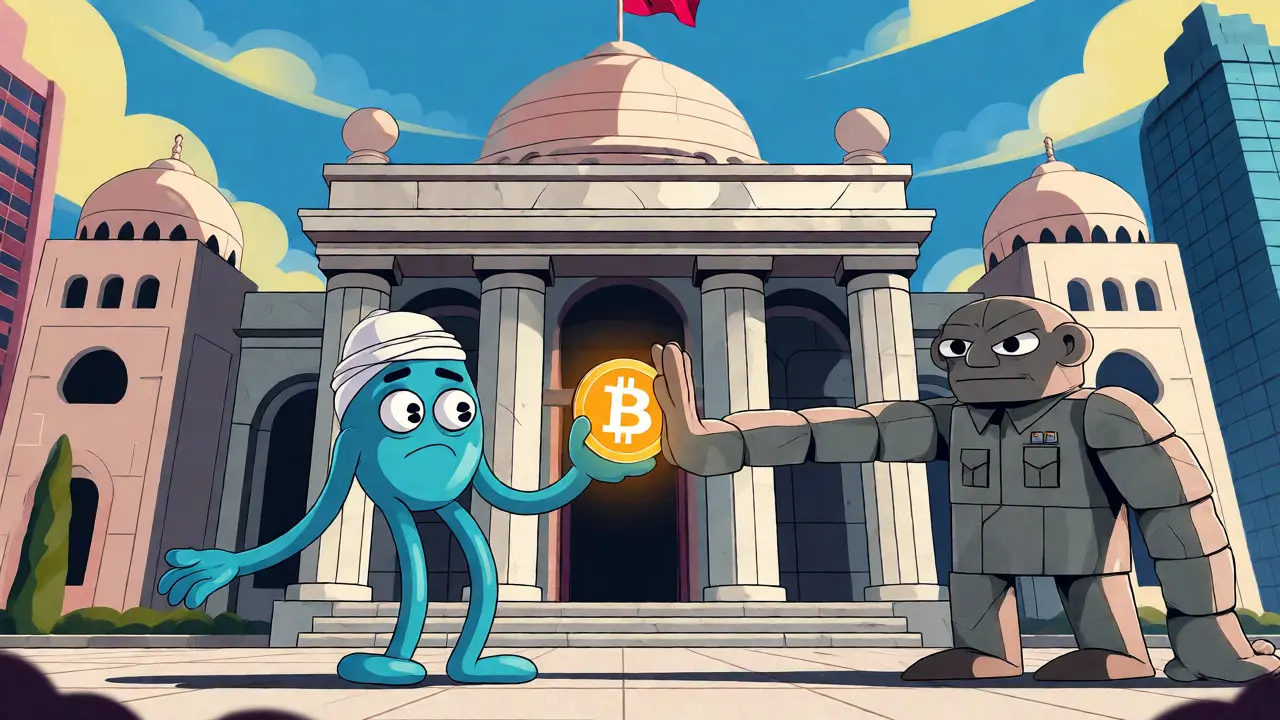
Living in Qatar means navigating one of the strictest cryptocurrency environments in the Gulf. If you’re a resident wondering whether you can buy Bitcoin or trade Ethereum, the short answer is: not through local banks, and definitely not through regulated financial institutions. But it’s not all black and white. While traditional cryptocurrencies are largely off-limits, Qatar has opened a specific door for digital assets that represent real-world value.
The confusion often stems from headlines about "crypto bans" versus news about new "digital asset frameworks." It sounds contradictory, right? In reality, Qatar distinguishes sharply between speculative coins like Bitcoin and tokenized versions of tangible assets like real estate or gold. Understanding this distinction is crucial if you want to stay compliant while exploring digital finance opportunities in Doha.
Quick Summary / Key Takeaways
- Bitcoin and stablecoins are banned: The Central Bank of Qatar prohibits banks from dealing in cryptocurrencies, classifying them as "Excluded Tokens" under recent regulations.
- Tokenization is legal: The Qatar Financial Centre (QFC) allows digital tokens that represent real-world assets like shares, bonds, and property.
- No direct bank access: You cannot use local Qatari bank accounts to buy or sell major cryptocurrencies directly.
- Compliance risks exist: While personal ownership isn’t explicitly criminalized for every scenario, anti-money laundering laws still apply to digital transactions.
- Future outlook: Qatar prefers controlled innovation via asset-backed tokens over speculative crypto trading.
The Ban on Traditional Cryptocurrencies
Let’s address the elephant in the room: Bitcoin is effectively illegal to trade within Qatar’s formal financial system. This isn’t a new rule. Back in February 2018, the Central Bank of Qatar issued a directive banning all banks from trading cryptocurrencies. They didn’t just stop at banking; they expanded these restrictions in December 2019 when the Qatar Financial Centre Regulatory Authority (QFCRA) limited services for virtual assets acting as currency substitutes.
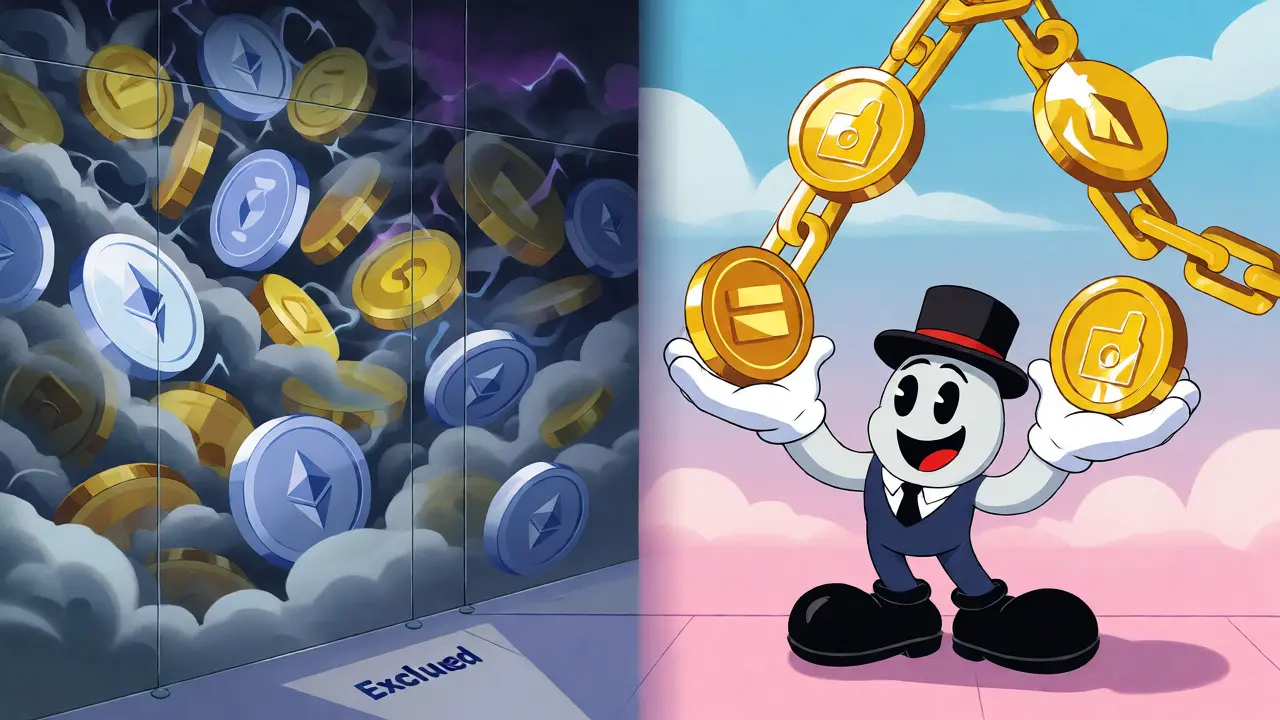
Why such a hard stance? The authorities cite concerns over money laundering, illicit financing, and extreme market volatility. Unlike some neighbors who embraced crypto exchanges early, Qatar chose caution. As of September 2024, this position hasn’t softened. In fact, it was codified further with the introduction of the Digital Assets Regulations 2024. These rules explicitly classify Bitcoin, Ethereum, and even stablecoins as "Excluded Tokens." That label matters because it means they fall outside the regulatory framework designed to protect investors and integrate with the broader economy.
If you try to walk into a local bank branch in Doha and ask to convert your Qatari Riyals into Bitcoin, you’ll hit a wall. Banks are prohibited from offering these services. So, where do people go? Many residents rely on international exchanges, but doing so comes with its own set of complications regarding fund transfers and regulatory gray areas.
The Rise of Permitted Tokenization
Here is where things get interesting. Just because Bitcoin is out doesn’t mean blockchain technology is ignored. On September 1, 2024, the QFC Authority and QFCRA introduced a dual-track approach. They launched the Investment Token Rules 2024, which creates a legal pathway for "Permitted Tokens."
What exactly qualifies as a Permitted Token? Think of it as a digital certificate of ownership for something real. It could be a share in a company, a piece of real estate, a bond, or even a commodity like gold. The key requirement is that the token must be tied to verified rights and backed by a tangible asset or legal claim. This isn’t speculation; it’s digitized equity.
The process for creating these tokens is rigorous. First, a validator issues a certificate confirming the asset’s existence and ownership. Then, the asset owner formally requests tokenization. Finally, a licensed token generator creates the digital token on approved infrastructure. This structured approach ensures that every token has a physical or legal anchor, reducing the risk of the wild swings seen in the crypto market.
| Feature | Excluded Tokens (Banned) | Permitted Tokens (Allowed) |
|---|---|---|
| Examples | Bitcoin, Ethereum, USDT, CBDCs | Tokenized Shares, Bonds, Sukuk, Real Estate |
| Backing | No intrinsic backing; market sentiment | Real-world assets or legal rights |
| Regulatory Status | Prohibited for banks and QFC services | Regulated under QFC Digital Assets Framework |
| Primary Risk | Volatility, Money Laundering | Asset Valuation, Legal Compliance |
| Access Method | International Exchanges (Gray Area) | Licensed QFC Service Providers |
How Residents Actually Trade Crypto
If you’re a resident eager to hold Bitcoin, you probably already know you can’t do it through a Qatari bank app. So, what’s the workaround? Most residents use offshore exchanges based in jurisdictions with friendlier crypto laws, such as Dubai, Singapore, or Europe. You deposit fiat currency-often via credit card or international transfer-and then execute trades on platforms like Binance or Kraken.
But here’s the catch: moving money in and out can be tricky. Since local banks are wary of crypto-related flows, large or frequent transfers might trigger compliance checks. Some users report delays or additional documentation requests when sending funds to known crypto exchange addresses. It’s not necessarily a block, but it’s certainly friction.
Another option is peer-to-peer (P2P) trading. Platforms allow you to buy crypto directly from another person, settling payment via bank transfer or cash. However, P2P carries higher fraud risks and lacks the consumer protections offered by regulated entities. Plus, if you’re selling significant amounts, you need to ensure the source of funds is clear to avoid AML flags.
Legal Nuances: Ownership vs. Trading
A common question is: "Is it illegal to own Bitcoin in Qatar?" The regulations primarily target service providers and financial institutions. The QFCRA bans companies from offering custody, exchange, or wallet services for excluded tokens. It doesn’t explicitly state that holding a private key in your personal wallet constitutes a crime. However, the lack of clarity is risky.
Law No. 20 of 2019 on Combating Money Laundering and Terrorism Financing defines "funds" broadly. This definition includes assets obtained through electronic and digital systems. Therefore, even if you hold Bitcoin privately, any transaction involving those funds falls under AML/CFT scrutiny. If you suddenly have a large sum in your bank account derived from crypto sales, you may need to prove its origin.
Furthermore, smart contracts have gained legal recognition under the 2024 framework, but only within the context of permitted tokens. Using a decentralized application (dApp) for DeFi lending with Ethereum, for example, operates in a legal vacuum. There’s no court precedent in Qatar yet for enforcing a DeFi smart contract dispute, leaving users without recourse if a protocol fails.
Compliance for Businesses and Investors
For businesses operating in Qatar, the rule is simple: don’t offer crypto services unless they fit the tokenization mold. If you run a fintech startup, you can’t just launch a Bitcoin exchange. You’d need to align with the QFC’s licensing requirements for investment tokens. This involves proving that your tokens are backed by real assets and that your operational procedures meet strict validation standards.
There are no detailed public guidelines for KYC (Know Your Customer) specifically for crypto traders, largely because the activity is discouraged rather than regulated. For most individuals, compliance means self-monitoring. Keep records of your transactions. Use reputable exchanges with strong security protocols. And be prepared to explain the source of wealth if your banking partner asks questions.
Experts note that Qatar’s approach contrasts sharply with the UAE, particularly Dubai, which has established a dedicated Virtual Assets Regulatory Authority (VARA). Qatar’s strategy is conservative, prioritizing stability over rapid adoption. This makes it less attractive for speculative crypto traders but potentially more secure for institutional investors looking into tokenized real estate or government bonds.

Future Outlook for Qatar’s Digital Asset Landscape
Will Qatar ever lift the ban on Bitcoin? Don’t hold your breath. The current trajectory suggests continued restriction on speculative assets. The government’s focus is on economic diversification through controlled technological advancement. By promoting tokenization of real-world assets, Qatar aims to leverage blockchain efficiency without exposing its economy to crypto bubbles.
We might see expansions in the types of assets eligible for tokenization. Currently, shares, bonds, and commodities are in scope. Real estate tokenization is a hot topic given Qatar’s massive property sector. Imagine buying a fraction of a luxury apartment in Lusail City using a digital token-this is becoming a reality under the new framework.
Additionally, keep an eye on potential Central Bank Digital Currency (CBDC) developments. Interestingly, the 2024 regulations also exclude CBDCs from the private digital asset framework, treating them similarly to other excluded tokens for now. This indicates the Central Bank wants to maintain tight control over monetary policy before allowing digital dirham equivalents into the retail sphere.
Frequently Asked Questions
Can I use my Qatari bank account to buy Bitcoin?
Generally, no. The Central Bank of Qatar prohibits local banks from facilitating cryptocurrency transactions. While you might successfully send money to an international exchange via debit card, many banks will decline direct transfers to crypto-specific merchants or flag them for review. It is safer to use alternative funding methods like credit cards or third-party payment processors, though fees may apply.
Is it illegal to hold Bitcoin personally in Qatar?
The law primarily restricts financial institutions and service providers from dealing in cryptocurrencies. Personal ownership is not explicitly criminalized in the same way, but it exists in a regulatory gray area. Because anti-money laundering laws apply to digital assets, residents should keep clear records of their holdings and transactions to justify the source of funds if audited.
What are 'Permitted Tokens' under Qatar's new regulations?
Permitted Tokens are digital representations of real-world assets or legal rights, such as tokenized shares, bonds, sukuk, commodities, or real estate. Unlike Bitcoin, these tokens must be validated and backed by tangible value. They are regulated under the Qatar Financial Centre’s Digital Assets Regulations 2024 and can be traded through licensed providers.
Why does Qatar ban stablecoins?
Stablecoins like USDT or USDC are classified as "Excluded Tokens" because they act as currency substitutes. The QFCRA views them as posing similar risks to cryptocurrencies regarding money laundering and monetary sovereignty. Despite being pegged to fiat currencies, they operate outside the central bank’s direct control, leading to their exclusion from the permitted framework.
Can I invest in tokenized real estate in Qatar?
Yes, this is one of the primary opportunities created by the new framework. Investors can purchase digital tokens representing fractional ownership in real estate projects. These transactions must go through licensed token service providers within the Qatar Financial Centre to ensure compliance with validation and generation rules.
Next Steps for Qatar Residents
If you are serious about digital assets in Qatar, start by defining your goal. Are you seeking high-risk speculation or steady investment? If it’s speculation, you’ll likely remain in the gray zone using offshore exchanges, accepting the friction and regulatory ambiguity. If it’s investment, look into QFC-licensed providers offering tokenized bonds or real estate.
Always consult with a local financial advisor familiar with QFC regulations before making large moves. Keep meticulous records of every transaction, including dates, amounts, and counterparties. And remember, the landscape is evolving. While the ban on Bitcoin seems firm, the growth of the tokenization market could reshape how Qataris interact with digital finance in the coming years.
Comments (15)
Daniel Pearson
October 4, 2026 AT 01:55
It is honestly pathetic that the Central Bank of Qatar is still living in the stone age while the rest of the world moves forward. They claim to care about money laundering but they are just protecting their own inefficient banking monopoly at the expense of resident freedom. You should be allowed to buy what you want with your own hard-earned riyals without a government nanny telling you it is too risky for you.
rose meechan
October 5, 2026 AT 04:32
This breakdown is super helpful! 🌟 It’s wild how much nuance there is between banned coins and permitted tokens. Really glad to see the distinction on real estate tokenization being clarified, that seems like such a huge opportunity for residents who want exposure without the volatility stress. Keep up the great work explaining this complex stuff! ✨
Amit Sharma
October 6, 2026 AT 03:26
so basically if you hold it in a wallet no one cares but if you touch a bank account suddenly its a crime scene
its always the same with these regimes they fear what they cant control or tax properly so they just ban the easy stuff and keep the complex stuff for the elites who can afford lawyers anyway
Shruti Mala
October 7, 2026 AT 05:30
Wait does this mean I can finally invest in property fractions via blockchain? 🏠💸 That sounds amazing compared to traditional buying processes! But seriously why are stablecoins banned?? If it's pegged to USD isn't it safer than volatile crypto?? 🤔📉 Seems contradictory to ban USDT but allow tokenized gold?? Confused but excited for the QFC opportunities!! 🚀✨
Kevin Van Deusen
October 8, 2026 AT 12:47
Qatar needs to wake up and realize that banning Bitcoin doesn't stop people from owning it it just drives them underground and makes them harder to track which defeats the whole purpose of AML laws in the first place
Ana Caroline
October 8, 2026 AT 17:29
The distinction between speculative assets and asset-backed tokens is intellectually fascinating though hardly surprising given the conservative nature of Gulf financial policy. One must appreciate the attempt to maintain monetary sovereignty amidst global digital chaos. It reflects a sophisticated understanding of value versus sentiment albeit a restrictive one for the average investor seeking alpha in decentralized markets.
KRISHAN LAKHIWAL
October 9, 2026 AT 12:29
Correct approach. Speculation is gambling. Tokenization is finance. Qatar gets it right.
Aman Kumar Shah
October 11, 2026 AT 07:29
Oh wow, this is absolutely fantastic information for anyone trying to navigate the murky waters of Doha's financial landscape!!! Seriously, the way they have carved out this niche for 'Permitted Tokens' while slamming the door shut on 'Excluded Tokens' is both brilliant and incredibly frustrating depending on which side of the fence you sit on!!!
I mean, think about the sheer audacity of banning stablecoins because they act as currency substitutes when the local currency itself is pegged to the dollar anyway??? It feels like bureaucratic overreach designed to protect legacy institutions from competition rather than actually protecting consumers from harm!!!
But hey, at least we have clarity now, right??? No more guessing games about whether your credit card will decline for a Coinbase purchase!!! Just pure, unadulterated friction and extra fees for international transfers!!! Bravo Qatar, bravo!!! 👏👏👏
Kerry Sims
October 11, 2026 AT 23:57
it raises an interesting philosophical point about what constitutes money
if i hold btc in a cold wallet am i holding an asset or a currency
qatar says neither really its just excluded
but value exists where people agree it exists regardless of regulation
the state cannot legislate away consensus
they can only make it inconvenient to use
which ultimately slows adoption but doesn't stop it
history shows bans rarely work long term
Steve Parshall
October 12, 2026 AT 07:16
Great read! This is exactly what I needed before moving my funds around. The part about P2P risks is spot on. Stay safe out there everyone!
Tiffany Kee
October 13, 2026 AT 03:17
It must be so challenging for expats to feel financially autonomous when these restrictions are in place. I hope the tokenization framework provides some comfort and viable alternatives for those looking to build wealth locally. Sending positive vibes to all the residents navigating this tricky regulatory environment!
Precious Ekwuribe
October 13, 2026 AT 20:18
honestly qatar is missing out big time by being so rigid. the uae is eating their lunch in fintech innovation. its sad really.
Mallika Sachdev
October 15, 2026 AT 14:30
one must remember that personal ownership is not explicitly criminalized yet the lack of legal clarity creates a chilling effect on legitimate investment activity
Shawn Jayroe
October 16, 2026 AT 14:52
Excellent analysis. For those looking to enter the market, I recommend starting with small transactions through reputable offshore exchanges to test the banking friction firsthand. Always keep detailed records of source of funds. This proactive approach significantly reduces compliance risks during potential audits. Good luck!
Kaitlin Ruiz
October 18, 2026 AT 06:52
Omg yes!! 🙌 The table comparing Excluded vs Permitted tokens was SO useful!! I had no idea stablecoins were grouped with BTC lol 😂 Super clear explanation thanks for sharing!! 💖📊