
Thinking about setting up a crypto business in the Middle East? You’ve probably heard of Dubai’s Virtual Assets Regulatory Authority (VARA). It’s not just another bureaucratic hurdle; it’s the gatekeeper for doing legitimate digital asset business outside the DIFC free zone. If you want to operate an exchange, offer custody services, or issue tokens on the mainland or in most other free zones, you need a VARA license. But here is the catch: getting one isn’t cheap, and the rules have tightened significantly as of 2026.
This guide breaks down exactly what VARA expects from you, how much it will cost, and the specific restrictions that might trip you up. We are talking real numbers, actual timelines, and the practical steps you need to take to avoid rejection.
What Exactly Is VARA?
VARA is the independent regulatory authority established by the Government of Dubai to regulate virtual assets and their service providers. Created under Law No. 4 of 2022, it operates with a clear mandate: protect consumers, prevent money laundering, and ensure market integrity.
Unlike traditional financial regulators that treat crypto as a niche add-on, VARA was built specifically for this sector. It oversees everything from centralized exchanges and broker-dealers to custody providers and token issuers. Crucially, VARA’s jurisdiction covers Dubai Mainland and all Free Zones except the Dubai International Financial Centre (DIFC), which has its own regulator, the DFSA. This makes VARA the primary contact for most international crypto firms entering the broader Dubai market.
Why does this matter? Because operating without a VARA license when required can lead to heavy fines, operational shutdowns, and reputational damage. The authority doesn’t just tick boxes; they audit your operations, review your marketing materials before they go live, and scrutinize your technology stack.
Licensing Categories and Capital Requirements
One size does not fit all. VARA categorizes licenses based on the specific activities you intend to perform. Your capital requirements depend entirely on which category you choose. If you plan to offer multiple services, you’ll likely need multiple licenses, and the capital requirements stack up.
Here is a breakdown of the main license types and their associated paid-up capital requirements as of late 2025:
| License Category | Description | Paid-Up Capital (AED) | Approx. USD Equivalent |
|---|---|---|---|
| Exchange Services | Facilitating trades between buyers and sellers | 5,000,000 | $1,360,000 |
| Custody Services | Holding private keys/assets for clients | 4,000,000 | $1,088,000 |
| Broker-Dealer | Executing orders and acting as principal | 1,000,000 | $272,000 |
| Transfer Services | Moving assets from one party to another | 500,000 | $136,000 |
| Wallet Provision | Providing software/hardware wallets | 250,000 | $68,000 |
| Token Issuance | Launching new virtual assets | 100,000 - 500,000* | $27,000 - $136,000 |
*Note: Token issuance capital varies based on the type of token (e.g., stablecoins vs. utility tokens).
If you are building a full-stack platform offering exchange, custody, and brokerage, you aren’t just paying the highest single fee. You are looking at a combined capital requirement of AED 10 million ($2.7 million) or more. This is a significant barrier to entry designed to ensure only financially robust entities enter the market.
The Application Process: Step-by-Step
Getting licensed isn’t a weekend project. Expect the process to take anywhere from three to six months if your documentation is flawless. Here is how it typically unfolds:
- Incorporate in Dubai: You must have a legal entity registered in Dubai Mainland or a non-DIFC Free Zone. Foreign investors can own 100% of the company in many free zones.
- Pre-Application Meeting: Before submitting formal documents, schedule a meeting with VARA. They will clarify your scope of work and flag any immediate red flags. This step saves weeks of rework later.
- Digital Submission: Upload your comprehensive application via VARA’s online portal. This includes your business plan, organizational structure, compliance manual, and technical architecture.
- Fit and Proper Test: VARA scrutinizes the background of directors, shareholders, and key executives. Criminal records, past regulatory issues, and professional qualifications are all checked.
- Capital Injection: Once preliminarily approved, you must deposit the required capital into a local bank account. Proof of funds is mandatory.
- Final Approval and Onboarding: After final checks, including potential site visits or remote audits of your tech infrastructure, you receive your license.

Key Restrictions and Compliance Hurdles
It’s not just about writing a check. VARA imposes strict operational restrictions that affect how you run your day-to-day business. Ignoring these can lead to swift enforcement actions.
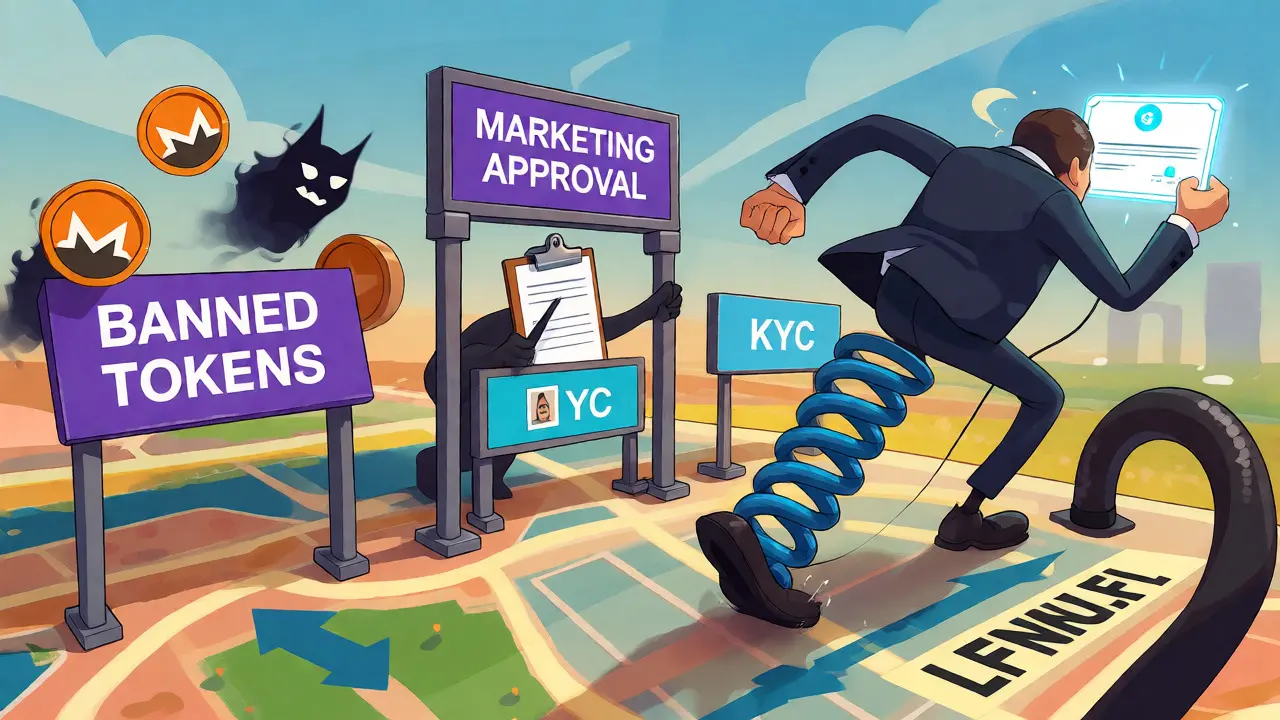
Banned Tokens
VARA maintains a list of prohibited virtual assets. As of 2026, privacy coins like Monero and Zcash are generally restricted due to anti-money laundering concerns. You cannot list or trade these on your platform without explicit, case-by-case approval, which is rarely granted.
Marketing Approvals
You cannot simply launch a Facebook ad campaign whenever you feel like it. All marketing materials, including social media posts, press releases, and influencer partnerships, require prior approval from VARA. They check for misleading claims, risk disclosures, and clarity. If your ad says "guaranteed returns," expect a rejection.
Retail Investor Protection
VARA places a heavy emphasis on protecting retail users. This means stricter Know Your Customer (KYC) procedures than in some other jurisdictions. You must verify identity, source of funds, and beneficial ownership. Additionally, you are required to provide clear risk warnings to customers before they trade, ensuring they understand the volatility involved.
Technology and Security Standards
Your tech stack must meet rigorous standards. VARA requires proof of secure data storage, encryption protocols, and disaster recovery plans. If you use third-party custodians, you must demonstrate oversight over them. Regular external audits of your cybersecurity posture are mandatory.
Costs Beyond Capital: Fees and Operational Expenses
While the paid-up capital sits in your bank account (it’s still yours, just locked), there are non-refundable fees you must pay upfront. These costs add up quickly.
- Application Fee: Ranges from AED 40,000 to AED 100,000 depending on the complexity of your license.
- Annual Supervision Fee: Once licensed, you pay between AED 80,000 and AED 200,000 annually to remain compliant.
- Professional Services: Most companies hire legal counsel and compliance consultants. Budget an additional AED 50,000 to AED 150,000 for professional assistance during the application phase.
- Audit Costs: Annual financial and IT audits are required, costing upwards of AED 30,000 per year.
For a small startup, the initial cash outlay excluding capital could easily exceed $50,000 just to get through the door. For larger enterprises seeking multiple licenses, the administrative burden is even higher.
VARA vs. DFSA vs. FSRA: Which Regulator Fits You?
Many founders confuse VARA with other UAE regulators. Choosing the wrong one can mean restarting your entire incorporation process. Here is how they compare:
| Feature | VARA (Dubai Mainland/Free Zones) | DFSA (DIFC) | FSRA (ADGM) |
|---|---|---|---|
| Jurisdiction | Dubai Mainland + Non-DIFC Free Zones | Dubai International Financial Centre | Abu Dhabi Global Market |
| Focus | Broad consumer-facing VASPs, Exchanges, Custody | Institutional finance, Wealth Management | Institutional, Tech-driven FinTech |
| Accessibility | High for global B2C/B2B platforms | High for institutional players | High for innovative tech firms |
| Regulatory Maturity | Newer, rapidly evolving, highly active | Established, traditional finance focus | Established, flexible sandbox options |
If you are targeting retail consumers across Dubai and the wider region, VARA is usually the best fit. If you are serving high-net-worth individuals within the DIFC’s specific ecosystem, look at DFSA. ADGM’s FSRA is strong for institutional-grade DeFi and fund management structures.
Tips for a Successful Application
Based on recent approvals, here are some actionable tips to speed up your VARA journey:
- Be Specific About Activities: Don’t say you “might” do something later. List every service you intend to offer now. Adding services later requires a new amendment process.
- Invest in Local Presence: While you can be foreign-owned, having a physical office and local staff strengthens your application. It shows commitment to the emirate.
- Prepare Robust AML Policies: Generic templates won’t cut it. Tailor your Anti-Money Laundering policies to your specific user base and transaction volumes.
- Engage Early: Use VARA’s pre-application guidance. Asking questions early prevents costly mistakes in the formal submission.
Frequently Asked Questions
How long does it take to get a VARA license?
Typically, the process takes between 3 to 6 months. This timeline depends heavily on the completeness of your application and how quickly you respond to VARA’s queries. Delays often occur if documentation is incomplete or if the 'fit and proper' test reveals issues with key personnel.
Can I operate in Dubai without a VARA license?
Generally, no. If you are providing regulated virtual asset services to customers in Dubai Mainland or non-DIFC Free Zones, you must hold a VARA license. Operating without one exposes you to fines and forced cessation of business. However, purely holding assets for personal investment purposes may fall outside the scope, but commercial activity almost always triggers licensing requirements.
Are privacy coins like Monero allowed under VARA?
No, privacy-enhanced tokens such as Monero and Zcash are currently restricted or banned for trading and listing under VARA regulations. This is due to concerns regarding transparency and anti-money laundering compliance. You should avoid listing these assets unless you receive specific, rare exemptions.
Do I need a local partner for VARA licensing?
Not necessarily. In many Dubai Free Zones, 100% foreign ownership is permitted. However, you must establish a legal entity in Dubai. While you don't need a local sponsor in the traditional sense for many free zone structures, having local directors or officers who reside in the UAE can facilitate the 'fit and proper' assessment and operational compliance.
What happens if I change my business model after getting licensed?
You must notify VARA and apply for an amendment to your license. Significant changes, such as adding a new service category (e.g., moving from wallet provision to exchange services), require new capital injections and a fresh review of your compliance framework. Failing to update your license status can result in penalties.