
It started with a typo. In December 2013, during a brutal market crash, a user on the Bitcointalk forum named GameKyuubi posted in all caps: "I AM HODLING." He meant to type "holding," but panic and adrenaline got the better of his fingers. That single misspelling birthed one of the most enduring memes-and strategies-in cryptocurrency history. Today, HODL is an acronym for 'Hold On for Dear Life,' representing a long-term investment strategy where investors keep their assets regardless of short-term price volatility. It has become a rallying cry for believers who trust that time in the market beats timing the market.
But here is the uncomfortable truth that many enthusiasts ignore: HODLing is not a magic shield against loss. It is not a passive set-and-forget button that guarantees wealth. While the strategy works beautifully for blue-chip assets like Bitcoin or Ethereum over multi-year cycles, it fails spectacularly when applied blindly. Many investors lose significant capital because they confuse stubbornness with strategy. They hold losing positions out of fear, pride, or community pressure, rather than sound financial reasoning. Understanding where this approach breaks down is just as important as knowing why it works.
The Trap of Indiscriminate Asset Selection
The biggest mistake new investors make is assuming that every cryptocurrency deserves to be held forever. This is a dangerous fallacy. The crypto market is rife with projects that launch with hype, pump their prices through marketing, and then fade into irrelevance. If you HODL a low-quality altcoin from its peak, you might never see your money again. Unlike the stock market, where large-cap companies have regulatory oversight and established revenue models, the crypto space allows thousands of tokens to emerge daily, many with no real utility or development team behind them.
To avoid this, you need to distinguish between fundamentally strong assets and speculative bets. A fundamentally strong asset usually has a clear use case, an active developer community, transparent governance, and a track record of surviving bear markets. Bitcoin fits this description because it serves as digital gold and a decentralized store of value. Ethereum qualifies because it powers smart contracts and decentralized applications. But what about the random meme coin you bought because your friend mentioned it? Holding that indefinitely is not HODLing; it is gambling. Before committing to a long-term hold, ask yourself: Does this project solve a real problem? Is there a sustainable economic model? If the answer is no, your exit strategy should be based on profit targets, not emotional attachment.
Ignoring Opportunity Cost and Rebalancing
Pure HODLers often fall into the trap of ignoring opportunity cost. By refusing to sell any portion of their holdings, they miss chances to rebalance their portfolios or capitalize on other emerging technologies. Imagine you invested heavily in Bitcoin in 2020. By 2025, your portfolio might be 80% Bitcoin simply because its price skyrocketed while other assets lagged. This concentration risk leaves you vulnerable if Bitcoin faces regulatory headwinds or technological challenges.
Smart investors practice dynamic rebalancing. They take profits from winners to buy undervalued assets or diversify into stablecoins during high-volatility periods. For example, selling 10% of your Bitcoin gains to invest in a promising Layer-2 solution or a real-world asset tokenization platform can enhance overall returns. This doesn't mean you are abandoning the HODL philosophy; it means you are managing risk actively. Think of it like gardening: you don't just plant seeds and walk away. You prune, water, and occasionally transplant plants to ensure the whole garden thrives. Refusing to adjust your position sizes based on market conditions is a rigid adherence to form over function.

Falling for Sunk Cost Fallacy and Emotional Rigidity
Psychology plays a massive role in why HODLing goes wrong. One of the most common behavioral errors is the sunk cost fallacy. When an investment drops 50%, many investors refuse to sell because they cannot accept the loss. They tell themselves, "I'll wait until it comes back up." But what if it never does? What if the technology becomes obsolete? Holding onto a losing position just because you bought it at a higher price is irrational. Your decision to hold or sell should be based on the future potential of the asset, not its past performance relative to your entry price.
Another psychological pitfall is emotional rigidity driven by community sentiment. Crypto communities on platforms like Reddit, Twitter, and Discord often create echo chambers where selling is viewed as betrayal. During bear markets, influencers chant "HODL" to maintain morale. While this camaraderie can be comforting, it can also lead to poor decision-making. You might hold a weak asset longer than your personal financial circumstances allow because you feel pressured by the group. Remember, your financial goals are unique to you. Whether you need liquidity for a house down payment, tuition fees, or emergency savings, those needs matter more than the opinions of strangers online. Always align your strategy with your personal risk tolerance and financial timeline, not the herd mentality.
Neglecting Security and Custody Risks
A critical, often overlooked aspect of HODLing is security. Many investors believe that as long as they hold their coins, they are safe. However, how you store your assets determines whether you actually own them. Leaving large amounts of cryptocurrency on centralized exchanges like Binance or Coinbase exposes you to counterparty risk. Exchanges can hack, freeze accounts, or go bankrupt-as seen with FTX and Celsius. If your exchange collapses, your "HODL" is gone.
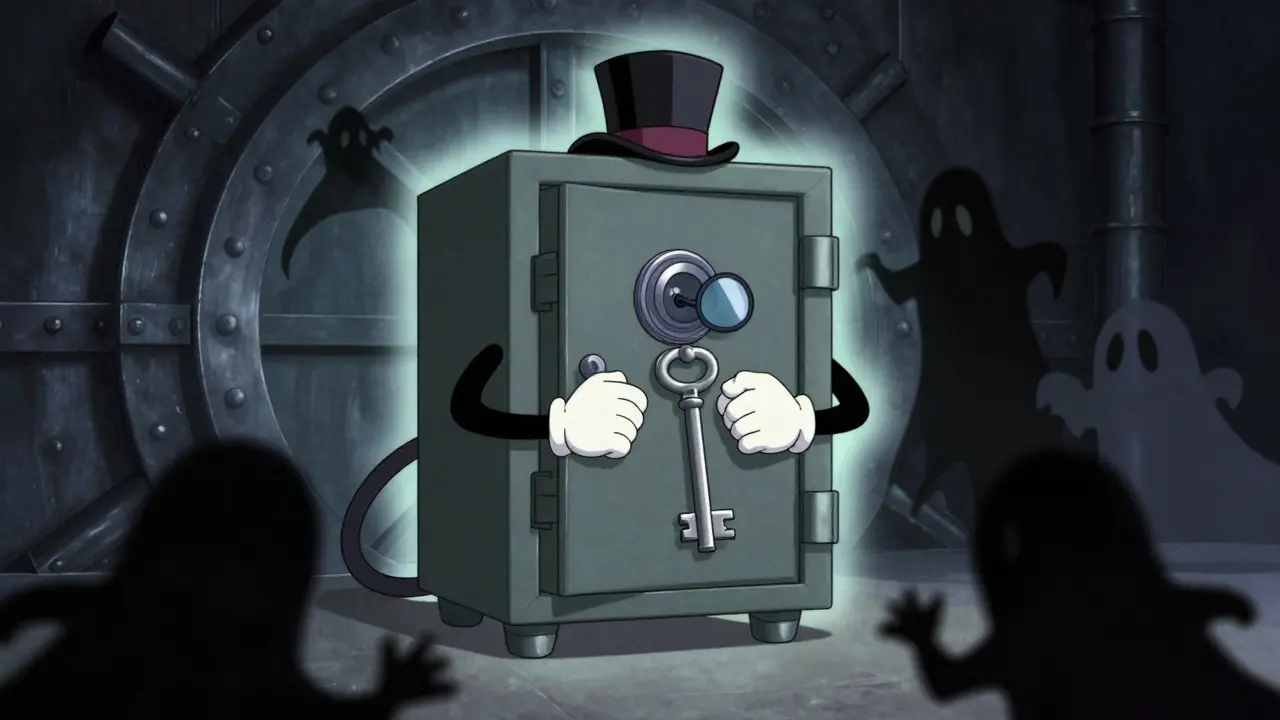
The golden rule of serious HODLing is self-custody. Moving your assets to a hardware wallet like Ledger or Trezor gives you control over your private keys. These devices store your keys offline, protecting them from online hacks. However, even this step requires diligence. You must securely back up your recovery phrase (seed phrase) on paper or metal, stored in a fireproof safe. Losing your seed phrase means losing access to your funds forever-no customer support can help you. Neglecting these security basics turns a long-term investment strategy into a potential disaster waiting to happen. Always treat your private keys like the combination to a bank vault: never share them, never store them digitally, and verify your backups regularly.
Tax Blind Spots and Regulatory Ignorance
Many HODLers operate under the misconception that holding assets indefinitely avoids taxes. This is partially true but misleading. In many jurisdictions, including the United States, you only pay capital gains tax when you sell or trade your crypto. However, if you use your crypto to pay for goods, stake it for rewards, or earn interest, those actions may trigger taxable events. Furthermore, failing to report income from staking or lending can lead to severe penalties.
Long-term holding also affects your tax rate. In the U.S., holding an asset for more than one year qualifies you for long-term capital gains rates, which are typically lower than short-term rates. But if you don't track your cost basis accurately, you might overpay or underreport when you eventually do sell. Use reliable tracking tools or consult a tax professional who understands cryptocurrency. Ignoring regulatory changes is another mistake. Governments worldwide are tightening rules around crypto reporting, anti-money laundering (AML), and know-your-customer (KYC) requirements. Staying informed about local laws ensures you don't face unexpected audits or legal issues years down the line.
| Mistake | Why It Happens | Smart Alternative |
|---|---|---|
| Holding weak altcoins | Lack of research, FOMO | Focus on assets with strong fundamentals and active development |
| Never rebalancing | Rigid adherence to "never sell" | Take periodic profits to diversify or reduce concentration risk |
| Sunk cost fallacy | Emotional attachment to entry price | Base decisions on future potential, not past losses |
| Leaving funds on exchanges | Convenience, lack of knowledge | Use hardware wallets for self-custody of significant holdings |
| Ignoring tax implications | Misunderstanding taxable events | Track cost basis and consult a crypto-savvy tax advisor |
When HODLing Isn't Enough: Adapting to Market Cycles
Crypto markets move in distinct cycles: accumulation, markup, distribution, and markdown. HODLing works best during the accumulation and markup phases. But during prolonged bear markets, simply holding can be emotionally draining and financially inefficient. Some investors adopt a hybrid approach: they HODL their core positions (like Bitcoin) while using smaller portions of their portfolio for tactical trading or dollar-cost averaging (DCA) into dips. This flexibility allows them to accumulate more units at lower prices without abandoning their long-term thesis.
Additionally, consider the macroeconomic environment. High inflation, rising interest rates, or geopolitical instability can impact crypto differently than in previous cycles. Being aware of broader economic trends helps you understand why certain assets might underperform despite strong fundamentals. Adaptability doesn't mean abandoning conviction; it means refining your strategy to navigate uncertainty more effectively.
Is HODLing still a valid strategy in 2026?
Yes, HODLing remains effective for blue-chip assets like Bitcoin and Ethereum, especially for investors with a long time horizon. However, it requires careful asset selection, proper security measures, and occasional rebalancing to mitigate risks associated with market volatility and technological obsolescence.
How do I know if a crypto project has strong fundamentals?
Look for transparency in the development team, active GitHub repositories, a clear whitepaper outlining the problem being solved, sustainable tokenomics, and a growing user base. Avoid projects that rely solely on hype or promises of unrealistic returns.
What is the best way to secure my HODLed cryptocurrencies?
The best method is self-custody using a hardware wallet such as Ledger or Trezor. Store your recovery phrase securely offline, preferably on metal plates in a fireproof safe. Never share your private keys or seed phrase with anyone, and avoid storing large amounts on centralized exchanges.
Should I ever sell my HODLed assets?
Yes, selling can be part of a smart strategy. Consider taking profits to rebalance your portfolio, diversify into other assets, or meet personal financial goals. Selling isn't a failure; it's a tool for risk management and capital allocation.
How does taxation affect HODLing?
In many countries, holding crypto for over a year qualifies you for lower long-term capital gains tax rates. However, activities like staking, lending, or trading can trigger taxable events. Keep detailed records of your transactions and consult a tax professional to ensure compliance.
Comments (11)
Caique Muniz
May 17, 2026 AT 20:14
lol u guys really think holding a random meme coin is 'investing'? its gambling pure and simple. stop pretending ur smart when u just got lucky once.
robert Whitehead
May 19, 2026 AT 02:05
The article is decent but lacks the nuance required for true financial literacy. Most people here are too stupid to understand that HODL is not a strategy, it's a surrender. You need to actively manage your portfolio or you deserve to lose money. The sunk cost fallacy isn't just a mistake, it's a character flaw in most retail investors who can't admit they were wrong about a project.
Mike S
May 19, 2026 AT 15:28
Oh wow, another generic crypto blog post telling us what we already know.
Let me guess, you want us to buy Bitcoin because it's 'digital gold' while ignoring the fact that it has no intrinsic value? Please. The whole 'HODL' culture is just a cult mentality designed to keep weak hands from selling so the whales can dump on them later. I've seen this script before. It always ends with retail getting wrecked because they trusted a forum poster named GameKyuubi instead of doing their own due diligence. Typical.
Michael Berggren
May 21, 2026 AT 01:09
I totally agree with the point about rebalancing! 🌱 It’s so easy to get stuck in one asset when the market goes crazy. I started taking small profits to diversify into stablecoins during the dip last year and it saved my sanity 😅 Also, hardware wallets are a must! No excuses for leaving big amounts on exchanges after FTX 😬
Kiran CS
May 21, 2026 AT 22:27
It is truly disheartening to witness the sheer lack of intellectual rigor displayed by the average reader of such simplistic content. The notion that one can merely 'hold' without engaging in continuous analysis is a testament to the decline of critical thinking in modern society. One must possess a profound understanding of macroeconomic indicators and tokenomics to even begin to approach this subject with any semblance of seriousness. To suggest otherwise is an insult to those who have dedicated their lives to financial study.
Bijan Das
May 22, 2026 AT 12:25
u r all idiots if u believe this. i bought doge at the bottom and im rich now. why listen to experts?
Ashley Rodriguez
May 22, 2026 AT 23:23
i mean i get what ur saying but like honestly does anyone actually read these long articles anymore or do they just scroll past looking for the part about how much money they will make? i feel like everyone is so stressed about checking their portfolios every five minutes that they forget to live their lives and maybe the whole hoding thing is just a way to cope with the anxiety of constant volatility which is totally understandable given how wild the markets have been lately
Bradley Geldenhuys
May 23, 2026 AT 23:40
Look man, life is about choices and risk. If you cant handle the volatility then maybe crypto isnt for you but dont act like ur smarter than the market. I lost half my stack in 2022 and came back stronger because i learned to trust the tech not the price. Keep hodling the good stuff and ignore the noise. We all gonna be millionaires eventually if we stay focused 💪
Bridget Coogle
May 25, 2026 AT 11:57
its okay to feel overwhelmed by all this info. remember that investing is personal and you should only invest what you can afford to lose. take deep breaths and focus on your own goals rather than comparing yourself to others online. you got this!
Zara Zaman
May 27, 2026 AT 07:42
This garbage is typical foreign influence trying to confuse American investors. We need strict regulations here in the US to protect our citizens from these unregulated scams. Anyone holding onto volatile assets is either a fool or a traitor to sound economic principles. Stop importing these bad ideas and stick to real assets like stocks and bonds made in America.
H F
May 29, 2026 AT 05:54
Actually, the section on tax implications was incredibly helpful! I had no idea staking rewards were taxable events until I read this. Thanks for breaking it down so clearly, it really helps to know where to start with tracking tools. Great read overall! 👍