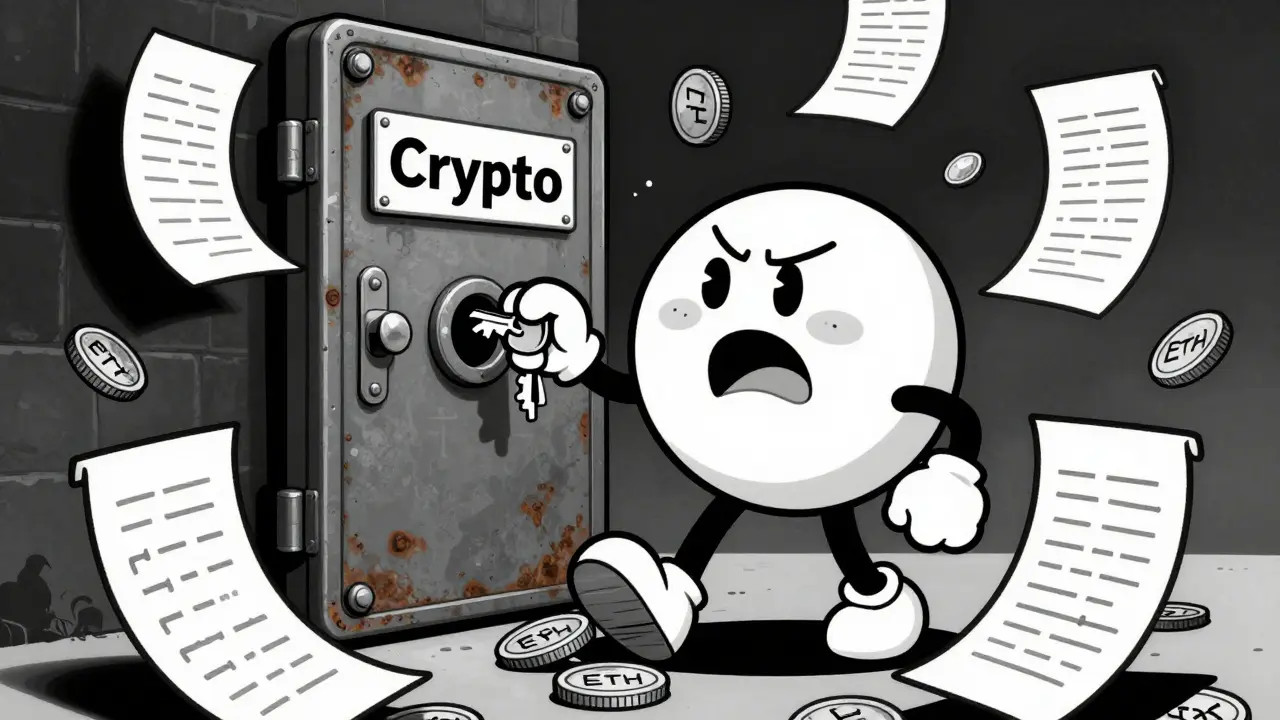
Imagine trying to send a text message but first having to pay a separate fee just to open your phone, memorizing a 24-word password to unlock it, and hoping you don’t lose that paper note with the words on it. That is exactly how using cryptocurrency felt for years. It was clunky, scary, and frankly, annoying. Most people who tried it once gave up because the friction was too high.
But something has changed under the hood of blockchains like Ethereum. A technology called account abstraction is quietly fixing these broken experiences. It doesn't change the money itself; it changes how you interact with it. By turning your wallet from a static key into a programmable smart contract, account abstraction makes crypto feel less like hacking a mainframe and more like using a modern banking app. Let’s look at why this matters for you right now in 2026.
The Problem With Traditional Crypto Wallets
To understand the fix, we have to look at what broke in the first place. For over a decade, most crypto users relied on what are known as Externally Owned Accounts (EOAs). Think of an EOA like a physical house key. It opens the door, and that’s it. If you lose the key, you’re locked out forever. If someone steals the key, they own your house. There is no "forgot password" button, no two-factor authentication, and no way to limit what the key can do.
This model created three massive headaches for everyday users:
- The Gas Fee Trap: You needed to hold the native token of the network (like ETH on Ethereum) just to pay for transaction fees. If you wanted to swap USDC for DAI, you still needed ETH in your wallet. If you ran out of ETH, your other assets were frozen until you bought more.
- The Seed Phrase Nightmare: Security depended entirely on you remembering or safely storing a long string of random words. One mistake, one lost USB drive, and millions of dollars vanished. This anxiety kept many people away from self-custody.
- No Recovery Options: Unlike your email or bank account, there was no customer support. If you moved phones and didn't back up correctly, your funds were gone. Forever.
These weren't just minor inconveniences; they were barriers to entry that stopped mainstream adoption. Account abstraction removes these barriers by changing the fundamental nature of the account itself.
What Is Account Abstraction?
At its core, account abstraction allows your wallet to be a smart contract rather than a simple cryptographic key pair. In technical terms, this shift was standardized by EIP-4337, which is an Ethereum Improvement Proposal that introduces a mempool for smart contract accounts, allowing for gasless transactions and social recovery without changing the base layer protocol.
Think of it like upgrading from a flip phone to a smartphone. The flip phone (the EOA) could only make calls and send texts. The smartphone (the Smart Contract Account) can run apps, update its own software, and integrate with other services seamlessly. Your wallet becomes programmable. You can write rules into it: "Only allow transfers under $100," "Require biometric login," or "If I haven't logged in for six months, notify my trusted contacts."
This isn't just theoretical. Major platforms like Starknet, Polygon, and Arbitrum have built native support for this, and wallets like Argent and Gnosis Safe have been leading the charge in making this accessible to non-developers.
Key User Experience Improvements
So, what does this actually mean for your daily interaction with crypto? Here are the specific ways account abstraction improves your life.
1. No More Gas Fee Headaches
With account abstraction, developers can sponsor gas fees for you. This means you can use a decentralized application (dApp) without needing to hold any ETH or MATIC. The app pays the network fee on your behalf, often taking a small cut or including it in the service cost. Even better, you can pay gas fees in stablecoins like USDC instead of volatile native tokens. You never have to worry about keeping a tiny amount of ETH around just to move your other assets.
2. Social Recovery Instead of Seed Phrases
Gone are the days of writing down seed phrases on paper and hiding them in a safe. Account abstraction enables social recovery. You designate a group of "guardians"-these could be friends, family members, or even professional custodians. If you lose access to your device, these guardians can vote to restore your wallet. It works like a multi-sig setup but feels like resetting a password via email or SMS. It’s secure because no single person can steal your funds, but it’s recoverable if you get locked out.
3. Biometric Authentication
You can now log in with your fingerprint or face ID. The smart contract handles the cryptography behind the scenes. You don't need to type in a password every time you sign a transaction. This brings crypto interactions closer to the convenience of Web2 apps like Facebook or Instagram, removing the friction of complex manual signing processes.
4. Session Keys for Gaming and DeFi
Imagine playing a blockchain game where you have to approve every single sword swing or movement. That would be unbearable. Account abstraction allows for "session keys." You grant a dApp temporary permission to perform certain actions within set limits. For example, you might authorize a game to spend up to 10 tokens per hour for gameplay mechanics. Once the session expires or the limit is reached, the access revokes automatically. This makes gaming and frequent micro-transactions viable.

Smart Contract Wallets vs. Traditional Wallets
To see the difference clearly, let's compare a traditional wallet like MetaMask (in its basic EOA form) with a modern account abstraction wallet like Argent X or a Gnosis Safe account.
| Feature | Traditional EOA (e.g., Basic MetaMask) | Account Abstraction Wallet (e.g., Argent, Safe) |
|---|---|---|
| Authentication | Password + Seed Phrase | Biometrics, Social Login, Passkeys |
| Gas Fees | Must hold native token (ETH/MATIC) | Can be paid in any token or sponsored by dApp |
| Recovery | Impossible if seed phrase is lost | Social recovery via trusted guardians |
| Security Controls | All-or-nothing access | Spending limits, time-locks, whitelists |
| Transaction Batching | One action per transaction | Multiple actions in one click (swap + bridge) |
The table shows a clear shift in philosophy. Traditional wallets prioritize simplicity of code but complexity of use. Account abstraction wallets prioritize complexity of code to deliver simplicity of use. For the average person, the latter is infinitely more valuable.
Real-World Use Cases in 2026
By 2026, account abstraction has moved beyond early adopters. Here is how it is being used in real scenarios.
Inheritance Planning: Users can set up "dead man's switch" logic. If their wallet shows no activity for a year, the funds can automatically transfer to a designated heir's address. This solves the problem of digital assets vanishing when owners pass away without leaving instructions.
Corporate Treasury Management: Companies managing crypto treasuries use AA wallets to enforce strict spending policies. For instance, a rule might state that any withdrawal over $50,000 requires approval from three different executives. This happens automatically on-chain, reducing internal fraud risks.
Seamless Onboarding: New users can create a wallet using just an email address. The private key is managed by a decentralized network of guardians, so the user never sees a seed phrase. They log in with magic links. This lowers the barrier to entry significantly, allowing grandparents to buy NFTs or invest in DeFi without understanding cryptography.
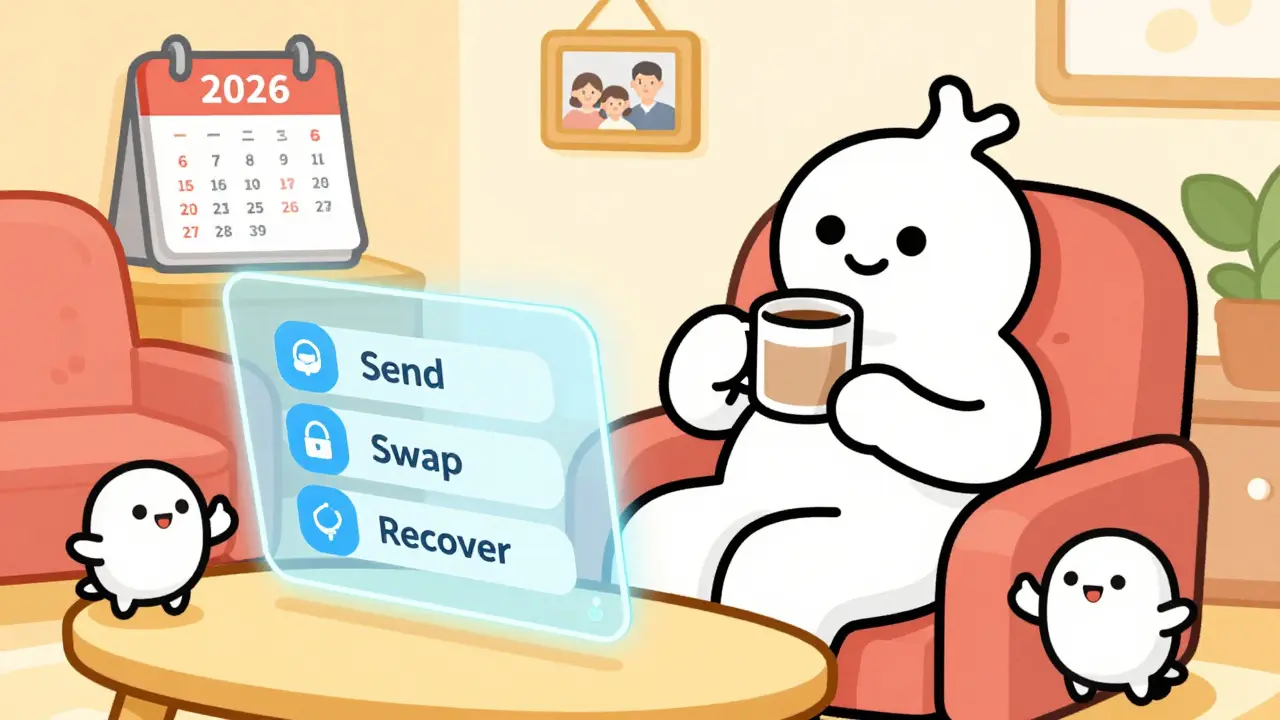
Potential Risks and Considerations
While account abstraction is a huge leap forward, it’s not without challenges. The biggest concern is centralization risk in the implementation. If you rely on a single company to provide your guardian services or gas sponsorship, you are reintroducing counterparty risk. Always choose wallets that use decentralized networks for recovery and gas bundling.
Additionally, the learning curve for setting up social recovery can be tricky. Choosing the wrong guardians can lead to social engineering attacks, where hackers try to trick your friends into approving a malicious recovery. Education is key here. Users need to understand that their "trusted contacts" are powerful keys to their kingdom.
There is also the issue of fragmentation. Not all blockchains support account abstraction natively yet. While Ethereum L2s like Arbitrum and Optimism are well-supported, some older chains may require bridges or wrappers, adding slight complexity. However, the trend is overwhelmingly toward universal AA support.
Getting Started With Account Abstraction
If you want to experience this improved user flow today, you don't need to be a developer. Here is a simple path:
- Choose an AA-Native Wallet: Download a wallet like Argent X, Braavos (for Starknet), or set up a Gnosis Safe account. These are designed with abstraction from day one.
- Set Up Social Recovery: During setup, carefully select 3-5 guardians. Mix close friends with perhaps a professional custody service if available. Do not skip this step.
- Enable Biometrics: Turn on FaceID or TouchID in your wallet settings. This will replace most of your password typing.
- Test Gas Abstraction: Try interacting with a dApp that supports ERC-4337. Notice if you can pay fees in USDC or if the app sponsors the gas for you.
Moving to an account abstraction wallet is one of the best upgrades you can make for your crypto hygiene. It keeps your funds safer, easier to recover, and simpler to use. As the industry matures, this won't just be an option; it will be the standard.
Is account abstraction safe?
Yes, generally safer than traditional wallets if configured correctly. Because it uses smart contracts, you can add layers of security like spending limits and multi-signature requirements. However, the safety depends heavily on choosing reliable guardians for social recovery and avoiding phishing attempts that target those guardians.
Do I still own my private keys with account abstraction?
It depends on the implementation. In true self-custodial AA wallets, you control the smart contract, but the "key" might be a passkey or biometric signature rather than a raw hex string. You retain sovereignty over your funds, but the mechanism for accessing them is abstracted away for convenience. Some custodial solutions hide keys entirely, so always check if the wallet is non-custodial.
What is EIP-4337?
EIP-4337 is the standard proposal on Ethereum that enables account abstraction without changing the core protocol. It introduces a new mempool specifically for smart contract accounts, allowing for features like gas sponsorship and batched transactions while maintaining compatibility with existing infrastructure.
Can I migrate my current MetaMask wallet to an AA wallet?
You cannot directly convert an EOA into a smart contract account. However, you can create a new AA wallet and transfer your assets from your old MetaMask wallet to the new one. Many AA wallets offer import tools that make this process straightforward, often letting you fund the initial gas fees for the transfer.
Why do some dApps still require traditional wallets?
Legacy infrastructure is slow to update. Many older decentralized applications were built before account abstraction became widespread and may not yet support the ERC-4337 standard. Additionally, some developers avoid AA due to the increased complexity of integrating smart contract accounts versus simple EOAs. This is changing rapidly as more tooling becomes available.