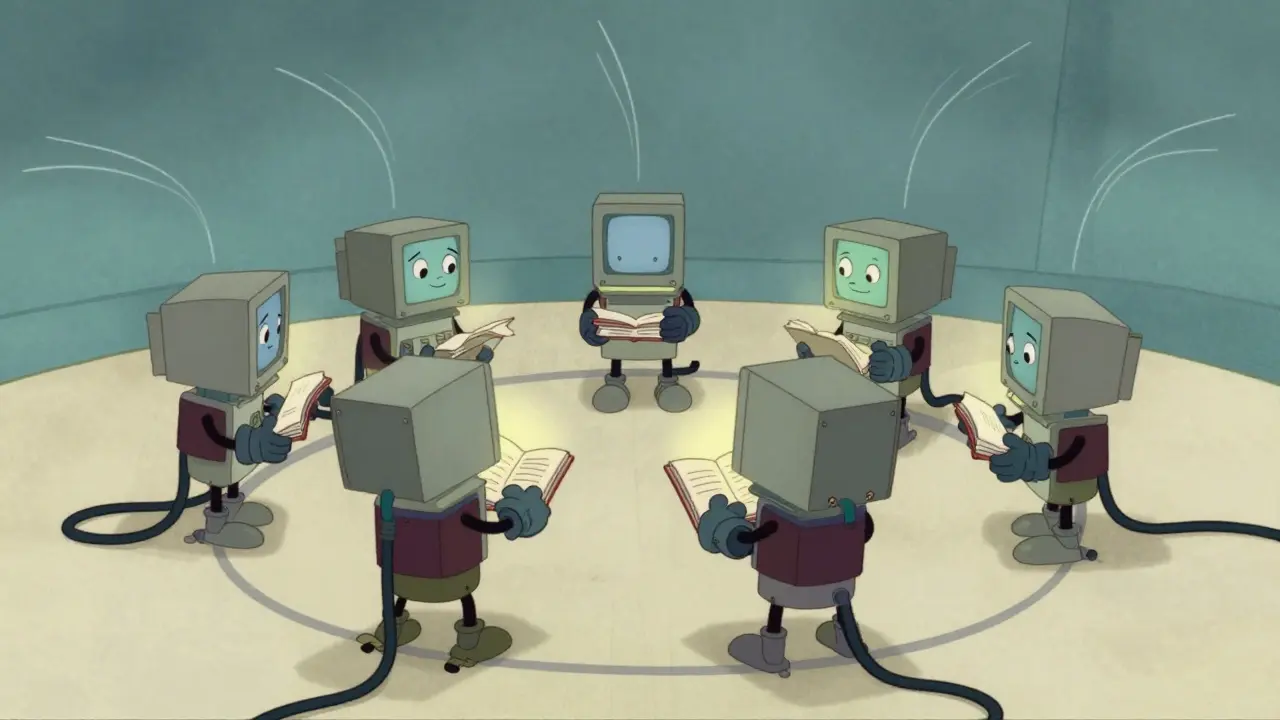
You probably know that cryptocurrency allows people to send money without a bank. But have you ever wondered how the system actually knows you haven't spent the same dollar twice? It isn't a manager checking a spreadsheet. Instead, the world relies on a complex web of computers working together. This system is called Distributed Ledger Technology. In short, it is a digital database shared across a peer-to-peer network where every participant holds a copy of the records.
DLT eliminates the single point of failure inherent in traditional banking systems. When you use a credit card, one central server holds your balance. If that server crashes or gets hacked, your data is at risk. With distributed ledgers, the data lives everywhere. If someone tries to tamper with their copy, the other thousands of copies reject the change immediately. This setup creates a trustless environment where you don't need to trust a company, just the math.
Quick Summary / Key Takeaways
- Distributed Ledger Technology spreads transaction data across multiple nodes instead of storing it centrally.
- Consensus mechanisms like Proof of Work ensure everyone agrees on the ledger state without a middleman.
- Blockchain is a specific type of DLT, but not all DLTs use blockchains.
- Cryptography secures the data, making past transactions practically impossible to alter.
- Permissionless networks allow anyone to join, while permissioned networks require invitations.
The Core Architecture of a Distributed Ledger
Imagine a Google Doc that everyone can edit, but once a sentence is finalized, it becomes unchangeable stone. That is the basic visual metaphor for a distributed ledger. Each computer connected to the network is called a Node. Every node stores an identical copy of the entire history of transactions.
When a user initiates a transaction, they sign it with a private cryptographic key. This signature proves ownership without revealing who they are. The transaction is then broadcast to the peer-to-peer network. Here is the critical part: every node receives this broadcast independently. They do not ask a boss if the transaction is valid. Instead, each node runs the same validation software locally.
Validation checks several things. Is the sender sending more than they have? Is the signature mathematically correct? Has this specific asset already been spent? If a node finds an error, it marks the transaction as invalid and discards it. Only valid transactions move to the next stage. This redundancy means that even if 51% of the nodes were trying to lie to the rest, the honest majority would still maintain the correct version of the truth.
How Consensus Algorithms Decide the Truth
In a world without a CEO, how does the network decide which transactions to accept? This is where Consensus Mechanisms come into play. A consensus algorithm is a protocol that forces nodes to agree on a single source of truth despite being controlled by different people.
The most famous example is the Proof of Work used by Bitcoin. In this model, miners compete to solve complex mathematical puzzles. Solving the puzzle requires massive energy, but verifying the solution is easy. Once a miner solves it, they get to add the next page of transactions to the ledger. Other miners verify this work before accepting it.
Newer models like Proof of Stake operate differently. Instead of burning electricity to solve puzzles, participants lock up coins as collateral. If they validate bad transactions, they lose their stake. This method has gained popularity because it uses significantly less energy than Proof of Work. Regardless of the method, the goal remains the same: to stop malicious actors from altering history without owning a huge portion of the network.
| Mechanism | Resource Required | Security Model | Energy Usage |
|---|---|---|---|
| Proof of Work | Computing Power | Economic Cost of Hardware | High |
| Proof of Stake | Coin Holdings | Floating Collateral | Low |
| Delegated Proof of Stake | Community Voting | Reputation Staking | Medium |

Clarifying Blockchain Versus DLT
People often use these terms interchangeably, but there is a technical distinction. Think of it like the relationship between squares and rectangles. All blockchains are DLTs, but not all DLTs are blockchains.
A blockchain specifically organizes data into "blocks" that are chained together chronologically using hash functions. Each block contains a cryptographic fingerprint of the previous block. This makes creating a tampered history exponentially difficult because you would have to recalculate every subsequent hash. However, some distributed ledgers do not use blocks. Some update continuously without chunking the data into segments. These alternative structures might offer faster speeds or different privacy features, proving that the broader category of Distributed Ledger Technology encompasses many architectures beyond just the chained blocks found in early cryptocurrencies.
Public Networks vs. Private Ledgers
Not every DLT is open to the world. The architecture splits based on who is allowed to read or write to the ledger. Public networks are permissionless. Anyone can download the software and start validating transactions. You see this with major currencies like Bitcoin or Ethereum. Transparency is the main feature here; anyone can audit the entire history of the chain.
Private networks function more like internal corporate databases, but they share the distributed nature of nodes. Access is restricted. You need an invitation or specific credentials to join. Banks use these for settlements between themselves. While less transparent, they offer higher transaction speeds and privacy for sensitive business data. The trade-off is that trust still exists to some degree because the operators control who joins the network.

Security Through Cryptography
The backbone of any secure ledger is Cryptography. Specifically, asymmetric encryption handles the identity verification. Every user generates a pair of keys. The private key signs transactions, acting like a digital signature. You never share this key. The public key acts as an address that others send funds to.
Beyond signatures, hashing algorithms protect the data integrity. A hash is a unique digital fingerprint created from the input data. Even changing a single zero to a one in the original transaction changes the resulting hash completely. Because the ledger links these hashes, a hacker cannot modify an old record without breaking the chain of fingerprints. By the time they try to present the fake version, the rest of the network sees the broken link and rejects the entry instantly.
Real-World Applications Beyond Money
While financial transfer launched the industry, the utility of DLT extends far deeper. Governments are testing systems for land registries. Because property deeds stored on an immutable ledger are hard to forge, they reduce disputes over ownership boundaries. Supply chains also benefit. Manufacturers can track a product from raw materials to the shelf, ensuring authenticity without manual paperwork.
Voting systems represent another frontier. A DLT-based ballot would theoretically prevent vote tampering and counting errors. Participants could verify their vote was counted without revealing how they voted. Smart contracts automate agreements. For instance, insurance policies could pay out automatically when flight delay data confirms a disruption. These applications rely on the core promise of distributed ledgers: maintaining shared truth among parties who may not trust each other.
Troubleshooting Common Implementation Hurdles
Despite the benefits, scaling remains a challenge. Adding millions of users to a global ledger creates congestion. Transactions queue up, and fees rise during peak demand. Developers are building layer-two solutions to handle these volumes off the main chain. Additionally, regulatory frameworks are still catching up to the technology. Companies implementing DLT must navigate uncertain legal landscapes regarding liability and data ownership. Understanding these practical limits helps set realistic expectations for adoption.
Is DLT the same thing as Blockchain?
No, DLT is the broader category. Blockchain is a specific implementation of DLT that groups data into linked blocks. Other DLTs may organize data differently without using blocks.
Who controls a distributed ledger?
In a public network, no single entity controls the ledger. Control is distributed among all participating nodes following the consensus protocol. Private networks have designated administrators who manage access rights.
Can DLT be hacked?
It is extremely difficult. To alter a public DLT, a hacker would need to control over half of the network's computing power or stake simultaneously. The decentralized design prevents single-point breaches common in centralized servers.
What is a node in DLT?
A node is any computer connected to the network that holds a copy of the ledger. Nodes validate transactions and help reach consensus on the state of the network data.
Why do we need consensus mechanisms?
Consensus ensures all nodes agree on the validity of transactions without a central authority. It prevents double-spending and maintains the integrity of the shared record across untrusted environments.
Comments (14)
Elizabeth Akers
March 31, 2026 AT 16:31
pretty cool stuff honestly, i always found tech confusing but this makes sense finally
nodes keeping tabs on everything is wild though
Matt Bridger
April 2, 2026 AT 07:23
While the explanation attempts clarity it lacks fundamental rigor regarding cryptographic hashing mechanisms
the average reader would fail to grasp the implication of Byzantine fault tolerance in this context
Alex Kuzmenko
April 3, 2026 AT 07:12
yeah but normal peopel dont need to know the deep math
just knowing its safe from hacks is enuf for most folks really
Justin Garcia
April 4, 2026 AT 21:08
This whole narrative ignores the energy costs making the system environmentally disastrous
Shaira Vargas
April 5, 2026 AT 08:11
i cant believe how much people love giving up privacy for this tech
its like trusting strangers with your wallet in the middle of nowhere and hoping nothing goes wrong for your money
Liam Robertson
April 5, 2026 AT 13:45
we need more articles like this explaining how things actually work under the hood
trust in technology is essential for our future digital lives
Tiffany Selchow
April 7, 2026 AT 10:39
typical globalist tech buzzword soup meant to confuse us all
real money works better without computers trying to decide what is real
Alex Lo
April 8, 2026 AT 07:33
this is amazing because we can see the potiential for change and its so big right now
every node checking everthing means nobody can steal anything easily
i think about how banks used to control us and now computers do it instad
and the energy part is huge but maybe they find better ways soon enough
i am so excited to see what happens next year in crypto markets too
people complain about cost but security is worth paying for sometimes you know
also the blockchains are cool but DLT is broader and i love learning that fact
hope everyone reads this fully to get the idea down properly
we should share knowledge more to help understand complex systems well
my head is spinning with info but in a good way for sure
Raymond K
April 8, 2026 AT 14:05
your enthusiasm is infectious and shows grea passion for the topic
i hope you keep diving deeper into the details of cryptography
learning never stops and every bit helps us move forward
ty for sharing your thoughts on the subject matter
Beverly Menezes
April 8, 2026 AT 23:26
it is nice to see people agree on how ledgers work together
sharing copies of data keeps things honest for everyone involved
Leah Lara
April 10, 2026 AT 05:48
okay sure whatever this stuff sounds complicated to me
not sure if it matters much to regular people anyway
Katrina Tate
April 12, 2026 AT 02:54
ignorance is not a shield against financial risk anymore
you should educate yourself before dismissing new economic models outright
Addy Stearns
April 13, 2026 AT 12:18
one must consider the nature of trust in a digital age fundamentally
we rely on institutions that we cannot see or touch directly anymore
this shift represents a paradigm change in how society organizes itself
the blockchain is merely a tool but the philosophy is much deeper than code
humanity seeks truth in chaotic environments where deception thrives naturally
distributed ledgers offer a path away from centralized points of failure completely
however we must question if decentralization truly solves human greed problems
machines follow rules but humans often try to break those rules for gain
consensus mechanisms force cooperation among strangers without physical presence
it creates a strange form of virtual civilization built on mathematics mostly
the energy argument is valid but efficiency grows with every technological leap forward
we saw similar skepticism when the internet first began to connect the world wide
progress always looks dangerous to those standing in their current comfort zones safely
security through redundancy seems like a sound strategy for lasting stability overall
i wonder if this model could replace traditional legal frameworks eventually someday
laws are slow and code is instant creating tension between them inevitably
perhaps a hybrid system emerges where both coexist harmoniously in due time
thinking about the implications makes me sleep less and worry more often
we are building the infrastructure for a future we cannot fully predict yet
staying vigilant is key as we transition into this new digital era slowly
Ronald Siggy
April 15, 2026 AT 10:37
dont let complexity scare you away from understanding your assets
knowledge empowers you to make the best choices for your future