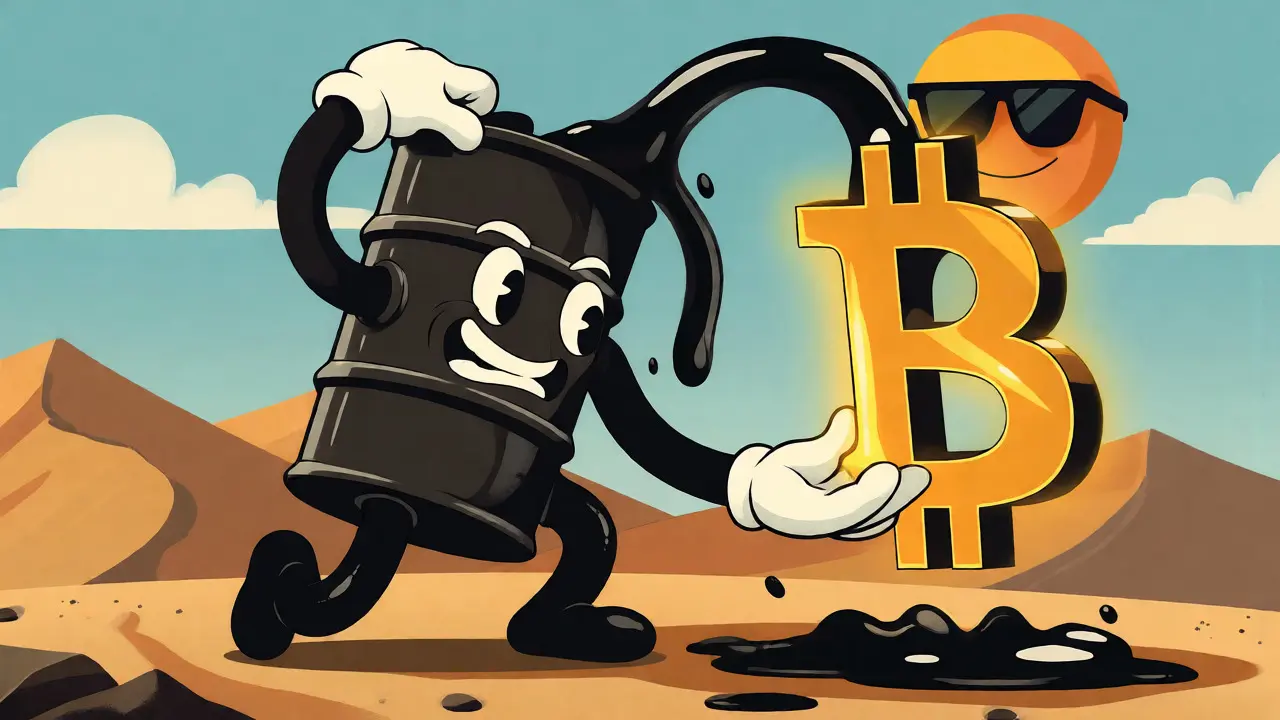
Imagine generating billions of dollars in foreign currency without ever touching a US dollar or sending money through SWIFT. That is exactly what Iran has been doing since 2018. While most people think of Bitcoin as an investment asset, for the Islamic Republic, it is a survival tool. Following the United States' withdrawal from the Joint Comprehensive Plan of Action (JCPOA), Iran faced crippling financial restrictions that cut off its oil revenues from the global banking system. The solution? Turn cheap domestic electricity into digital gold.
This isn't just a side hustle for hobbyists with garage rigs. It is a state-level strategy involving military entities, subsidized power grids, and complex international partnerships. Analysts at Elliptic estimate that roughly 4.5% of all global Bitcoin mining happens inside Iran. This might sound small, but in a network where every transaction pays fees to miners, it means Iranian infrastructure touches a significant portion of global Bitcoin activity. By monetizing excess energy-often generated by burning natural gas or crude oil-Iran bypasses traditional financial intermediaries entirely. You aren't buying their oil; you are paying them for the electricity used to secure the blockchain.
The Mechanics of State-Level Mining
How does a sanctioned country actually pull this off? It starts with energy. Iran sits on some of the world's largest natural gas reserves. For years, the government subsidized electricity prices to keep the population happy, making power incredibly cheap compared to global market rates. In major mining hubs like the United States, industrial miners pay between $0.03 and $0.08 per kilowatt-hour. In Iran, state-affiliated operations often access rates near zero or significantly below cost due to political connections and special economic zone designations.
The infrastructure behind this boom is massive. Consider the 175-megawatt Bitcoin farm in Rafsanjan, Kerman province. This facility is a joint venture involving entities linked to the Islamic Revolutionary Guard Corps (IRGC) and Chinese investors. These aren't typical commercial setups. They operate on dedicated power feeds, sometimes ignoring electricity bills entirely because the cost is negligible compared to the value of the Bitcoin mined. The equipment itself tells a story of sanctions evasion too. Most miners use ASIC hardware manufactured in China. Since direct imports are restricted, these machines often arrive via gray markets or through intermediary countries before being installed in facilities controlled by powerful religious foundations like Astan Quds Razavi.
The process is straightforward but politically charged. Miners solve cryptographic puzzles to validate transactions. In return, they receive block rewards and transaction fees in Bitcoin. Because Bitcoin is permissionless, no bank needs to approve the payout. An Iranian miner can hold that Bitcoin in a self-custody wallet, convert it to stablecoins like Tether (USDT) or TRON-based assets, and then use those digital tokens to pay for imports or move funds internationally. This creates a parallel financial ecosystem that operates outside the reach of Western banking surveillance systems.
The Rise of the Crypto Cartel
You might assume this mining boom benefits ordinary Iranians struggling with inflation. The reality is more nuanced. Reports describe a "crypto cartel" where the biggest winners are entities with political protection. The IRGC’s entry into mining accelerated dramatically around 2019-2020 under directives from Supreme Leader Ali Khamenei. He viewed Bitcoin generation as compensation for lost access to dollar-denominated trade.
By 2022, the regime had issued licenses for over 10,000 mining farms. However, independent miners face steep hurdles. Acquiring modern ASIC miners is expensive and logistically difficult due to import bans. Internet connectivity can be unstable, affecting pool connections. Meanwhile, state-linked giants enjoy preferential treatment, securing the best hardware and the cheapest power. This concentration of wealth means that while the state generates hundreds of millions annually, the average citizen sees little benefit. In fact, many locals complain about frequent blackouts caused by the strain mining places on the national grid.
| Country | Primary Strategy | Key Mechanism | Effectiveness |
|---|---|---|---|
| Iran | Industrial Mining & Trade Settlement | Subsidized Energy -> Bitcoin -> Imports | High (4.5% Global Hash Rate) |
| Venezuela | State-Backed Currency | Petro Token (Failed adoption) | Low (Limited utility) |
| North Korea | Hacking & Theft | Cyberattacks on Exchanges | Moderate (High risk, high yield) |
| Russia | Adaptive Adoption | Post-2022 Pivot to Crypto Payments | Growing (Early stages) |
Where Does the Money Go?
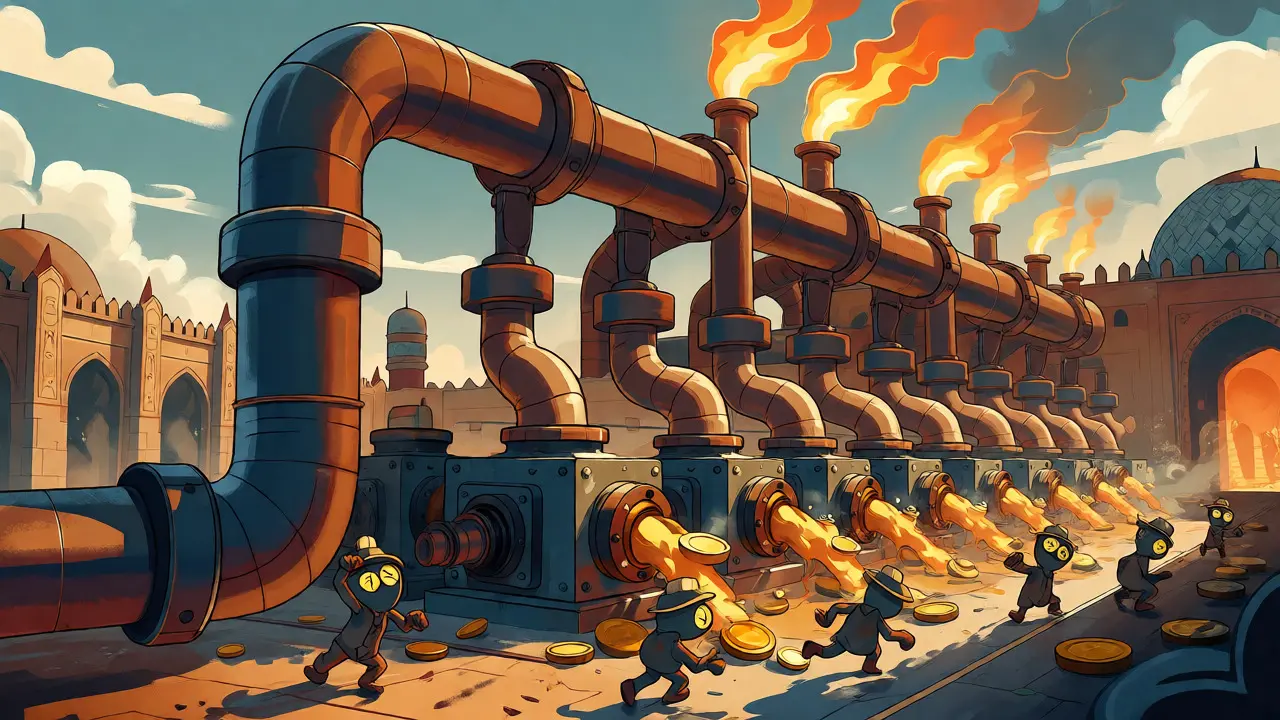
Once the Bitcoin is mined, how does Iran use it? It doesn't always convert back to fiat immediately. A significant portion flows into sophisticated laundering networks. Investigations reveal that Iranian firms processed approximately $8 billion worth of transactions through Binance alone since 2018. But exchanges are tightening controls. So, where does the cash go next?
Blockchain analytics firms like Chainalysis and TRM Labs point to a complex web of shell companies. Funds often move through "teapot" refineries in Beijing or free-zone entities in the UAE and Hong Kong. Another popular route involves TRON-based stablecoins, which offer lower transaction fees than Ethereum and are widely used in Asian markets. From there, the money can re-enter the global economy as clean capital, ready to purchase goods that were previously blocked by sanctions.
A landmark moment occurred when Iran executed its first official import order using cryptocurrency, valued at $10 million. This signaled a shift from opportunistic mining to structured trade settlement. Bilateral agreements with Russia, signed as early as November 2018, laid the groundwork for this. Today, negotiations continue with nations like Austria, Germany, and South Africa to accept crypto-based payments for specific goods, further isolating the US dollar from certain trade lanes.
Impact on Global Bitcoin Network
Does Iranian mining hurt the Bitcoin network? Not necessarily. In fact, it provides resilience. When China banned mining in 2021, causing a massive drop in hash rate, Iran stepped in to fill the gap. This decentralization helps prevent any single nation from dominating the network. However, there are concerns about fungibility-the idea that one Bitcoin should be equal to another. If a user buys Bitcoin that was mined in Iran, could they face scrutiny from banks who fear secondary sanctions violations?
Some tech advocates argue that tagging coins based on origin undermines Bitcoin's core principle of censorship resistance. Others worry about compliance risks for institutions holding Iranian-mined BTC. Currently, most major exchanges do not filter out Iranian-mined coins, treating them as standard Bitcoin. But as regulatory pressure mounts, we may see more sophisticated tools allowing users to choose whether they want to interact with sanctioned jurisdictions.
Challenges and Future Outlook
Despite its success, Iran's strategy faces headwinds. The primary issue is energy consumption. Mining requires vast amounts of power. Critics argue that diverting electricity to mines exacerbates domestic shortages, leading to summer blackouts that anger the populace. The government occasionally orders temporary shutdowns during peak demand periods, disrupting revenue streams.
Technological shifts also pose a threat. As mining becomes more efficient globally, the advantage of ultra-cheap fossil fuel energy diminishes. If renewable energy costs drop further elsewhere, Iran's edge shrinks. Additionally, international enforcement is getting smarter. FinCEN advisories and enhanced blockchain monitoring make it harder to hide the trail of funds. Yet, as long as sanctions remain, the incentive to evade them remains strong. Iran plans to increase mining capacity by 50% over the next two years, betting that digital assets will become an increasingly permanent fixture in global finance.
Key Takeaways
- Scale: Iran accounts for ~4.5% of global Bitcoin mining, generating hundreds of millions annually.
- Mechanism: Subsidized energy converts domestic resources into internationally recognized currency without SWIFT.
- Control: Operations are heavily dominated by IRGC-linked entities and religious foundations, not private citizens.
- Laundering: Funds move through UAE/HK shell companies and TRON stablecoins to bypass exchange KYC checks.
- Trade: First official crypto-import order ($10M) marks a shift from speculation to practical trade settlement.
Why does Iran mine Bitcoin instead of selling oil directly?
Sanctions restrict Iran's ability to sell oil through normal channels and repatriate the profits in US dollars. Mining allows them to monetize excess electricity domestically and generate a decentralized asset (Bitcoin) that can be traded peer-to-peer without requiring approval from Western banks or clearinghouses.
Is Bitcoin mined in Iran different from other Bitcoin?
Technically, no. Bitcoin is fungible, meaning one unit is identical to another regardless of where it was mined. However, forensic analysts can trace the history of coins. Some institutions may view coins with a provenance linked to sanctioned entities as higher compliance risks, potentially affecting their liquidity in regulated markets.
How much electricity does Iranian mining consume?
The electricity consumed by Iranian miners is estimated to require the equivalent of approximately 10 million barrels of crude oil annually to generate. This represents roughly 4% of Iran's total oil exports in recent years, highlighting the scale of energy diverted from potential export or domestic industrial use.
Who controls the majority of mining farms in Iran?
While thousands of licenses exist, the largest and most profitable facilities are often controlled by entities affiliated with the Islamic Revolutionary Guard Corps (IRGC) and powerful religious foundations like Astan Quds Razavi. These groups benefit from political protection and access to subsidized power rates unavailable to smaller, independent operators.
Can international banks refuse Iranian-mined Bitcoin?
Yes, banks can refuse to handle transactions if they suspect the source involves sanctioned entities. However, because Bitcoin is decentralized, they cannot stop the transfer on the blockchain itself. They can only restrict services for users who present coins with a flagged history, creating friction rather than a hard block.
Comments (11)
Shruti Mala
October 2, 2026 AT 12:22
This is absolutely mind-blowing!! 🤯 I had no idea Iran was mining this much Bitcoin to bypass sanctions. It’s such a clever survival strategy, honestly! 💪 The fact that they are turning excess gas into digital gold is genius. We need to think outside the box more often like this! 🚀
Muyiwa Osibolu
October 3, 2026 AT 06:03
It is evident that Western financial hegemony is crumbling under the weight of its own contradictions. The Islamic Republic has demonstrated a strategic acumen that many developed nations lack, utilizing energy reserves not merely for consumption but as a sovereign monetary instrument. This shift away from SWIFT dependency signifies a broader geopolitical realignment where resource-rich nations are reclaiming their economic autonomy from dollar-centric surveillance systems.
Jennifer Moore
October 4, 2026 AT 23:35
I completely agree with the sentiment that this represents a significant cultural and economic shift, although we must consider the human cost involved in these state-level operations because while the government generates revenue, the average citizen often faces blackouts and inflation without seeing direct benefits from the mining profits, which creates a complex social dynamic that cannot be ignored when discussing the effectiveness of such strategies in the long term.
Michael DeGroat
October 6, 2026 AT 22:59
idk man seems like just another way for the elite to get rich while regular people suffer lol. also bitcoin is still volatile so relying on it is risky af imo.
Daniel Tremblay
October 7, 2026 AT 11:38
it feels wrong though 😔 like using public resources for private gain? 🤔 the moral implications are huge here... we should care about the grid stability for normal folks not just the IRGC wallets 💸
Douglas Sorocco
October 9, 2026 AT 10:21
The article overlooks the fundamental fungibility argument. If one accepts that Bitcoin is money, then origin does not matter. However, the compliance layer imposed by centralized exchanges creates artificial scarcity and risk premiums for coins with sanctioned provenance. This bifurcation of the asset class undermines the very premise of decentralized currency, suggesting that regulatory capture is inevitable unless peer-to-peer adoption reaches critical mass independent of fiat on-ramps.
Nimisha Wagde
October 11, 2026 AT 09:14
wait wait wait!!! dont you see what theyre doing?? its all a big psyop to control the flow of money!! 🤯🤯 they want us to think its decentralized but really its just shifting power from banks to new overlords who know how to play the game better!! conspiracy or coincidence?? i say conspiracy!!! 👁️👄👁️
Ayodele Emmanuel
October 13, 2026 AT 02:24
Bro this is exactly why Africa needs to look at our own energy potential differently!! 🔥 We have so much wasted gas and solar potential, imagine if Nigeria or Ghana did this properly?! 🇳🇬🇬🇭 We could bypass debt traps and build wealth directly through tech infrastructure. Let's stop waiting for aid and start mining our future!! 💪💰
Katherine Scanlon-Gehn
October 14, 2026 AT 14:13
Okay, but seriously, can we talk about the environmental impact?? 🌍 Like, yes, sanctions suck, but burning crude oil to mine Bitcoin?? That seems counterintuitive for 'green' energy goals, right?? And who is actually checking the emissions data?? Because if nobody is auditing them, is it really clean energy?? Just asking questions!! 🤷♀️❓
Daniel Pearson
October 16, 2026 AT 09:17
You guys are missing the point entirely. This isn't about green energy or even morality. It's about power. The IRGC consolidating control over the digital economy means they become untouchable by traditional banking sanctions. That's the real story here. The rest is just noise.
lady D
October 16, 2026 AT 15:53
It breaks my heart to read about the blackouts affecting ordinary families while the state mines billions. 🥺 We hope for resilience, but the disparity between the ruling entities and the common people is painful to witness. Sending strength to everyone navigating these tough economic times. ❤️