
Imagine hiring a brilliant developer from a freelance platform. They have a perfect profile, glowing references, and code that compiles on the first try. Six months later, your company’s hot wallet is drained, your internal data is leaked, and you realize your new hire was never who they said they were. This isn’t a hypothetical nightmare for tech startups anymore; it is the daily reality for companies falling victim to North Korean IT worker fraud, a sophisticated scheme sanctioned by the U.S. Department of Treasury's Office of Foreign Assets Control (OFAC) in 2025.
The stakes have never been higher. According to analysis by TRM Labs, a leading blockchain analytics firm, North Korean threat actors stole over $2.1 billion in cryptocurrency during the first half of 2025 alone. These aren't random hackers breaking into servers from basements. They are state-sponsored operatives embedded inside legitimate U.S. companies, using their access to steal funds and demand ransom. If you work in Web3, finance, or remote-first tech, understanding how these networks operate is no longer optional-it is essential for survival.
The Anatomy of the Deception: How the Scheme Works
To understand how to stop this, you need to know exactly how the trap is set. The threat, tracked by security researchers under designations like Famous Chollima (also known as Jasper Sleet, UNC5267, and Wagemole), operates as a dual-purpose scheme. The goal is twofold: provide legitimate services to build trust, and simultaneously conduct reconnaissance for future exploitation.
Here is the step-by-step process these actors use:
- Identity Fabrication: Operatives create curated fake identities. They don’t just make up a name; they build entire personas with histories. These identities are often reused across multiple operations, creating a web of connections that can be traced back to the same source.
- Platform Infiltration: They establish presences on professional platforms like GitHub, CodeSandbox, Freelancer, Medium, RemoteHub, CrowdWorks, and WorkSpace.ru. Their profiles look authentic, often featuring open-source contributions or writing samples that demonstrate high competence.
- Target Selection: They specifically target cryptocurrency exchanges, Web3 startups, and tech companies with remote-working cultures. Why? Because these environments rely heavily on digital verification and decentralized teams, making it easier for a single insider to bypass physical security controls.
- Employment and Access: Once hired, they perform their jobs well. This builds credibility. Over time, they gain access to sensitive internal systems, including private keys, multi-signature wallets, and employee databases.
- Theft and Extortion: With access secured, they execute the theft. In some cases, they drain stablecoins directly. In others, they steal proprietary code or customer data and demand ransom for its return.
This method is insidious because it exploits human trust and standard hiring practices. It is not a brute-force attack; it is a social engineering campaign backed by state resources.
Follow the Money: How Stolen Crypto Is Laundered
Stealing the crypto is only half the battle. The other half is converting it into usable cash without triggering alarms. The laundering infrastructure used by these networks is surprisingly sophisticated and involves international coordination.
Consider the case of Kim Ung Sun, an individual designated by OFAC in August 2025. She facilitated financial transfers worth nearly $600,000 by converting cryptocurrency to U.S. dollars in cash. But how does that happen at scale?
| Method | Description | Risk Level |
|---|---|---|
| Centralized Exchange Hopping | Moving funds through multiple exchanges in different jurisdictions to break the transaction trail. | High |
| OTC Broker Conversion | Using over-the-counter brokers to convert large amounts of crypto to fiat currency without public ledger visibility. | Critical |
| NFT Washing | Purchasing high-value NFTs with stolen funds, then selling them to legitimize the source of wealth. | Medium |
| Fragmentation | Splitting large sums into many small transactions across self-hosted wallets to avoid detection thresholds. | High |
In June 2025, the Department of Justice filed a civil forfeiture complaint seeking over $7.7 million in assets tied to a specific laundering network. Investigators found that workers operating under fraudulent identities like 'Joshua Palmer' and 'Alex Hong' collected stablecoin payments from U.S. employers. These proceeds were routed through centralized exchanges and self-hosted wallets before being consolidated and transferred to senior DPRK operatives, including previously sanctioned individuals Kim Sang Man and Sim Hyon Sop.
The use of Russian and UAE-based infrastructure, IP addresses, and fabricated documentation underscores the global scale of these operations. By late 2024, OFAC had already sanctioned at least one OTC broker involved in these conversions, highlighting the depth of the facilitator network.

Recent Sanctions and Government Response (2025)
The U.S. government has responded with a coordinated whole-of-government approach. On August 27, 2025, OFAC designated several key players, including Russian national Vitaliy Sergeyevich Andreyev and North Korean individual Kim Ung Sun, along with entities like Shenyang Geumpungri Network Technology Co., Ltd and Korea Sinjin Trading Corporation.
Under Secretary of the Treasury for Terrorism and Financial Intelligence John K. Hurley stated clearly: "The North Korean regime continues to target American businesses through fraud schemes involving its overseas IT workers, who steal data and demand ransom." This statement emphasizes the Trump administration's commitment to protecting Americans from these schemes.
This action built upon previous sanctions imposed on July 8 and July 24, 2025, demonstrating a sustained focus on dismantling these networks. The Department of State also issued joint statements with Japan and the Republic of Korea, recognizing that multilateral enforcement is necessary given the cross-border nature of the threat.
These sanctions are not just punitive; they are investigative tools. They provide enhanced visibility into the DPRK's sanctions evasion ecosystem. For businesses, this means that screening for connections to these newly designated entities is now a critical compliance requirement.
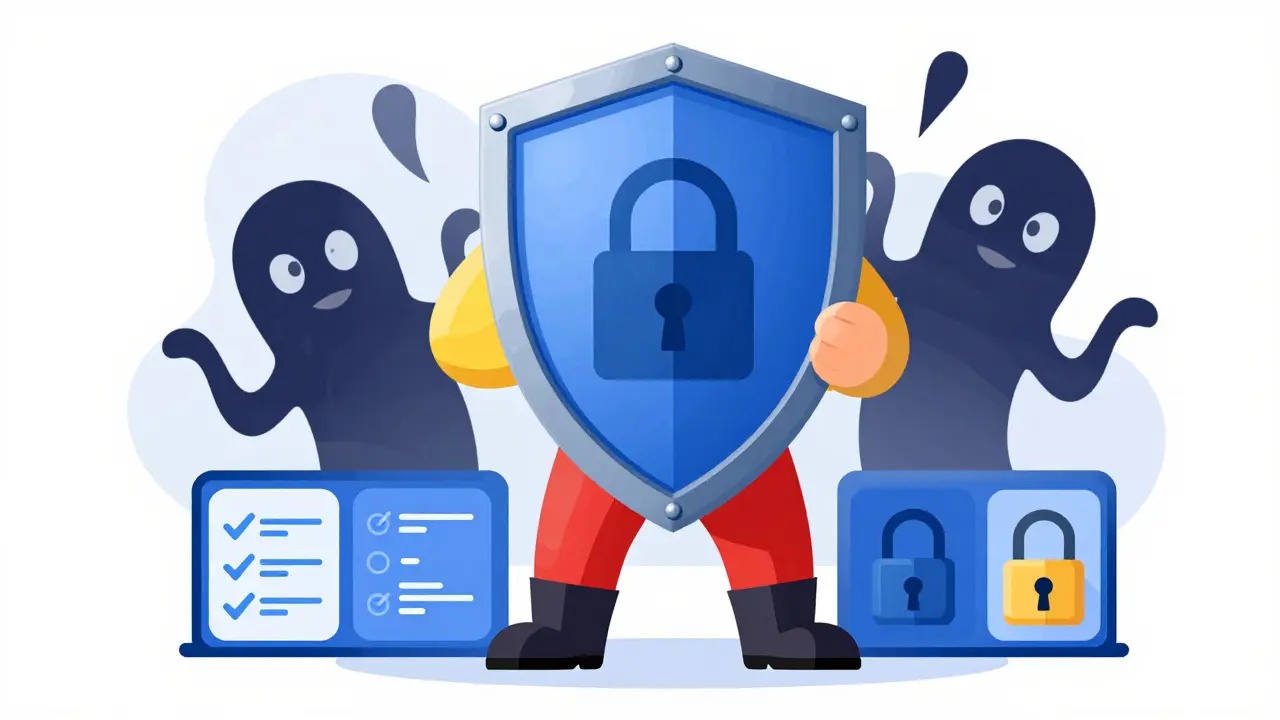
How to Protect Your Business: Practical Steps
You cannot afford to be passive. Here is what you can do right now to secure your organization against these threats:
- Enhance Identity Verification: Do not rely solely on LinkedIn or GitHub profiles. Use video interviews with live interaction. Ask candidates to explain complex code decisions in real-time. Check for inconsistencies in their backstory, such as gaps in employment history or locations that don't match their claimed residence.
- Implement Least-Privilege Access: Never give a single employee full access to cold wallets or critical infrastructure. Use multi-signature wallets requiring approval from multiple team members. Rotate API keys regularly and monitor for unusual access patterns.
- Screen Against Sanctions Lists: Integrate OFAC SDN (Specially Designated Nationals) list screening into your hiring and vendor onboarding processes. Tools like TRM Labs can help monitor blockchain addresses associated with sanctioned individuals.
- Monitor On-Chain Activity: If you hold significant crypto assets, use blockchain analytics to detect any interactions with known DPRK-linked wallets. Look for fragmentation patterns or sudden movements to mixers or OTC brokers.
- Secure Internal Data: Assume that any remote employee could potentially be compromised. Encrypt sensitive data, restrict access to proprietary code repositories, and conduct regular audits of user permissions.
Remember, the threat is evolving. As of October 2025, enforcement agencies are expanding their understanding of facilitator networks operating across Russia, China, and Southeast Asia. Additional designations are expected as investigations progress.
Why This Matters Beyond Compliance
This is not just about avoiding fines. It is about protecting your intellectual property, your customers' data, and your company's reputation. The revenue generated by these schemes-over $1 million since 2021 according to U.S. Treasury assessments-directly supports the North Korean regime's weapons of mass destruction and ballistic missile programs.
By failing to screen properly, you may inadvertently become part of a supply chain that fuels geopolitical instability. Moreover, the direct financial extortion and data theft can cripple a startup overnight. The cost of prevention is far lower than the cost of recovery.
What is Famous Chollima?
Famous Chollima is a designation used by security researchers to identify a sophisticated North Korean cyber threat group. Also known as Jasper Sleet, UNC5267, and Wagemole, this group is assessed to be directly affiliated with the Workers' Party of Korea. They specialize in embedding IT workers in legitimate companies to steal cryptocurrency and data.
How much cryptocurrency did North Korea steal in 2025?
According to TRM Labs analysis, North Korean threat actors stole over $2.1 billion in cryptocurrency during the first half of 2025 alone. This represents a dramatic increase in crypto-related thefts attributed to DPRK-linked networks.
Which platforms do North Korean IT workers use to find jobs?
They commonly use professional platforms such as GitHub, CodeSandbox, Freelancer, Medium, RemoteHub, CrowdWorks, and WorkSpace.ru. They create fake identities with strong portfolios to appear legitimate to potential employers.
What recent sanctions has OFAC imposed related to this issue?
In August 2025, OFAC designated individuals like Vitaliy Sergeyevich Andreyev and Kim Ung Sun, along with entities such as Shenyang Geumpungri Network Technology Co., Ltd and Korea Sinjin Trading Corporation. These actions targeted their roles in assisting DPRK overseas IT worker fraud schemes.
How can I check if a candidate is linked to sanctioned entities?
You should integrate OFAC SDN list screening into your hiring process. Additionally, use blockchain analytics tools like TRM Labs to monitor for any connections between the candidate's digital footprint and known DPRK-linked wallets or addresses.
Why do these groups target Web3 and crypto companies?
Web3 and crypto companies often operate with remote working cultures and rely on digital verification. This makes it easier for insiders to bypass physical security controls and access digital assets directly, such as private keys and multi-signature wallets.
What role do OTC brokers play in these schemes?
Over-the-counter (OTC) brokers are used to convert large amounts of stolen cryptocurrency into fiat currency without leaving a visible trail on public ledgers. OFAC has sanctioned at least one OTC broker involved in these activities in late 2024.
Comments (17)
Filbert Reeves
June 21, 2026 AT 00:51
its not just north korea its the whole western financial system collapsing and they are just using crypto to cash out before the ruble and yuan take over completely you people are blind to the real threat which is the fed printing money like crazy while these guys are actually moving assets off chain into gold and land in russia and china i told you last year that the sanctions would fail because the elites dont care about laws they only care about liquidity so stop blaming a small country for your own governments incompetence and start looking at the big picture of global de-dollarization happening right now under our noses
Nick Rice
June 21, 2026 AT 01:41
Listen up everyone. This isn't just some random hacker story. This is state-sponsored theft on an industrial scale. If you run a startup, you need to wake up. The article mentions TRM Labs data showing $2.1 billion stolen in H1 2025 alone. That is insane. We need to treat remote hiring with the same scrutiny we treat physical security. Multi-sig wallets are non-negotiable. Period. Do not let one person hold the keys to the kingdom.
pankaj chawla
June 22, 2026 AT 07:35
Amit Thakur here. As someone who works in Web3 security in India, I can confirm that the 'identity fabrication' step is getting incredibly sophisticated. They don't just fake a resume; they build a digital footprint. GitHub commits, Medium articles, even LinkedIn connections. It's scary how deep they go. My team now requires video verification where candidates explain code logic in real-time. No pre-recorded answers. It helps, but it's not foolproof. We also use blockchain analytics tools daily to monitor wallet interactions. It's a cat and mouse game, but awareness is our best defense.
Sonya O'Brien
June 22, 2026 AT 13:42
I really appreciate this detailed breakdown because it highlights exactly why standard HR practices are failing us in the tech sector. When we hire remotely, we often rely on trust and past work samples, but as Sonya O'Brien points out, those samples can be fabricated or stolen from open-source projects. The part about 'Least-Privilege Access' resonates deeply with me because I've seen too many startups give junior devs admin access to production environments just to save time on setup. It's a recipe for disaster. We need to normalize rigorous background checks that include verifying the candidate's digital history across multiple platforms, not just their LinkedIn profile. It feels invasive, maybe, but when the alternative is losing millions to state actors, it's a necessary evil.
Greg Lewis
June 24, 2026 AT 13:39
you think this is about money? no. this is about control. the government wants you scared so you buy their security products. meanwhile the real thieves are inside the banks. north korea is just a scapegoat. look at the timestamps. look at the ips. its all staged. they want you to believe in a monster under the bed so you dont look at the wolf in the boardroom. wake up sheeple
Caralee Robertson
June 24, 2026 AT 17:59
omg this is so scary!! i cant beleive they do this. i work in a small company and we just check linkedin. im gonna tell my boss we need to change this ASAP. thanks for sharing this info it really opens ur eyes to how vulnerable we are
Eric Scheinberg
June 25, 2026 AT 23:22
The procedural aspect of identity verification cannot be overstated. Many organizations neglect the nuance of cross-referencing digital footprints. A simple Google search may reveal inconsistencies in employment history or location data that contradict the candidate's claims. Furthermore, the integration of OFAC SDN list screening into the onboarding pipeline is a critical compliance measure that should be automated rather than manual. Human error in this domain is unacceptable. The sophistication of groups like Famous Chollima demands a corresponding level of rigor from corporate security teams.
Charles Pawlikowski
June 26, 2026 AT 01:14
These commie hackers need to be stopped!!! :angry: Our troops are dying overseas while these criminals steal from American companies. The Trump administration is doing the right thing by sanctioning them. We need tougher penalties and more cooperation with allies like Japan and Korea. Stop coddling these regimes! #AmericaFirst
Andrea Burd
June 26, 2026 AT 11:43
another clickbait title. 'guide to spotting the threat'? please. if u were smart enough to spot it u wouldnt be reading this. the article is full of jargon and fear-mongering. typical mainstream media narrative to keep us paranoid. boring read tbh
Akeem Whittaker
June 26, 2026 AT 17:22
We need to focus on the technical controls mentioned in the post. Specifically, the use of multi-signature wallets. If every transaction requires approval from at least two independent parties, the risk of a single insider threat draining funds drops significantly. I've implemented this in my current role, and while it adds friction to the workflow, it provides peace of mind. Also, rotating API keys regularly is a simple yet effective measure that many teams overlook.
Manish Prajapat
June 27, 2026 AT 06:41
It is fascinating to observe how geopolitical tensions manifest in the digital realm. The actions of groups like Famous Chollima are not merely criminal acts but extensions of state policy. This raises philosophical questions about the nature of work and identity in a borderless economy. Are we truly prepared for a world where our colleagues may be agents of hostile states? The answer seems to be no, at least not currently. We must evolve our ethical and security frameworks to address this new reality.
John Doe
June 29, 2026 AT 02:43
I had a friend whose startup got hit by something similar. Not DPRK, but still devastating. He lost everything. The emotional toll was huge. It's not just about the money; it's about the betrayal of trust. You hire someone, you welcome them into your team, and then they stab you in the back. It makes you question everyone. That's the insidious part of social engineering. It attacks your humanity, not just your servers.
Kumaran sowkarpet
June 30, 2026 AT 11:51
Hi friends! From India, we see a lot of freelance scams too, but this is next level. The laundering part is interesting. Using NFTs to wash money? Wow. I never thought of that. In my experience, video calls are key. If someone refuses a live video interview, that's a red flag. Also, checking their IP address against known proxy services can help. Stay safe everyone! :)
Mauricio Contreras Loredo
July 1, 2026 AT 05:10
Sure, let's blame North Korea again. Classic. Meanwhile, the SEC is busy suing Coinbase. But hey, at least we have a villain to point fingers at. Thanks for the scare tactics, OP. Really needed that anxiety boost today. /s
Amit Thakur
July 2, 2026 AT 08:16
As a security engineer, I'm seeing a massive uptick in phishing attempts targeting HR departments specifically. They're trying to get credentials to employee databases first. Once they have that, they can impersonate legitimate employees to bypass security checks. It's a layered attack. You need to secure your HR systems just as much as your dev environments. MFA is mandatory for all staff, not just admins. And train your HR team to recognize social engineering tactics. They are the front line.
Kelly Tenney
July 2, 2026 AT 15:53
This is such important information! Thank you for sharing this. It's empowering to know what steps we can take to protect ourselves and our teams. Let's support each other in building safer workplaces. Remember, vigilance is key! 💪
Jessica Lane
July 3, 2026 AT 04:47
The section on 'Follow the Money' is particularly enlightening. The use of OTC brokers to convert crypto to fiat without public ledger visibility is a sophisticated method that many businesses might not consider. It highlights the need for comprehensive monitoring that goes beyond just on-chain analysis. Companies should be working closely with financial institutions to identify unusual conversion patterns. This is a complex ecosystem, and understanding the laundering mechanisms is crucial for effective prevention.