You’ve seen the hype. You’ve read the whitepapers promising revolutionary ecosystems. But how do you know if a utility token is actually worth your attention, or if it’s just another speculative bubble waiting to burst?
Evaluating these projects isn’t about guessing where the price will go next week. It’s about verifying whether the token has a real job to do within its ecosystem. As of mid-2026, the landscape has shifted dramatically from the wild west of 2017. Regulators are sharper, investors are smarter, and the tools available for deep-dive analysis have never been better. If you want to separate the sustainable projects from the quick cash grabs, you need a systematic approach that looks beyond marketing fluff.
Understand the Core Definition and Legal Reality
Before diving into charts, you must define what you’re looking at. A utility token provides access to a product or service, unlike a security token which represents an investment contract with an expectation of profit. This distinction is crucial because it dictates regulatory scrutiny.
The U.S. Securities and Exchange Commission (SEC) uses the Howey Test to determine if a token is a security. If a project promises profits based on the efforts of others, it fails this test. In 2023 alone, the SEC took action against 27 projects that mislabeled themselves as utility tokens. The average penalty? $4.7 million. When evaluating a project, ask yourself: Is the primary value driver the usage of the network, or the hope that someone else will buy it for more later? If it’s the latter, proceed with extreme caution.
- Functional Use Case: Does the token unlock specific features, governance rights, or services at launch?
- No Profit Promises: Are marketing materials focused on utility rather than ROI guarantees?
- Jurisdictional Clarity: Has the project sought legal opinions or no-action letters relevant to their target markets?
Analyze Tokenomics: Supply, Demand, and Distribution
Tokenomics is the economic engine of any project. Bad economics kill good technology. You need to scrutinize the supply mechanics. Look for capped total supplies-projects like Filecoin, with its 2 billion FIL cap, provide scarcity that can support value accrual over time. Infinite inflationary models often dilute holder value unless there’s a massive, continuous demand driver.
Distribution schedules matter immensely. A common red flag is when the founding team holds more than 20% of the supply with long vesting periods that could dump on retail investors later. According to Bitbond’s 2024 analysis of 350 utility tokens, projects with transparent distribution schedules and deflationary mechanisms (like token burns) showed 23% higher retention rates.
| Metric | Healthy Signal | Red Flag |
|---|---|---|
| Total Supply Cap | Fixed or clearly defined max | Infinite minting capability |
| Team Allocation | <20% with multi-year vesting | >30% unlocked immediately |
| Utility Mechanism | Burns, staking rewards, fees | No clear sink mechanism |
| Circulating vs. Total | High circulating ratio early on | Low circulating, high FDV valuation |
Verify Technical Security and Infrastructure
A beautiful roadmap means nothing if the code is broken. Smart contract security is non-negotiable. You should expect projects to undergo multiple audits from reputable firms like OpenZeppelin. These audits cost between $15,000 and $50,000 as of late 2024. If a project hasn’t paid for a thorough audit, why should you trust them with your capital?
Check the network infrastructure. Can the blockchain handle the transaction volume required for its utility? Ethereum’s base layer struggles with throughput, but Layer 2 solutions now average 2,000 transactions per second (TPS). If a gaming token relies on a slow chain, user experience will suffer, killing adoption. Also, look at interoperability. Projects using cross-chain bridges like Chainlink CCIP achieve 3.2x higher ecosystem integration, making them more resilient and accessible.
Measure Real Usage: The On-Chain Truth
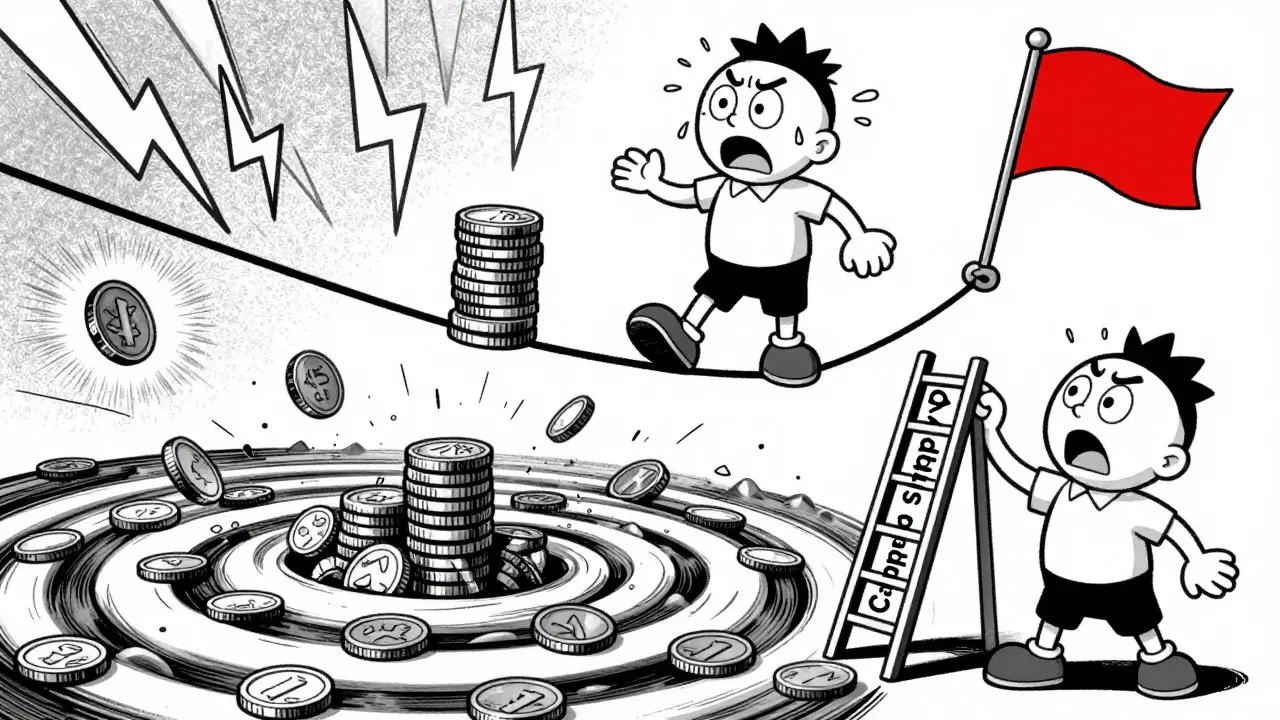
Marketing says one thing; on-chain data says another. This is where most evaluators fail. They look at price action instead of activity. Dr. Garrick Hileman from Blockchain.com advocates for the 'Utility Adoption Index,' measuring daily active users (DAU) per token holder. A healthy ratio is at least 0.35 DAU per holder. If 100 people hold the token but only 5 use it daily, the utility is weak.
Use tools like Dune Analytics to track metrics such as:
- Transactions per Holder: Aim for >5 monthly interactions.
- Revenue per Token: Minimum $0.25 generated by the protocol.
- Active Contract Interactions: Successful projects see >500 daily unique interactions.
If more than 80% of the trading volume comes from speculative swapping rather than actual utility usage (like paying for services or staking), the project is likely unsustainable. CryptoCompare’s longitudinal study found that tokens without functional use cases had a 92% attrition rate within 18 months.
Assess Team Credibility and Developer Activity
Who is building this? Anonymous teams can succeed, but they carry higher risk. Look for a track record in software development or finance. More importantly, check their current activity. Go to GitHub. Are they committing code regularly? The World Economic Framework suggests looking for >50 weekly commits. A stagnant repository is a dying project.
Also, evaluate decentralization. Use the Nakamoto Coefficient to see how many nodes or validators are needed to control the network. A score above 65 indicates healthy decentralization. If five wallets hold 35% of the supply, you’re dealing with a centralized entity, not a decentralized network.

Navigate Regulatory Landscapes
Regulation is no longer optional. By 2026, jurisdictions like Switzerland (FINMA) and Singapore (MAS) have strict rules. FINMA requires utility tokens to demonstrate that >70% of their value derives from actual usage. Singapore mandates a 12-month operational history before launch. If a project ignores these standards, they face existential risk.
Look for projects incorporating compliance directly into their functionality. The rise of 'RegTech tokens' in 2024 shows a trend toward built-in identity verification and transaction monitoring. This doesn’t just protect the project; it protects you from future legal entanglements.
Practical Steps for Your Evaluation Process
Evaluating a token takes time. Professionals spend 8-12 hours per project. Here is a streamlined checklist to help you:
- Read the Whitepaper Critically: Look for vague promises. Specificity wins.
- Check Audit Reports: Ensure findings were resolved. Unfixed critical bugs are a dealbreaker.
- Analyze Token Flow: Use Nansen or Etherscan to see where big holders are moving funds.
- Test the Product: Don’t just invest; use it. If the UI is clunky or the service is broken, adoption will stall.
- Monitor Community Sentiment: Check Reddit and Discord. Are users discussing utility or just price pumps?
Avoid the mistake of overlooking 'utility decay.' Sixty-eight percent of failed tokens maintained initial utility for less than nine months before stagnation. Keep checking these metrics quarterly. What works today might not work tomorrow if the ecosystem doesn’t evolve.
What is the difference between a utility token and a security token?
A utility token grants access to a specific product or service within a blockchain ecosystem, like using fuel for a car. A security token represents an ownership stake or investment contract, implying an expectation of profit from the efforts of others. The SEC's Howey Test is used to distinguish between the two, with significant legal implications for each.
Why is smart contract auditing important for utility tokens?
Smart contracts control the token's logic and funds. Bugs or vulnerabilities can lead to hacks and total loss of value. Audits by firms like OpenZeppelin verify code integrity. Projects without professional audits pose a high risk, as even small errors can be exploited by malicious actors.
How can I tell if a utility token has real demand?
Look at on-chain metrics, not just price. Use tools like Dune Analytics to check Daily Active Users (DAU), transaction volume per holder, and revenue generation. High speculative trading volume with low actual usage indicates weak demand. A healthy ratio is at least 0.35 DAU per token holder.
What are the red flags in token distribution?
Red flags include infinite supply caps, large allocations to founders without vesting periods, and high concentration of tokens in few wallets (e.g., top 10 wallets holding >35%). Transparent distribution schedules and deflationary mechanisms like burns are positive signals.
Is regulatory compliance necessary for a utility token project?
Yes. Regulatory clarity reduces legal risk. Jurisdictions like Switzerland and Singapore have specific requirements for utility tokens. Projects ignoring these may face bans or penalties. Look for projects that have obtained legal opinions or no-action letters and incorporate compliance features.