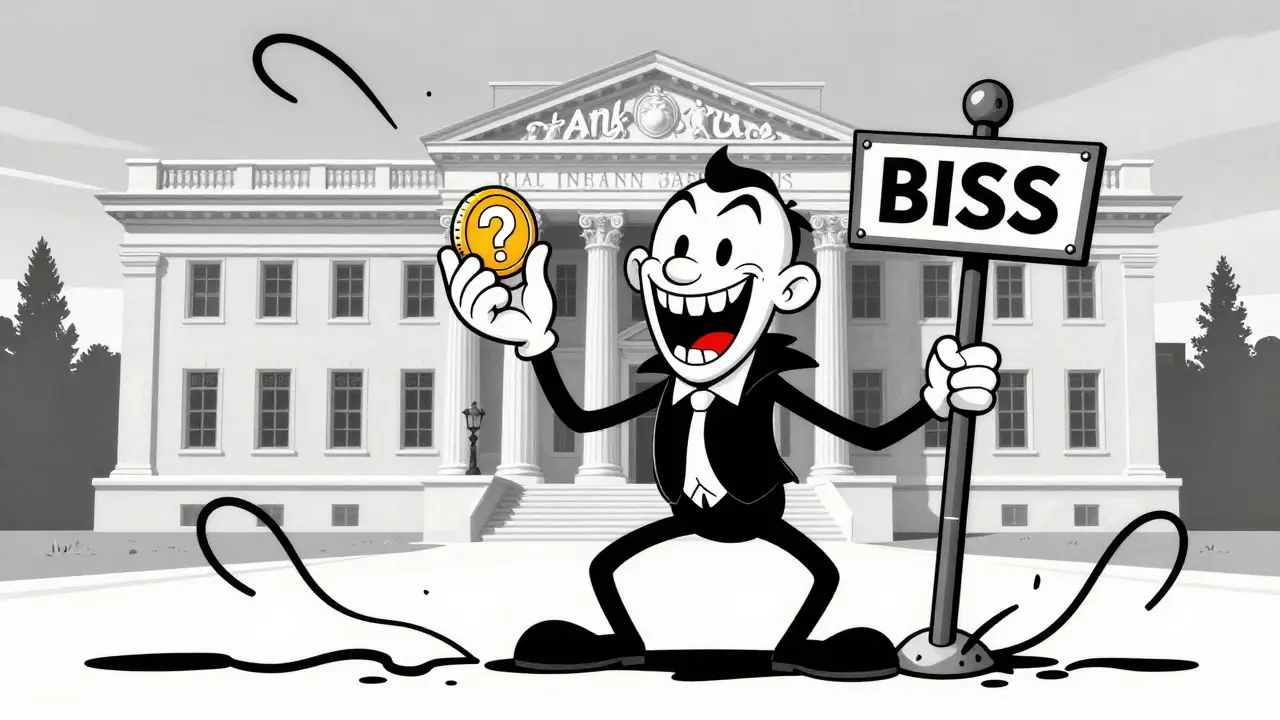
You might have seen an ad or a forum post claiming that BISS crypto exchange is the next big thing in digital assets. Maybe it promises high returns, zero fees, or exclusive access to new tokens. It sounds too good to be true because it likely is. After digging through regulatory databases, financial news archives, and user reports, there is a critical fact you need to know right now: **There is no legitimate, regulated cryptocurrency exchange named BISS.**
This isn't just a case of a small platform flying under the radar. The name "BISS" appears to be a confusion or a deliberate mimicry of the Bank for International Settlements (BIS), which is a prestigious international financial institution owned by central banks, established in 1930 in Basel, Switzerland. The BIS does not operate a trading platform. It does not sell crypto. It does not offer investment accounts. If you are looking at a website called "BISS" asking for your money, you are likely facing a sophisticated phishing scheme or a outright fraud operation.
The Dangerous Confusion: BISS vs. BIS
Why does this mix-up happen? Fraudsters often use names that sound authoritative to lower your guard. The Bank for International Settlements (BIS) is the world's most important bank for central bankers. It publishes serious research on financial stability, including how to regulate cryptocurrencies to prevent money laundering and systemic risk. Because the BIS is respected, scammers borrow its phonetic similarity-changing "BIS" to "BISS"-to create a fake sense of legitimacy.
The real BIS has explicitly warned about these risks. In their November 2022 bulletin, they highlighted how unregulated entities exploit the complexity of blockchain technology. They noted that once funds move to unhosted wallets, conventional intervention becomes nearly impossible. This means if you send Bitcoin or Ethereum to a fake "BISS" exchange, getting it back is statistically unlikely. The BIS emphasizes that anonymity in decentralized settings can increase incentives for malicious behavior, a stark contrast to traditional finance where identities are verified.
How to Spot a Fake Crypto Exchange
If you aren't sure whether the platform you're looking at is real, run it through this mental checklist. Legitimate exchanges like Coinbase, Binance, or Kraken have transparent operations. Fake ones hide behind vagueness.
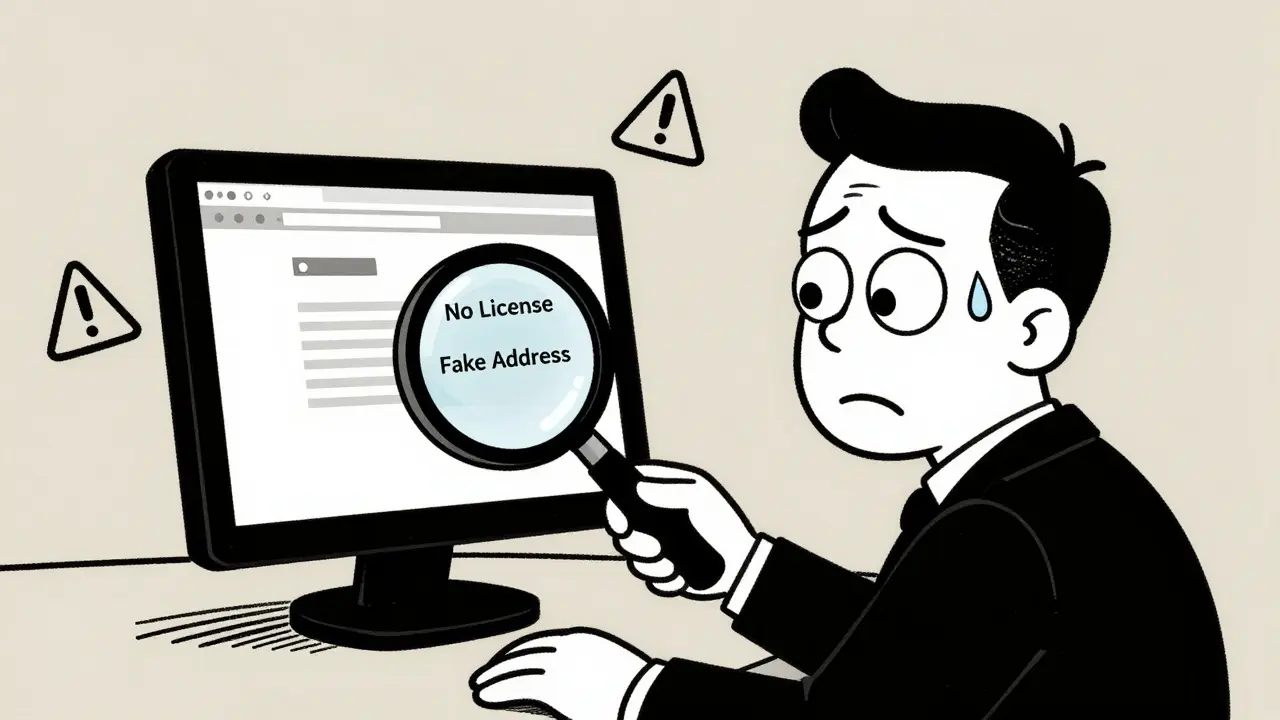
- Check Regulatory Licenses: Does the site list a license number from a known body like the FCA (UK), FinCEN (US), or ASIC (Australia)? You can verify these numbers on the regulator's official website. If the license doesn't exist or belongs to a different company, walk away.
- Look for Physical Addresses: Real companies have offices. Fake sites often list PO boxes or generic business centers. Use Google Street View to check if the office actually exists.
- Analyze the Promises: No legitimate exchange guarantees profits. If you see phrases like "guaranteed daily returns" or "risk-free trading," it is a Ponzi scheme.
- Review Independent Sources: Search for reviews on Trustpilot or Reddit. Be careful of fake positive reviews; look for detailed complaints about withdrawal issues.
Data from Arkose Labs shows that 78% of security incidents for users occur due to compromised API keys or poor password hygiene, but the biggest risk remains interacting with fraudulent platforms entirely. When a platform is fake, your security settings don't matter because the infrastructure itself is designed to steal your funds.
What the Experts Say About Crypto Risks
Agustín Carstens, the General Manager of the BIS, stated clearly in 2022 that "crypto is a solution in search of a problem." He emphasized that the lack of oversight in many crypto ecosystems creates vulnerabilities. The BIS research points out that centralized exchanges dominate volume, with the top 10 exchanges handling 95% of trading. This concentration means that reputable players are well-known. Obscure names like "BISS" fall outside this trusted ecosystem.
The BIS also identified structural flaws in the industry, such as validator centralization and the dominance of a few key players. Their March 2023 report, "The crypto ecosystem: key elements and risks," analyzed the aftermath of the FTX collapse. FTX failed because it lacked proper segregation of customer funds-a basic banking standard. A fake exchange like BISS won't even pretend to have these safeguards. They will simply disappear with your deposit.
Safe Alternatives: Where to Actually Trade
If you want to trade cryptocurrency, stick to platforms that are publicly traded, heavily regulated, or have a long track record of transparency. Here is a comparison of what makes a platform safe versus risky.
| Feature | Legitimate Exchange (e.g., Coinbase, Kraken) | Fake/Risky Platform (e.g., "BISS") |
|---|---|---|
| Regulation | Licensed in multiple jurisdictions (US, EU, UK) | No license or fake offshore license |
| Proof of Reserves | Regular third-party audits showing 1:1 backing | No audits or fabricated documents |
| KYC Process | Strict identity verification required | Either overly lax (to attract victims) or impossibly strict (to delay withdrawals) |
| Customer Support | Responsive, verifiable contact channels | Only chat bots or Telegram/Discord links |
| Withdrawal Policy | Clear fees, instant or same-day processing | Hidden fees, "tax" demands before release, or indefinite delays |
Platforms like Gemini and Coinbase implement hardware security modules (HSMs) for API key storage, reducing breach risks significantly. They keep less than 5% of assets in hot wallets, with the rest in cold storage. These are technical details that fake exchanges cannot replicate because they don't hold real assets-they only display fake balances on a screen.
Protecting Yourself: Security Best Practices
Even when using a legitimate exchange, you must take responsibility for your account security. The BIS and other financial bodies recommend several steps to mitigate risk.
- Use Unique Passwords: Reusing passwords across platforms is the leading cause of account compromise. Use a password manager to generate complex, unique strings for every service.
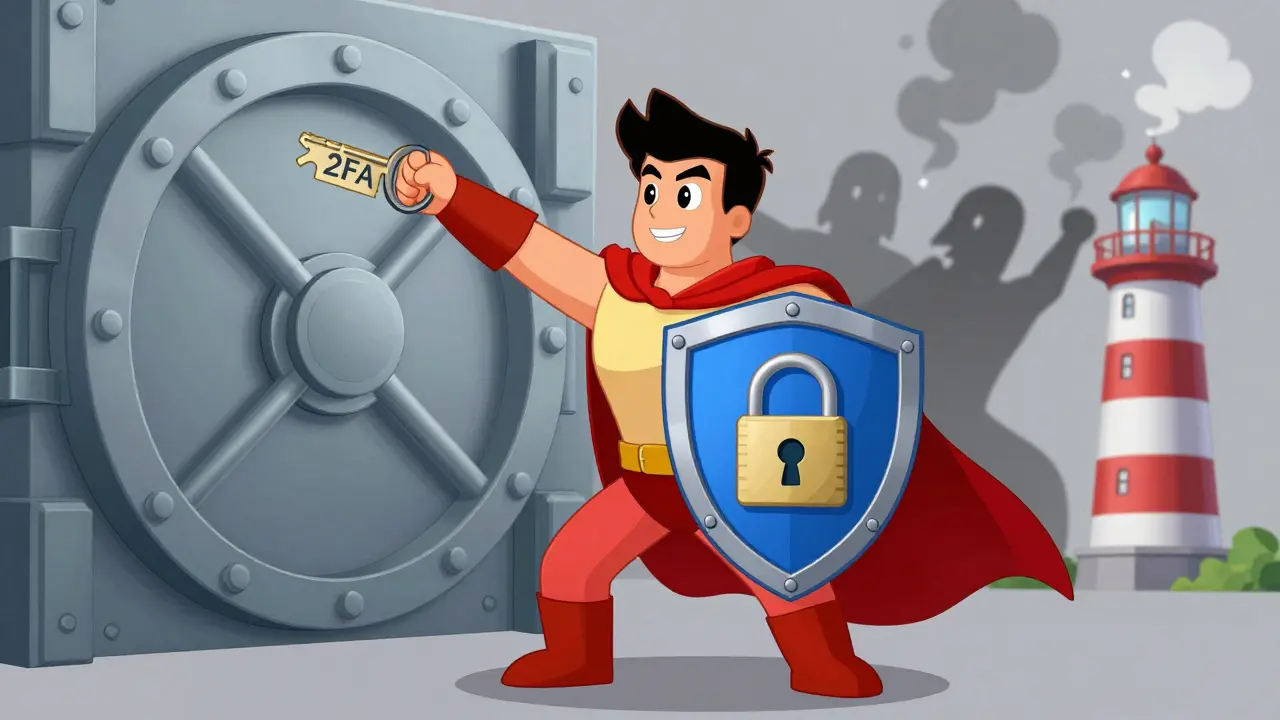
- Enable Two-Factor Authentication (2FA): Never rely on SMS alone. Use an authenticator app like Google Authenticator or a hardware key like YubiKey. SMS can be intercepted via SIM swapping.
- Whitelist Withdrawal Addresses: Most major exchanges allow you to whitelist specific wallet addresses. This ensures that even if your account is hacked, funds can only go to a wallet you control.
- Verify URLs Carefully: Phishing sites often use slight misspellings (e.g., coinbase.com vs. coinbaze.com). Bookmark your exchange's homepage and always navigate from there.
- Keep Software Updated: Ensure your device has the latest security patches. Malware can capture keystrokes or screen data, exposing your login credentials.
Gemini’s security guide notes that exchanges implementing multi-party computation (MPC) wallets reduce reliance on single points of failure. While you may not control the exchange's MPC setup, you can control your own endpoint security. Tools like SentinelOne or CrowdStrike are used by professionals, but for individuals, keeping your OS updated and avoiding suspicious downloads is crucial.
Regulatory Landscape in 2026
The regulatory environment for crypto has tightened significantly since the early days of the industry. As of 2026, the European Union’s MiCA framework is fully enforced, requiring all crypto asset service providers to maintain proof of reserves and adhere to strict data sanitization policies. In the United States, the GENIUS Act has introduced comprehensive federal standards for stablecoins, mandating 100% high-quality liquid asset backing.
These regulations make it harder for fake exchanges to operate openly. However, scammers adapt. They may claim to be "preparing for regulation" to explain why they haven't launched yet, or they may ask for upfront "compliance fees." Remember: legitimate exchanges charge transaction fees, not compliance fees. If a platform asks you to pay to withdraw your own money, it is a scam.
The Financial Stability Board implemented an enhanced monitoring framework in 2023, requiring large exchanges to submit monthly risk reports. This level of scrutiny does not apply to underground or fraudulent platforms. By sticking to regulated entities, you benefit from this protective net.
What to Do If You’ve Already Sent Money
If you have deposited funds into a platform claiming to be BISS or any other unrecognized exchange, act immediately.
- Contact Your Bank or Card Issuer: If you paid via credit card or bank transfer, request a chargeback. Explain that the merchant was fraudulent. Time is critical here.
- Report to Authorities: File a report with your local cybercrime unit. In the US, this is the FBI’s Internet Crime Complaint Center (IC3). In the EU, report to your national consumer protection agency.
- Notify the Exchange: If you sent crypto directly, notify the exchange you used to buy the initial coins. While they usually can’t reverse blockchain transactions, they may freeze the recipient address if it’s flagged as malicious.
- Change Passwords: If you created an account on the fake site, change passwords for any other accounts where you reused those credentials.
Recovery is difficult, but reporting helps law enforcement build cases against these operations. The BIS notes that interconnectedness between traditional finance and crypto means that tracing illicit flows is becoming more feasible with tools like Chainalysis Hexagate, which uses machine learning to detect abnormal patterns.
Conclusion: Stay Skeptical, Stay Safe
The cryptocurrency market offers incredible opportunities, but it also attracts predators who prey on newcomers. The name "BISS crypto exchange" is a red flag. It leverages the authority of the Bank for International Settlements to deceive investors. There is no legitimate product by this name. By understanding the difference between the real BIS and these fakes, you protect yourself from significant financial loss.
Stick to well-known, regulated platforms. Verify licenses. Enable strong security measures. The goal of institutions like the BIS is to foster a stable financial system. Supporting that stability starts with you choosing trustworthy partners. Don’t let a cleverly named scam undermine your financial future.
Is BISS crypto exchange a scam?
Yes, it is highly likely a scam. There is no legitimate, regulated cryptocurrency exchange named BISS. The name appears to be a fraudulent attempt to mimic the Bank for International Settlements (BIS), a respected central bank organization that does not offer crypto trading services.
What is the difference between BIS and BISS?
The BIS (Bank for International Settlements) is a real, global financial institution founded in 1930 that serves central banks. It does not trade crypto. "BISS" is not a recognized financial entity and is likely a fake name used by scammers to confuse users.
How can I verify if a crypto exchange is legitimate?
Check for regulatory licenses from authorities like the SEC, FCA, or FinCEN. Look for independent audits and proof of reserves. Read reviews on trusted platforms like Trustpilot. Legitimate exchanges have physical addresses and transparent team information.
Can I get my money back if I sent it to BISS?
It is difficult but not impossible. Contact your bank or credit card provider immediately to request a chargeback. Report the incident to cybercrime authorities. If you sent cryptocurrency directly, recovery is much harder, but reporting the address may help freeze funds if detected by blockchain analysis firms.
What are some safe alternatives to unknown exchanges?
Stick to major, regulated exchanges like Coinbase, Binance, Kraken, or Gemini. These platforms are subject to strict financial regulations, undergo regular audits, and have established reputations for security and customer support.