
Walking into a Tehran coffee shop and hearing people discuss Bitcoin feels like a scene from a movie that shouldn't exist. Yet, despite heavy international pressure and strict local laws, Iran has one of the most active cryptocurrency markets in the Middle East. But if you are asking is crypto regulated in Iran, the answer is no longer a simple yes or no. It is a messy, shifting landscape where the state tries to control every transaction while citizens use workarounds to keep their savings safe.
The situation changed dramatically in late 2024 and early 2025. For years, Iranians traded crypto in a gray zone. Then, the Central Bank of Iran (CBI) stepped in with a heavy hand. They blocked direct payment channels, imposed strict limits on stablecoins, and even banned advertising. Today, the market operates under a complex set of rules that prioritize state surveillance over user freedom. Understanding these rules is critical for anyone looking to navigate this unique financial environment.
The Current Legal Status: Control, Not Prohibition
It is a common misconception that Iran has banned cryptocurrency entirely. In reality, the government prefers control over prohibition. Under President Masoud Pezeshkian's directive in January 2025, the CBI became the sole authority for licensing and overseeing all digital asset activities. This means that technically, crypto is legal, but only if you play by the state's specific game.
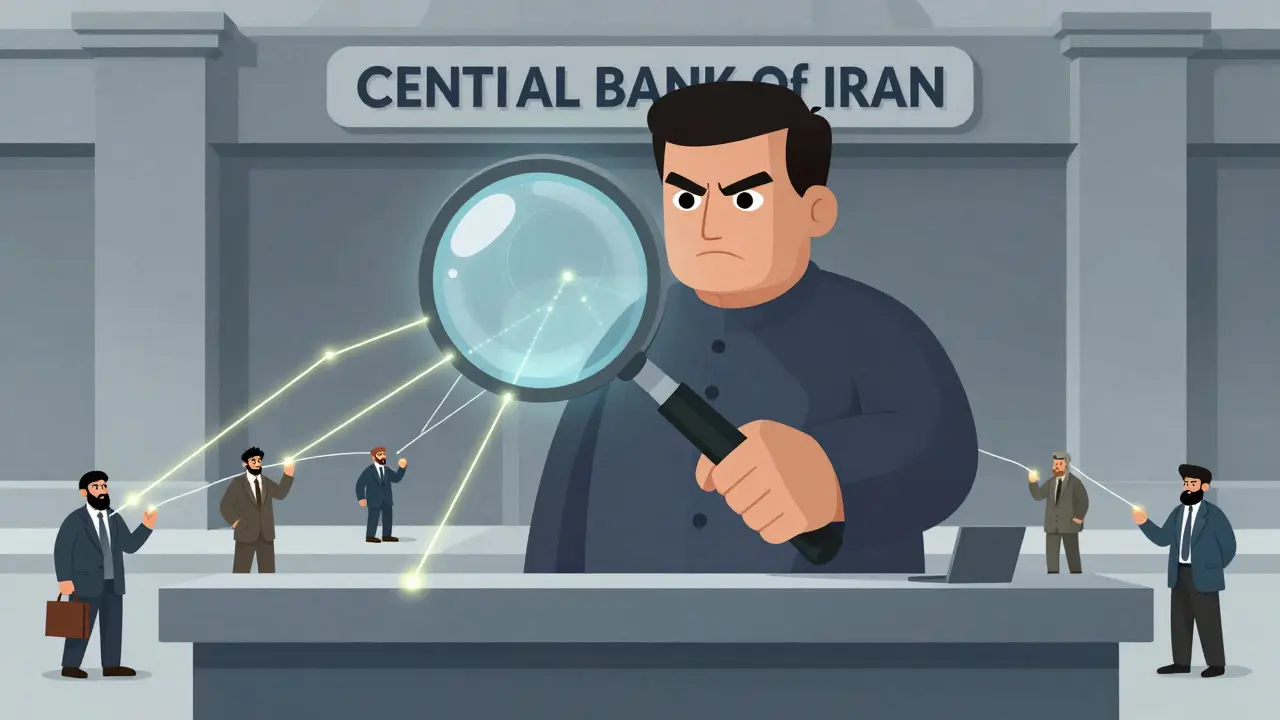
The core of this regulation is the requirement for full transparency. All participants, whether they are individuals or large businesses, must obtain licenses from the Central Bank. If you want to trade, you generally need to go through government-approved platforms. These platforms are required to connect to a central API, giving the state direct access to your transaction data. As TRM Labs noted, this creates "unprecedented state surveillance capabilities." It is not just about tracking money; it is about knowing exactly who holds what and when they move it.
This approach differs significantly from countries like the US or EU, where regulation often focuses on consumer protection and anti-money laundering (AML) standards without demanding total data visibility. In Iran, the regulatory goal is financial sovereignty. By controlling the flow of digital assets, the government aims to reduce reliance on the US dollar and bypass international sanctions that have long choked the traditional banking sector.
Key Restrictions Every User Must Know
If you are an individual looking to hold or trade crypto in Iran, several specific restrictions apply as of mid-2026. These rules have tightened significantly since 2024, leaving little room for error.
- Stablecoin Caps: In September 2025, the CBI imposed hard limits on stablecoins like Tether (USDT). Individuals can now buy a maximum of $5,000 worth per year and hold a balance of no more than $10,000. If you exceed this, you risk having your accounts frozen.
- Mandatory Licensing: Running an exchange, wallet service, or mining operation requires a license from the CBI. Unlicensed operations are considered illegal and subject to seizure.
- Advertising Ban: Since February 2025, all public advertising of cryptocurrencies is banned. You will not see crypto ads on TV or billboards. This effectively silences public discourse and makes it harder for new users to find official information.
- Taxation: Starting in August 2025, cryptocurrency trading is subject to capital gains tax. This was part of a broader law targeting speculation in gold, real estate, and forex. You now have to report your profits to the Ministry of Economic Affairs and Finance.
These rules create a high barrier to entry. For example, the $10,000 stablecoin limit makes it difficult for families to hedge against inflation, which is a primary reason many Iranians turn to crypto in the first place. When the rial drops in value, holding a capped amount of stablecoins offers limited protection.
The Mining Paradox: High Energy Costs and Underground Operations
Bitcoin mining used to be a booming industry in Iran due to cheap electricity. However, the regulatory shift has turned this into a risky business. Since 2019, miners have been required to sell their mined coins directly to the Central Bank. This policy, combined with rising energy tariffs for licensed operators, has made legitimate mining financially unviable for many.
As a result, much of the mining activity has gone underground. Miners operate without licenses, using power sources that are not officially tracked. This leads to frequent disputes between local communities and mining farms, especially during rolling power outages. The government views unauthorized mining as a threat to national energy stability, leading to aggressive enforcement actions where rigs are seized and destroyed.
For those still considering mining, the math is tough. You face high operational costs, the risk of equipment seizure, and the obligation to sell at rates determined by the state. Unless you have significant political connections or access to subsidized energy, the profit margins are slim compared to the risks.
How Iranians Are Adapting: The Rise of DAI and DeFi
Regulation often drives innovation, and Iran is no exception. When the CBI tightened controls on Tether (USDT), users quickly adapted. A major turning point came in July 2025 when Tether froze 42 Iranian-linked addresses, cutting off access to funds for thousands of users. This event pushed many traders away from centralized stablecoins controlled by foreign entities.
In response, there has been a massive shift toward DAI, a decentralized stablecoin built on the Polygon network. Unlike USDT, DAI is not issued by a single company that can freeze your account based on geopolitical decisions. According to TRM Labs, DAI's market share among Iranian stablecoin users is projected to grow from 35% in Q3 2025 to 65% by Q4 2026. This trend highlights a key theme: Iranian users prefer assets that offer censorship resistance, even if they are slightly less liquid or more complex to manage.
Users are also increasingly relying on Virtual Private Networks (VPNs) to access foreign exchanges. While domestic exchanges like Nobitex remain popular, Chainalysis estimates that about 60% of trading volume still occurs through unofficial channels. This bifurcated market allows users to bypass local caps and fees, though it comes with its own risks, such as potential scams or lack of recourse if something goes wrong.
| Feature | Iran (2026) | Typical Global Standard (e.g., US/EU) |
|---|---|---|
| Primary Authority | Central Bank of Iran (CBI) | Multiple agencies (SEC, CFTC, ESMA, etc.) |
| Data Privacy | Full state access to all transaction records | KYC/AML requirements with data protection laws |
| Stablecoin Limits | $10,000 max holding / $5,000 annual purchase | Generally no specific holding caps for retail |
| Mining Policy | Licensed only; mandatory sale to CBI | Legal; free market sales allowed |
| Public Advertising | Banned | Allowed with disclosures |
The Role of International Sanctions
You cannot understand Iran's crypto regulations without looking at the geopolitical context. International sanctions, particularly from the US and UN, have historically driven Iranians to crypto. When the "snapback mechanism" reinstated UN sanctions in September 2025, it immediately triggered tighter domestic controls. The logic is straightforward: if the outside world cuts off Iran's banks, the state wants to ensure that capital doesn't leak out through untracked digital channels.
This creates a paradox. Crypto was originally adopted to bypass sanctions, but now the government regulates it to prevent further economic leakage. Economist Mohammad Sadegh Alhosseini warned that if Iranian wallets become too identifiable through these strict frameworks, Iran could face even harsher secondary sanctions. This suggests that the current model might be a temporary measure rather than a long-term solution.
Conversely, some analysts argue that formalizing the market helps Iran comply with global anti-money laundering standards. By bringing transactions onto the books, the government hopes to signal good faith to international partners. Whether this strategy works remains to be seen, but it shows that crypto policy in Iran is deeply tied to its diplomatic posture.

What This Means for Investors and Users
So, what should you do if you are operating in or investing in the Iranian crypto market? First, accept that volatility is part of the deal. Rules can change overnight. The sudden shift from USDT to DAI in 2025 caught many users off guard, causing temporary liquidity issues. Always keep a portion of your portfolio in assets that are harder for any single entity to freeze, such as decentralized tokens or hardware-wallet-held Bitcoin.
Second, stay informed. Follow local news outlets like Tasnim News Agency, but cross-reference with independent blockchain analytics firms like TRM Labs or Chainalysis. Government announcements may downplay risks or exaggerate compliance, so third-party data provides a more neutral view.
Finally, consider the tax implications. With the new capital gains tax, keeping detailed records of every trade is essential. The Ministry of Economic Affairs plans to integrate crypto tax collection into existing financial reporting systems by Q2 2026. Ignoring this could lead to penalties later on.
Frequently Asked Questions
Is Bitcoin legal to hold in Iran?
Yes, holding Bitcoin is not explicitly banned for individuals, but trading it usually requires using licensed platforms or private channels. The main restriction is on how you convert it to rials, which must go through approved gateways.
Can I mine Bitcoin in Iran without a license?
Technically, no. Since 2019, miners are required to sell their output to the Central Bank. Unauthorized mining is risky because the government regularly seizes unlicensed rigs, especially during power shortages.
Why did Tether freeze Iranian accounts?
In July 2025, Tether froze 42 addresses linked to Iran, partly due to concerns about sanctioned entities using the platform. This move accelerated the shift toward decentralized alternatives like DAI among Iranian users.
Do I need to pay taxes on crypto profits in Iran?
Yes. Since August 2025, cryptocurrency trading is subject to capital gains tax under the Law on Taxation of Speculation and Profiteering. You should report your gains alongside other investments like gold and real estate.
What is the best stablecoin to use in Iran right now?
DAI is currently gaining popularity due to its decentralized nature and lower risk of being frozen by a single issuer. However, USDT remains widely used for liquidity, despite the recent freezes and regulatory caps.