Have you ever stared at a crypto chart wondering if that tiny green candle is the start of something big or just market noise? If you've been eyeing Knight War: The Holy Trio, you might have seen whispers about a CoinMarketCap Token Campaign airdrop. But here's the twist: as of late 2026, official records show zero active listings for this specific campaign on major aggregators. So, what's really going on with the KWS token? Is it a ghost project, or are we missing the real value behind the hype?
The Reality Check: Where Is the Airdrop?
Let's cut through the noise. You clicked this article because you wanted to know how to grab free tokens. Most crypto projects love the word "airdrop" because it drives traffic and creates FOMO (Fear Of Missing Out). However, when we look at the current data for Knight War: The Holy Trio, the picture isn't quite what the marketing tweets promised.
Public blockchain explorers and CoinMarketCap's own tracking tools currently list 0 active airdrops and 0 upcoming campaigns specifically tied to the KWS ticker under the "Token Campaign" banner. This doesn't mean the community is dead; it often means the campaign has either concluded without widespread publicity, was exclusive to early Discord members, or hasn't officially launched yet despite rumors. If you're waiting for a public claim button to appear on your dashboard, you might be waiting in vain unless you check their private channels.
Understanding the KWS Token Utility
Before you chase an airdrop that might not exist, you need to understand what you'd actually get. The KWS token isn't just a speculative asset; it's the fuel for the Knight War: The Holy Trio gaming ecosystem. In play-to-earn (P2E) models, utility is king. Without a reason to hold the token, the price collapses once the initial hype dies down.
So, what can you do with KWS right now? The core mechanics revolve around three pillars:
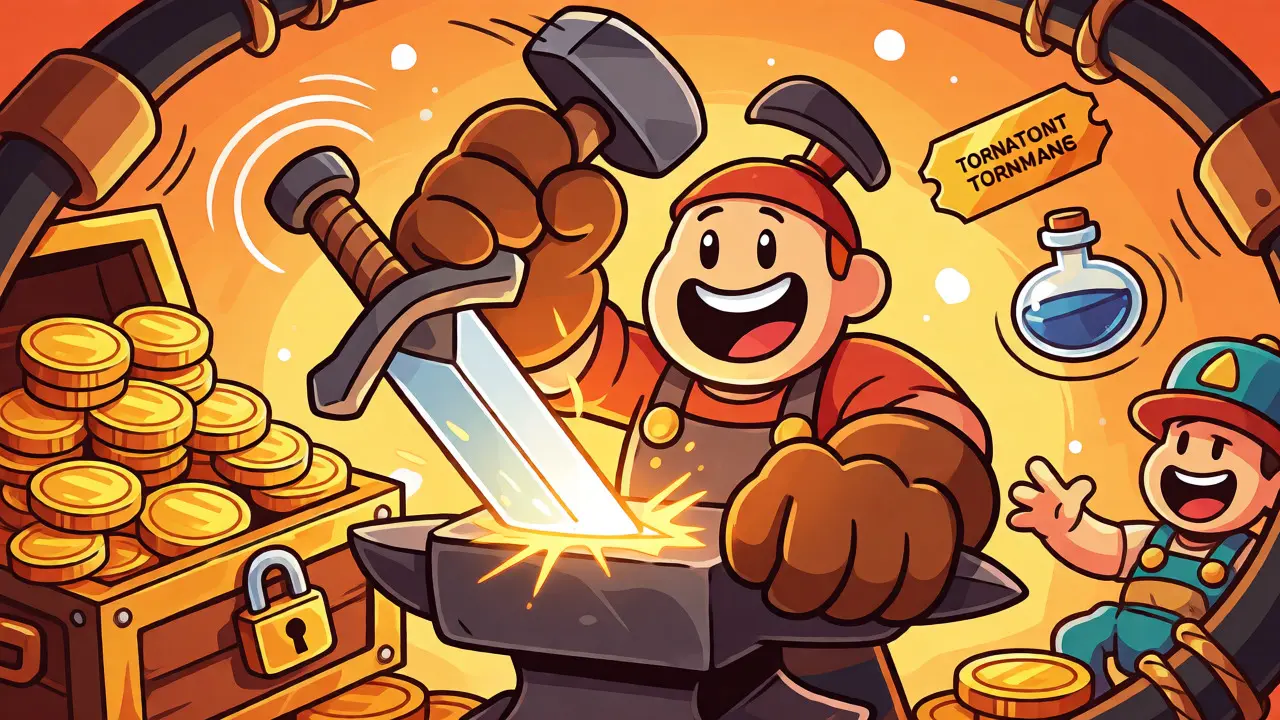
- NFT Weapon Crafting: Players use KWS to mint unique weapons. These aren't just cosmetic skins; they impact gameplay stats.
- Staking Rewards: Holders can lock up their tokens to earn passive income, usually paid out in more KWS or governance rights.
- In-Game Transactions: Buying potions, repairs, or entry fees for tournaments requires KWS.
This utility structure attempts to create demand beyond speculation. If players want better gear, they buy KWS. If they want passive income, they stake KWS. It’s a circular economy, which is standard for modern blockchain games like Axie Infinity or Gods Unchained, though KWS operates on a much smaller scale.
Price Performance and Market Volatility
Let's talk numbers, because they tell a story of their own. As of November 11, 2026, the KWS token trades at approximately $0.000091 USD. That’s less than one-tenth of a cent. For context, that’s why many people call these "micro-cap" gems. You can buy thousands of tokens for a few dollars, which makes them attractive for small investors hoping for a 100x return.
But don't let the low price fool you into thinking it's stable. The volatility is intense:
| Timeframe | Change (%) | Status |
|---|---|---|
| 24 Hours | +0.14% | Stable/Slight Gain |
| 30 Days | -3.7% | Mild Decline |
| 60 Days | -1.62% | Sideways Trend |
| 90 Days | -7.89% | Bearish Pressure |
Notice the trend? While daily movements are negligible, the longer-term trajectory is downward. This is typical for small-cap gaming tokens during broader market corrections. Investors are cautious, and liquidity is thin. Speaking of liquidity, the reported 24-hour trading volume is near $0 USD in some aggregators, which suggests that most trading happens off-exchange or on very niche decentralized exchanges (DEXs) that haven't fully indexed the pair yet.
Why CoinMarketCap Campaigns Matter (And Why They’re Hard to Track)
CoinMarketCap (CMC) runs various promotional programs where projects pay to feature their tokens or offer rewards to users who complete tasks. These are often called "Token Campaigns." They are legitimate ways to boost visibility. However, not every partnership results in a permanent listing on the "Airdrops" page.
If Knight War: The Holy Trio did run a CMC campaign, it likely involved:
- Task Completion: Following social media accounts, joining Telegram groups, or verifying email addresses.
- Snapshot Dates: Holding a certain amount of KWS at a specific block height.
- Exclusive Distribution: Tokens sent directly to wallets rather than claimed via a portal.
The problem with these smaller campaigns is transparency. Large projects like Polygon or Solana announce airdrops months in advance. Micro-caps often operate in stealth mode. If you missed the announcement window, the tokens might already be distributed, leaving new entrants confused by the lack of visible activity.

Risks and Red Flags for Small-Cap Gaming Tokens
Investing in a token priced at $0.000091 comes with significant risks. Here is what you should watch out for before putting any money into KWS:
- Liquidity Risk: With minimal trading volume, you might find it hard to sell large amounts of KWS without crashing the price further. Always check the order book depth.
- Project Viability: Is the game actually being played? Look for active player counts on platforms like DappRadar. If the game is empty, the token has no intrinsic value.
- Team Transparency: Are the developers known entities in the blockchain space, or are they anonymous? Anonymous teams carry higher risk of rug pulls.
- Vesting Schedules: Do insiders have locked tokens? If team tokens unlock soon, expect selling pressure.
Remember, past performance does not guarantee future results. The -7.89% drop over 90 days shows that sellers are currently dominant. Unless the project announces a major update-like a new game release or a partnership with a larger exchange-the price may continue to drift sideways or down.
How to Verify Future Airdrops Yourself
Don't rely solely on news articles or Twitter influencers. Here is a practical checklist to verify if a KWS airdrop is real:
- Check Official Channels: Visit the official Knight War: The Holy Trio website and their verified Twitter/X account. Look for pinned posts about campaigns.
- Inspect Smart Contracts: Use Etherscan or BscScan (depending on the chain) to see if recent transactions involve distribution contracts.
- Monitor CoinMarketCap Listings: Go to the "Airdrops" section and filter by "Gaming" and "Upcoming." If it’s not there, it’s likely not active.
- Join Community Calls: Developers often announce surprise drops during AMAs (Ask Me Anything sessions) on Discord or Telegram.
By doing your own due diligence, you avoid falling for fake airdrop scams that ask you to connect your wallet to a suspicious site promising "free KWS."
Is the Knight War KWS airdrop still active?
As of November 2026, there are no publicly listed active airdrops for KWS on major aggregators like CoinMarketCap. Any ongoing campaigns are likely exclusive to internal community channels or have already concluded.
What is the current price of the KWS token?
The KWS token trades at approximately $0.000091 USD. Please note that prices fluctuate rapidly, and trading volume is extremely low, which can affect the actual execution price.
What is the utility of the KWS token?
KWS is used within the Knight War: The Holy Trio ecosystem for crafting NFT weapons, staking to earn rewards, and facilitating in-game transactions such as buying items or entering tournaments.
Why is the trading volume for KWS so low?
Low trading volume indicates limited interest from traders and potential buyers. It also suggests that the token may not be listed on major centralized exchanges, forcing users to trade on less liquid decentralized platforms.
Should I invest in KWS expecting a price surge?
Investing in micro-cap tokens like KWS is high-risk. The price has declined over the last 90 days, and without significant development updates or increased user adoption, a sudden surge is uncertain. Only invest what you can afford to lose.