
Imagine a world where your doctor in Denver can instantly see your X-rays from a clinic in New York without emailing PDFs or waiting days for fax machines to work. That is the promise of medical records on blockchain, a system that uses distributed ledger technology to create secure, interoperable, and patient-controlled health information networks. Instead of storing massive files directly on the chain, these systems typically store encrypted data pointers or hashes, ensuring that your history remains immutable while keeping the actual sensitive details off-chain. This approach emerged around 2016-2017 as blockchain matured beyond crypto coins, aiming to solve the fragmentation that plagues modern healthcare.
The Core Problem: Fragmented Health Data
Right now, getting your complete medical history is a headache. In Boston alone, the healthcare system relies on 26 different electronic medical records (EMR) systems, each speaking its own digital language. Critical info gets scattered across facilities, often becoming inaccessible during emergencies. This fragmentation isn't just annoying; it costs money and potentially lives. Approximately 25% of U.S. healthcare spending-hundreds of billions annually-is wasted due to inefficiencies, duplicate tests, and lack of clear benefits. Blockchain addresses this by creating a unified layer where providers can verify record authenticity and access shared data securely, regardless of which EMR they use internally.
How It Actually Works
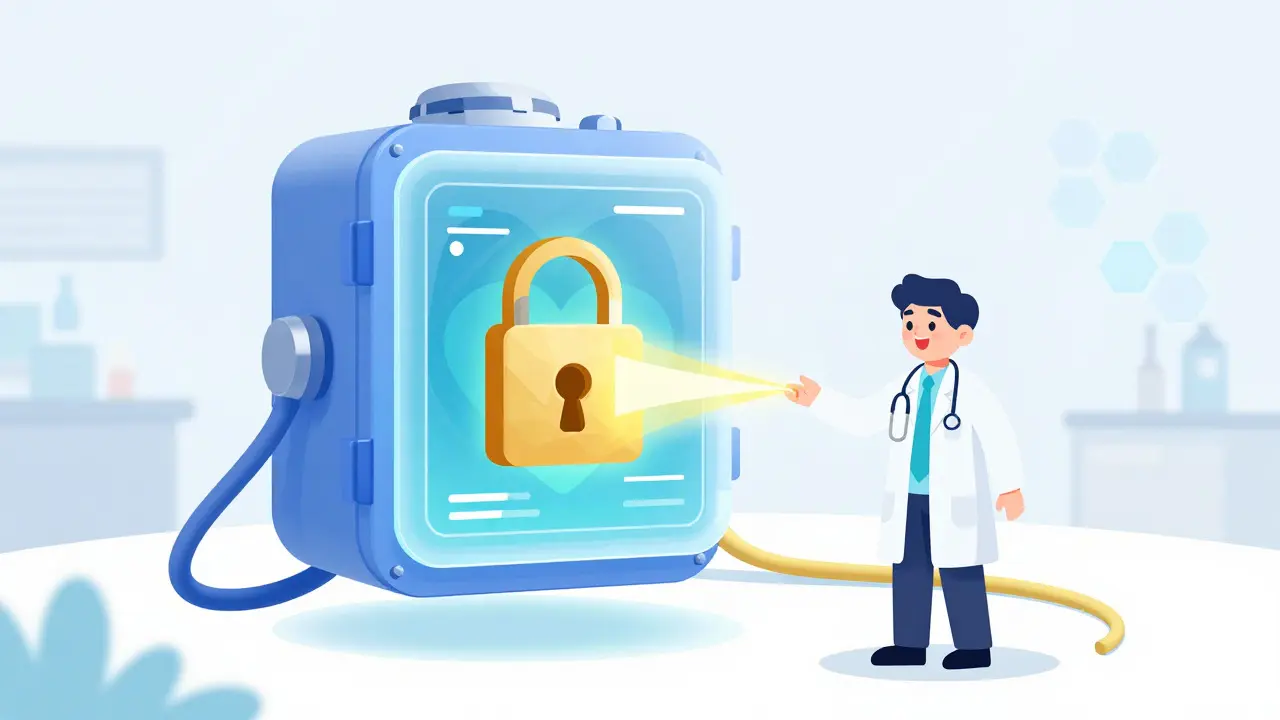
You might think blockchain means putting your entire MRI scan on a public ledger. Not quite. Most serious implementations, like those based on the Ethereum protocol, use smart contracts to manage access rights. Here’s the typical flow:
- Data Encryption: Your raw medical data is encrypted using strong cryptographic standards and stored in a secure cloud or local server.
- Hash Generation: A unique digital fingerprint (hash) of that data is generated.
- Ledger Entry: The hash, along with metadata about who has access and when the record was created, is written to the blockchain.
- Smart Contract Execution: When a doctor requests access, a smart contract verifies their credentials and your consent before releasing the decryption key.
This setup ensures that if someone tries to tamper with your old blood test results, the hash won’t match, flagging the change instantly. Systems like MeDShare even use attached keys to monitor data behavior, detecting potential privacy invasions in real-time.
Key Benefits for Patients and Providers
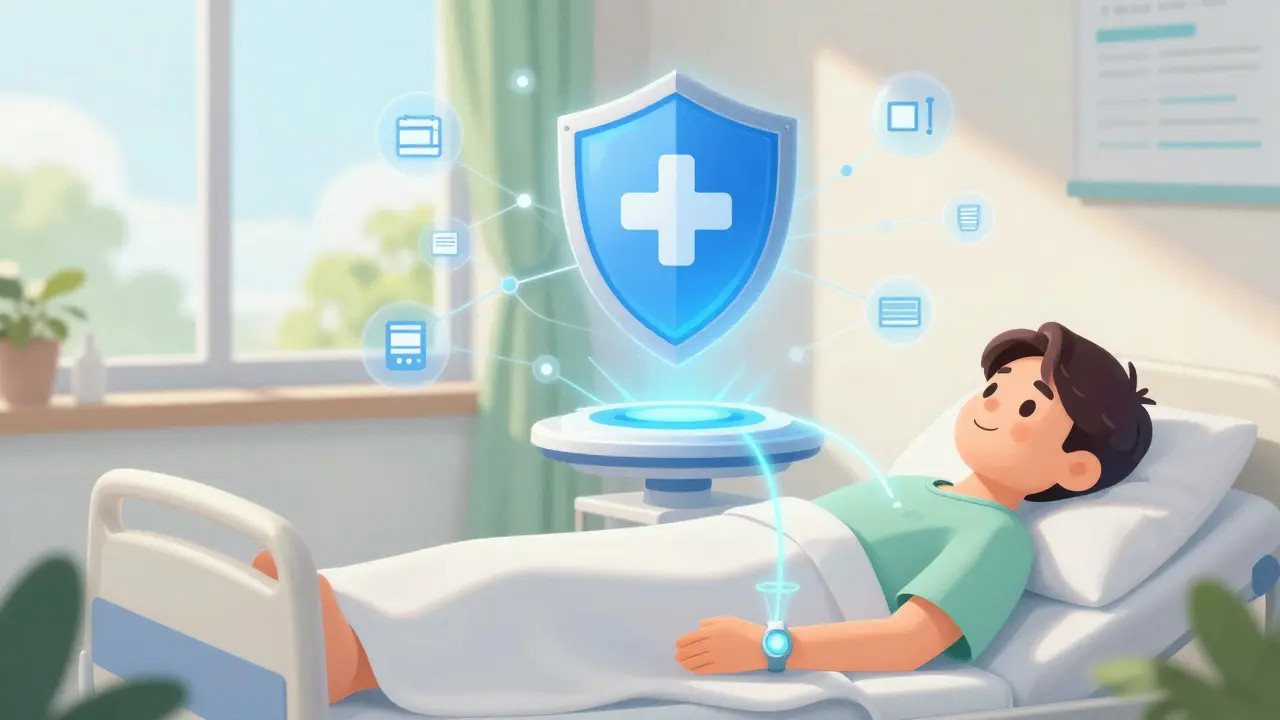
The advantages go beyond just "cool tech." For patients, the biggest win is control. You decide who sees what and for how long. No more guessing if that specialist actually received your referral notes. For providers, it cuts down on administrative bloat. Manual document verification wastes significant time; blockchain automates authentication, making credential checks nearly instant. Organizations like Avaneer, backed by Aetna and Cleveland Clinic, are already using public ledgers to streamline claims processing and provider directories. Furthermore, integration with the Internet of Medical Things (IoMT) allows smart sensors to feed encrypted data directly into the network, reducing human error in data entry.
| Feature | Traditional EHR | Blockchain-Based System |
|---|---|---|
| Data Ownership | Hospital/Clinic | Patient (via encryption keys) |
| Interoperability | Low (requires HL7/FHIR mapping) | High (standardized ledger access) |
| Tamper Resistance | Moderate (audit logs can be altered) | High (cryptographic immutability) |
| Access Control | Centralized database permissions | Decentralized smart contracts |
| Emergency Access | Often delayed or missing | Instant via authorized emergency protocols |
The Hard Challenges: Why It's Not Everywhere Yet
If it’s so great, why isn't every hospital using it? Because the hurdles are significant. First, there’s the issue of scale. Blockchains aren't infinitely fast. Storing high-frequency data from IoMT devices requires careful architecture to avoid bottlenecks. Second, regulatory compliance is tricky. While HIPAA doesn't ban blockchain, it demands strict controls over who accesses Protected Health Information (PHI). If a private key is lost, does the data become unrecoverable? If it’s stolen, is the data compromised? These questions require robust multi-signature setups and recovery mechanisms. Then there’s the human factor. Staff need training. Implementing basic systems takes 6-12 months, while complex integrations involving advanced authentication can take up to 24 months. Doctors are busy; adding another interface they have to learn slows things down. Finally, cost. While blockchain can reduce long-term waste, the upfront infrastructure costs are high. Many organizations partner with specialized firms rather than building in-house, which adds vendor dependency.
Real-World Examples and Market Context
The market is growing fast. The global healthcare blockchain market is projected to reach $55.8 billion by 2027, growing at a 48.1% compound annual rate. But adoption is still early. ProCredEx uses distributed ledgers specifically for healthcare credentials, making doctor certifications immutable and easily verifiable. Patientory offers end-to-end encryption for sharing data between patients and clinicians. These examples show that the tech works, but it’s mostly in niche applications like credentialing and insurance claims rather than full-scale clinical decision support. John Halamka, CIO at Beth Israel Deaconess Medical Center, advocates for this shift, envisioning incorruptible databases maintained by computer networks. His view aligns with a broader trend: using blockchain not to replace EMRs, but to sit on top of them as a trust layer. This hybrid approach is likely the path forward, allowing hospitals to keep their existing workflows while gaining the security and transparency benefits of a decentralized ledger.
What Comes Next?
Expect more standardization efforts through consortiums and government pilot programs. Artificial intelligence is also being integrated to analyze data anomalies automatically. However, mainstream adoption within 5-7 years depends on solving scalability issues and achieving widespread provider buy-in. Until then, blockchain in healthcare will remain a powerful tool for specific problems-like verifying credentials or securing emergency data exchange-rather than a universal replacement for current systems. For patients, the immediate benefit is peace of mind: knowing your data is truly yours, secure from silent tampering, and ready to travel with you wherever you go.
Does blockchain store my entire medical file on the chain?
Usually, no. Most systems store only encrypted data pointers or hashes on the blockchain. The actual large files (like images or lab reports) stay in secure off-chain storage. The blockchain acts as a trusted index that proves the data hasn't been changed and controls who can unlock it.
Is blockchain-based medical data HIPAA compliant?
Yes, provided the implementation follows HIPAA rules. Since the data is encrypted and access is controlled via smart contracts, it meets the security standards. However, organizations must ensure Business Associate Agreements are in place with any third-party nodes or cloud providers involved in the infrastructure.
What happens if I lose my private key?
If you use a simple single-key system, you might lose access. That's why serious healthcare implementations use multi-signature schemes or social recovery methods. This means multiple parties (like a doctor, a family member, or a custodian) are needed to recover access, reducing the risk of permanent lockout.
Can doctors edit my records on the blockchain?
They can add new entries, but changing old ones is difficult. Any alteration creates a new transaction that references the previous one, leaving a permanent audit trail. This doesn't prevent errors, but it makes hidden tampering nearly impossible, ensuring transparency in case of disputes.
How long does it take to implement this in a hospital?
Basic systems can go live in 6-12 months. More complex setups involving IoT devices and deep integration with existing EMRs can take 12-24 months. The timeline depends heavily on staff training, regulatory review, and the complexity of the data flows involved.
Comments (14)
Ashley Snyder
August 23, 2026 AT 04:14
Love that the post clarifies the off-chain storage part. So much misinformation out there about putting entire MRIs on a public ledger.
manish jha
August 24, 2026 AT 03:43
You are all missing the point entirely. This is just another way for Big Pharma to track us. The 'patient control' narrative is a lie designed by corporate interests to monetize our data further. Do your own research before you get excited about this tech, it's clearly a trap.
Sarah Hafner
August 25, 2026 AT 18:35
I work in health informatics and I have to say, the interoperability angle is the real game changer here :)
We spend so much time chasing fax machines and PDFs that actually contain the wrong patient's data. If we can just verify identity and consent via smart contracts without rebuilding every EMR from scratch, that is huge.
The hybrid model mentioned at the end (sitting on top of existing systems) feels like the only realistic path forward right now.
Susan Kiley
August 26, 2026 AT 11:42
Oh, how *quaint* of them to finally address the elephant in the room! 🙄
Most people reading this don't even know what a hash function is, let alone understand the cryptographic implications of immutable ledgers. But sure, let's pretend this solves everything.
It’s lovely that they included a table comparing traditional EHRs, though one wonders if the average reader will actually parse the nuance of 'moderate' vs 'high' tamper resistance. It’s a sophisticated topic wrapped in a blog post, which is both impressive and slightly insulting to those who already know the drill. 😏
alex fordy
August 28, 2026 AT 04:05
Great breakdown. One thing I think is often overlooked is the psychological shift for patients.
When you feel like your data is truly yours, you engage more with your health. It changes the doctor-patient dynamic from paternalistic to collaborative. That’s a massive philosophical win, not just a technical one. 🧠✨
Nia Franklin
August 28, 2026 AT 17:22
OMG!! i love this!!! its so cool how they use hashes instead of the actual files!!
its like a digital fingerprint for your health!! super neat!! i bet my mom would be scared tho?? she thinks computers eat her data?? lol!!
but yeah!! the emergency access part is KEY!! imagine falling in a different state and having no records!! that could literally save lives!! so glad someone wrote this up!!
Mohamed Shoaeb
August 30, 2026 AT 12:34
Really solid article. The timeline of 6-24 months for implementation is spot on from what I've seen in pilot programs. Most hospitals underestimate the training curve significantly. It's not just about the code, it's about changing workflow habits. Optimistic but cautious, I'd say.
Sonia Gomez Gomez
August 31, 2026 AT 12:25
So basically, if you lose your key, you're screwed? Who decided that was a good idea? 😒
And don't get me started on the 'smart contracts'. Code is law, right? What happens when the code has a bug? You want to bet your life savings on that? I feel like we need to talk about liability here. Who pays when the system fails? The hospital? The patient? The blockchain developers?
It seems like a lot of risk for a solution that might not even be necessary if we just fixed the current systems properly. Just my two cents, but I'm watching this space closely because it feels like a setup for disaster. 🤨
SHIV SHANKAR KANTA
August 31, 2026 AT 15:54
The true essence of blockchain in medicine is not the technology itself but the liberation of the human spirit from the shackles of institutional memory. We are merely vessels of data until we reclaim our sovereignty. The immutability of the ledger mirrors the unchangeable truth of our existence. Are we ready for this ontological shift? Or do we prefer the comfortable illusion of centralized control? The question lingers... deeply.
Daniel Brown
September 2, 2026 AT 12:45
Let's be honest, the biggest hurdle isn't the tech, it's the unions. Nurses and doctors will fight any change that touches their workflow. You can build the most secure ledger in the world, but if the staff hates using it, it fails. I've seen too many IT projects die because of human resistance, not technical debt. The article glosses over this social engineering aspect way too much.
Marco Maldonado
September 3, 2026 AT 18:26
US healthcare is a mess and this is the fix. Why are we still importing ideas from Europe or Asia when we invented the internet AND blockchain? We should be leading the world in medical innovation, not lagging behind. Get it done, America! 🇺🇸
Darren Moon
September 4, 2026 AT 23:54
One must observe the inherent latency issues within distributed consensus mechanisms when applied to high-frequency IoT data streams. The article suggests a seamless integration, yet the computational overhead of maintaining network synchronicity across heterogeneous nodes remains a significant bottleneck. Furthermore, the assumption of zero-trust architecture within a hospital environment is somewhat naive given the physical security risks associated with endpoint devices. It is a promising paradigm, certainly, but the operational friction cannot be underestimated.
Quang Thai Tran
September 5, 2026 AT 17:26
It is evident that the global establishment seeks to consolidate power through these decentralized networks. By labeling it 'patient-controlled,' they mask the reality that private keys are held by third-party custodians, effectively creating a new form of surveillance state. The 'immutable' nature of the ledger serves primarily to lock in errors made by the elite, ensuring that the common citizen cannot correct the historical record. Wake up. This is not freedom; it is a cage built of code. 🚩
Dianne Ritter
September 6, 2026 AT 14:17
Nice summary. Balanced view on the pros and cons.