Imagine selling a digital painting for $100 today. Five years from now, that same piece sells for $100,000. In the traditional art world, you see zero of that profit unless you negotiated a specific resale clause beforehand-a rarity for most emerging artists. Now, imagine that every time your work changes hands, a percentage automatically lands in your wallet. No lawyers, no chasing buyers, no waiting months for checks. This isn't a hypothetical scenario; it is the core promise of NFT royalties, a blockchain-based mechanism allowing creators to earn perpetual revenue from secondary sales via automated smart contracts.
For content creators-whether you are a musician, graphic designer, or writer-understanding how NFTs handle ownership and royalties is no longer optional if you want to future-proof your income streams. But here’s the catch: the system isn’t perfect. It relies on marketplace cooperation, technical standards, and market dynamics that shift faster than most people can keep up with. As we move through late 2026, the landscape has matured, but confusion remains about who actually gets paid, how much, and under what conditions.
The Core Mechanism: How Smart Contracts Enforce Payment
At its heart, an NFT (Non-Fungible Token) is a unique digital certificate stored on a blockchain. Unlike cryptocurrencies like Bitcoin, where one unit is interchangeable with another, each NFT is distinct. When you mint an NFT, you aren't just uploading a file; you are deploying a small program called a smart contract onto the blockchain. This contract contains the rules for how the asset behaves.
Royalties are coded directly into this smart contract during the minting process. You specify a percentage-typically between 2.5% and 15%-that must be paid to your wallet address whenever the token is resold. The magic happens when a transaction occurs on a compliant marketplace. The marketplace’s code reads the royalty requirement from the smart contract, calculates the fee based on the sale price, splits the payment between the seller and the original creator, and settles the transaction on-chain. This automation removes the need for third-party collection agencies or manual invoicing.
Consider a practical example. You mint a digital illustration with a 5% royalty rate. You sell it initially for $1,000. Two years later, a collector flips it for $10,000. If the marketplace honors the royalty, you receive $500 instantly. If they flip it again next year for $50,000, you get $2,500. This creates a compounding effect where early success leads to long-term passive income, provided the asset retains value.
Technical Standards and Implementation
You don’t need to be a coder to set this up, but understanding the underlying standards helps you choose the right platform. Most NFT royalties rely on two primary Ethereum standards: ERC-721 and ERC-1155. ERC-721 is designed for single, unique assets, while ERC-1155 allows for batch transactions and semi-fungible tokens, which is useful for music tracks or gaming items where multiple copies exist.
A more recent development, EIP-2981, aims to standardize how royalties are queried across different marketplaces. Before EIP-2981, each marketplace had to write custom logic to read royalty data, leading to inconsistencies. With this standard, any compliant platform can ask the smart contract, "What is the royalty fee for this token?" and get a uniform answer. However, adoption is still patchy. Some newer platforms ignore these standards to offer lower fees to traders, creating a fragmented enforcement environment.
| Platform | Royalty Enforcement | Typical Fee Structure | Best For |
|---|---|---|---|
| OpenSea | Mandatory for most collections; optional for some new listings. | Creator sets % (usually 2.5%-10%). | General art and high-volume trading. |
| Blur | Optional. Traders often bypass royalties to save costs. | Traders pay lower fees; creators may miss out. | Pro traders prioritizing speed over community support. |
| Foundation | Strictly enforced. | Standard industry rates (5%-10%). | Curated art and established digital artists. |
| Rarible | Enforced via smart contract logic. | Customizable by creator. | Multi-chain projects and DAO-governed communities. |
The Enforcement Problem: Why You Might Not Get Paid
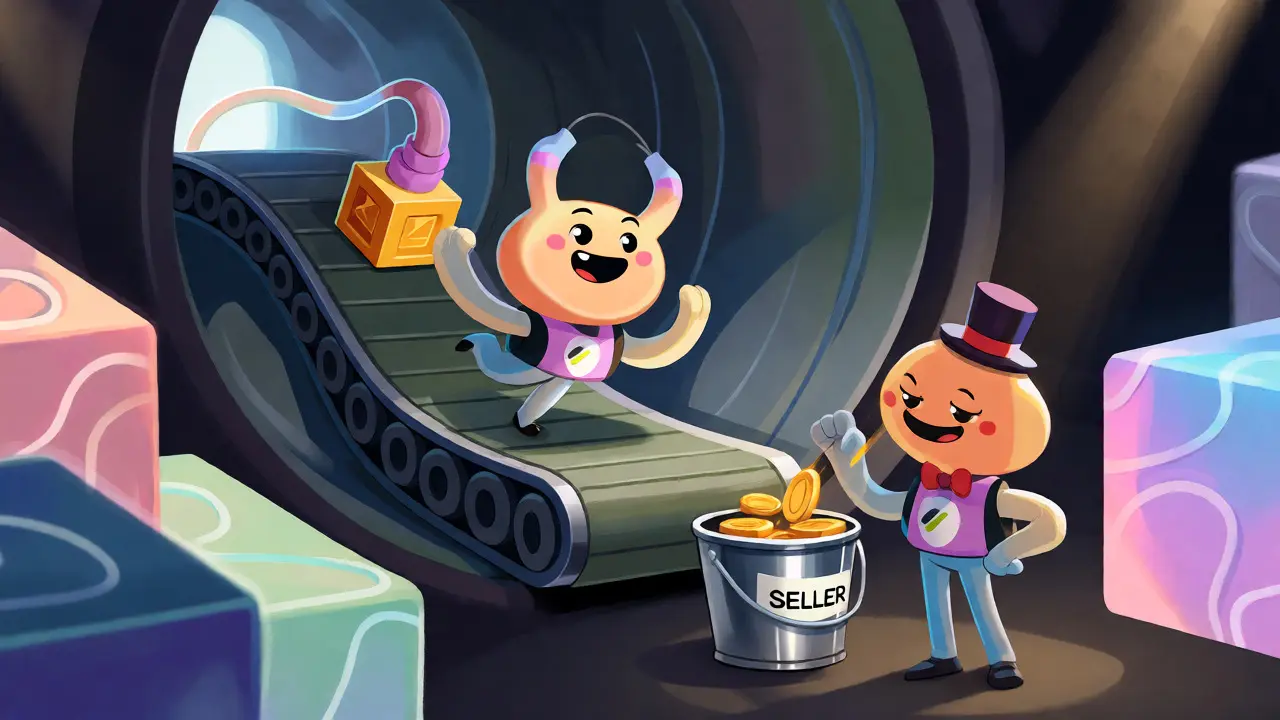
Here is the uncomfortable truth: a smart contract can only enforce rules within its own ecosystem. If you sell your NFT on Platform A, which respects royalties, and the buyer then transfers it to Platform B, which ignores them, your royalty stream stops. This is known as the "enforcement gap."
In 2023, compliance rates hovered around 60% across major platforms, down from near-universal adherence in the early boom days. Platforms like Blur gained massive market share by allowing users to trade without paying creator royalties, arguing that it increased liquidity and lowered barriers to entry. While this benefited traders, it hurt creators who relied on those secondary payments. By 2026, many creators have adapted by choosing platforms that mandate royalties, even if it means less trading volume, or by building their own direct-to-consumer storefronts using tools like Shopify integrations with blockchain wallets.
Another tactic involves off-chain transactions. Buyers and sellers might agree on a price privately and transfer the NFT directly between wallets without using a marketplace interface. In these cases, unless the smart contract itself holds funds in escrow (which is rare due to gas costs), the royalty simply doesn't happen. This requires trust and reputation systems rather than pure code enforcement.
Beyond Art: Music, Gaming, and Intellectual Property
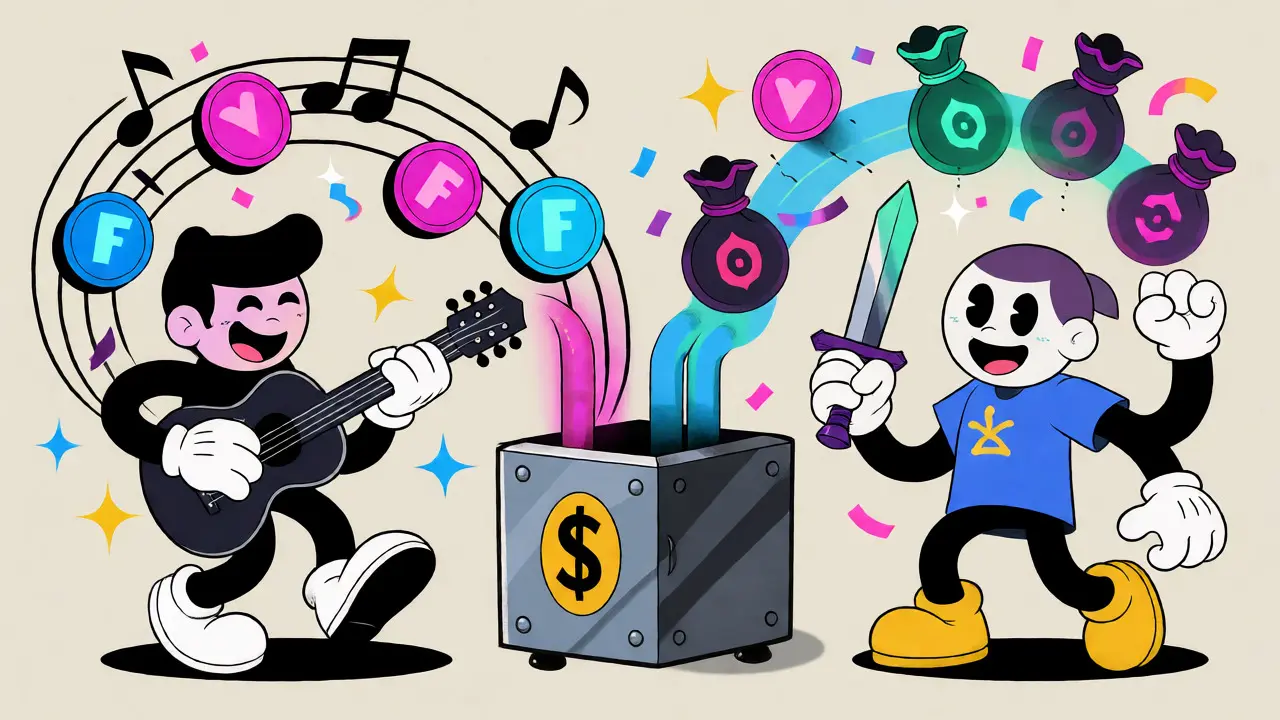
While visual art dominates the conversation, NFT royalties are reshaping other industries. In music, platforms allow artists to sell shares of streaming rights or exclusive tracks as NFTs. When these tokens are resold, the artist earns a cut. This contrasts sharply with traditional record deals, where artists often see little profit from catalog sales decades after release.
Gaming offers another compelling use case. Imagine buying a rare sword in a game as an NFT. If you decide to stop playing and sell that sword to another player, the original game developer-or the independent artist who designed the sword asset-can receive a royalty. This aligns incentives: developers create better assets because they benefit from their longevity, and players retain value from their investments.
For writers and podcasters, NFTs represent a way to own "first editions" or exclusive access passes. Instead of selling a license to a publisher once, you can sell limited edition NFTs that grant access to behind-the-scenes content. Resales of these passes generate ongoing revenue, turning static content into dynamic financial instruments.
Strategic Considerations for Creators
Setting the right royalty percentage is a balancing act. Set it too high (e.g., 20%), and traders will avoid your collection because it eats into their potential profit margins. Set it too low (e.g., 1%), and you fail to capture meaningful value from appreciating assets. Industry analysis suggests a sweet spot between 5% and 10% for most digital art, while gaming assets often settle around 2.5% to encourage high-frequency trading.
You also need to consider tax implications. In the United States, the IRS treats cryptocurrency transactions, including NFT sales and royalties, as taxable events. Each time you receive a royalty payment, it is considered ordinary income at the fair market value on the date received. Keep detailed records of every transaction, including timestamps and USD equivalents, to simplify filing season. Using accounting software integrated with blockchain explorers can automate much of this tracking.
- Choose Your Chain Wisely: Ethereum offers the highest security and liquidity but higher gas fees. Solana and Polygon provide cheaper transactions, which can matter if you are dealing with low-value, high-volume assets.
- Read the Marketplace Terms: Don't assume all platforms treat royalties equally. Check if the platform takes a commission *on top* of your royalty or if they bundle fees.
- Engage Your Community: Collectors who respect royalties often do so because they value the relationship with the creator. Transparent communication about why royalties matter can improve compliance rates organically.
The Future of Digital Ownership
The concept of content ownership is shifting from "copyright law" to "cryptographic proof." While legal frameworks lag behind technology, the economic reality is undeniable. Creators who embrace NFT royalties gain autonomy and transparency previously unavailable in the Web2 model. However, success depends on navigating the technical and social nuances of the ecosystem.
As regulatory clarity improves-with initiatives like the EU’s MiCA regulations potentially mandating royalty disclosures-the enforcement gaps will likely shrink. Until then, diversifying your strategy across multiple platforms and chains is the safest bet. Whether you are a hobbyist photographer or a professional illustrator, the ability to earn from your work’s journey through the market is a powerful tool. Use it wisely.
Do I have to pay taxes on NFT royalties?
Yes. In most jurisdictions, including the US, NFT royalties are treated as ordinary income. You must report the fair market value of the cryptocurrency received at the time of receipt. Additionally, if you later convert that crypto to fiat currency, there may be capital gains implications depending on the change in value since you received it.
Can I change my royalty percentage after minting?
Generally, no. Once an NFT is minted, the royalty terms are embedded in the smart contract and are immutable. If you need to change the royalty structure, you typically have to deploy a new smart contract and migrate your collection, which can be complex and costly. Always double-check your settings before hitting "mint."
What happens if a marketplace goes bankrupt?
Your NFT exists on the blockchain, not on the marketplace server. So, you won't lose your asset. However, you might lose access to the specific user interface or trading features of that platform. You can transfer your NFT to another compatible wallet or marketplace to continue trading, though you may need to re-list it.
Are NFT royalties guaranteed?
No, they are not legally guaranteed in the same way copyright laws are. They depend on the technical implementation of the marketplace and the willingness of traders to comply. Some platforms make royalties optional, meaning you might not receive payment if a trader chooses to bypass the fee.
Which blockchain is best for NFT royalties?
Ethereum currently has the most robust infrastructure and highest liquidity for NFT royalties, ensuring wider reach. However, Layer 2 solutions like Polygon and alternative chains like Solana offer lower transaction fees, which can be beneficial for high-volume, lower-priced items. Choose based on your target audience and asset value.